Wear-resistant Toothed Coupling Extends Service Life Of PIR Sandwich Panel Production Line
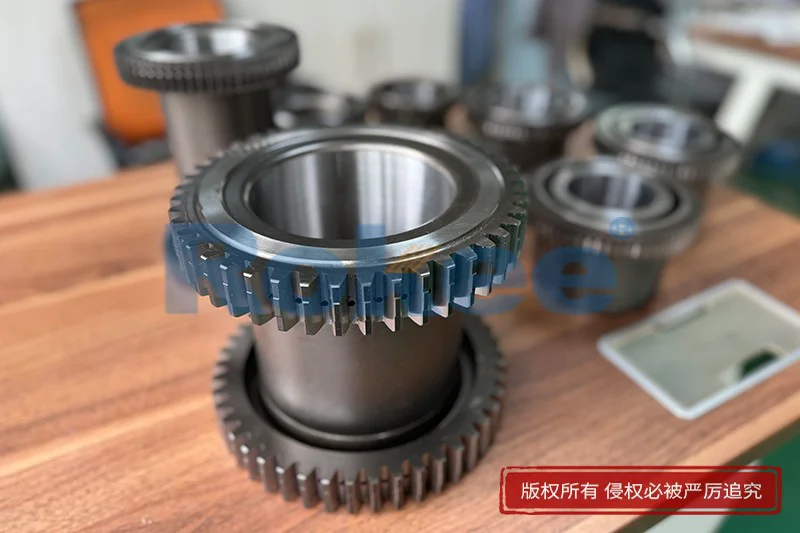
In the modern industrial production field, PIR sandwich panel production lines play an indispensable role in the construction, chemical, and cold storage industries due to their ability to produce high-performance thermal insulation and structural panels. These production lines integrate multiple complex processes, including raw material pretreatment, foaming, forming, cutting, and stacking, requiring precise coordination between various mechanical components to ensure stable and efficient operation. Among all the key components, the coupling, as the core connection part between the power source and the working machine, directly affects the transmission efficiency, operational stability, and overall service life of the entire production line. Among various types of couplings, the wear-resistant toothed coupling stands out due to its excellent load-bearing capacity, wear resistance, and displacement compensation performance, becoming an ideal choice for PIR sandwich panel production lines and effectively extending the service life of the equipment.
PIR (Polyisocyanurate) sandwich panels are widely recognized for their superior thermal insulation, fire resistance, lightweight, and structural stability, making them essential materials in many industrial and construction scenarios. The production process of PIR sandwich panels is highly automated and involves complex mechanical movements: the hydraulic decoiler continuously feeds color steel sheets, the roll forming system shapes the panels with high precision, the foaming system injects and reacts raw materials to form the thermal insulation core, and the cutting and stacking systems complete the final processing and sorting of the finished panels. Each of these links relies on the stable transmission of power, and the coupling, which connects the motor, reducer, and other power components to the working mechanisms such as the decoiler and forming rolls, bears the responsibility of transmitting torque and compensating for relative displacements between shafts. In the long-term operation of the production line, the coupling is subjected to continuous mechanical loads, friction, and occasional impact forces, which puts high demands on its wear resistance, fatigue resistance, and structural stability. Common couplings often experience problems such as tooth surface wear, deformation, or even breakage after a period of use, leading to equipment shutdowns, reduced production efficiency, and increased maintenance costs. In contrast, the wear-resistant toothed coupling effectively solves these problems through its optimized structural design and high-performance material selection, providing reliable support for the long-term stable operation of the PIR sandwich panel production line.
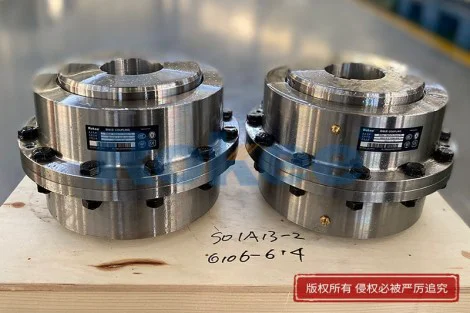
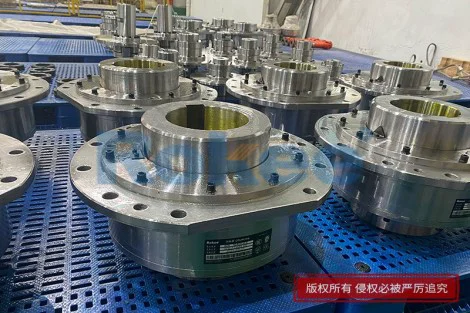
The wear-resistant toothed coupling is a type of rigid movable coupling that achieves power transmission through the precise meshing of internal and external teeth, and its core advantage lies in its excellent wear resistance and load-bearing capacity. Unlike ordinary toothed couplings, the wear-resistant type adopts special material processing and structural optimization to enhance its resistance to friction and wear in harsh working environments. In terms of material selection, the gear teeth and shaft sleeves of wear-resistant toothed couplings are usually made of high-strength carbon steel or alloy steel, which are subjected to processes such as carburizing, quenching, and tempering to significantly improve the hardness and wear resistance of the tooth surface. Some high-demand models also use surface treatment technologies such as nitriding or chrome plating to form a hard protective layer on the tooth surface, further reducing wear during meshing transmission. Compared with traditional cast iron couplings, the wear-resistant toothed coupling has a tooth surface hardness that is increased by more than 30%, and the wear rate is reduced by nearly half, which can effectively resist the wear caused by long-term meshing and load transmission.
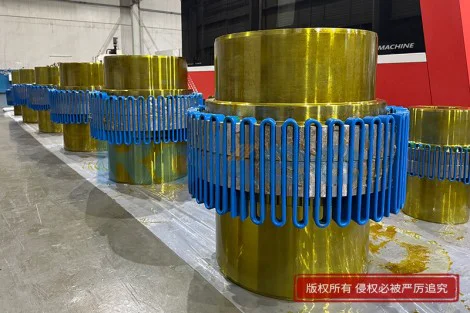
In addition to excellent material performance, the structural design of the wear-resistant toothed coupling also contributes significantly to its wear resistance and service life. Most wear-resistant toothed couplings adopt a drum-shaped tooth design, where the external teeth are made into a spherical shape with the center of the sphere on the gear axis. This design not only improves the contact condition between the internal and external teeth, making the stress distribution more uniform and reducing the concentration of contact stress at the tooth ends, but also enhances the displacement compensation capacity of the coupling. In the operation of the PIR sandwich panel production line, due to factors such as installation errors, thermal expansion during equipment operation, and load fluctuations, relative displacements often occur between the shafts of different components, including angular misalignment, parallel misalignment, and comprehensive misalignment. The drum-shaped tooth design allows the coupling to compensate for angular displacements of up to 6 degrees (recommended 1.5°-2.5°) and radial displacements of 0.5-3mm, effectively avoiding the edge extrusion and wear caused by shaft misalignment. This not only protects the coupling itself but also reduces the additional load on the bearings and other components, extending the service life of the entire transmission system.
The sealing and lubrication system of the wear-resistant toothed coupling is another key factor in extending its service life and ensuring stable operation. The coupling is equipped with a high-performance sealing device, such as a labyrinth seal or double-lip oil seal, which can effectively prevent dust, impurities, and moisture in the production environment from entering the meshing surface of the internal and external teeth. In the PIR sandwich panel production process, there may be a small amount of foam residue, dust, or other pollutants, which, if entering the coupling, will cause severe wear on the tooth surface and accelerate the aging of the coupling. The effective sealing device can isolate these pollutants, maintaining the cleanliness of the meshing surface and reducing wear. At the same time, the wear-resistant toothed coupling adopts forced lubrication or regular grease lubrication to form a stable oil film between the meshing teeth, reducing friction between the tooth surfaces and preventing dry friction. The selection of lubricating oil or grease is also targeted: for low-speed and heavy-load working conditions of the production line, high-viscosity extreme pressure industrial gear oil is used to form a thick oil film to resist heavy loads; for high-speed components, medium-viscosity lubricating oil is selected to reduce stirring resistance. Regular lubrication and oil change can ensure that the lubrication effect is maintained, further reducing wear and extending the service life of the coupling. According to practical application data, the service life of a properly lubricated and sealed wear-resistant toothed coupling is more than twice that of a coupling without effective lubrication and sealing.
The application of wear-resistant toothed couplings in PIR sandwich panel production line can effectively reduce equipment failure rates and extend the overall service life of the production line by solving the problems of easy wear and short service life of traditional couplings. In the hydraulic decoiler of the production line, which is responsible for continuously feeding color steel sheets, the coupling needs to transmit stable torque while adapting to the slight displacement caused by the rotation of the coil. The wear-resistant toothed coupling can ensure the stable operation of the decoiler, avoid the shutdown caused by coupling failure, and ensure the continuity of the feeding process. In the roll forming system, the coupling connects the reducer to the forming rolls, requiring precise torque transmission to ensure the accuracy of the panel shape. The high precision and wear resistance of the wear-resistant toothed coupling can maintain the stability of the forming process, reduce the error of the panel size, and at the same time avoid the wear and deformation of the coupling caused by long-term high-load operation. In the foaming and curing links, the stable operation of the conveying mechanism and mixing equipment also relies on the reliable transmission of the coupling. The wear-resistant toothed coupling can adapt to the harsh working environment of these links, resist the corrosion of chemical raw materials and the wear of mechanical particles, and ensure the stable operation of the equipment.
In practical application, the service life of PIR sandwich panel production lines equipped with wear-resistant toothed couplings has been significantly improved compared with those using traditional couplings. Taking a medium-sized PIR sandwich panel production line as an example, before replacing with wear-resistant toothed couplings, the average service life of the couplings was about 3,000 hours, and frequent replacement was required, which not only increased maintenance costs but also affected production progress. After replacing with wear-resistant toothed couplings, the average service life of the couplings was extended to more than 8,000 hours, and the number of maintenance times was reduced by more than 60%. This not only reduces the cost of purchasing and replacing couplings but also reduces the downtime caused by coupling failure, improving the overall production efficiency of the production line. In addition, the stable operation of the wear-resistant toothed coupling also reduces the wear of other related components, such as motors, reducers, and bearings, extending the service life of the entire production line equipment and reducing the overall operation and maintenance costs.
The excellent performance of wear-resistant toothed couplings is also reflected in their strong adaptability to the working environment of PIR sandwich panel production lines. PIR sandwich panel production lines may operate in different environments, including high temperature, humidity, or dusty conditions, which put forward higher requirements for the environmental adaptability of the coupling. The wear-resistant toothed coupling, through reasonable material selection and structural design, has good high-temperature resistance and corrosion resistance. It can work stably in environments with temperatures up to 200℃, avoiding performance degradation or deformation caused by high temperatures. For humid or corrosive environments, stainless steel materials or special anti-corrosion surface treatment can be selected to enhance the corrosion resistance of the coupling, ensuring its long-term stable operation. This adaptability enables the wear-resistant toothed coupling to be applied to various types of PIR sandwich panel production lines, whether it is a production line for wall panels, roof panels, or cold storage panels, and can play a good role in extending the service life of the equipment.
In addition to extending the service life of the production line, the wear-resistant toothed coupling also helps to improve the operational stability and product quality of the PIR sandwich panel production line. The stable torque transmission and small vibration of the coupling can reduce the vibration of the entire production line, avoid the impact of vibration on the foaming and forming processes, and ensure the uniformity of the PIR foam core and the flatness of the panel surface. At the same time, the accurate displacement compensation capacity of the coupling can reduce the mechanical stress between components, avoid the deformation of the equipment caused by uneven stress, and further ensure the stability of the production process. The improvement of product quality not only enhances the market competitiveness of the PIR sandwich panels but also reduces the waste of raw materials caused by product unqualified, bringing more economic benefits to the enterprise.
To maximize the role of wear-resistant toothed couplings in extending the service life of PIR sandwich panel production lines, reasonable selection, correct installation, and regular maintenance are also essential. In the selection process, it is necessary to determine the model and specification of the coupling according to the actual working conditions of the production line, such as the transmitted torque, rotating speed, and displacement compensation requirements, to ensure that the coupling can match the working load and operating environment of the production line. During installation, it is necessary to strictly control the coaxiality and fit clearance of the coupling, use special tools to avoid eccentricity and inclination, and uniformly tighten the bolts to prevent the deformation of the coupling and ensure the smoothness of power transmission. In terms of maintenance, it is necessary to regularly check the lubrication status of the coupling, supplement or replace the lubricating oil or grease in a timely manner according to the operating time and environment, and check the sealing device for aging, damage, or leakage. At the same time, it is necessary to regularly inspect the tooth surface of the coupling for wear, scratches, or cracks, and repair or replace the coupling in a timely manner if any problems are found. Through scientific selection, standardized installation, and regular maintenance, the service life of the wear-resistant toothed coupling can be further extended, and its role in protecting the PIR sandwich panel production line can be fully exerted.
With the continuous development of the PIR sandwich panel industry, the requirements for the efficiency and service life of production lines are getting higher and higher. As a key component in the transmission system, the performance of the coupling directly affects the overall level of the production line. The wear-resistant toothed coupling, with its excellent wear resistance, load-bearing capacity, and displacement compensation performance, effectively solves the problems of short service life and frequent failures of traditional couplings, providing a reliable guarantee for the long-term stable operation of PIR sandwich panel production lines. Its application not only extends the service life of the production line and reduces maintenance costs but also improves production efficiency and product quality, bringing significant economic and social benefits to enterprises. In the future, with the continuous advancement of material technology and processing technology, the performance of wear-resistant toothed couplings will be further optimized, and their application in PIR sandwich panel production lines will be more extensive, making greater contributions to the sustainable development of the PIR sandwich panel industry.