Elastic Pin Coupling

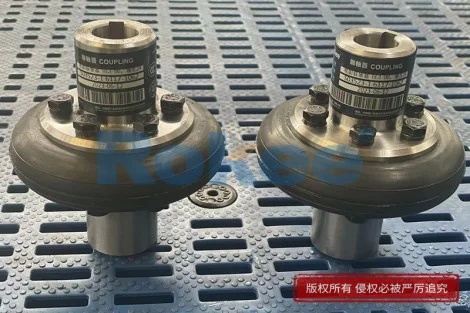
Elastic pin coupling is a widely adopted flexible transmission component in mechanical power systems, designed to connect driving and driven shafts and transmit rotational torque while integrating unique elastic buffering functions. Distinct from rigid couplings that pursue absolute transmission rigidity, this component relies on the elastic deformation of its core pin structures to address common mechanical operation problems, including shaft misalignment, torsional vibration, and sudden impact loads. Its core structural features lie in the combination of rigid metal hubs and flexible elastic pin components, which balance stable torque transmission and effective mechanical protection. With a simple overall structure, convenient assembly and maintenance, and strong environmental adaptability, it is extensively applied in medium and small power mechanical transmission scenarios across various industries. This article comprehensively elaborates on its working principles, structural characteristics, core advantages, application scenarios, performance limitations, maintenance methods, and industry application value, providing a systematic overview of this essential mechanical part.
The working principle of elastic pin coupling is based on controllable elastic deformation and flexible torque transmission, forming a stable and efficient power transfer logic between mechanical shafts. The coupling is mainly composed of two symmetrical metal hubs and multiple evenly distributed elastic pins fixed between the hubs. In normal operating conditions, the driving hub rotates with the power source, and the rotational torque is uniformly transmitted to the driven hub through the tightly fitted elastic pins, realizing synchronous rotation of the two connected shafts. When the mechanical system generates positional deviation due to installation errors, equipment vibration, or thermal expansion and contraction during operation, the elastic pins produce slight bending, compression, or stretching deformation. This mild and controllable deformation can effectively compensate for radial, angular, and axial misalignment between the shafts, avoiding the rigid extrusion and stress concentration that occur in traditional rigid transmission structures. Meanwhile, the elastic pins can absorb and dissipate torsional vibration energy generated by torque fluctuation in the transmission process, isolating vibration transmission between the power source and the executing equipment, and ensuring the smooth and stable operation of the entire mechanical transmission system.

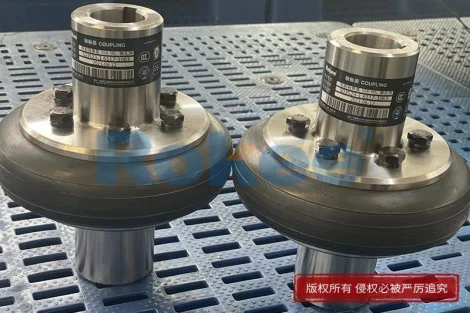
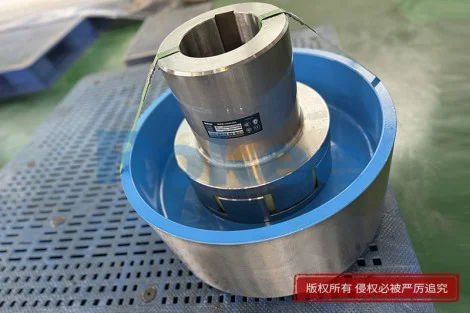
The structural composition of elastic pin coupling is concise and reasonable, with each part undertaking independent and coordinated functions to support its comprehensive transmission performance. The two metal hubs are usually made of high-strength rigid metal materials, with high structural rigidity and wear resistance, which can bear long-term rotational torque and ensure the overall dimensional stability of the coupling. The core functional components are the elastic pins, which are manufactured from high-elasticity and fatigue-resistant flexible materials such as polyurethane, high-quality rubber, and engineering nylon. These materials have excellent elastic recovery capabilities and can maintain stable deformation performance under long-term cyclic load. The elastic pins are installed in the reserved matching holes of the two hubs, with no excessive rigid gap, ensuring accurate torque transmission while retaining sufficient elastic deformation space. Different from complex flexible couplings with multi-layer structures, the elastic pin coupling has fewer parts and a highly integrated structure. There is no complex transmission mechanism or auxiliary positioning component, which not only reduces the overall weight and installation space occupation but also avoids mechanical failure risks caused by excessive structural parts. This simple and compact structural design lays a solid foundation for its convenient installation, wide adaptability, and low failure rate in practical industrial applications.
Elastic pin coupling possesses multiple core performance advantages that make it superior to many traditional coupling types in medium and small power transmission scenarios. First, it has excellent misalignment compensation capability, which can adapt to minor positional deviations of shafts caused by installation, operation, and environmental changes, effectively reducing the additional mechanical stress on shafts, bearings, and equipment bodies. Second, its outstanding vibration damping and noise reduction performance greatly optimizes the operating environment of mechanical equipment. The elastic pins can absorb high-frequency vibration and impact energy generated during equipment start-stop, load switching, and high-speed operation, weakening vibration resonance between components and lowering mechanical friction noise. Third, the coupling has strong impact resistance buffering performance. When the mechanical system encounters sudden load changes or instantaneous impact forces, the elastic structure can release stress through deformation, avoiding instantaneous overload damage to power components and executing parts. In addition, it features low operation resistance and high transmission efficiency, with no obvious power loss during torque transmission. Its simple structure also brings ultra-low maintenance difficulty, requiring only regular inspection of elastic pin wear without complex disassembly and debugging, greatly reducing equipment operation and maintenance costs.

Elastic pin coupling is widely applicable in diverse medium and small power mechanical transmission systems, covering multiple industrial and civilian equipment fields. In general industrial machinery, it is commonly matched with conventional rotating equipment such as fans, water pumps, and compressors. These devices often have frequent start-stop operations and stable medium-speed operating conditions, and the coupling’s vibration damping and impact buffering functions can effectively extend the service life of the equipment. In textile, printing, and light industrial machinery, which requires high operating stability, the coupling compensates for tiny shaft misalignment generated by long-term high-speed operation, ensuring the precise and continuous operation of processing equipment and avoiding product processing defects caused by mechanical jitter. In transportation and logistics supporting machinery, such as small conveying equipment and sorting devices, it adapts to intermittent operation and variable load working conditions, stabilizing power output and improving equipment operation consistency. Moreover, it is also widely used in agricultural machinery, environmental protection equipment, and general mechanical transmission devices. Its strong environmental adaptability allows it to operate stably in conventional temperature and dust working environments, making it a universal and versatile transmission component in the mechanical industry.
While elastic pin coupling has prominent comprehensive performance, it also has inherent performance limitations that define its applicable boundary in industrial scenarios. Restricted by the material strength of elastic pins, this coupling cannot bear ultra-high torque and ultra-high-speed operating conditions, making it unsuitable for heavy-duty mechanical transmission systems with extreme load and high rotational speed requirements. Long-term cyclic elastic deformation will cause gradual fatigue wear of the elastic pin materials. After a certain period of operation, the elasticity will decrease and permanent deformation may occur, leading to reduced vibration damping effect and transmission accuracy, requiring regular replacement of vulnerable parts. In addition, the elastic components are sensitive to extreme temperature environments. Excessively high temperature will accelerate material aging and softening, while excessively low temperature will reduce material elasticity and toughness, both affecting the overall working performance and service life of the coupling. Besides, although it can compensate for minor shaft misalignment, it has limited tolerance for large-scale positional deviation. Excessive misalignment will cause excessive deformation of elastic pins, intensify local stress and accelerate component damage, thus requiring basic alignment calibration during equipment installation.

Daily maintenance and inspection of elastic pin coupling is simple and standardized, which is crucial to maintaining stable equipment operation and extending component service life. The core of daily maintenance lies in regular inspection of elastic pin status. Operators need to periodically check the surface integrity, elasticity, and deformation degree of the elastic pins to observe whether there are aging cracks, excessive wear, permanent bending, or loose assembly. Once abnormal conditions are found, the vulnerable pins should be replaced in a timely manner to avoid transmission instability and equipment vibration caused by damaged elastic components. Meanwhile, it is necessary to regularly check the fitting tightness of the metal hubs and the coaxiality of the connected shafts, eliminate accumulated dust and debris in the assembly gaps, and prevent foreign matter from affecting elastic deformation and torque transmission accuracy. In terms of maintenance cycle, conventional operating equipment can adopt monthly routine inspection and quarterly comprehensive inspection. For equipment with frequent start-stop and variable load operation, the inspection frequency should be appropriately increased. During long-term equipment shutdown, the coupling should be kept dry and clean to avoid moisture corrosion of metal hubs and mildew or aging of elastic materials, ensuring that the coupling can maintain optimal performance when restarted.
With the continuous development of modern mechanical industry towards high stability, low energy consumption and low failure rate, the application value and development potential of elastic pin coupling are constantly highlighted. As a classic flexible transmission component integrating vibration reduction, buffering and misalignment compensation, it fills the performance gap between rigid couplings and high-precision professional flexible couplings, providing a cost-effective and reliable transmission solution for most medium and small power mechanical equipment. Its simple structural design, convenient installation and maintenance, and stable comprehensive performance make it irreplaceable in general mechanical transmission scenarios. At the same time, with the continuous upgrading of elastic material technology, the fatigue resistance, temperature adaptability and load-bearing capacity of elastic pins are constantly improved, gradually breaking through the original performance limitations. In the future, with the iterative optimization of material science and structural design, elastic pin coupling will further expand its application scope, adapt to more complex working conditions, and continue to play an important basic supporting role in the stable operation of various mechanical transmission systems.