Barrel Coupling Torsionally Rigid

Torsionally rigid barrel couplings are high-performance mechanical transmission components designed to balance precise torque delivery and controlled shaft misalignment compensation in industrial power systems. Unlike flexible couplings that allow significant torsional deflection under load, this specialized coupling maintains exceptional torsional stiffness to ensure synchronous rotational movement between driving and driven shafts, eliminating angular lag and torque loss during operation. Its unique structural configuration with hardened steel barrel rollers serves as the core torque transmission medium, enabling stable and efficient power transfer even under heavy, fluctuating operational loads. While retaining rigid torsional characteristics critical for precision machinery, the coupling still accommodates minor axial and angular shaft misalignments caused by installation deviations, equipment vibration, or thermal expansion. This dual performance advantage makes it a preferred solution for heavy-duty industrial applications requiring both positional accuracy and operational stability, covering material handling, mechanical transmission, and heavy processing equipment systems that demand consistent torque output and long-term operational reliability.
The core operational logic of torsionally rigid barrel couplings lies in their optimized rolling contact torque transmission mechanism, which fundamentally distinguishes them from conventional rigid and flexible coupling structures. Traditional rigid couplings completely restrict shaft displacement but suffer from severe stress concentration when misalignment occurs, leading to premature component wear and structural fatigue. In contrast, ordinary flexible couplings rely on elastic deformation to buffer vibration but produce obvious torsional deflection under high torque, reducing transmission accuracy. Torsionally rigid barrel couplings adopt curved surface contact between precision-machined steel barrel rollers and semicircular groove structures on the hub and sleeve. When the equipment operates, torque is transmitted uniformly through the rolling contact of barrel rollers rather than surface extrusion or elastic deformation. This contact mode disperses mechanical stress over a large curved area, effectively avoiding localized stress concentration while maintaining zero torsional clearance and minimal torsional deformation under rated and overload conditions. The rolling motion of barrel rollers also ensures smooth, impact-free power transmission, suppressing instantaneous torque fluctuations caused by equipment start-up, load switching, and operational vibration, thus maintaining consistent rotational synchronization of the entire transmission system.
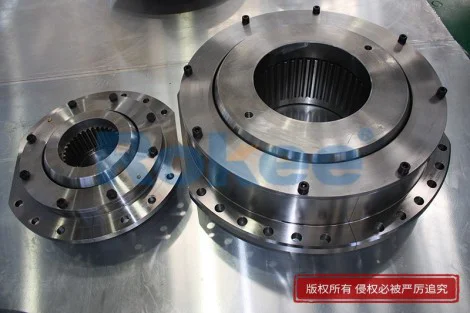
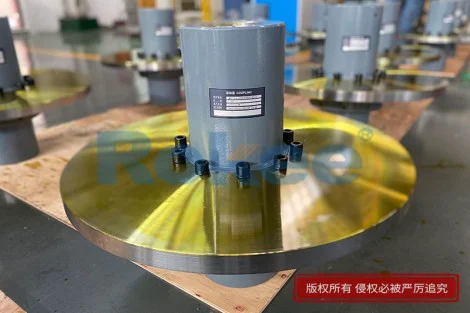
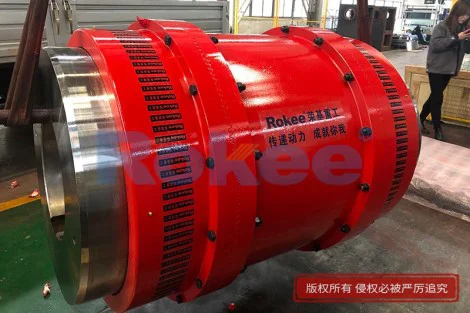
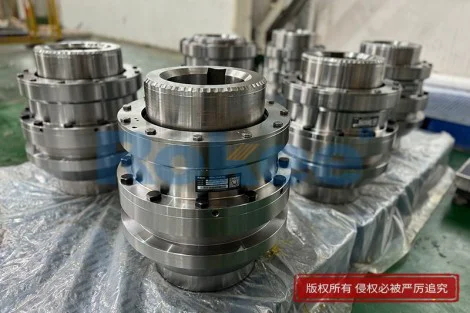
The structural composition of torsionally rigid barrel couplings is highly compact and functionally integrated, focusing on durability, assembly convenience, and operational stability for long-term industrial service. The main components include a high-strength outer sleeve, a precision-machined inner hub, uniformly distributed hardened steel barrel rollers, and fully enclosed sealing assemblies. The inner wall of the outer sleeve and the outer wall of the inner hub are processed with matching semicircular arc grooves, forming uniform limit spaces for the placement of barrel rollers. This structural design fixes the radial position of transmission components while reserving tiny movable gaps for axial and angular misalignment compensation. The barrel rollers are made of high-hardness alloy steel through integral quenching and precision grinding, possessing excellent wear resistance, compression resistance, and fatigue resistance to withstand long-term heavy-load cyclic operation. The integrated sealing structure composed of special rubber gaskets and protective covers forms a fully closed internal working cavity. This structure effectively isolates external dust, moisture, and corrosive pollutants, prevents internal lubricating grease from overflowing and deterioration, and maintains a stable lubrication state for the rolling contact pairs, which is the key to ensuring continuous and efficient operation of the coupling in complex working environments.
Torsional rigidity, the most core performance attribute of the barrel coupling, endows industrial transmission systems with unparalleled precision and stability in torque control. Torsional rigidity refers to the ability of the coupling to resist torsional deformation under applied torque, and this series of couplings maintains extremely low torsional deflection throughout the entire load range. In high-precision mechanical transmission scenarios, even tiny torsional deformation will lead to asynchronous rotation of driving and driven ends, resulting in positioning errors, reduced processing accuracy, and unstable equipment operation. The barrel coupling eliminates such hidden troubles through its rigid roller transmission structure. All torque is transmitted through the rigid contact of metal components without relying on elastic deformation, ensuring that the rotation angle of the driven shaft completely follows the driving shaft in real time. This consistent torsional synchronization enables the coupling to handle steady torque and impact load torque stably, avoiding torque hysteresis and rotational speed deviation. Moreover, the uniform stress distribution of the curved contact structure makes the torsional rigidity of the coupling remain stable during long-term operation, without obvious performance attenuation caused by component wear, ensuring long-term precision and reliability of the transmission system.
A prominent comprehensive advantage of torsionally rigid barrel couplings is their excellent misalignment compensation capability on the premise of maintaining rigid torsional performance, breaking the performance limitations of traditional single-function couplings. In actual industrial equipment operation, absolute coaxiality of driving and driven shafts is difficult to achieve permanently. Installation errors, mechanical vibration, equipment aging, and thermal expansion and contraction will cause cumulative axial displacement, angular deflection, and radial offset of the shafts. Completely rigid couplings cannot adapt to these deviations, which will generate additional alternating stress inside the transmission system, accelerating bearing and shaft wear and even causing equipment failure. Flexible couplings with large compensation capacity often sacrifice torsional accuracy. Torsionally rigid barrel couplings achieve a perfect balance through the flexible rolling fit of barrel rollers. The tiny movable gaps of the rollers in the arc grooves can automatically compensate for minor axial, angular, and radial misalignments, releasing additional assembly stress and operational stress. This compensation process does not produce torsional deformation or torque loss, ensuring that the transmission system operates smoothly while maintaining precise power transmission accuracy.
Torsionally rigid barrel couplings exhibit outstanding environmental adaptability and service durability, making them suitable for harsh and continuous industrial working conditions. Most industrial heavy-duty equipment operates in complex environments with dust, humidity, variable temperature, and frequent load changes, which put forward strict requirements on the wear resistance, corrosion resistance, and structural stability of transmission components. The all-metal main transmission structure of the barrel coupling avoids the aging and failure problems of elastic materials such as rubber and polyurethane in extreme environments. The fully enclosed sealing system effectively blocks the invasion of external harmful media, protecting the internal roller contact pairs from abrasion and corrosion. The high-strength heat-treated steel components can withstand long-term heavy-load operation and frequent start-stop impact loads, with strong resistance to mechanical fatigue. In terms of temperature adaptability, the coupling maintains stable structural performance and torsional rigidity within a wide temperature range, without performance degradation caused by temperature changes. These characteristics enable the coupling to operate stably for a long time in mining, material handling, heavy processing, and other harsh working scenarios, reducing equipment failure rates and maintenance frequency significantly.
The installation and maintenance characteristics of torsionally rigid barrel couplings further enhance their practical value in industrial production and equipment operation. The overall compact structural design reduces axial installation space requirements, making it applicable to equipment with limited installation dimensions and compact transmission layouts. The modular component structure simplifies the assembly and disassembly process, without complex positioning and calibration procedures during installation. The matching precision of the hub and sleeve is optimized, enabling quick docking with the shaft system and effectively shortening equipment assembly and debugging cycles. In terms of daily maintenance, the fully enclosed lubrication system can maintain a stable lubrication state for a long time, avoiding frequent grease replenishment and cleaning work. The wear-resistant metal roller structure has a low failure rate, and vulnerable parts have strong interchangeability. When local wear occurs after long-term operation, targeted replacement of individual components can be realized without overall disassembly of the transmission system. This convenient maintenance mode greatly reduces equipment downtime and later operational costs, improving the continuous operation efficiency of industrial production lines.
With the continuous upgrading of modern industrial heavy-duty transmission systems, the application scope and technical value of torsionally rigid barrel couplings are constantly expanding, becoming a key component to ensure high-efficiency and high-precision operation of mechanical equipment. It is widely applied in core transmission links of various heavy-load equipment such as lifting and handling machinery, conveyor systems, crushing and grinding equipment, and industrial drum transmission devices. In these scenarios, the coupling’s high torsional rigidity ensures accurate torque transmission and stable equipment operation, while its moderate misalignment compensation capability adapts to complex operational deviations, and its durable structure meets the requirements of long-cycle continuous production. Compared with other types of transmission couplings, it has obvious comprehensive performance advantages in precision, stability, durability, and economy. As industrial equipment develops towards high load, high precision, and high continuity, torsionally rigid barrel couplings will continue to play an irreplaceable role in optimizing mechanical transmission performance, reducing operational failures, and improving industrial production efficiency.