Gear Coupling For Motor
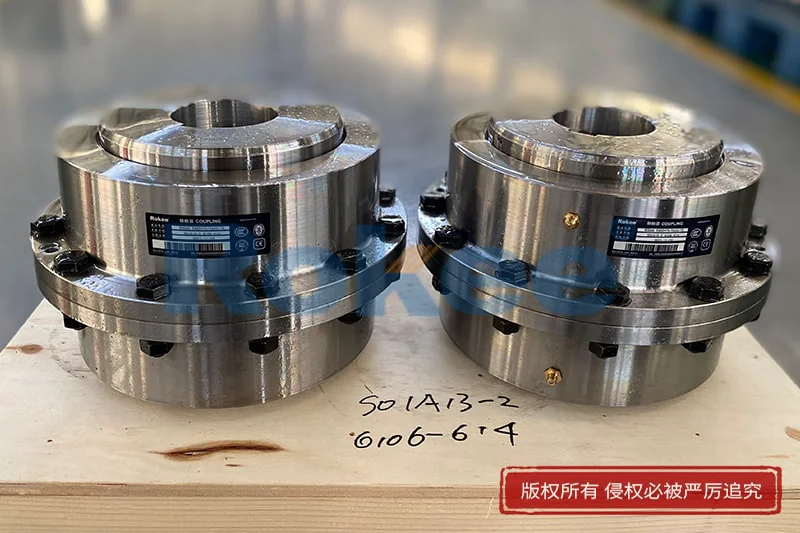
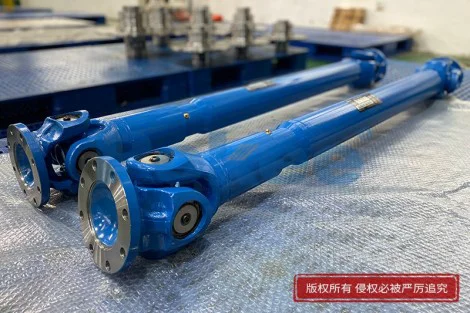
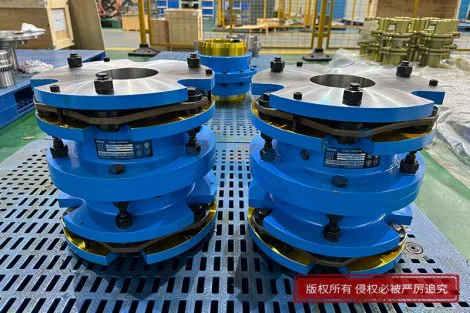
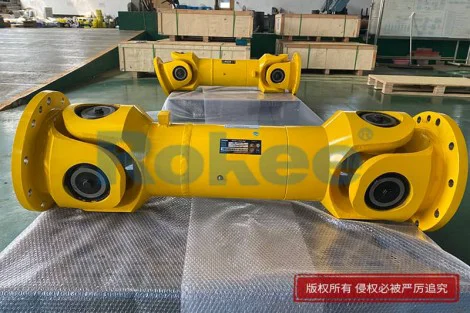
Gear couplings serve as indispensable mechanical transmission components specifically designed for motor-driven industrial systems, acting as a critical bridge between motor shafts and driven equipment shafts to deliver torque and rotational power efficiently. Unlike ordinary flexible couplings, this mechanical structure integrates rigid transmission performance with flexible displacement compensation capabilities, making it uniquely adaptable to complex operating conditions of motor equipment. It mainly relies on the meshing of internal and external gear teeth to realize synchronous rotation of connected shafts, effectively buffering vibration and impact generated during motor startup, operation and load switching. Meanwhile, it can compensate for minor axial, radial and angular misalignments caused by installation deviations, equipment aging and thermal deformation of motor parts. Widely applied in various motor matching scenarios such as mechanical transmission, fluid power equipment and industrial production lines, gear couplings stand out for their compact structure, strong load-bearing capacity and stable long-term operation, effectively improving the overall transmission efficiency and service life of motor systems while reducing equipment failure rates caused by shaft misalignment and torque fluctuation.
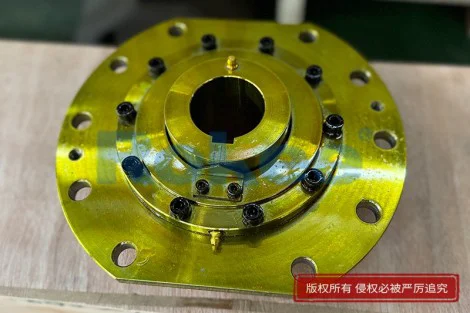
The basic structural composition of motor gear couplings is sophisticated and highly integrated, ensuring both reliable power transmission and flexible environmental adaptability. The core components mainly include two external gear hubs and one internal gear sleeve, which form the main meshing transmission structure. The gear hubs are usually fixed on the motor shaft and the driven equipment shaft respectively through key connection or interference fit, maintaining coaxial positioning during operation. The external teeth of the hubs adopt a special crowned tooth profile design, which is the key to realizing displacement compensation; the tooth surface is polished and optimized to reduce meshing friction and avoid local stress concentration. The internal gear sleeve wraps the meshing part of the two gear hubs, providing a stable meshing constraint space for gear rotation. In addition, the coupling is equipped with professional sealing and locking auxiliary structures, including sealing gaskets and anti-loosening fasteners. These accessories can effectively isolate external dust, moisture and impurities, prevent internal lubricant leakage, and ensure the structural stability of the coupling during long-term high-speed operation. The overall structure abandons redundant designs, achieving a compact volume while retaining excellent torque transmission performance, which perfectly fits the limited installation space of most motor supporting equipment.
The working principle of gear couplings for motors is based on precise gear meshing motion and flexible displacement tolerance, realizing efficient and stable power transmission. When the motor starts and runs, the motor shaft drives the connected external gear hub to rotate synchronously, and the torque is transmitted to the internal gear sleeve through the continuous meshing contact of internal and external gear teeth. Then the internal gear sleeve drives the other external gear hub and the connected driven shaft to rotate, completing the whole process of power transmission. Different from conventional gear sets used for speed regulation or steering, the gear meshing of the coupling only undertakes torque transmission tasks and reserves a tiny movable gap through optimized tooth profile design. When the motor system produces shaft misalignment due to installation errors, equipment vibration or thermal expansion and contraction, the crowned gear teeth can roll slightly in the meshing area to adapt to the offset change. This flexible rolling contact avoids rigid extrusion and friction between shafts, eliminates transmission jitter and power loss caused by misalignment, and maintains synchronous and consistent rotation speed of the motor and driven equipment throughout the operation process.
Motor gear couplings possess prominent performance advantages that make them superior to many other types of transmission couplings in industrial application scenarios. First of all, they have ultra-high torque transmission capacity, which can bear heavy load impact generated by high-power motors during startup and peak operation, achieving efficient and lossless power transmission. Secondly, the multi-directional displacement compensation capability is a core advantage, which can simultaneously adapt to axial deviation, radial offset and angular misalignment between motor shaft and driven shaft, greatly reducing the equipment wear caused by installation and operation errors. In terms of operation stability, the optimized gear meshing structure enables smooth rotation with low vibration and low noise, effectively suppressing the resonance phenomenon of motor transmission systems during long-term continuous operation. In addition, the overall structural rigidity of the gear coupling is strong, with good fatigue resistance and impact resistance, and it can maintain stable working performance under harsh working conditions such as variable load and frequent startup and shutdown. Its durable mechanical properties greatly reduce the frequency of equipment maintenance and replacement, improving the continuous operation efficiency of the entire motor equipment system.
The matching adaptability of gear couplings for motors covers a wide range of industrial working conditions, meeting the diverse operational needs of different motor types and equipment combinations. This type of coupling can be perfectly matched with various common industrial motors, including high-speed rotating motors, low-speed high-torque motors and variable-frequency speed-regulating motors, and can maintain stable transmission performance under different speed regulation states. It is highly compatible with typical motor-driven equipment such as fans, pumps, compressors, conveyors and mechanical processing equipment, adapting to both light-load continuous operation and heavy-load intermittent operation modes. For working environments with frequent load changes, the gear coupling can buffer instantaneous torque impact generated by motor load switching, protect the motor spindle and equipment bearings from damage. Moreover, it can adapt to conventional indoor production environments and harsh working conditions with certain dust and temperature changes, relying on its good sealing performance and structural stability. The flexible working condition adaptability makes it a universal matching component for motor transmission systems in multiple industrial fields, realizing standardized and efficient connection of motor and supporting equipment.
Lubrication management is a core link to maintain the long-term stable operation of motor gear couplings and extend their service life. The internal gear meshing operation of the coupling depends entirely on high-quality lubrication to reduce friction and wear between tooth surfaces. Reasonable lubrication can form a uniform oil film on the gear meshing surface, isolate direct metal contact, reduce frictional resistance during operation, and lower the heat generated by high-speed meshing. At the same time, lubricants can play a certain cooling role, taking away part of the heat accumulated in the meshing area to avoid tooth surface aging and deformation caused by high temperature. In daily use, it is necessary to select suitable lubricating media according to the actual operating speed and load of the motor equipment, and regularly supplement and replace lubricants to prevent lubricant deterioration, failure or impurity precipitation. It is also essential to check the sealing structure regularly to avoid lubricant leakage caused by loose seals, which may lead to dry friction and serious wear of gear teeth. Scientific and standardized lubrication maintenance can effectively avoid common faults such as tooth surface abrasion, meshing jamming and torque attenuation, and keep the transmission performance of the gear coupling stable for a long time.
Correct installation and daily maintenance specifications are crucial to giving full play to the performance of motor gear couplings and reducing equipment failure risks. During the installation process, it is necessary to ensure that the matching size of the gear hub and the motor shaft is accurate, and the positioning is firm and coaxial as much as possible to reduce initial misalignment errors. The assembly of the internal gear sleeve and the fastening of auxiliary parts need to be standardized to avoid structural looseness during operation. After installation, it is necessary to conduct no-load trial operation to check for abnormal vibration, noise and jitter, and adjust the installation state in time if problems occur. In daily maintenance, besides regular lubrication replacement, regular disassembly and inspection of gear tooth wear, sealing aging and fastener looseness are required. Worn gear parts and failed sealing components need to be replaced in a timely manner to prevent minor faults from evolving into major equipment failures. In addition, during the operation of motor equipment, abnormal load impact and long-term overload operation should be avoided, so as to prevent the gear coupling from bearing excessive torque and causing structural deformation and performance attenuation. Standardized installation and maintenance can maximize the service life of the coupling and ensure the safe and efficient operation of the motor transmission system.
With the continuous upgrading of industrial motor transmission technology, the optimization and development of motor gear couplings are also advancing towards higher efficiency, stronger durability and wider adaptability. Modern industrial production puts forward higher requirements for the stability, precision and environmental adaptability of motor transmission systems, which drives the continuous structural optimization of gear couplings. The innovative optimization of tooth profile design and material processing technology further improves the displacement compensation ability and wear resistance of the coupling, enabling it to adapt to more complex and high-precision motor transmission scenarios. The improved sealing and anti-corrosion structures make the coupling applicable to more harsh industrial environments, expanding its application boundary in heavy industry, intelligent manufacturing and other fields. At the same time, the integrated and lightweight structural design effectively reduces the overall weight of the equipment while ensuring high torque transmission capacity, which helps to reduce the operating load of the motor and improve the energy utilization efficiency of the entire system. As a key basic transmission component, gear couplings will continue to iterate and upgrade with industrial equipment technology, providing more reliable support for the stable operation of various motor-driven industrial systems.