Diaphragm Coupling Catalogue
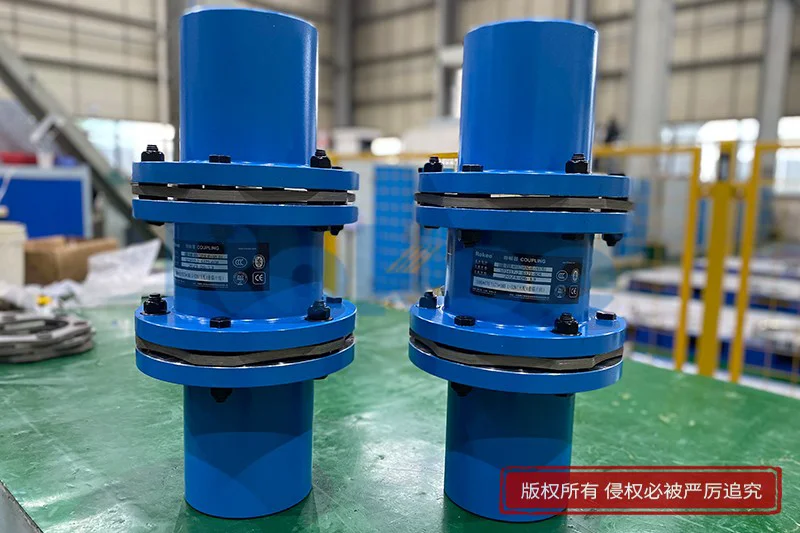
Diaphragm couplings stand out as high-performance metal flexible transmission components widely adopted in modern mechanical transmission systems, serving as a core connecting unit between driving and driven equipment. Unlike traditional coupling structures that rely on friction, meshing or rubber deformation for power transmission, this type of coupling utilizes metal diaphragm groups as the key load-bearing and buffering components, achieving stable torque transmission through rigid bearing structures while offsetting various shaft misalignments via controllable elastic deformation. It integrates multiple superior characteristics including zero backlash, maintenance-free operation, low vibration and high-speed adaptability, effectively solving common operational problems of traditional couplings such as easy wear, large transmission clearance and poor misalignment compensation. Suitable for complex and high-precision mechanical working conditions, diaphragm couplings have become an indispensable part of industrial transmission equipment, optimizing system operation stability and extending the service life of overall mechanical structures in long-term continuous operation scenarios.
The core working principle of diaphragm couplings centers on the reversible elastic deformation of precision-manufactured metal diaphragms, which forms the fundamental basis for their reliable power transmission and misalignment compensation functions. During equipment operation, the driving shaft transmits rotational torque to the driven shaft through the rigid connection of diaphragm assemblies and end plates, ensuring efficient and non-loss power output under normal operating conditions. When installation deviations, equipment operation deformation or thermal expansion and contraction cause axial, radial and angular misalignment between the two connected shafts, the thin metal diaphragms produce micro elastic deformation to adapt to the offset changes. This flexible adjustment mode avoids rigid extrusion and friction between shaft components, eliminating the transmission backlash that exists in gear and sleeve couplings. The metal diaphragm material maintains stable mechanical properties during cyclic deformation, without aging, fatigue failure or performance attenuation caused by long-term use, enabling the coupling to maintain consistent transmission accuracy and operational stability in continuous high-frequency working environments.
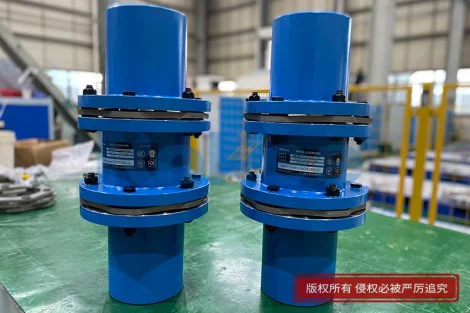
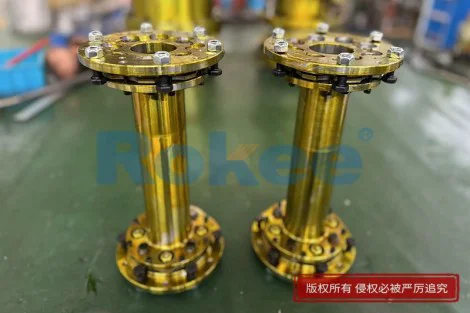
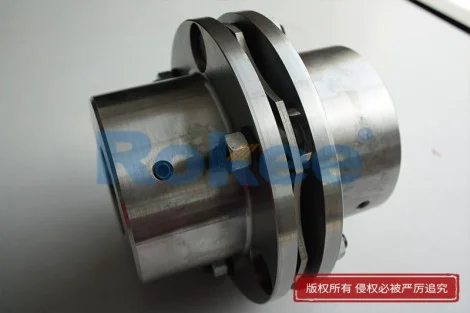
Structural composition design endows diaphragm couplings with unique functional advantages and structural stability, with the overall structure mainly composed of metal diaphragm groups, fastening bolts, intermediate sleeves and connecting end plates. Each component undergoes precision processing and matching to ensure coordinated operation and overall structural rigidity. Diaphragm groups are usually composed of multiple stacked thin metal sheets, which balance structural toughness and bearing capacity, realizing flexible deformation under small loads and rigid torque transmission under rated working conditions. Fastening structures adopt high-precision matching designs to avoid relative displacement between components during high-speed rotation, effectively preventing vibration and noise caused by loose assembly. The modular structural design not only simplifies the overall assembly process but also facilitates daily inspection and component replacement in later operation. Compared with integrated rigid couplings, this segmented assembly structure disperses operational stress, reduces local pressure concentration, and greatly improves the structural durability and fault tolerance of the coupling in complex variable-load working conditions.
Diaphragm couplings exhibit excellent comprehensive performance in vibration damping and noise reduction, making them highly adaptable to high-precision and low-noise industrial operation scenarios. In the process of mechanical power transmission, equipment start-stop, load changes and rotational speed fluctuations will inevitably produce mechanical vibration and impact force. Traditional rigid couplings directly transmit these vibrations and impacts to the entire transmission system, leading to increased equipment operation noise, accelerated component wear and even system resonance in severe cases. Diaphragm couplings rely on the elastic buffering effect of metal diaphragms to absorb and weaken instantaneous impact force and high-frequency vibration generated during operation. The uniform deformation characteristics of metal materials ensure balanced vibration attenuation in all directions, avoiding local vibration superposition. This vibration isolation and buffering performance stabilizes the operating state of the transmission system, reduces the vibration load of bearings and other core components, and creates a stable operating environment for precision mechanical equipment that requires high operational smoothness.
High-speed operation adaptability is a prominent advantage of diaphragm couplings, which enables them to meet the high-efficiency operation requirements of modern high-speed mechanical equipment. In high-speed rotating working environments, traditional flexible couplings with non-metal elastic elements are prone to elastic fatigue, deformation failure and even component separation due to centrifugal force, while gear couplings are easy to generate meshing wear and thermal deformation at high speeds, affecting transmission accuracy. Diaphragm couplings adopt all-metal elastic structures with uniform material density and stable high-speed mechanical properties, which can resist centrifugal deformation and maintain structural integrity and transmission accuracy under ultra-high rotational speed conditions. The streamlined structural design reduces wind resistance and rotational inertia during operation, effectively lowering the energy consumption of high-speed operation. In long-term continuous high-speed operation, the coupling will not produce loose gaps or performance degradation, maintaining consistent transmission efficiency and operational stability, and fully adapting to the efficient and continuous working mode of modern industrial high-speed transmission systems.
The maintenance-free performance and long service life of diaphragm couplings greatly reduce the operational and maintenance costs of mechanical transmission systems. Most traditional flexible couplings require regular lubrication, elastic element replacement and gap adjustment to ensure normal operation, with frequent maintenance work increasing equipment downtime and manual investment. As an all-metal structural component, diaphragm couplings do not need lubrication during operation, eliminating the failure risks and maintenance workload caused by lubricant deterioration, leakage and pollution. The selected metal materials have excellent fatigue resistance, corrosion resistance and wear resistance, and can withstand long-term cyclic deformation and variable load impact without easy aging or damage. In daily operation, the coupling will not produce wear debris or pollutant precipitation, ensuring a clean operating environment of the equipment. The long-term stable working state greatly extends the maintenance cycle of the transmission system, improves the continuous operation rate of mechanical equipment, and brings significant economic benefits to industrial production.
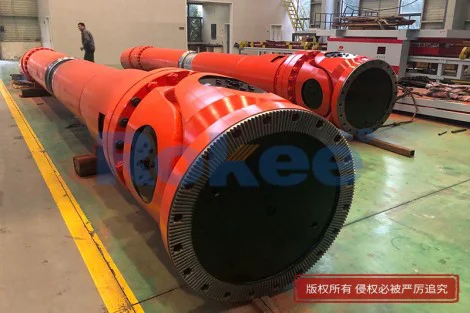
Diaphragm couplings have extremely wide application versatility, covering multiple industrial fields with different working condition requirements due to their adjustable structural performance and excellent comprehensive adaptability. They can be flexibly adapted to various transmission equipment from medium and low-speed heavy-load working conditions to high-speed precision transmission scenarios through structural optimization and parameter matching. In mechanical transmission systems that require high positioning accuracy and repeated start-stop operation, the zero-backlash transmission feature ensures accurate torque output and position synchronization, avoiding transmission errors caused by clearance accumulation. In variable-load and impact-prone working environments, the good misalignment compensation and impact buffering performance protect the core equipment from mechanical damage. Whether it is continuous operation of large industrial equipment or precision transmission of small and medium-sized mechanical devices, diaphragm couplings can maintain stable working performance, realizing universal adaptation to diversified industrial working conditions and becoming a universal high-performance transmission connecting component.
With the continuous upgrading of modern industrial mechanical equipment towards high precision, high efficiency and high stability, the application value and development potential of diaphragm couplings are constantly highlighted. Traditional coupling products are gradually unable to meet the increasingly stringent requirements of modern industrial production for transmission accuracy, operational stability and equipment durability. Diaphragm couplings, with their integrated advantages of zero backlash transmission, efficient misalignment compensation, vibration damping and noise reduction, long service life and maintenance-free operation, perfectly fit the development trend of modern mechanical transmission technology. Continuous optimization of structural design and material application further improves the comprehensive performance of diaphragm couplings, enhancing their adaptability to extreme working conditions such as high temperature, low temperature and complex load changes. In the future industrial transmission field, diaphragm couplings will continue to replace traditional coupling products on a large scale, becoming the mainstream choice of high-performance mechanical transmission connection solutions, and providing reliable technical support for the stable and efficient operation of various industrial mechanical systems.