Curved Tooth Coupling Optimizes Power Transmission Efficiency Of PU Sandwich Panel Line
In the modern construction and manufacturing industry, polyurethane (PU) sandwich panels have become an essential material due to their excellent thermal insulation, structural stability, lightweight properties, and environmental friendliness. These panels, composed of two outer facing layers and a rigid PU foam core, are widely applied in external walls, roofs, cold storage facilities, prefabricated buildings, and various industrial structures, driving the continuous advancement of PU sandwich panel production technology. The PU sandwich panel production line is a complex integrated system that integrates mechanical manufacturing, electronic control, and chemical material processing, involving multiple sequential processes such as uncoiling of facing materials, roll forming, preheating, PU foaming, lamination, curing, and precision cutting. Each link of the production line relies on stable and efficient power transmission to ensure the consistency of product quality, the continuity of the production process, and the optimization of overall operational efficiency. Among the numerous components that constitute the transmission system of the production line, the curved tooth coupling stands out as a core component that significantly optimizes power transmission efficiency. Its unique structural design, excellent performance characteristics, and high adaptability perfectly match the complex working conditions of PU sandwich panel production lines, effectively solving the pain points of traditional transmission components and providing reliable support for the high-efficiency operation of the entire production line.
To fully understand how curved tooth couplings optimize the power transmission efficiency of PU sandwich panel production lines, it is first necessary to clarify the working characteristics of the production line and the core requirements for its transmission system. A modern PU sandwich panel line is a continuous and automated production system that requires the coordinated operation of multiple subsystems, including the uncoiling system, roll forming system, foaming system, double-belt lamination system, curing system, cutting system, and conveying system. Each subsystem is driven by an independent power source, and the power needs to be accurately and stably transmitted to various executive components, such as motors, reducers, rollers, and cutting tools, to ensure that the entire production line operates in a synchronized and coordinated manner. The transmission system of the PU sandwich panel production line faces several key challenges in practical operation: first, due to the limitations of the production process and the overall layout of the equipment, the installation positions of each subsystem are often not on the same axis, resulting in angular, radial, and axial deviations between the driving shaft and the driven shaft; second, during long-term continuous operation, the equipment will generate vibration and thermal expansion, which will further change the relative position of the shafts, requiring the transmission components to have strong deviation compensation capabilities; third, the production process involves different load changes, such as the instantaneous impact load during the start-up of the conveying system and the stable heavy load during the lamination process, which requires the transmission components to have high load-bearing capacity and impact resistance; fourth, the production environment may have a certain amount of dust and temperature changes, which puts forward higher requirements for the wear resistance, corrosion resistance, and service life of the transmission components. Traditional transmission components, such as straight tooth couplings, often have shortcomings such as poor deviation compensation, uneven load distribution, high energy loss, and short service life in such working conditions, which easily lead to unstable power transmission, increased equipment failure rate, reduced production efficiency, and even affect the quality of PU sandwich panels. In this context, the curved tooth coupling, with its unique structural advantages and excellent performance, has become the preferred transmission component for PU sandwich panel production lines, effectively optimizing power transmission efficiency and solving the above-mentioned challenges.
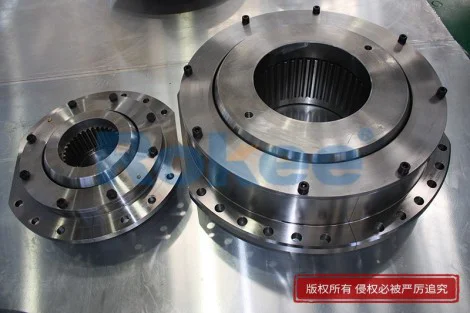
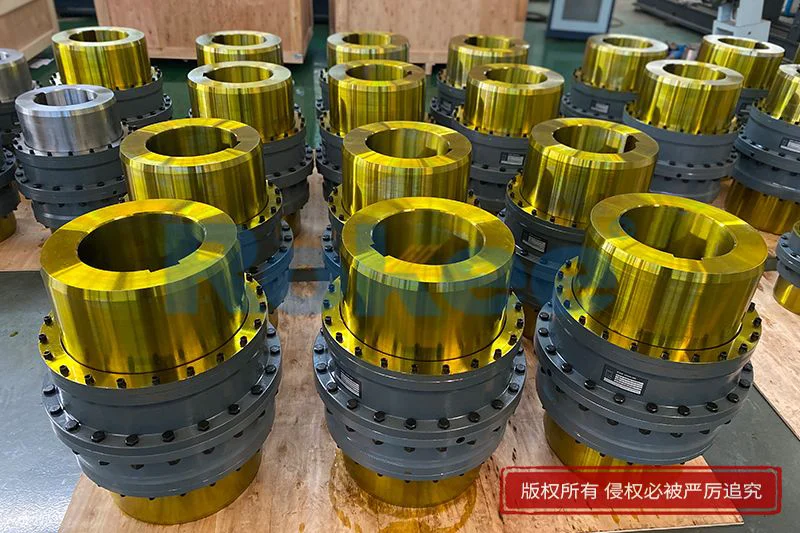
The curved tooth coupling, also known as the drum gear coupling, is an advanced gear coupling specially designed for heavy-duty and high-efficiency power transmission scenarios. Its core structural design is based on the improvement and optimization of traditional straight tooth couplings, with the most prominent feature being the spherical drum-shaped design of the external teeth. The external teeth of the coupling are processed into a spherical shape, with the center of the sphere coinciding with the axis of the gear, and the tooth clearance is slightly larger than that of ordinary straight tooth couplings. This special structural design not only enhances the load-bearing capacity and deviation compensation capability of the coupling but also significantly reduces energy loss during power transmission, thereby improving the overall transmission efficiency. The curved tooth coupling is mainly composed of external gear sleeves, internal gear rings, sealing components, and lubrication structures. The external gear sleeves are usually installed at the ends of the shafts that need to be connected, and the internal gear rings engage with the external gear sleeves to form a rigid yet flexible connection. When the driving shaft rotates, power is transmitted to the driven shaft through the precise meshing of the external and internal teeth, and the curved tooth profile ensures that the tooth surfaces maintain good contact even when there are relative displacements between the two shafts, avoiding edge contact and stress concentration.
One of the key reasons why curved tooth couplings can optimize the power transmission efficiency of PU sandwich panel production lines is their excellent deviation compensation capability. As mentioned earlier, the PU sandwich panel production line has multiple subsystems, and the axis misalignment between the driving and driven shafts is inevitable due to installation errors, equipment vibration, and thermal expansion. The curved tooth coupling can effectively compensate for angular, radial, and axial deviations between the shafts, which is far superior to traditional straight tooth couplings. Specifically, the allowable angular displacement of the curved tooth coupling can reach 1°30′, which is 50% higher than that of straight tooth couplings. This strong angular compensation capability can effectively offset the angular deviation caused by the installation of different subsystems in the production line, such as the deviation between the motor and reducer of the roll forming system, and the deviation between the reducer and the conveying roller. In terms of radial compensation, the curved tooth coupling achieves radial deviation compensation through the design of tooth flank clearance and tooth crest arc, and the allowable radial displacement depends on the modulus and number of teeth, which can fully meet the radial deviation requirements of each link of the PU sandwich panel production line. In terms of axial compensation, the spherical characteristics of the drum-shaped teeth allow a certain degree of relative sliding between the internal and external teeth in the axial direction, which can compensate for the axial displacement caused by thermal expansion of the equipment during long-term operation. This comprehensive deviation compensation capability avoids the additional load caused by axis misalignment on the transmission system, reduces the wear of bearings and tooth surfaces, and ensures the stable and efficient operation of power transmission, thereby reducing energy loss and improving the overall efficiency of the production line.
Another important factor that curved tooth couplings optimize power transmission efficiency is their high load-bearing capacity and uniform load distribution. The PU sandwich panel production line has different load requirements in different processes: the uncoiling system needs to bear the weight of the facing material rolls and the tension during uncoiling; the roll forming system needs to bear the pressure during the forming of the facing materials; the lamination system needs to maintain stable pressure to ensure the bonding quality between the facing materials and the PU core; the cutting system needs to bear the instantaneous impact load during the precision cutting of the panels. The curved tooth coupling has a larger tooth contact area compared to traditional straight tooth couplings, and the curved tooth profile enables the contact between the internal and external teeth to be line contact rather than point contact. This line contact distributes the transmitted torque over a larger surface area, reducing the stress per unit area, avoiding stress concentration, and significantly improving the load-bearing capacity of the coupling. Under the same inner gear ring outer diameter and coupling maximum outer diameter, the load-bearing capacity of the curved tooth coupling is 15% to 20% higher than that of the straight tooth coupling, and its nominal torque range can cover a wide range, which can fully meet the load requirements of each link of the PU sandwich panel production line. In addition, the uniform load distribution of the curved tooth coupling also reduces the wear of the tooth surfaces, prolongs the service life of the coupling, reduces the frequency of equipment maintenance and replacement, and ensures the continuity of the production line, thereby indirectly improving production efficiency.
The high transmission efficiency of curved tooth couplings is also a key factor in optimizing the power transmission of PU sandwich panel production lines. Relevant research and practical applications have shown that the transmission efficiency of curved tooth couplings can reach more than 99.7%, which is significantly higher than that of traditional transmission components. This high transmission efficiency is mainly due to the optimized structural design and precise processing technology of the coupling. The curved tooth profile is carefully designed to ensure smooth meshing between the internal and external teeth, reducing friction between the tooth surfaces. At the same time, the reasonable design of tooth clearance and the selection of high-quality lubrication materials further reduce friction loss during power transmission. In the PU sandwich panel production line, the high transmission efficiency of the curved tooth coupling means that more power output by the motor can be effectively transmitted to the executive components, reducing energy waste caused by friction and other factors. For example, in the conveying system of the production line, the curved tooth coupling can transmit the power of the motor to the conveying roller more efficiently, reducing the energy consumption required for the operation of the conveying system while ensuring the conveying speed. In the roll forming system, the high transmission efficiency ensures that the power is stably transmitted to the forming roller, making the forming process more stable, improving the forming quality of the facing materials, and reducing the waste of raw materials caused by unstable forming. In the long run, the high transmission efficiency of the curved tooth coupling can significantly reduce the energy consumption of the entire production line, reduce production costs, and achieve energy-saving and environmental protection production.
The excellent wear resistance and long service life of curved tooth couplings also provide a reliable guarantee for the long-term efficient operation of PU sandwich panel production lines. The tooth surfaces of the curved tooth coupling are usually treated with carburizing and quenching processes, which can significantly improve the hardness and wear resistance of the tooth surfaces, with the hardness reaching HRC58-62. This treatment makes the tooth surfaces able to withstand long-term friction and wear during power transmission, reducing the wear rate of the tooth surfaces and prolonging the service life of the coupling. In addition, the curved tooth coupling is equipped with a high-performance sealing structure, such as a double-lip skeleton oil seal, which can effectively prevent dust, oil, and other impurities from entering the internal gear meshing area, avoiding the wear and corrosion of the tooth surfaces caused by impurities, and further extending the service life of the coupling. The PU sandwich panel production line usually operates continuously for a long time, and the service life of the transmission components directly affects the production efficiency and maintenance costs. The long service life of the curved tooth coupling reduces the frequency of maintenance and replacement, reduces the downtime of the production line caused by maintenance, and ensures the continuous and stable operation of the production line. At the same time, the simple structure of the curved tooth coupling also makes its maintenance more convenient. Regular lubrication and inspection can ensure its stable performance, further reducing maintenance costs and improving the overall operational efficiency of the production line.
In practical applications, the curved tooth coupling is widely used in various key links of the PU sandwich panel production line, and its optimization effect on power transmission efficiency is reflected in every aspect of the production process. In the uncoiling system, the curved tooth coupling connects the motor and the uncoiling roller, effectively compensating for the axis deviation caused by the installation of the uncoiling equipment, ensuring the stable rotation of the uncoiling roller, and avoiding the uneven tension of the facing material during uncoiling, which may lead to material damage or uneven forming. In the roll forming system, the curved tooth coupling transmits the power of the motor to the forming roller, with high load-bearing capacity and stable power transmission, ensuring that the facing material is formed according to the set shape and size, improving the forming precision and efficiency. In the PU foaming and lamination system, the curved tooth coupling drives the operation of the lamination roller, maintaining stable pressure during the lamination process, ensuring the close bonding between the facing material and the PU foam core, improving the quality of the sandwich panel, and avoiding the waste of raw materials caused by poor bonding. In the cutting system, the curved tooth coupling connects the motor and the cutting tool, ensuring the precise and stable operation of the cutting tool, improving the cutting precision of the sandwich panel, reducing the dimensional error of the finished product, and improving the qualified rate of the product. In the conveying system, the curved tooth coupling drives the conveying roller to operate, ensuring the stable and efficient conveying of the finished sandwich panel, avoiding the accumulation of products and affecting the production progress.
The selection and installation of curved tooth couplings also have an important impact on their optimization effect on power transmission efficiency. In the selection process, it is necessary to accurately calculate the torque requirements of each link of the PU sandwich panel production line, and select the curved tooth coupling with the appropriate nominal torque, while reserving a certain safety factor (usually 1.5 to 2 times) to avoid the damage of the coupling due to instantaneous overload. At the same time, it is necessary to measure the actual axis deviation of the transmission system through laser alignment instruments, and select the curved tooth coupling with corresponding deviation compensation capabilities to ensure that the coupling can effectively compensate for the axis deviation. In terms of material selection, for the links with high temperature and more dust in the production line, such as the curing system, it is necessary to select the curved tooth coupling made of high-temperature resistant and corrosion-resistant materials to ensure its stable performance in harsh environments. In the installation process, it is necessary to ensure the accurate installation of the coupling, adjust the coaxiality of the driving and driven shafts as much as possible, and avoid excessive installation errors affecting the performance of the coupling. In addition, regular lubrication of the curved tooth coupling is essential. The selection of appropriate lubricating oil or grease can reduce the friction between the tooth surfaces, reduce energy loss, and prolong the service life of the coupling. Generally, thin oil lubrication can reduce wear to about 10% of grease lubrication, and can also take away the heat generated by meshing to prevent the degradation of material performance.
With the continuous development of PU sandwich panel production technology towards automation, intelligence, and high efficiency, the requirements for the transmission system of the production line are also constantly improving. The curved tooth coupling, as a core transmission component, is also constantly optimizing and upgrading to better adapt to the development needs of the production line. For example, through the optimization of the drum curvature curve, the deviation compensation capability and load distribution of the coupling are further improved; through the adoption of new materials and processing technologies, the wear resistance, corrosion resistance, and service life of the coupling are enhanced; through the integration of intelligent monitoring functions, the operating status of the coupling can be monitored in real time, and potential faults can be warned in advance, reducing the failure rate of the transmission system. These improvements make the curved tooth coupling play a more important role in optimizing the power transmission efficiency of the PU sandwich panel production line, promoting the upgrading and development of the entire PU sandwich panel industry.
In conclusion, the curved tooth coupling, with its unique structural design, excellent deviation compensation capability, high load-bearing capacity, high transmission efficiency, and long service life, has become an indispensable core component in the power transmission system of PU sandwich panel production lines. It effectively solves the pain points of traditional transmission components in the production line, such as poor deviation compensation, high energy loss, and short service life, optimizes the power transmission efficiency of the entire production line, ensures the stability and continuity of the production process, improves the quality of PU sandwich panels, reduces energy consumption and maintenance costs, and provides strong support for the high-efficiency, energy-saving, and stable operation of PU sandwich panel production lines. In the future, with the continuous progress of technology, the curved tooth coupling will be further optimized and upgraded, and its application in PU sandwich panel production lines will be more extensive and in-depth, making greater contributions to the development of the PU sandwich panel industry.