Elastic Sleeve Pin Coupling
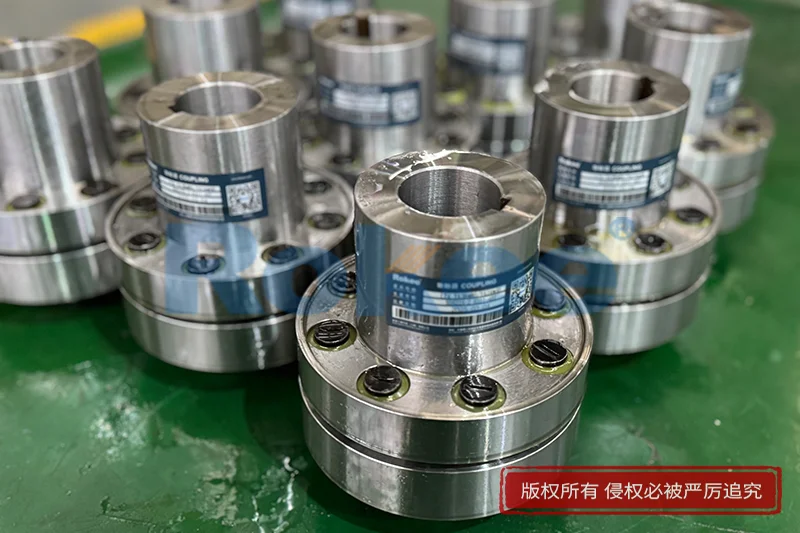
Elastic sleeve pin coupling is a widely adopted flexible transmission component in modern mechanical power systems, serving as a critical connecting device for coaxial rotating shafts in various industrial equipment. Boasting a compact and streamlined structural design, this coupling integrates metal pin transmission and elastic buffer functions, effectively realizing stable torque transmission between driving and driven shafts while accommodating minor mechanical misalignments generated during equipment operation. Its core functional advantage lies in the elastic deformation of flexible sleeve components, which can efficiently absorb instantaneous impact loads, dampen mechanical vibration, and reduce transmission noise during equipment start-up, operation, and load fluctuation. Compared with rigid coupling structures, it avoids rigid stress concentration and mechanical wear caused by shaft misalignment, while featuring simpler assembly and lower operational failure rates. Suitable for medium and low torque transmission scenarios with frequent start-stop and variable load conditions, it has become a mainstream choice for conventional mechanical transmission systems due to its balanced performance, reliable operation and convenient daily maintenance.
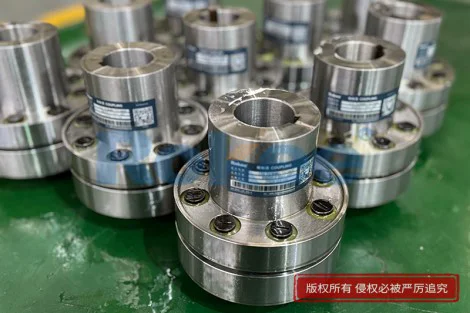
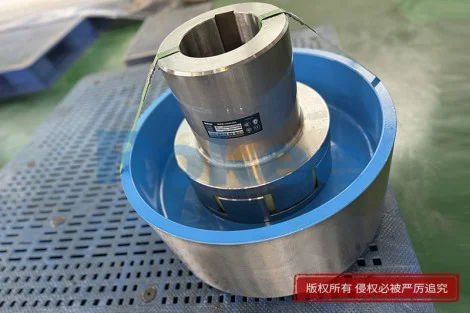
The overall structural composition of elastic sleeve pin coupling is concise and reasonable, with all components closely matched to form a complete power transmission system without redundant mechanical structures. The main components include two symmetrical half-coupling hubs, cylindrical metal pins and flexible elastic sleeves, all of which cooperate synergistically to complete power transmission and mechanical protection functions. The two half-coupling hubs are respectively fixed on the driving shaft and driven shaft through key connection structures, ensuring synchronous rotation with the shafts and stable bearing of torque load. Evenly distributed pin holes are reserved on the flange surfaces of the two half-couplings, and metal pins penetrate through the aligned pin holes to connect the two hubs as a whole. The elastic sleeves made of high-elasticity polymer materials are sleeved on the outer wall of each metal pin, filling the gap between the pin body and the inner wall of the pin hole. This structural design separates the rigid metal contact between pins and hubs, forming a flexible intermediate layer. All components adopt standardized modular design, which not only ensures the overall structural rigidity of the coupling during high-speed operation but also reserves elastic deformation space for buffering and misalignment compensation, laying a solid foundation for its stable and durable operation in complex working conditions.
The working principle of elastic sleeve pin coupling centers on flexible torque transmission and elastic deformation compensation, realizing efficient and safe power transmission through the coordinated movement of rigid and flexible components. During equipment operation, the driving half-coupling rotates with the power shaft, and the torque is transmitted to the metal pins through the contact of pin holes. The pins then transfer the torque to the elastic sleeves, and the elastic sleeves drive the driven half-coupling to rotate synchronously, thus completing the power transmission from the driving end to the driven end. In the process of torque transmission, the elastic sleeve will produce mild elastic compression and shear deformation according to the load change, which can effectively buffer the instantaneous impact force generated by equipment start-up, sudden load increase or mechanical jitter. When minor radial, angular or axial misalignment occurs between the two connected shafts due to assembly errors or operational mechanical deformation, the elastic deformation of the sleeve can adapt to the tiny displacement of the pins, avoiding rigid friction and extrusion between components. This flexible transmission mode eliminates the rigid constraint of traditional rigid couplings on shaft systems, reduces the alternating stress borne by shafts, bearings and other supporting parts, and greatly improves the operational stability of the entire transmission system.
Elastic sleeve pin coupling exhibits prominent performance advantages in practical industrial applications, making it adaptable to diverse conventional mechanical transmission scenarios. First of all, it has excellent vibration damping and noise reduction capabilities. The elastic sleeve material can absorb most of the high-frequency vibration generated during mechanical operation, isolate vibration transmission between shafts, and reduce the resonance phenomenon of the equipment system, thereby lowering operational noise and improving the working environment of mechanical equipment. Secondly, it has reliable misalignment compensation performance, which can adapt to small-range shaft misalignment caused by installation deviations, equipment aging and thermal deformation, avoiding additional mechanical wear and power loss caused by misalignment. In addition, the coupling has strong impact resistance, which can effectively disperse instantaneous impact loads during frequent start-stop and variable load operation, protect precision transmission parts from damage, and extend the overall service life of equipment. Its simple structure also brings outstanding stability, with fewer vulnerable parts and low failure probability in long-term continuous operation, which can meet the long-cycle operational requirements of most industrial mechanical equipment.
In terms of operational adaptability, elastic sleeve pin coupling can stably operate in various conventional working environments and meet the transmission needs of different working conditions. It is highly compatible with medium and low-speed rotating equipment, showing stable transmission efficiency and flexible buffering performance in frequent start-stop, positive and negative rotation, and intermittent operation scenarios, which is incomparable to many rigid couplings with poor impact resistance. For working conditions with slight load fluctuation and unstable instantaneous torque, the elastic deformation adjustment ability of the sleeve can always maintain uniform and stable torque transmission, avoiding power jitter and mechanical jamming. Meanwhile, the coupling has good environmental adaptability, capable of normal operation in conventional temperature and humidity environments, and its elastic components can maintain stable physical elasticity for a long time without obvious aging and deformation under daily industrial working conditions. It does not need auxiliary lubrication during operation, eliminating the maintenance cost and equipment pollution problems caused by lubricating oil, and realizing maintenance-free operation in conventional working environments, which greatly improves the convenience of equipment management.
The daily maintenance and replacement operation of elastic sleeve pin coupling is extremely convenient, which is an important reason for its wide popularization in industrial production. Among all components of the coupling, the elastic sleeve is the only vulnerable part, while the metal half-couplings and pins have high structural strength and long service life, and can work stably for a long time without frequent replacement. After long-term operation, the elastic sleeve will produce slight aging, wear or elastic fatigue due to repeated extrusion and deformation, resulting in reduced buffering performance. When partial performance attenuation is detected, workers only need to disassemble the coupling flange slightly, take out the worn elastic sleeves and replace them with new ones, without disassembling the overall shaft system and mechanical equipment. The whole replacement process is simple in operation, short in time-consuming and low in technical threshold, and will not affect the assembly accuracy and operational state of the original equipment. This convenient maintenance mode greatly reduces equipment downtime and maintenance labor costs, improves the operating rate of mechanical equipment, and brings significant economic benefits to industrial production.
Elastic sleeve pin coupling is widely applied in various civil and industrial mechanical transmission equipment, covering multiple fields of conventional mechanical manufacturing. It is commonly used in power connection of rotating equipment such as fans, water pumps, reducers, conveyors and general machine tools, and can perfectly adapt to the medium and low torque transmission needs of these equipment. In light industrial production and civil mechanical equipment, it ensures stable operation of equipment with frequent start-stop and low-load fluctuation, effectively reducing equipment failure rates. In general industrial production lines, it buffers the mechanical vibration generated by equipment linkage operation, protects the transmission system and supporting components, and improves the overall operational precision of the production line. In addition, it is also applicable to some mobile mechanical equipment and auxiliary transmission mechanisms, providing reliable flexible connection guarantee for various conventional transmission scenarios. Its versatile adaptability makes it one of the most widely used flexible coupling products in the field of general mechanical transmission.
With the continuous development of mechanical transmission technology, the application value and development potential of elastic sleeve pin coupling are constantly highlighted, and it still occupies an irreplaceable position in modern mechanical systems. Although various new high-precision coupling products have emerged in the market, this traditional flexible coupling still wins continuous favor in the industry by virtue of its simple structure, stable performance, low comprehensive cost and convenient maintenance. In the future development, with the continuous upgrading of elastic polymer materials, the wear resistance, aging resistance and elastic stability of its core flexible components will be further improved, enabling the coupling to adapt to more complex working conditions and longer service cycles. At the same time, with the continuous improvement of mechanical equipment's requirements for operational stability and energy conservation, the vibration damping and energy-saving advantages of elastic sleeve pin coupling will be further exerted. It will continue to serve as a basic and core transmission component in general mechanical equipment, providing reliable guarantee for the stable, efficient and low-consumption operation of various industrial mechanical systems.