Grid Flexible Coupling
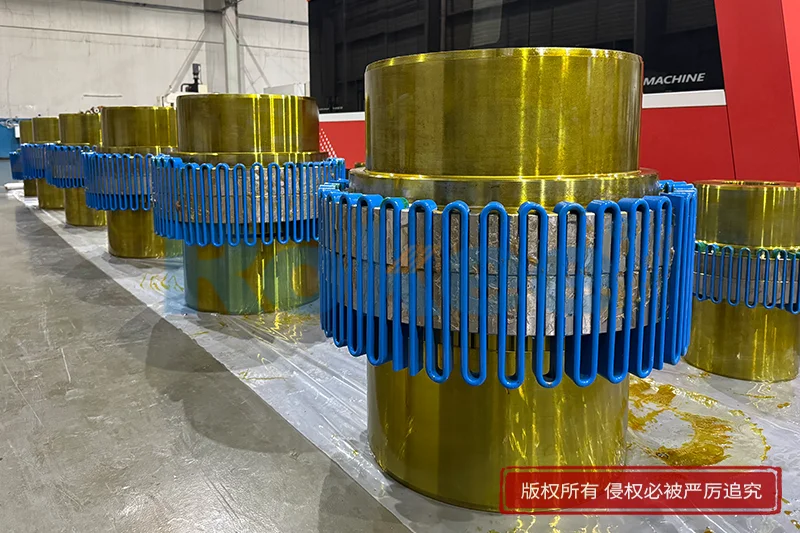
Grid flexible coupling stands as a pivotal mechanical transmission component widely adopted in modern industrial power systems, serving as a critical connecting medium between driving and driven mechanical shafts. Distinct from rigid coupling structures, it integrates unique elastic grid elements to achieve flexible torque transmission, effectively resolving common operational problems in mechanical systems such as shaft misalignment, vibration impact, and load fluctuation. Its core advantages lie in balanced power transmission efficiency and adaptive buffering performance, enabling it to maintain stable operation under complex and variable working conditions. By relying on the elastic deformation of grid structures, the coupling can compensate for axial, radial and angular deviations generated during equipment operation, while absorbing instantaneous shock torque and mechanical vibration. This dual functional design not only improves the overall operational stability of mechanical equipment but also reduces component wear and failure risks, extending the service life of transmission systems and supporting the reliable operation of various industrial power equipment.
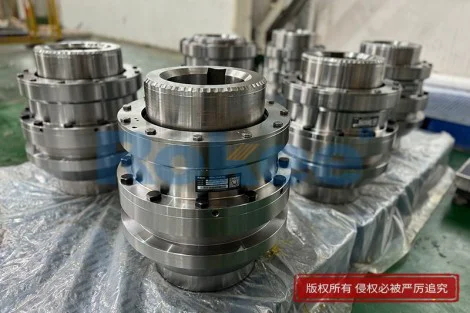
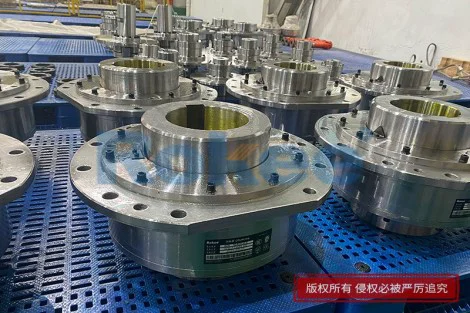
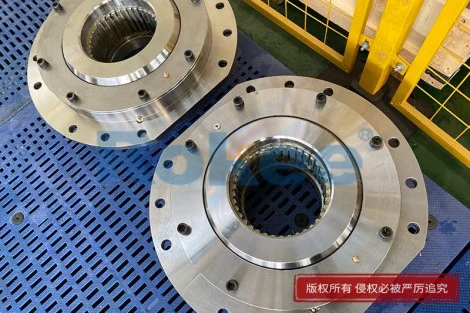
The basic structural composition of grid flexible coupling constitutes the foundation of its excellent flexible transmission performance, with the core assembly consisting of two symmetric half coupling hubs, a flexible grid spring and a protective sealing cover. The hub parts are designed with regular tooth grooves, which are perfectly matched with the curved grid spring structure to form a stable torque transmission channel. Different from traditional elastic couplings with single deformation mode, the grid spring adopts an integral serpentine structure, which can realize multi-directional uniform elastic deformation under load. The external protective cover plays a key role in operational protection, effectively preventing the grid spring from deviating or flying out due to centrifugal force during high-speed rotation, while isolating external dust, impurities and humid air to avoid structural corrosion and functional attenuation. In addition, the closed inner cavity of the protective cover can store lubricating media, which continuously reduces the friction coefficient between the grid spring and hub tooth grooves. This reasonable structural layout enables the coupling to coordinate rigid torque bearing and flexible buffering, ensuring both high-power transmission capacity and excellent deformation adaptability in long-term operation.
The working principle of grid flexible coupling is based on elastic deformation energy transfer and dynamic misalignment compensation, forming a stable and efficient power transmission mechanism. When the driving shaft starts to operate, rotational torque is first transmitted to the active half coupling hub, and the tooth groove structure of the hub drives the embedded grid spring to generate gradual elastic deformation. With the continuous input of power, the elastic grid evenly transmits torque to the driven half coupling hub, thereby realizing the synchronous operation of the entire transmission system. In this process, the unique progressive stiffness characteristic of the grid spring enables its deformation degree to adapt to the load change in real time. Under light load conditions, slight elastic deformation ensures precise and efficient torque transmission, while under heavy load or instantaneous impact load, large-range uniform deformation can disperse peak torque. Meanwhile, the multi-directional elastic tolerance of the grid structure can automatically offset the shaft position deviation caused by equipment installation errors, mechanical vibration and thermal expansion and contraction, avoiding additional shear force and extrusion force on the shaft system, and fundamentally reducing the loss of transmission components.
Grid flexible coupling possesses unique mechanical performance advantages that distinguish it from other types of flexible couplings, making it adaptable to diverse complex industrial working conditions. Its most prominent feature is the integration of high torque transmission capacity and excellent vibration damping performance, breaking the performance limitation of traditional couplings that cannot balance load bearing and buffering. Compared with elastomeric flexible couplings, it has stronger structural rigidity and fatigue resistance, able to withstand long-term high-load and high-frequency operation without permanent deformation or functional failure. Compared with gear rigid couplings, it retains superior flexible adaptability, effectively alleviating rigid impact and torsional vibration in the transmission process. In terms of load adaptation, the grid spring’s progressive contact design enables the contact area between the spring and hub teeth to increase synchronously with torque growth, maintaining stable contact pressure at all times and avoiding local stress concentration. This performance characteristic ensures that the coupling can operate stably in variable load scenarios, effectively reducing torsional vibration amplitude and absorbing instantaneous impact energy, and significantly improving the dynamic stability of the entire mechanical transmission system.
The adaptive misalignment compensation capability of grid flexible coupling is a core functional feature that guarantees the long-term reliable operation of mechanical systems. In actual industrial equipment operation, absolute coaxiality of driving and driven shafts cannot be achieved due to objective factors such as installation accuracy errors, equipment foundation settlement, thermal deformation during operation and long-term mechanical wear. These subtle deviations will generate continuous additional load on the shaft system, leading to accelerated wear of bearings, shafts and other core components, and even causing equipment vibration and abnormal noise. The grid flexible coupling solves this problem effectively through the multi-dimensional elastic deformation of its grid structure. The flexible grid can generate independent adaptive deformation in axial, radial and angular directions, accurately compensating for various misalignment errors without generating additional reaction force on the shaft system. This passive compensation mechanism requires no manual adjustment or auxiliary control, and can dynamically adapt to real-time changes of shaft deviation during equipment operation, maintaining the stability of the power transmission path and eliminating hidden dangers of equipment failure caused by shaft misalignment.
Vibration damping and shock absorption performance endows grid flexible coupling with outstanding application value in high-speed and variable-load mechanical systems. Mechanical vibration and instantaneous impact are inevitable in the start-stop process, load switching and high-speed operation of industrial equipment, and these dynamic impacts will cause torsional oscillation of the transmission shaft system, leading to fatigue damage of mechanical components and reduced operation accuracy. The serpentine grid spring structure of the coupling can evenly disperse instantaneous impact energy through the overall elastic deformation of the grid, avoiding local energy accumulation and sharp torque spikes. In the vibration suppression process, the friction damping generated between the grid spring and hub tooth grooves can effectively consume torsional vibration energy, reduce vibration transmission efficiency between the driving and driven ends, and suppress the resonance phenomenon of the shaft system. Relevant operational practice shows that this structural damping characteristic can significantly reduce the vibration level of the transmission system, protect precision mechanical structures from vibration damage, and ensure the stable and accurate operation of equipment in long-cycle and high-frequency working scenarios.
Grid flexible coupling exhibits strong environmental adaptability and operational durability in complex industrial scenarios, supporting stable operation under diverse harsh working conditions. Its core grid components adopt optimized material processing technology, with excellent oxidation resistance, wear resistance and structural stability, able to resist the erosion of conventional industrial environmental factors such as temperature change and dry-wet alternation. The fully sealed protective structure can effectively block the invasion of external dust, particulate impurities and corrosive media, preventing structural abrasion and corrosion failure of internal transmission parts. Different from flexible couplings with organic elastic elements that are prone to aging and deformation, the grid metal elastic structure has excellent anti-fatigue performance, and can maintain stable elastic deformation and torque transmission capacity after millions of times of load cycles. In addition, the lubrication system inside the coupling can form a stable protective oil film on the friction contact surface, reducing dry friction and abrasive wear between components. This comprehensive environmental adaptability and structural durability enable the coupling to maintain consistent mechanical performance in long-term continuous operation, greatly reducing equipment maintenance frequency and operational cost.
With the continuous upgrading of modern industrial intelligent manufacturing and high-efficiency power transmission systems, the application prospect of grid flexible coupling is becoming increasingly broad, and its technical optimization direction is more in line with the development trend of industrial equipment. At present, it has been widely applied in core transmission links of various mechanical equipment such as power transmission devices, fluid conveying equipment and rotating machinery. Its flexible transmission and dynamic protection characteristics can effectively match the high-speed, variable-load and high-stability operation requirements of modern industrial equipment. In the future, with the innovation of new structural designs and high-performance materials, grid flexible coupling will further improve its load-bearing efficiency, vibration damping accuracy and service life. The continuous optimization of its lightweight structure and adaptive performance will enable it to adapt to more refined and high-end industrial application scenarios, providing more reliable basic component support for the efficient, stable and intelligent operation of modern mechanical transmission systems.