Cardan Shaft
A cardan shaft, also known as a universal joint shaft or propeller shaft, is an indispensable mechanical component designed to transmit torque and rotational motion between two shafts that are not aligned coaxially. Its unique design allows it to accommodate angular misalignment, axial movement, and even radial displacement between the driving and driven shafts, making it a critical part in numerous industrial and transportation systems. Unlike fixed shafts that require precise alignment to function, the cardan shaft’s flexibility enables it to operate efficiently in complex working environments where shaft positions may change dynamically during operation. This versatility has made it a cornerstone in mechanical power transmission, spanning across automotive, industrial, agricultural, and marine sectors, among others. To fully understand the role and value of cardan shafts, it is essential to explore their structural composition, key performance characteristics, various types, and wide-ranging applications, as each aspect contributes to their functionality and adaptability in different scenarios.
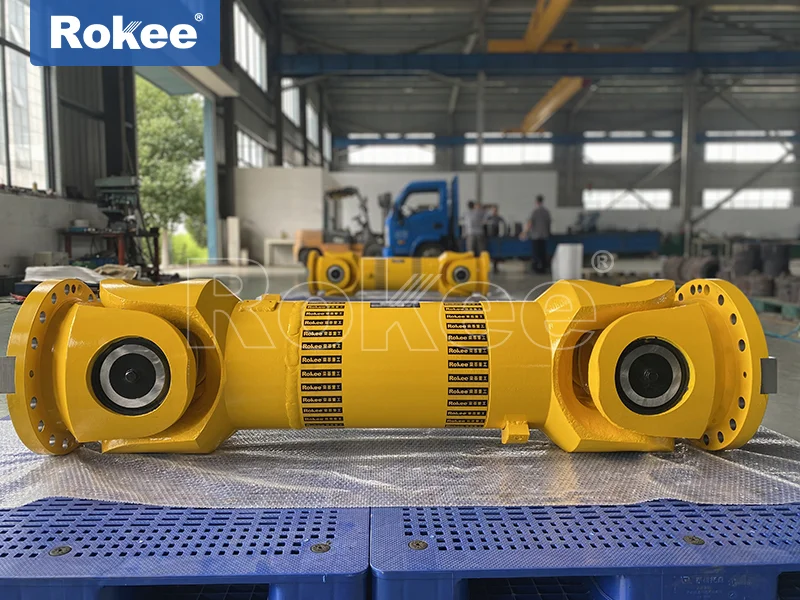
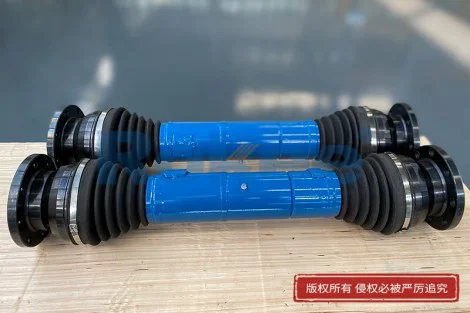
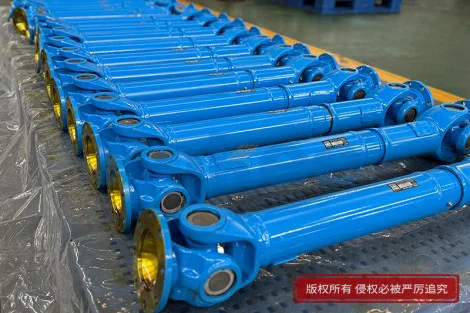
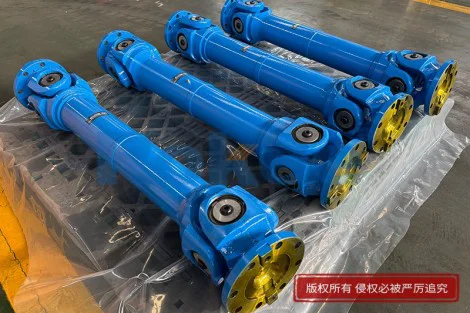
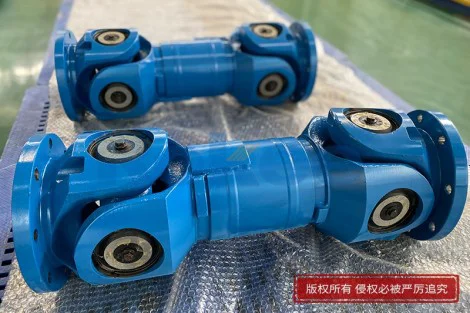
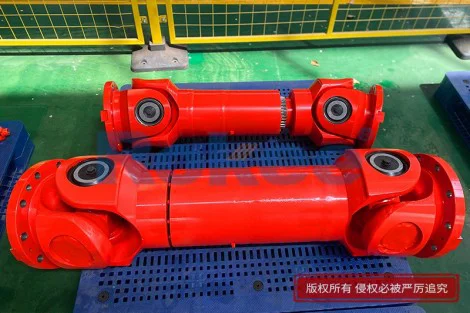
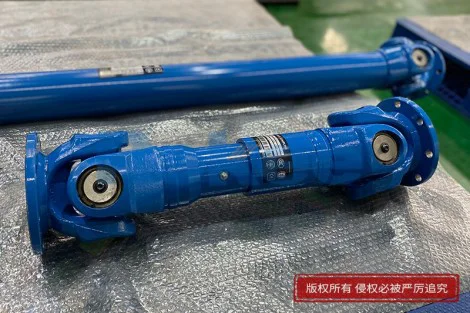
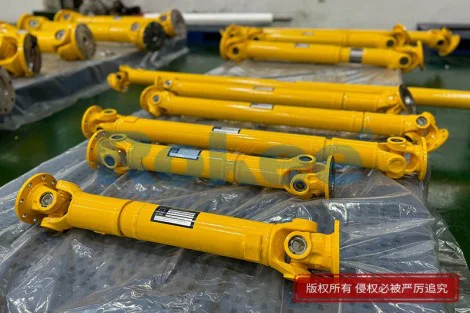
The structure of a cardan shaft is a sophisticated assembly of interconnected components, each serving a specific purpose to ensure smooth and reliable power transmission. At the core of every cardan shaft is the universal joint, often referred to as a U-joint, which is responsible for enabling angular flexibility between the connected shafts. The universal joint typically consists of a cross-shaped component called a spider, with four trunnions (or pins) extending from its center, each fitted with needle bearings. These bearings reduce friction between the spider and the yokes, allowing the spider to rotate freely within the yoke openings. The yokes are U-shaped components that connect the universal joint to the driving and driven shafts; they are usually attached via flanges or splines, ensuring a secure connection that can withstand high torque loads. Flanges are flat, circular components with bolt holes that facilitate rigid attachment to other machinery parts, while splined connections allow for axial movement between the yoke and the shaft, accommodating changes in length during operation. In longer cardan shafts, a center support bearing is often integrated to provide additional stability, reduce vibration, and prevent excessive deflection. This bearing is mounted on a bracket and supports the intermediate section of the shaft, ensuring smooth rotation even when the shaft is subjected to heavy loads or long spans. The shaft tube, the outer casing of the cardan shaft, encloses and protects the internal components, such as the universal joint and splined connections, from external contaminants like dust, dirt, and moisture. Made from high-strength materials like steel or aluminum, the shaft tube also plays a crucial role in transmitting torque, as it must be rigid enough to resist bending and torsion while remaining lightweight to minimize energy loss. Additionally, seals and dust covers are installed at the connections between components to retain lubrication and prevent the ingress of debris, which could cause premature wear and damage to the moving parts. All these components work in harmony to create a robust structure that can adapt to various misalignment conditions while maintaining efficient power transmission.
The performance of a cardan shaft is defined by several key characteristics that determine its suitability for different applications, including torque capacity, angular compensation, transmission efficiency, durability, and vibration control. Torque capacity is one of the most critical performance metrics, as it refers to the maximum amount of torque the shaft can transmit without suffering deformation or failure. This capacity is influenced by the material of the components, the design of the universal joint and shaft tube, and the size of the shaft. Cardan shafts used in heavy-duty applications, such as industrial machinery and large vehicles, are engineered to handle extremely high torque loads, often ranging from thousands to hundreds of thousands of Newton-meters, while those used in lighter applications, like small agricultural equipment or precision machinery, have lower torque capacities. Angular compensation is another vital performance feature, as it allows the cardan shaft to accommodate angular misalignment between the driving and driven shafts. Single universal joint cardan shafts can typically compensate for angular misalignment up to a certain degree, usually between 30 and 45 degrees, depending on the design. For applications requiring greater angular flexibility or constant velocity transmission, double universal joint configurations are used, which can compensate for misalignment in two planes and eliminate the uneven rotational speed that occurs with single joints. Transmission efficiency is a measure of how effectively the cardan shaft transfers power from the driving shaft to the driven shaft, with minimal energy loss. High-quality cardan shafts, with well-lubricated bearings and precision-machined components, can achieve transmission efficiencies of over 95%, ensuring that most of the input power is delivered to the driven equipment. Durability is essential for cardan shafts operating in harsh environments, such as industrial plants, construction sites, or marine vessels, where they are exposed to heavy loads, extreme temperatures, and corrosive substances. The use of high-strength materials, such as hardened steel, stainless steel, or aluminum alloys, combined with advanced manufacturing processes like heat treatment and precision machining, enhances the durability and service life of the shaft. Additionally, proper lubrication of the universal joint bearings is critical to reducing friction and wear, extending the component’s lifespan. Vibration control is another key performance aspect, as excessive vibration can cause noise, damage to other machinery components, and reduce the overall efficiency of the system. Cardan shafts are precision-balanced during manufacturing to minimize vibration, and the use of center support bearings in longer shafts further reduces oscillation, ensuring smooth operation even at high rotational speeds. These performance characteristics work together to make cardan shafts a reliable and efficient solution for power transmission in a wide range of applications.
Cardan shafts are available in various types, each designed to meet specific application requirements based on factors such as torque load, angular misalignment, rotational speed, and environmental conditions. The most common type is the single cardan shaft, also known as a Hooke’s joint shaft, which consists of a single universal joint connecting two yokes and a shaft tube. This type is simple in design, cost-effective, and suitable for applications with moderate angular misalignment and low to medium rotational speeds, such as small agricultural machinery, light-duty vehicles, and some industrial equipment. However, single cardan shafts have a limitation: they exhibit unequal angular velocity during rotation when misaligned, which can cause vibration and noise at high speeds. To address this issue, double cardan shafts, or constant velocity (CV) joint shafts, are used. A double cardan shaft consists of two universal joints connected by an intermediate shaft, with the two joints arranged such that the angular misalignment of one joint is offset by the other. This configuration eliminates the unequal velocity problem, providing smooth, constant velocity transmission even at high speeds and large angular misalignments. Double cardan shafts are commonly used in high-performance vehicles, front-wheel-drive cars, and industrial machinery that requires precise and smooth power transmission. Splined cardan shafts are another type, featuring a grooved shaft (splined shaft) and a mating sleeve with matching grooves. This design allows for axial movement between the shaft and the sleeve, making it suitable for applications where the distance between the driving and driven shafts changes during operation, such as in vehicles with suspension systems or industrial equipment with moving components. Slip yoke cardan shafts, a variation of splined shafts, consist of a splined inner shaft and an outer yoke with a splined hole, allowing the inner shaft to slide back and forth within the outer yoke to accommodate axial movement. This type is widely used in automotive drivetrains, where suspension travel causes changes in the distance between the engine and the axle. Another type is the ball cage cardan shaft, which uses a spherical outer ring, a star-shaped inner ring, and a set of steel balls held in place by a cage. This design provides constant velocity transmission even at large angular misalignments, making it ideal for high-speed applications such as passenger cars, precision machinery, and aerospace equipment. Additionally, cardan shafts can be classified based on their torque capacity into light-duty, medium-duty, and heavy-duty types. Light-duty cardan shafts are used in small equipment and vehicles, medium-duty shafts in commercial vehicles and general industrial machinery, and heavy-duty shafts in large industrial equipment, mining machinery, and marine vessels. Each type of cardan shaft is engineered with specific design features to optimize performance for its intended application.
The applications of cardan shafts are extensive and diverse, spanning across multiple industries where flexible power transmission between non-coaxial shafts is required. In the automotive industry, cardan shafts are a critical component of drivetrains, connecting the engine and transmission to the wheels. In rear-wheel-drive vehicles, a single or double cardan shaft transmits torque from the transmission to the rear axle, accommodating the angular misalignment between the transmission and the axle as the vehicle moves over uneven terrain. In four-wheel-drive and all-wheel-drive vehicles, multiple cardan shafts are used to distribute power to all four wheels, ensuring traction and stability in various driving conditions. Commercial vehicles, such as trucks, buses, and trailers, rely on heavy-duty cardan shafts to handle the high torque loads required for hauling heavy cargo, with designs that accommodate the large angular misalignments between the engine, transmission, and axles. The industrial sector is another major user of cardan shafts, with applications in manufacturing, mining, construction, and power generation. In manufacturing plants, cardan shafts are used in conveyor systems, assembly lines, and machine tools, connecting motors to conveyor belts, gears, and other components to ensure smooth and efficient operation. In mining and construction machinery, such as excavators, bulldozers, and cranes, heavy-duty cardan shafts transmit power to the wheels and working components, withstanding the harsh conditions of construction sites and mines, including heavy loads, dust, and vibration. In the steel and metal processing industry, cardan shafts are used in rolling mills, where they connect the motor to the rolling stands, transmitting high torque to shape metal sheets and bars. The agricultural industry also relies heavily on cardan shafts, particularly in farm machinery such as tractors, harvesters, and irrigation systems. In tractors, cardan shafts (often referred to as power take-off shafts) transmit power from the tractor’s engine to attached implements, such as plows, harrows, and mowers, accommodating the angular misalignment between the tractor and the implement as it moves over uneven farmland. Marine applications use corrosion-resistant cardan shafts to transmit power from the ship’s engine to the propeller, with designs that handle the axial and angular movements caused by wave action and hull flexing. Additionally, cardan shafts are used in aerospace equipment, precision machinery, and renewable energy systems, such as wind turbines, where they transmit power from the turbine to the generator, accommodating the dynamic misalignments that occur during operation. The versatility of cardan shafts, combined with their robust design and reliable performance, makes them an essential component in modern mechanical systems, enabling efficient power transmission in applications where fixed shafts would be impractical or ineffective.
In summary, the cardan shaft is a versatile and essential mechanical component that plays a critical role in power transmission between non-coaxial shafts. Its sophisticated structure, composed of universal joints, yokes, shaft tubes, and other supporting components, enables it to accommodate angular misalignment, axial movement, and radial displacement, while its key performance characteristics—including high torque capacity, efficient transmission, durability, and vibration control—ensure reliable operation in a wide range of conditions. The various types of cardan shafts, from single and double universal joint designs to splined and ball cage configurations, are tailored to meet the specific requirements of different applications, spanning automotive, industrial, agricultural, marine, and aerospace sectors. As technology advances, cardan shafts continue to be optimized with new materials and manufacturing processes, enhancing their performance, durability, and efficiency. Whether in a small agricultural implement, a heavy-duty industrial machine, or a high-performance vehicle, the cardan shaft remains a fundamental component that enables the smooth and reliable transmission of power, contributing to the functionality and efficiency of modern mechanical systems. Its ability to bridge the gap between non-aligned shafts makes it an irreplaceable part of countless applications, highlighting its importance in the world of mechanical engineering and power transmission.