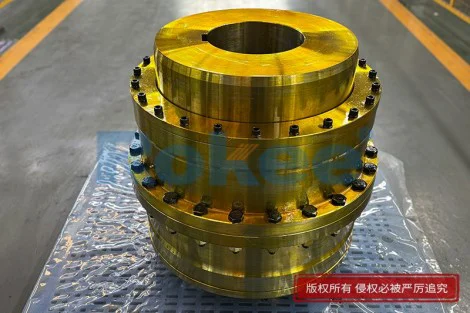
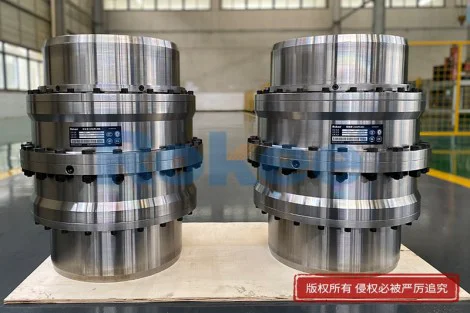
Drum Coupling
Drum coupling is a crucial mechanical component widely used in industrial transmission systems, serving as a key connection between power input shafts (such as those from motors or reducers) and working shafts (such as those from drums, pumps, or other industrial equipment). Its primary function is to transmit torque stably, compensate for relative displacements between two shafts, and protect the entire transmission system from damage caused by overload, vibration, or misalignment. Unlike ordinary couplings, drum coupling is specially designed to adapt to various harsh industrial environments, especially those requiring heavy-duty transmission, high stability, and long-term reliable operation. To fully understand the value and application of drum coupling in industrial production, it is essential to explore its structure, performance characteristics, different types, and practical application scenarios in detail.
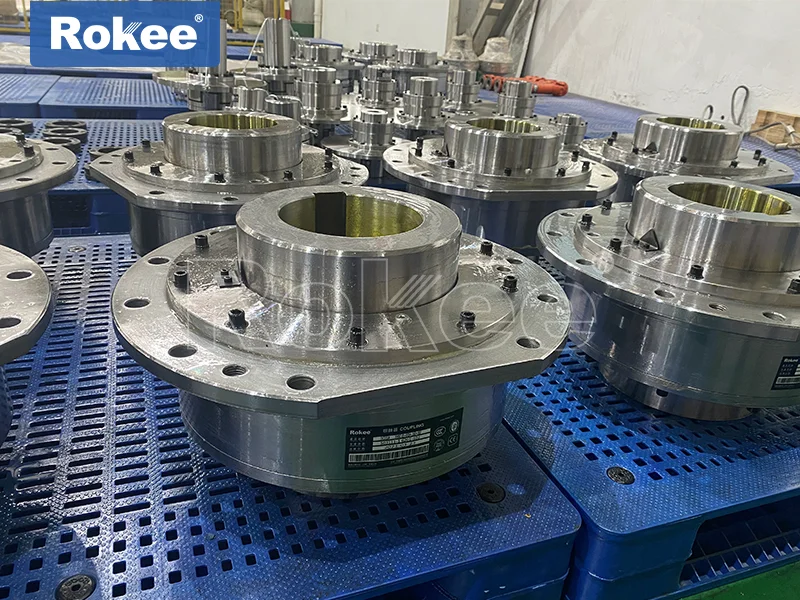
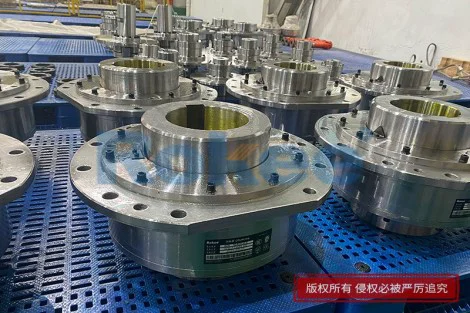
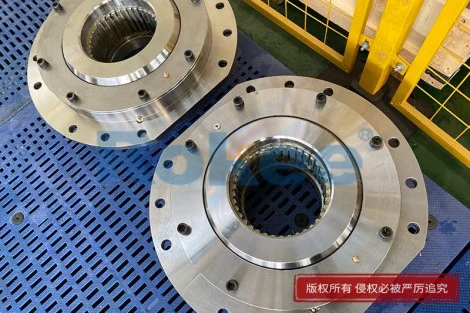
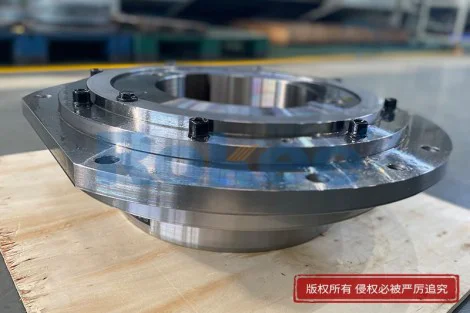
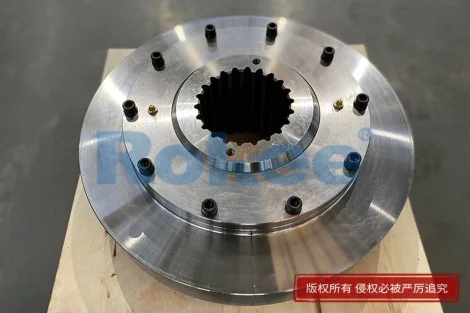
The structure of drum coupling is relatively compact but scientifically designed, consisting of several core components that work together to achieve efficient torque transmission and displacement compensation. The basic structure of most drum couplings includes an outer gear sleeve, an inner gear ring, a semi-coupling, a sealing assembly, and fasteners, with some special types adding additional components according to specific application needs. The outer gear sleeve is one of the core force-transmitting components, whose outer circle is processed into drum-shaped teeth—this drum-shaped design is the key feature that distinguishes drum coupling from other types of couplings. The tooth tips of the outer gear sleeve are arc-shaped, and the tooth surface is processed into a convex arc, which allows the coupling to adapt to angular, radial, and axial displacements between the two shafts during operation. The outer gear sleeve is usually connected to the driving or driven shaft through a key connection or an expansion sleeve connection; the expansion sleeve connection is often used in scenarios requiring higher alignment accuracy, as it can achieve a keyless interference fit through radial expansion, avoiding damage to the shaft diameter while ensuring a firm connection. The inner gear ring is matched with the outer gear sleeve, with internal teeth processed on its inner hole that mesh perfectly with the drum-shaped teeth of the outer gear sleeve. The inner gear ring is fastened to the semi-coupling through high-strength bolts, and its structure can be integral or split according to the type of coupling—split inner gear rings are more convenient for disassembly and maintenance, as they can be installed or removed without moving the main or driven equipment. The semi-coupling serves as the connecting end component of the coupling, with one end connected to the inner gear ring via bolts and the other end connected to the shaft extension of the motor, reducer, or working machine. The end face of the semi-coupling is usually equipped with a positioning spigot to ensure the alignment accuracy during installation, and some models are integrated with a flange to adapt to flange-connected equipment. The sealing assembly is composed of sealing rings and sealing end covers, usually made of nitrile rubber (NBR) or polyurethane materials. After filling with lubricating grease (such as lithium-based grease), the sealing assembly can prevent rust on the tooth surface, avoid dust and other impurities from entering the meshing area, and reduce wear between the teeth, thereby extending the service life of the coupling. Fasteners mainly include high-strength bolts, nuts, and washers, which are used to fasten the inner gear ring and the semi-coupling; some models use fitted bolts that have both positioning and force-transmitting functions, ensuring the stability of the entire coupling structure during high-torque transmission. In addition, some special drum couplings are equipped with additional components, such as limit covers to restrict axial movement, wear indicators to monitor the service status of the coupling, or brake wheels to integrate torque transmission and braking functions, further expanding the application scope of the coupling.
The performance characteristics of drum coupling are closely related to its structural design, and its excellent comprehensive performance makes it widely used in various industrial fields. High torque transmission capacity is one of the most prominent advantages of drum coupling. Due to the reasonable drum-shaped tooth profile design, the meshing area between the inner and outer teeth is large, which can effectively distribute the load, so it can withstand large torque and radial load. Compared with straight-tooth couplings of the same size, the bearing capacity of drum coupling is generally 15% to 25% higher, and it can stably transmit torque ranging from several hundred N·m to thousands of kN·m, which is suitable for heavy-duty transmission scenarios such as metallurgy, mining, and lifting. The strong displacement compensation capacity is another core performance of drum coupling. The drum-shaped tooth surface allows the outer gear sleeve to slide along the tooth profile of the inner gear ring, which can effectively compensate for angular, radial, and axial displacements between the two shafts caused by installation errors, equipment vibration, or thermal expansion and contraction. Generally, the maximum angular displacement compensation can reach 1.5° to 3°, the radial displacement compensation can reach 0.2mm to 6mm, and the axial displacement compensation can reach ±3mm to ±10mm (specific values vary according to the model and specification). This displacement compensation capacity can effectively reduce the additional load caused by shaft misalignment, reduce the wear of bearings and other components, and improve the stability and service life of the entire transmission system. High transmission efficiency is also an important performance feature of drum coupling. The meshing between the drum-shaped teeth is smooth, and the friction coefficient between the tooth surfaces is small. After reasonable lubrication, the transmission efficiency can reach more than 99.7%, which means that the energy loss during the torque transmission process is minimal, helping to improve the energy utilization efficiency of the entire industrial equipment. In addition, drum coupling also has the advantages of low noise, long service life, and convenient installation and maintenance. The drum-shaped tooth design avoids the edge contact and stress concentration of straight teeth under misalignment conditions, which not only reduces the noise generated during operation but also reduces tooth wear and pitting, extending the service life of the coupling. The outer gear sleeve of the drum coupling is usually designed with a trumpet-shaped tooth end, which makes the assembly and disassembly of the inner and outer teeth very convenient, simplifying the installation and maintenance process and reducing the operation difficulty and maintenance cost.
There are various types of drum couplings, which are classified according to different standards such as structural design, transmission form, and application scenarios. Each type has its own unique structural characteristics and applicable scope, which can meet the diverse needs of different industrial transmission systems. According to the structural form, drum couplings can be divided into drum gear couplings, spherical hinge drum couplings, spherical roller drum couplings, and ball and drum gear drum couplings. Drum gear couplings are the most common type, which adopt drum-shaped tooth design and are mainly composed of inner gear rings, outer gear sleeves, semi-couplings, and sealing components. They are suitable for general heavy-duty transmission scenarios and can compensate for multi-directional displacements, widely used in pumps, fans, and metallurgical equipment. Spherical hinge drum couplings have a connecting flange with an inner spherical surface and a spherical semi-coupling sleeve with an outer spherical surface, and the internal structure usually adopts a spline sleeve design. They transmit torque through a specially designed key bar, can withstand large torque and radial load, and the maximum angular displacement compensation can reach 3°, with a safe and reliable structure, suitable for equipment with large angular displacement requirements such as cranes. Spherical roller drum couplings are composed of a jacket with a connecting flange, spherical rollers, semi-couplings, inner and outer cover plates, and a sealing system. They have strong torque transmission capacity and radial load-bearing capacity, and the connection between the coupling and the reducer output shaft often adopts an involute spline pair design, which improves the connection accuracy and stability, suitable for high-speed and heavy-duty transmission scenarios. Ball and drum gear drum couplings adopt a spherical drum tooth design on the outer sleeve, which has low requirements for shafting installation accuracy, large transmission torque, and strong overload capacity. Its bearing capacity is 30% higher than that of ordinary drum gear couplings of the same size, and the innovative spherical sealing technology can maintain excellent lubrication performance and greatly extend the service life, suitable for harsh working environments such as heavy-duty cranes. According to the presence or absence of a brake device, drum couplings can be divided into ordinary drum couplings and drum couplings with brake wheels. Drum couplings with brake wheels integrate the functions of torque transmission and braking, and the brake wheel is integrally formed or bolted with the semi-coupling. The outer edge of the brake wheel is provided with a braking surface, which can be directly matched with caliper disc or drum brakes for use, suitable for equipment that requires frequent start-stop and braking, such as hoists, elevators, and mine hoists. According to the connection form, drum couplings can be divided into basic type, split type, and intermediate shaft type. The basic type has a compact structure, with an integral inner gear ring, suitable for occasions where the alignment accuracy of the two shafts is good and the installation space is limited. The split type has a split inner gear ring, which can be disassembled and maintained without moving the main and driven equipment, suitable for equipment with frequent maintenance and narrow installation space. The intermediate shaft type adds an intermediate shaft and an intermediate sleeve on the basis of the basic type, which can greatly extend the transmission distance between the two shafts while retaining good displacement compensation capacity, suitable for transmission systems with a large distance between the main and driven equipment, such as long-distance belt conveyors and large crane traveling mechanisms.
The wide range of applications of drum coupling is closely related to its excellent performance and diverse types, covering almost all fields of heavy industry and general industry, especially in scenarios requiring heavy-duty transmission, high stability, and strong adaptability. In the lifting machinery field, drum coupling is one of the core components of the drum crane mechanism, which connects the power input shaft of the reducer with the drum, transmits torque, and restricts the axial movement of the drum at the same time. It is widely used in various cranes such as bridge cranes, gantry cranes, and hoists, and can adapt to the frequent start-stop, heavy load, and large displacement working conditions of cranes, ensuring the safe and stable operation of the lifting system. In the metallurgical industry, drum coupling is widely used in transmission systems of metallurgical equipment such as rolling mills, blast furnaces, and converters. These equipment often work under harsh conditions such as high temperature, high load, and strong vibration, and drum coupling can withstand large torque and radial load, compensate for the displacement caused by thermal expansion and contraction of the shaft, and ensure the stable operation of the metallurgical production line. For example, in the rolling mill transmission system, drum coupling connects the motor, reducer, and rolling mill roll, transmitting the torque required for rolling, and its displacement compensation capacity can effectively offset the alignment error caused by the deformation of the equipment during operation, reducing the wear of the roll and bearings. In the mining industry, drum coupling is used in the transmission systems of mining equipment such as crushers, conveyors, and mine hoists. These equipment need to transmit large torque in harsh environments with dust, humidity, and large vibration, and drum coupling's strong load-bearing capacity and sealing performance can ensure long-term reliable operation, reducing the frequency of equipment failure and maintenance costs. In the petroleum and chemical industry, drum coupling is used in the transmission systems of pumps, compressors, and reaction kettles. It can adapt to corrosive, high-pressure, and high-temperature working environments (after special material treatment), and its smooth transmission performance and good sealing can prevent the leakage of media and ensure the safety and efficiency of chemical production. In the general machinery field, drum coupling is widely used in fans, water pumps, compressors, and other equipment, which can meet the basic torque transmission needs of these equipment, and its displacement compensation capacity can reduce the impact of installation errors and equipment vibration on the transmission system, improving the stability and service life of the equipment. In addition, with the development of industrial technology, drum coupling is also gradually applied in emerging fields such as new energy, aerospace, and intelligent manufacturing, providing reliable transmission support for the upgrading and development of these industries.
In practical application, the selection and use of drum coupling need to be based on specific working conditions, including the magnitude of transmitted torque, the speed of the shaft, the type and magnitude of displacement between the two shafts, the working environment (temperature, humidity, corrosion, etc.), and the installation space. For example, in heavy-duty, low-speed working conditions such as metallurgy and mining, drum gear couplings or spherical roller drum couplings with strong load-bearing capacity and large displacement compensation should be selected; in scenarios requiring frequent maintenance and narrow installation space, split-type drum couplings should be selected; in equipment requiring integrated braking function, drum couplings with brake wheels should be selected. At the same time, attention should be paid to the installation and maintenance of drum coupling to ensure its performance. During installation, the alignment accuracy of the two shafts should be adjusted to avoid excessive misalignment leading to increased wear and reduced service life; during use, regular lubrication should be carried out to ensure the smooth meshing of the teeth and reduce friction; regular inspection should be carried out to check the wear of the teeth, the tightness of fasteners, and the integrity of the sealing assembly, and timely replacement of damaged components to avoid equipment failure caused by coupling damage. In addition, according to the specific needs of the working environment, drum couplings made of special materials can be selected, such as stainless steel drum couplings for corrosive environments, and high-temperature resistant materials for high-temperature environments, to further improve the adaptability and service life of the coupling.
With the continuous development of industrialization and the continuous upgrading of industrial equipment, the performance requirements of drum coupling are also constantly improving. In the future, drum coupling will develop in the direction of high torque, high speed, high precision, and intelligence. Through the optimization of tooth profile design, the use of new materials, and the integration of intelligent monitoring technology, the load-bearing capacity, transmission efficiency, and service life of drum coupling will be further improved, and it will be able to adapt to more complex and harsh working environments. At the same time, with the popularization of energy conservation and environmental protection concepts, energy-saving and environmentally friendly drum couplings will also become a research focus, reducing energy loss during transmission and reducing environmental pollution caused by lubricant leakage. In conclusion, drum coupling, as an important part of industrial transmission systems, plays an irreplaceable role in ensuring the stable operation of industrial equipment, improving production efficiency, and reducing maintenance costs. Its unique structural design, excellent performance characteristics, diverse types, and wide application scenarios make it an indispensable core component in modern industrial production, and it will continue to play a more important role in the future industrial development process.
Coupling Categories
-
![Drum Coupling Specification]()
Drum Coupling Specification
Oct 8, 2026 -
![Radial Load Drum Coupling]()
Radial Load Drum Coupling
Sep 2, 2026 -
![Overhead Crane Drum Coupling]()
Overhead Crane Drum Coupling
Sep 2, 2026 -
![Crane Drum Coupling]()
Crane Drum Coupling
Aug 26, 2026 -
![Bridge Crane Drum Coupling]()
Bridge Crane Drum Coupling
Aug 14, 2026 -
![Spherical Roller Drum Coupling]()
Spherical Roller Drum Coupling
Aug 7, 2026 -
![Crown Gear Drum Coupling]()
Crown Gear Drum Coupling
Jul 24, 2026 -
![Curved Tooth Drum Coupling]()
Curved Tooth Drum Coupling
Jul 24, 2026