Telescopic Universal Coupling

Telescopic universal coupling is a versatile and high-performance mechanical transmission component widely adopted in modern industrial transmission systems, uniquely engineered to address the limitations of traditional coupling structures. Unlike conventional universal couplings that only adapt to angular misalignment between shafts, this integrated device combines universal joint transmission technology with a telescopic sliding structure, enabling simultaneous compensation for angular deviation, axial displacement, and minor radial offset during power operation. Its core design integrates flexible angle adjustment and variable-length axial adaptation, allowing it to maintain stable torque and rotary motion transmission in complex and dynamic operating environments. With outstanding structural flexibility, load-bearing stability, and environmental adaptability, it has become an indispensable core component for mechanical equipment that requires frequent position changes, vibration displacement, and dynamic shaft distance adjustment, covering various light and heavy industrial machinery scenarios to optimize transmission efficiency and reduce mechanical operation failure risks.
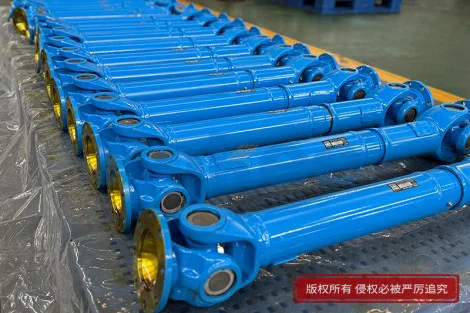
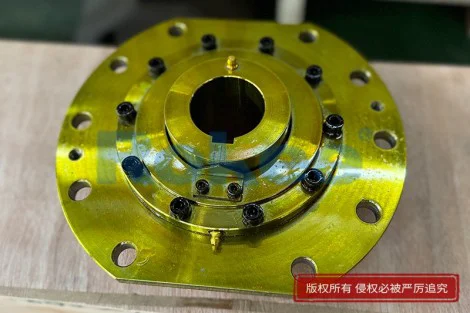
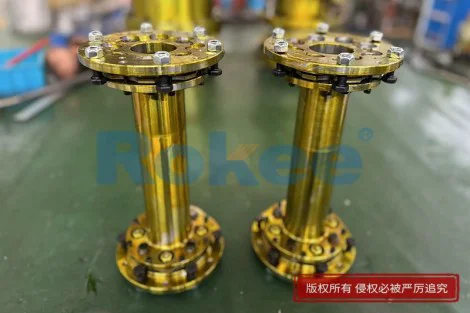
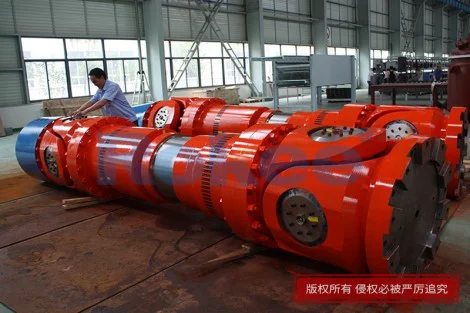
The structural composition of telescopic universal coupling adopts a modular integrated design, with each functional unit cooperating closely to realize dual compensation capabilities of angle and axial displacement. The main structure consists of two symmetric universal joint assemblies and a middle telescopic spline transmission mechanism, forming a complete closed-loop transmission system. The universal joint assemblies at both ends are composed of precision-machined yokes and cross shaft bearing structures, where the cross shaft connects the upper and lower yokes to form a flexible rotating pair. This structure allows the coupling to tolerate a certain range of angular deflection between the driving shaft and driven shaft, ensuring continuous power output even when the two shafts are not strictly collinear. The middle core part is the telescopic mechanism made of matching internal and external spline shafts, with tightly meshed spline teeth that can transmit high torque while supporting free axial sliding. All structural parts are processed with high-precision machining technology to ensure tight fitting tolerance, uniform force distribution, and avoid loose transmission or jamming problems during long-term operation. The overall compact structure effectively saves installation space while maintaining excellent transmission stability.
The working principle of telescopic universal coupling is based on the complementary kinematic characteristics of universal joint deflection transmission and spline telescopic adjustment, realizing adaptive power transmission under dynamic working conditions. In the operating state, the universal joint assemblies on both sides undertake the angular compensation function. When the equipment runs and causes the driving and driven shafts to produce angular deviation due to vibration, mechanical swing or installation deviation, the cross shaft of the universal joint can rotate flexibly in multiple directions, converting the offset rotary motion into stable synchronous rotation and avoiding torque loss caused by shaft misalignment. Meanwhile, when the axial distance between the two shafts changes due to mechanical stretching, shrinking or position movement, the internal and external spline structures of the middle telescopic part will slide relatively along the axial direction. This automatic length adjustment eliminates additional axial stress generated by shaft position changes, preventing structural deformation and component wear caused by rigid extrusion. The two functional structures operate synchronously without mutual interference, ensuring that torque transmission remains efficient and continuous throughout the dynamic displacement process of the equipment.
Telescopic universal coupling exhibits remarkable performance advantages over traditional coupling products, making it more adaptable to complex industrial operating conditions. First of all, it has comprehensive displacement compensation capability, breaking through the single compensation limitation of ordinary couplings, and can cope with angular, axial and slight radial misalignment at the same time, greatly reducing the installation and operation accuracy requirements of mechanical transmission systems. Secondly, the spline telescopic structure has a large adjustable stroke, which can adapt to frequent and large-range axial distance changes of equipment, with strong structural flexibility. In terms of transmission performance, the precise meshing of spline teeth ensures high torque transmission efficiency, no power loss during operation, and stable rotary speed output. In addition, the integral rigid structure with surface strengthening treatment gives the coupling excellent wear resistance and impact resistance, enabling it to withstand instantaneous impact load and long-term continuous operation. It also features low operation noise, small vibration and stable dynamic balance, which can effectively improve the overall operating smoothness of mechanical equipment and extend the service life of the entire transmission system.
The material selection and processing technology of telescopic universal coupling directly determine its service performance and service life, and high-standard manufacturing processes are adopted for core components. The main body and key load-bearing parts are made of high-strength alloy materials with excellent mechanical properties, which have high tensile strength, yield strength and fatigue resistance, and can maintain stable structural performance under long-term high-load operation. The spline shaft and sleeve, as the core telescopic transmission parts, undergo precision broaching and grinding processing to ensure smooth spline tooth surface and accurate meshing clearance, avoiding sliding stagnation or abnormal wear. The surface of key friction parts is treated with quenching and tempering and surface hardening processes to improve surface hardness and wear resistance, reducing friction loss during telescopic movement. The bearing components inside the universal joint are made of high-precision wear-resistant materials, with good rotational flexibility and pressure resistance. All parts are strictly inspected for dimensional tolerance and dynamic balance after processing to eliminate structural defects, ensuring that each finished product can maintain consistent and reliable performance in various working environments.
Telescopic universal coupling is widely applied in multiple industrial fields due to its superior comprehensive performance, covering light industry, heavy industry and automated mechanical equipment. In textile and packaging machinery, it is used in spinning, weaving and packaging transmission systems, adapting to the frequent position adjustment and small vibration displacement of high-speed operating equipment to ensure stable and continuous production transmission. In woodworking and metallurgical machinery, it bears medium and high torque transmission tasks, coping with the axial displacement and angular deviation generated by equipment operation and mechanical stretching, avoiding transmission failure caused by shaft position changes. In factory automated production lines and conveying equipment, the coupling adapts to the dynamic position adjustment of mobile transmission structures, realizing efficient power transmission between movable and fixed shafts. It is also commonly used in engineering machinery, printing equipment and general industrial transmission devices, solving various misalignment problems in mechanical transmission, greatly improving the stability and reliability of equipment operation, and reducing daily maintenance frequency and operating costs.
In actual industrial application, the correct use and daily maintenance of telescopic universal coupling are crucial to maintain its long-term stable performance and extend its service life. During equipment assembly, it is necessary to ensure reasonable installation clearance of the coupling, avoid excessive tension or compression of the telescopic structure in the static state, and reserve a sufficient telescopic stroke for dynamic operation. Regular lubrication maintenance is required during daily use, and high-quality lubricating grease should be filled into the spline meshing part and universal joint bearing part regularly to reduce friction and wear between moving parts and prevent dry friction damage. It is necessary to regularly check the operating state of the coupling, observe whether there is abnormal vibration, noise or telescopic jamming, and timely inspect and replace worn parts once abnormal conditions are found. In addition, avoid long-term overload operation of the coupling, as excessive torque will cause spline tooth deformation or bearing damage. Standardized use and scientific maintenance can effectively maintain the transmission efficiency of the coupling, reduce failure rate, and ensure the long-term stable operation of the mechanical transmission system.
With the continuous upgrading of modern industrial machinery towards high speed, high precision and high automation, the technical optimization and application prospects of telescopic universal coupling are becoming increasingly broad. At present, the industry is constantly optimizing its structural design, committed to developing more compact, lightweight and high-load products to adapt to the miniaturization and high-power development trend of modern mechanical equipment. The innovation of material technology and processing technology is also further improving the wear resistance, fatigue resistance and environmental adaptability of the coupling, enabling it to adapt to more harsh working environments such as high temperature, dust and heavy load. In the future, with the continuous expansion of intelligent manufacturing and automated production scenarios, telescopic universal coupling, as a key flexible transmission component, will be applied in more emerging industrial fields. Its powerful adaptive transmission performance will continue to solve various complex shaft transmission problems for mechanical equipment, providing reliable basic support for the efficient and stable operation of modern industrial systems.