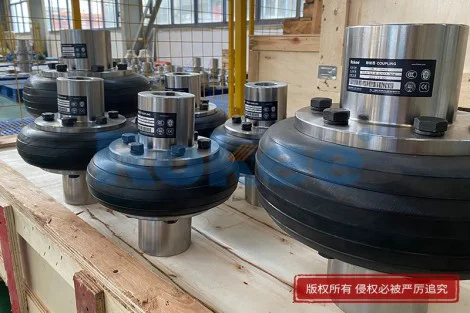
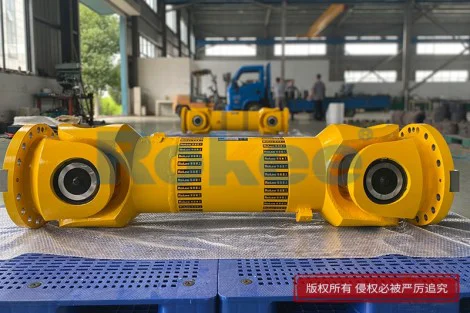
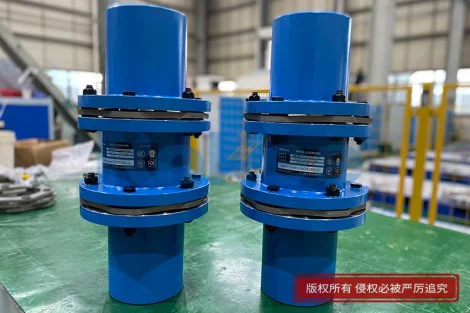
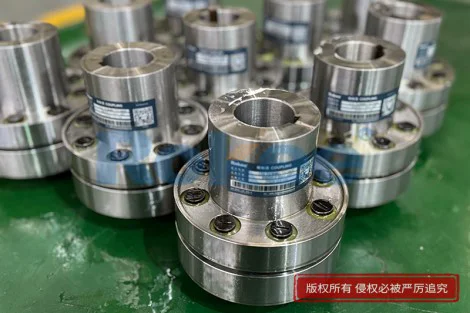
Steel Gear Coupling
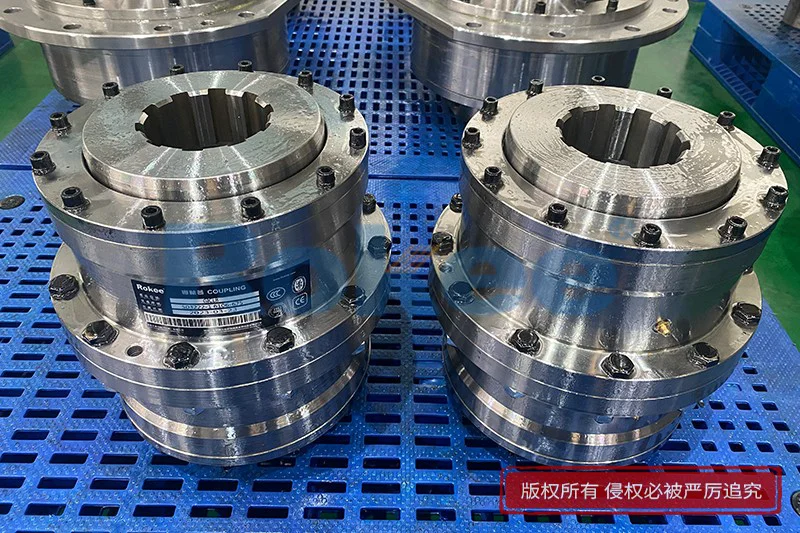
Steel gear couplings are essential mechanical transmission components widely adopted in industrial power transmission systems, serving as a flexible connection core between rotating shafts to deliver torque while absorbing minor operational deviations. Constructed primarily from high-strength steel materials, these couplings integrate precision-machined internal and external gear structures, enabling stable and efficient power transmission in complex mechanical equipment. Unlike rigid coupling structures that lack adaptability, steel gear couplings feature unique flexible compensation performance, which can effectively offset angular, radial, and axial misalignments between connected shafts generated by equipment installation errors, operational vibration, and thermal deformation. With outstanding load-bearing capacity, structural compactness, and durable operational stability, they adapt to high-speed, heavy-load, and continuous working scenarios. Their all-steel construction endows them with excellent mechanical toughness and wear resistance, allowing long-term stable operation in harsh industrial environments, and they have become a preferred transmission component for various mechanical and industrial equipment systems.
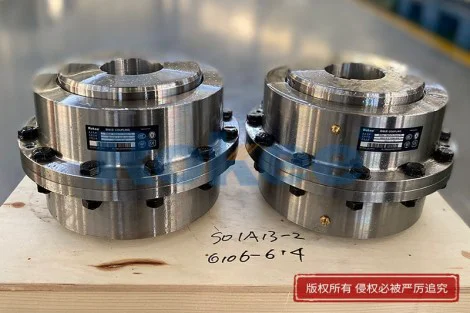
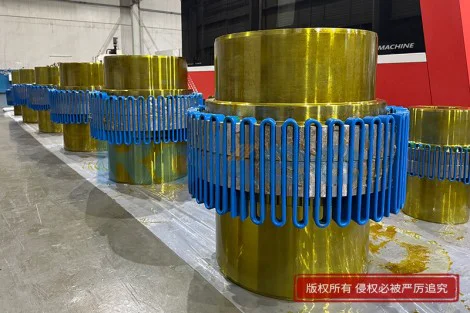
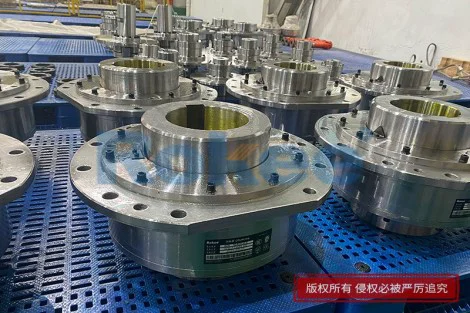
The basic structural composition of steel gear couplings is sophisticated and functional, with every core component designed to optimize torque transmission and misalignment compensation. A standard steel gear coupling mainly consists of two external gear shaft sleeves and one integral internal gear sleeve, forming a closed gear meshing transmission structure. The external gear sleeves are installed on the input and output shafts of mechanical equipment respectively, undertaking the task of synchronous rotation and torque output, while the middle internal gear sleeve wraps around the external gears to realize meshing transmission. Most external gear teeth adopt a crowned tooth profile design, which subtly adjusts the contact state between gear teeth during operation, avoiding concentrated edge pressure caused by shaft misalignment and reducing local wear of tooth surfaces. All structural parts are forged and processed with high-quality steel, with precise machining of tooth profiles and matching surfaces to ensure tight and uniform meshing gaps. The overall structure features compact layout and low self-weight, effectively reducing rotational inertia during equipment operation. In addition, the coupling shell is reserved with professional lubrication ports, facilitating regular grease injection and maintenance, and ensuring the internal gear meshing pair maintains a good lubrication state for a long time.
The working principle of steel gear couplings centers on precise gear meshing and flexible displacement compensation, realizing efficient and stable power transmission in mechanical systems. When the equipment starts to operate, the driving shaft drives the external gear sleeve on the input end to rotate, and the torque is transmitted to the internal gear sleeve through the meshing action of internal and external gear teeth, then transferred to the external gear sleeve on the driven end and the connected driven shaft. In the whole transmission process, the crowned tooth profile of external gears plays a key flexible adjustment role. When relative misalignment occurs between the two connected shafts due to installation deviation or operational vibration, the curved tooth surface can adaptively adjust the contact position and contact area of gear teeth, avoiding rigid stress concentration and transmission jitter. This flexible meshing mode allows the coupling to tolerate a certain range of angular deflection, radial offset, and axial displacement without affecting the continuity and stability of torque transmission. Meanwhile, the uniform stress distribution of gear meshing pairs ensures that the coupling can maintain efficient power transmission efficiency even under variable load conditions, avoiding power loss and equipment operation failure caused by shaft position deviation.
Steel gear couplings possess prominent performance advantages that distinguish them from other types of shaft couplings, making them highly adaptable to complex industrial working conditions. First of all, they have an excellent torque-to-size ratio, which means they can bear and transmit large torque with a compact structural volume, saving installation space for mechanical equipment and optimizing the overall structural layout of the transmission system. Secondly, the all-steel forging structure provides extremely high structural strength and rigidity, enabling stable operation under heavy-load and impact-load working conditions without structural deformation or damage. Their unique flexible compensation capability effectively eliminates additional mechanical stress generated by shaft misalignment, reducing vibration and noise during equipment operation and improving the smoothness of mechanical transmission. In addition, the precision-machined gear meshing pair has low friction coefficient and good wear resistance, which greatly reduces component wear in long-term continuous operation and extends the service life of the coupling. Moreover, steel gear couplings have strong environmental adaptability, capable of maintaining stable working performance in high-temperature, dusty, and conventionally corrosive industrial environments, with low failure rate and high operational reliability.
The application scenarios of steel gear couplings cover a wide range of industrial fields, becoming an indispensable core component of mechanical power transmission. In general mechanical manufacturing and plant engineering, they are widely used in various power transmission equipment such as speed reducers, motors, and transmission shafts, providing stable power connection for mechanical linkage systems. In fluid power equipment, steel gear couplings are commonly matched with pumps and compressors, adapting to the continuous high-speed operation state of such equipment, offsetting shaft vibration and displacement generated during fluid conveying, and ensuring the stable and efficient operation of fluid transmission systems. In the metallurgical and steel industry, where equipment operates under heavy-load and high-strength working conditions all year round, their high load-bearing capacity and impact resistance can fully meet the stringent operational requirements of rolling equipment and conveying machinery. In addition, they are also applied in large-scale fan equipment, mining machinery, and chemical production equipment, adapting to continuous, high-intensity, and complex working conditions in different industries. Their versatile performance enables them to solve various shaft connection and power transmission problems in industrial production, effectively improving the overall operational efficiency of mechanical equipment.
Lubrication maintenance is the key link to ensure the long-term stable operation and extended service life of steel gear couplings, and standardized lubrication management can effectively avoid common failure problems. The internal gear meshing pair of steel gear couplings relies entirely on lubricating grease to reduce friction and wear, and good lubrication conditions can also buffer meshing impact and dissipate operational heat. In the installation and commissioning stage, it is necessary to fill high-performance special lubricating grease into the coupling cavity to ensure that all gear meshing surfaces are fully covered, avoiding dry friction and local abrasion caused by insufficient lubrication. During the daily operation cycle, regular lubrication supplementation is required through the reserved lubrication ports on the coupling shell to compensate for grease loss and aging caused by long-term operation. It is essential to select lubricating grease with good wear resistance, high temperature resistance and oxidation resistance, which can maintain stable lubricating performance under high-speed operation and harsh environmental conditions. Excessive or insufficient grease filling should be avoided, as excessive grease will cause rotational resistance and heat accumulation, while insufficient grease will lead to accelerated tooth surface wear. Regular lubrication maintenance can keep the gear meshing state optimal, reduce operational failure risks, and maximize the service life of the coupling.
Daily inspection and fault prevention management are crucial to maintain the working stability of steel gear couplings and ensure the safe operation of mechanical systems. In the daily equipment operation process, regular visual inspection and operational state monitoring of the coupling are required. It is necessary to check whether there is abnormal vibration, noise and temperature rise during the operation of the coupling, which are typical signs of abnormal meshing, excessive wear or insufficient lubrication. Meanwhile, the tightness of the coupling installation position should be checked regularly to avoid displacement and loosening caused by long-term vibration, which will lead to increased shaft misalignment and aggravated gear wear. For equipment operating in high-intensity and harsh environments, regular disassembly and inspection are needed to observe the wear state of gear tooth surfaces, check for tooth surface scratches, abrasion, fatigue peeling and other defects, and replace severely worn components in a timely manner. In addition, it is necessary to avoid long-term overload operation of the coupling, as excessive load will exceed the bearing limit of gear meshing pairs, causing permanent deformation and structural damage of gear teeth. Scientific daily management can effectively eliminate potential faults in advance, ensure the long-term stable and efficient operation of steel gear couplings, and reduce equipment maintenance costs and downtime losses.
With the continuous upgrading of industrial manufacturing technology, the production and application technology of steel gear couplings is also constantly optimized and innovated, moving towards higher precision, higher efficiency and stronger durability. Modern processing and forging technologies have further improved the structural uniformity and mechanical properties of steel materials, eliminating internal structural defects of materials and enhancing the overall strength and fatigue resistance of couplings. The continuous optimization of tooth profile design makes the gear meshing fit degree higher, the stress distribution more uniform, and the misalignment compensation range more extensive, further improving the stability and efficiency of power transmission. At the same time, the innovation of surface treatment technology enables the gear tooth surface to have stronger wear resistance, corrosion resistance and high temperature resistance, adapting to more extreme industrial working conditions. In terms of structural design, the optimized integrated structure simplifies the installation and disassembly process, reduces maintenance difficulty, and improves the convenience of equipment operation and maintenance. In the future, with the development of intelligent industrial equipment, steel gear couplings will also combine with intelligent monitoring technology to realize real-time monitoring of operational state, laying a foundation for more intelligent and efficient industrial mechanical transmission systems.