Crowned Gear Coupling
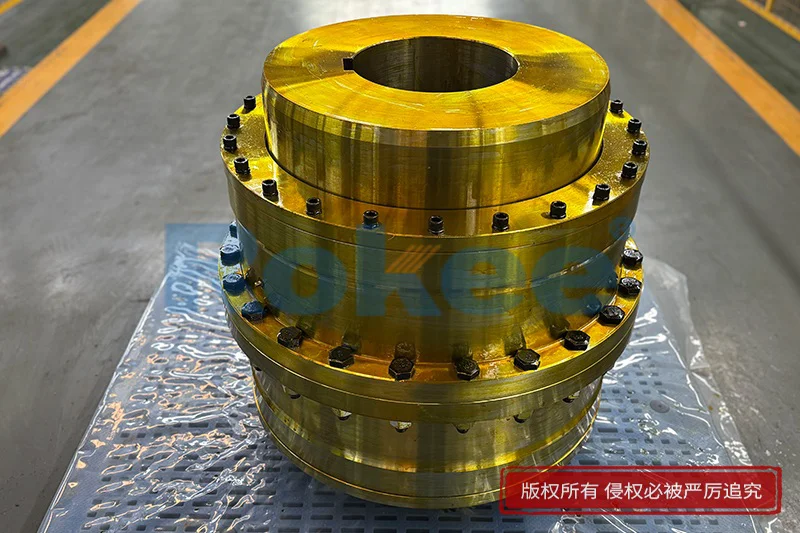
Crowned gear coupling is a high-performance mechanical transmission component widely adopted in modern industrial power transmission systems, designed to connect rotating shafts and transmit torque while effectively adapting to various shaft misalignment conditions. Distinguished from conventional straight-tooth gear couplings, its core innovation lies in the uniquely machined curved, drum-shaped crowned external gear teeth, which fundamentally optimizes tooth meshing status and mechanical stress distribution during operation. This specialized structural design enables the coupling to integrate high torque transmission efficiency, strong misalignment compensation capability and excellent operational stability into one compact unit. It can reliably accommodate angular, radial and axial shaft deviations generated by equipment installation errors, mechanical vibration and thermal expansion during long-term operation. By eliminating concentrated stress on tooth edges and reducing friction and wear between meshing teeth, the crowned gear coupling significantly extends the service life of transmission equipment, lowers operational failure rates and minimizes maintenance costs. As a robust and versatile transmission part, it has become a preferred solution for heavy-duty, high-speed and continuous industrial transmission scenarios across diverse mechanical fields.
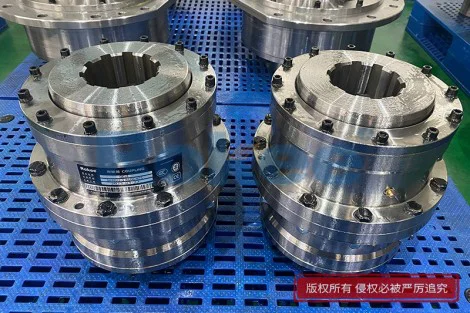
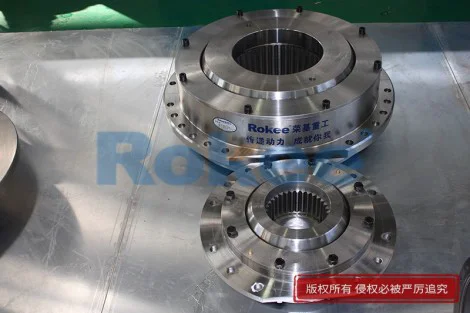
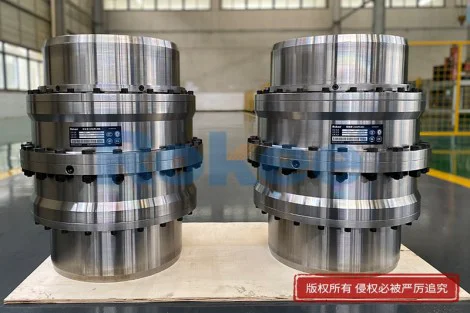
The structural composition of crowned gear coupling features simplicity, compactness and high rigidity, laying a solid foundation for its superior transmission performance. The core assembly mainly consists of two gear hubs with precision-machined crowned external teeth, two flanged sleeves with internal straight teeth, and a complete set of fastening and sealing accessories. Different from ordinary gear couplings with flat straight tooth profiles, the external teeth of the hub are processed into a smooth spherical crown curved surface, with the spherical center precisely aligned with the hub’s rotation axis. This elaborate machining design ensures that the contact point between external and internal teeth always falls on the middle of the tooth surface rather than the tooth ends during meshing. The two hubs are separately fixed on the driving and driven shafts through reliable connection methods, while the internal tooth sleeves mesh with the crowned hubs to form a closed torque transmission structure. Equipped with professional sealing components, the coupling can lock internal lubricating grease and effectively block external dust, moisture and corrosive substances. The overall integrated structure avoids redundant mechanical parts, reduces structural clearance and mechanical vibration, and maintains high structural rigidity even under heavy load conditions, ensuring stable and consistent power transmission output.
The working principle of crowned gear coupling is based on optimized gear meshing motion, realizing efficient and flexible torque transmission and misalignment compensation. During equipment operation, the driving shaft drives the crowned gear hub to rotate synchronously, and torque and rotational power are stably transmitted to the internal tooth sleeves through the meshing of curved crowned teeth and straight internal teeth. Subsequently, the sleeves drive the driven gear hub and the connected driven shaft to operate synchronously, completing the entire power transmission process. When the connected two shafts produce angular, radial or axial misalignment due to installation deviations or operational deformation, the crowned tooth profile allows relative rolling and fine sliding between meshing teeth instead of rigid extrusion. The curved tooth surface can automatically adapt to the tiny angle offset and position deviation of the shafts, dispersing the local pressure that would otherwise concentrate on tooth edges in straight-tooth structures. This flexible meshing state eliminates jamming and abnormal friction caused by shaft misalignment, ensures uniform stress on each tooth surface during operation, and realizes continuous and efficient torque transmission while compensating for shaft displacement errors, achieving a perfect balance between transmission rigidity and adaptive flexibility.
Crowned gear coupling boasts prominent performance advantages over traditional gear couplings and other types of transmission couplings, making it stand out in industrial applications. First of all, its unique crowned tooth design achieves uniform stress distribution on tooth surfaces, completely avoiding the edge stress concentration problem that plagues straight-tooth couplings. This structural optimization greatly improves the load-bearing capacity, allowing the coupling to transmit higher torque under the same dimensional specifications. Secondly, the curved tooth surface maintains a complete and stable lubricating oil film during meshing movement, effectively reducing dry friction and abrasive wear between teeth, lowering operational friction resistance and working noise. In addition, the multi-directional misalignment compensation capability enables it to cope with complex and variable shaft displacement conditions in industrial operation, reducing additional alternating load on equipment bearings and shafts, and protecting core transmission components from fatigue damage. Moreover, the compact and rigid structure endows the coupling with excellent torsional stiffness and operational stability, which can resist mechanical vibration and impact load during high-speed operation, ensuring precise and consistent power transmission accuracy for long-term continuous operation.
The application scenarios of crowned gear coupling cover a wide range of heavy-duty and high-precision industrial mechanical fields, benefiting from its comprehensive and balanced performance. It is widely used in heavy machinery and engineering equipment such as large crushers, mixers and conveyor systems, which require long-term continuous operation and bear frequent impact loads. In these scenarios, its high torque transmission capacity and wear resistance ensure stable operation of equipment under harsh working conditions. Meanwhile, it is also extensively applied in mechanical transmission systems of metallurgy, mining, chemical and building materials industries, where equipment often generates thermal deformation and shaft displacement due to long-time high-load operation. The excellent misalignment compensation performance effectively solves the operational failure problems caused by shaft misalignment. In addition, it is also applicable to high-speed rotating equipment such as fans, pumps and power transmission units, where its low vibration and low noise characteristics maintain the smooth operation of high-precision transmission systems. Whether it is constant-load stable operation or variable-load intermittent operation, the crowned gear coupling can adapt to diverse working environments and meet the transmission needs of different industrial equipment.
Lubrication and daily maintenance are key factors to ensure the long-term stable operation and extended service life of crowned gear coupling, with standardized operation bringing remarkable effects on performance retention. The internal meshing tooth surface of the coupling relies entirely on lubricating media to reduce friction and wear, so selecting high-quality lubricating grease suitable for gear transmission is essential. Before equipment operation, the internal cavity of the coupling needs to be filled with a moderate amount of lubricating grease to ensure full coverage of all meshing tooth surfaces, avoiding excessive or insufficient grease that may affect heat dissipation and lubrication effects. During long-term operation, regular inspection of the sealing performance is required to prevent grease leakage and external impurity infiltration, which may cause tooth surface abrasion and corrosion. It is necessary to periodically replace the aging lubricating grease and clean the internal dirt and wear debris to maintain a good lubrication state. In addition, regular detection of shaft connection tightness and meshing state helps timely eliminate abnormal vibration and loose connection faults. Scientific and standardized maintenance can effectively reduce tooth surface wear, avoid abnormal noise and transmission jitter, and maintain the efficient and stable working performance of the coupling for a long time.
Compared with elastic couplings, diaphragm couplings and other common transmission couplings, crowned gear coupling shows unique comprehensive competitiveness in structural performance and application adaptability. Elastic couplings rely on elastic deformation for misalignment compensation, but their load-bearing capacity is limited and they are prone to aging and deformation under long-term heavy load, resulting in reduced transmission accuracy. Diaphragm couplings feature high precision but have strict requirements for installation accuracy and working environment, with poor tolerance for impact load and harsh working conditions. In contrast, crowned gear coupling combines the high rigidity and high torque transmission advantages of gear transmission with flexible misalignment adaptation capability. It not only maintains precise and efficient power transmission like rigid couplings, but also has the displacement compensation performance of flexible couplings. Its wear-resistant structure and stable mechanical properties enable it to adapt to high-load, high-speed and harsh working conditions that many other couplings cannot cope with. Meanwhile, its simple structure and convenient maintenance greatly reduce the later operational and maintenance cost of equipment, achieving a better balance between performance, durability and economy.
With the continuous upgrading of modern industrial mechanical equipment towards high speed, high load and high precision, the technical optimization and application prospect of crowned gear coupling are becoming increasingly broad. At present, continuous progress in mechanical processing technology enables the crowned tooth profile to achieve higher machining precision and smoother surface finish, further optimizing the meshing state and stress distribution of tooth surfaces. The innovation of new wear-resistant and high-temperature resistant materials also further improves the coupling’s durability and adaptability to extreme working environments. In the future, with the rapid development of intelligent manufacturing and automated industrial production lines, the demand for high-stability and low-failure transmission components will continue to rise. The crowned gear coupling, as a mature and high-performance transmission part, will be further popularized in more sophisticated mechanical transmission fields. Continuous structural optimization and material upgrading will make it more adaptable to diversified and high-standard industrial transmission needs, providing more reliable basic support for the stable operation of modern industrial mechanical systems.