Low-noise Steel Laminae Coupling For Rockwool Sandwich Panel Production Line
In the continuous manufacturing system of rockwool sandwich panels, the stability and quietness of power transmission components directly determine the overall operational quality of the entire production line and the finished product consistency. As a core flexible transmission component tailored for high-precision and low-vibration industrial scenarios, low-noise steel laminae coupling has gradually become a key matching part for modern rockwool sandwich panel production lines, effectively solving the problems of excessive operating noise, unstable torque transmission and easy wear of traditional connecting parts in continuous industrial production. The rockwool sandwich panel production process involves multiple continuous and synchronous processes including steel plate uncoiling, roll forming, glue spraying, rockwool core material laying, high-pressure composite molding, fixed-length cutting and finished product conveying. Each link relies on precise and stable mechanical power transmission, and any slight vibration, impact or noise generated in the transmission process will be amplified in the continuous assembly line operation, affecting the operating accuracy of subsequent equipment and even causing subtle deviations in the flatness, bonding uniformity and dimensional accuracy of finished sandwich panels.
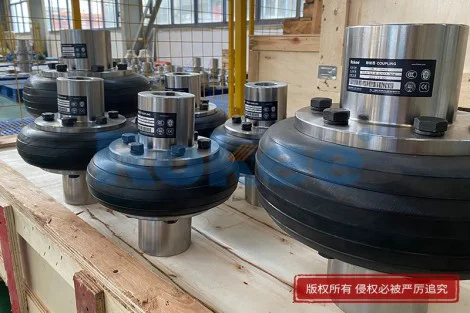
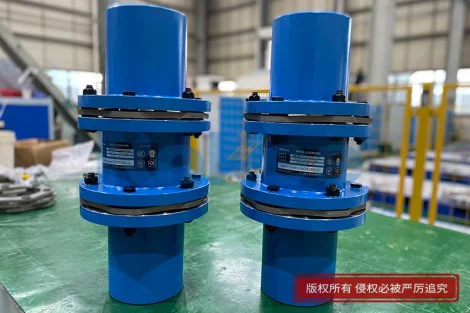
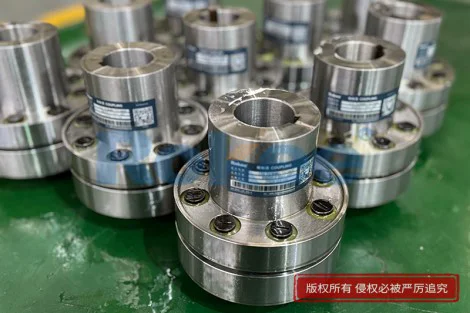
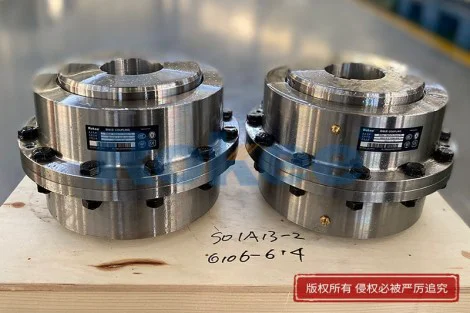
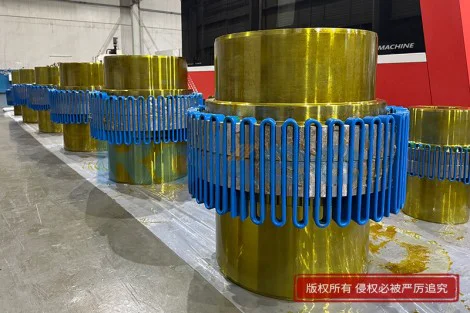
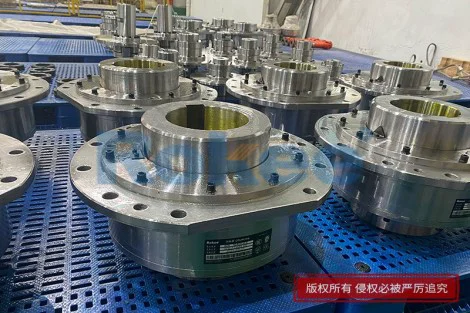
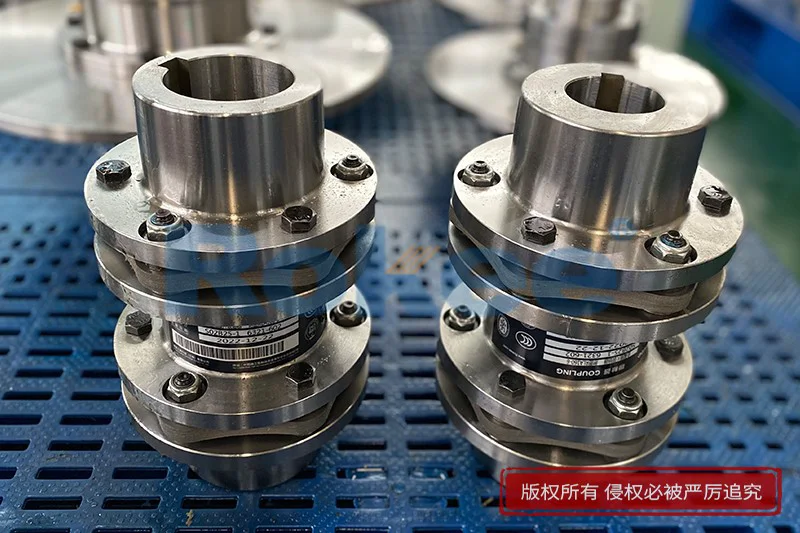
The structural design of low-noise steel laminae coupling is derived from the principle of metal elastic deformation, adopting a multi-layer stacked steel laminae assembly as the core force-transmitting component. Different from traditional rigid couplings that rely on hard contact for torque transmission and elastic couplings that use non-metallic flexible bodies, this coupling takes high-strength stainless steel thin plates as the main flexible unit, which are superimposed and combined in a symmetrical and compact structure. The overall structural layout features low rotational inertia and high structural symmetry, avoiding unbalanced centrifugal force during high-speed operation, which lays a structural foundation for low-noise operation. The internal connecting structure adopts staggered bolt fastening and positive locking assembly, realizing backlash-free power transmission between the driving shaft and the driven shaft. This non-gap transmission mode completely eliminates the collision and friction noise caused by gear gap engagement or rubber elastic body extrusion deformation in traditional couplings during positive and negative rotation and variable speed operation, which is the core reason for its excellent low-noise performance in long-term continuous operation.
In the actual operation scenario of rockwool sandwich panel production line, the equipment often faces multi-dimensional shaft misalignment problems caused by equipment installation errors, frame micro-deformation after long-term operation, and temperature changes in the production workshop. Axial, radial and angular deviations between the power shafts of various processing units will cause additional shear force and friction on the transmission components. Traditional rigid couplings cannot compensate for these deviations, resulting in severe shaft vibration, abnormal friction noise and accelerated component wear during equipment operation. Ordinary elastic couplings with rubber or plastic flexible bodies can absorb part of the vibration, but their flexible materials are prone to aging, deformation and fatigue loss under long-term high-load and continuous operation, which will gradually weaken the vibration damping and noise reduction effect, and even cause unstable transmission and increased noise in the later stage of use. In contrast, the low-noise steel laminae coupling relies on the reversible elastic deformation of multi-layer steel laminae to realize flexible compensation of multi-dimensional shaft misalignment. The metal laminae can gently release the additional stress generated by shaft deviation during torque transmission, buffer the vibration impact in the power transmission process, and greatly reduce the vibration amplitude of the shaft system, thereby fundamentally reducing the mechanical noise generated by friction, impact and resonance in the transmission link.
The low-noise performance of steel laminae coupling brings multiple practical values to the operation of rockwool sandwich panel production lines. First of all, stable low-vibration and low-noise operation ensures the synchronous coordination accuracy of each processing unit of the assembly line. The rockwool sandwich panel composite molding process requires uniform and continuous power output. The vibration and noise generated by unstable transmission will cause micro-jitter of the forming roller and conveying roller, leading to uneven glue coating thickness, offset laying of rockwool core materials, and local hollowing or uneven bonding of composite panels. The stable transmission state maintained by steel laminae coupling can effectively avoid these quality defects, improve the flatness and overall uniformity of finished panels, and reduce the rate of defective products in continuous production. Secondly, long-term low-noise and low-vibration operation can significantly reduce the fatigue loss of the entire mechanical structure of the production line. Mechanical vibration is the main cause of loose equipment bolts, aging bearings and structural frame deformation. By suppressing transmission vibration and reducing operating noise, the coupling effectively delays the aging and damage of auxiliary components of the production line, reduces the frequency of equipment shutdown maintenance, and improves the continuous operation efficiency of the production line.
In terms of material performance and structural durability, the all-steel design of low-noise steel laminae coupling makes it highly adaptable to the complex production environment of rockwool sandwich panel workshops. The production process of rockwool materials involves high-temperature melting and fiber forming, and the workshop environment has certain temperature fluctuation and fine fiber dust. Non-metallic flexible coupling parts are easily affected by temperature aging and dust erosion, resulting in reduced flexibility and increased noise. The steel laminae structure has excellent high-temperature resistance, corrosion resistance and aging resistance, and will not have performance degradation due to temperature changes, dust accumulation or minor chemical gas erosion in the workshop. In addition, the steel laminae group has high torsional stiffness and stable elastic recovery performance. It can maintain consistent vibration damping and noise reduction effects in long-term high-speed and high-load continuous operation, without fatigue deformation or performance attenuation, realizing long-term maintenance-free operation. This stable durability is very suitable for the working characteristics of rockwool sandwich panel production lines that operate continuously for a long time and have high requirements for equipment stability consistency.
The torque transmission mode of steel laminae coupling also endows it with unique advantages in low-noise operation. The multi-layer laminated steel plate structure disperses the transmission torque evenly on each layer of laminae, avoiding local stress concentration and instantaneous impact force in the torque transmission process. When the production line starts, stops or adjusts the operating speed, the elastic deformation of the steel laminae can smoothly buffer the instantaneous torque change, eliminate the starting impact noise and speed fluctuation noise of the equipment, and make the power transmission process more gentle and stable. For the flying cutting unit and precise conveying unit of the sandwich panel production line, this gentle transmission characteristic can ensure the positioning accuracy and cutting flatness of fixed-length cutting, while avoiding the abnormal noise and vibration caused by equipment start-stop impact, and optimizing the overall operating environment of the workshop.
Compared with other types of flexible couplings, the low-noise steel laminae coupling has more balanced comprehensive performance in the application of sandwich panel production equipment. Diaphragm couplings with single-layer metal structure have limited vibration absorption capacity and are prone to local stress fracture under long-term alternating load. Sleeve couplings have simple structure but poor misalignment compensation ability, which cannot eliminate transmission vibration and noise. The multi-layer laminated structure of steel laminae coupling not only ensures high torsional stiffness and efficient torque transmission efficiency, but also realizes multi-level vibration absorption and noise reduction through the coordinated elastic deformation of multiple steel plates. The symmetrical compact structure also reduces the overall volume and rotating inertia of the component, making it more suitable for the compact installation space of integrated sandwich panel production lines. It can be perfectly matched with various transmission shafts of uncoiling machines, forming machines, composite machines and conveying equipment, realizing unified low-noise and stable operation of the whole line.
The application of low-noise steel laminae coupling also helps to improve the overall intelligent and high-precision operation level of modern rockwool sandwich panel production lines. Modern sandwich panel production adopts fully automated synchronous control system, and the operating state of each mechanical transmission link will feed back to the central control system in real time. Excessive equipment vibration and noise will interfere with the signal detection of precision sensors, resulting in subtle deviations in speed regulation and positioning control. The low-vibration and low-noise operating state maintained by steel laminae coupling can ensure the accurate collection and feedback of equipment operating data, make the synchronous operation of each process link more precise, and further improve the dimensional accuracy and production consistency of finished rockwool sandwich panels. At the same time, the stable operating state reduces the wear loss of transmission bearings, reducers and other matching parts, reduces the operating failure rate of the production line, and creates stable basic conditions for high-efficiency and high-quality mass production.
In the long-term industrial operation, the low-noise advantage of steel laminae coupling also brings positive environmental and economic benefits to factory production. Continuous low-noise equipment operation optimizes the workshop production environment, reduces the overall operating noise of the production line, and meets the environmental protection requirements of modern industrial production workshops. More importantly, its stable and durable performance avoids frequent replacement of vulnerable parts and repeated debugging and calibration of equipment caused by transmission failure, saves equipment maintenance time and operation cost, and improves the continuous production capacity of the production line. For the rockwool sandwich panel industry with large-scale continuous production characteristics, the application of this low-noise transmission component can effectively help enterprises stabilize product quality, improve production efficiency and reduce comprehensive operating costs.
With the continuous upgrading of rockwool sandwich panel production technology towards high precision, high efficiency and low energy consumption, the performance requirements for supporting transmission components are also constantly improving. Low-noise steel laminae coupling, with its excellent low-vibration and low-noise performance, stable torque transmission capability, excellent environmental adaptability and long service life, has become an indispensable key component in modern sandwich panel production lines. Its unique metal elastic deformation transmission principle and multi-layer laminated structural design perfectly fit the continuous, synchronous and high-precision working characteristics of rockwool sandwich panel production, solving many pain points of traditional transmission components in industrial applications. In the future, with the further improvement of industrial production automation and precision standards, low-noise steel laminae coupling will be more widely used in various continuous panel production equipment, providing more stable and quiet power transmission guarantee for the high-quality development of the rockwool sandwich panel manufacturing industry.