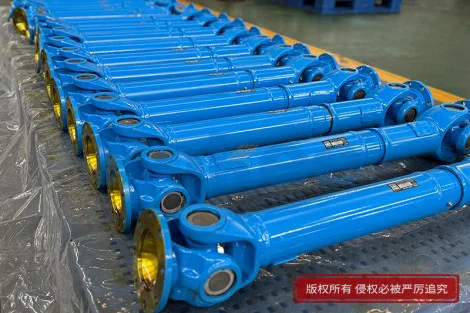
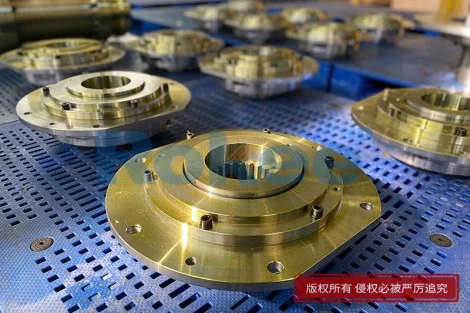
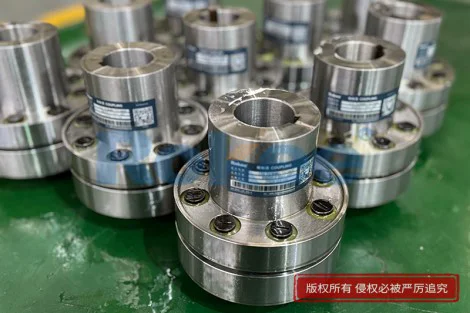
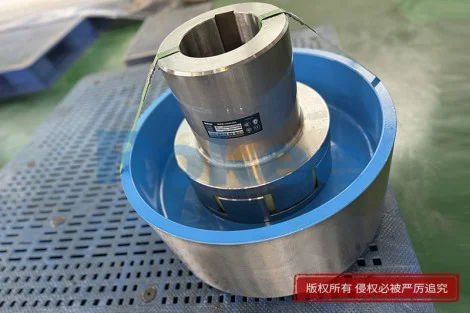
High-torque Steel Laminae Couplings Adapt To Heavy-duty Rockwool Sandwich Panel Production Line
The continuous upgrading of modern building material manufacturing technology has put forward higher requirements for the stability, load resistance and continuous operation capacity of production equipment. Rockwool sandwich panels, as core fireproof, heat-insulating and sound-insulating building materials widely used in industrial plants, public buildings and energy-saving construction projects, are produced on heavy-duty continuous production lines that feature long-cycle operation, high-load transmission and complex dynamic working conditions. In the entire mechanical transmission system of rockwool sandwich panel production lines, the coupling, as a key component connecting driving and driven equipment, undertakes the core task of torque transmission, shaft deviation compensation and vibration buffering. Traditional flexible coupling products are prone to elastic fatigue, torque attenuation and structural aging under long-term heavy-load and impact working conditions, which cannot meet the stable operation needs of high-efficiency rockwool panel production. High-torque steel laminae couplings, relying on their unique all-metal laminated structure, excellent load-bearing performance and reliable dynamic adaptability, have become an ideal matching component for heavy-duty rockwool sandwich panel production lines, effectively solving various transmission pain points in industrial continuous production.
Heavy-duty rockwool sandwich panel production line present extremely stringent working condition challenges to mechanical transmission components throughout the continuous production process. Different from ordinary light-duty building material production equipment, the rockwool panel production process integrates multiple continuous processing procedures including raw material feeding, roller pressing, glue coating, composite lamination, heating curing and fixed-length cutting. The entire production line operates in a continuous linear mode for a long time, and the transmission system needs to maintain stable power output under uninterrupted operating states for days or even weeks. In the material composite pressing stage, the equipment will generate instantaneous impact load due to the superposition of steel plate rigidity and rockwool fiber porous structure compression resistance. The frequent start-stop and load fluctuation in the cutting and sorting process will also cause periodic torque impact on the transmission shaft system. In addition, affected by long-term mechanical vibration, equipment foundation slight settlement and thermal deformation of mechanical parts during high-temperature curing, the transmission shafts of the production line are prone to produce tiny axial, radial and angular misalignments. These complex and variable working conditions require the coupling to have both ultra-high torque bearing capacity and flexible deformation compensation performance, as well as excellent fatigue resistance to adapt to long-term cyclic load operation.
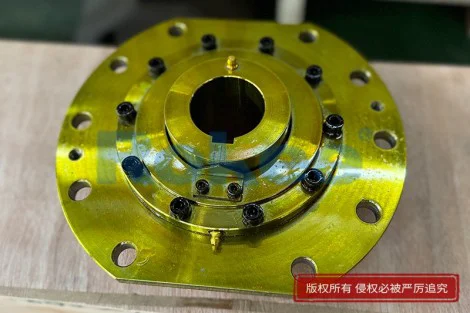
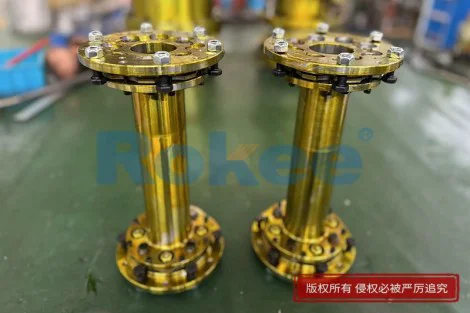
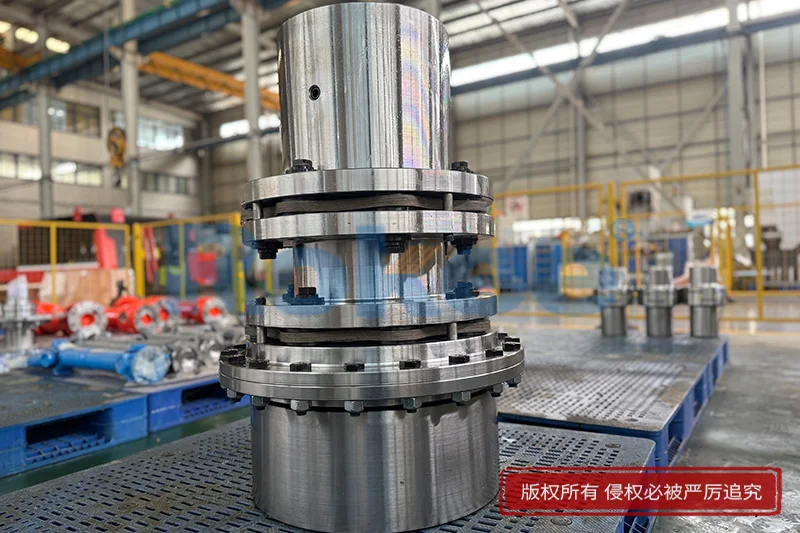
High-torque steel laminae couplings are designed and optimized based on the elastic deformation principle of metal materials, with a core structural system composed of multi-layer stacked high-strength steel laminae and symmetrically distributed connecting bolt groups. Different from elastomeric couplings that rely on rubber or polymer materials for flexible buffering, steel laminae couplings adopt an all-metal rigid-flexible integrated structure, which fundamentally avoids the aging, deformation and failure problems of non-metallic materials in high-load and high-temperature environments. The multi-layer laminated steel sheet structure forms a stable elastic deformation unit. When the equipment operates, the driving torque is transmitted from the driving shaft hub to the driven shaft hub through the elastic deformation of the steel laminae group. The stacked thin steel plates can produce micro elastic displacement in multiple directions, which can accurately compensate for various tiny misalignments of the transmission shaft system generated during the operation of rockwool sandwich panel production lines. This structural design enables the coupling to maintain precise torque transmission while eliminating additional mechanical stress caused by shaft misalignment, avoiding local stress concentration and component wear of the transmission system.
The outstanding high-torque bearing characteristic is the core advantage of steel laminae couplings adapting to heavy-duty rockwool panel production lines. The laminated high-strength steel material has far higher structural rigidity and mechanical strength than ordinary flexible coupling materials, and can bear continuous stable high torque output and instantaneous impact torque in the production process. In the roller pressing and composite molding link of rockwool sandwich panels, the equipment needs to apply uniform and stable pressure to ensure the tight bonding between the upper and lower color steel plates and the internal rockwool core material. The transmission system needs to maintain constant torque output to avoid uneven plate thickness, interlayer hollowing and bonding failure caused by torque fluctuation. High-torque steel laminae couplings can stably transmit large power without torque attenuation under long-term heavy load, ensuring the consistency of pressure and speed in the continuous pressing process of the production line. Even in the instantaneous load impact stage of material cutting and variable-speed feeding, the metal laminae structure can absorb impact energy through micro elastic deformation, buffer the dynamic load of the shaft system, and protect key equipment such as reducers, motors and transmission rollers from impact damage.
In terms of environmental adaptability, high-torque steel laminae couplings show strong applicability to the complex production environment of rockwool sandwich panel workshops. The production process of rockwool panels involves high-temperature curing procedures, and the workshop environment is accompanied by certain heat radiation and dry air conditions. At the same time, fine rockwool fiber dust and tiny adhesive particles will be generated in the production process, which form a complex industrial dust environment. Non-metallic couplings are easily corroded, aged and hardened in such environments, leading to reduced flexibility and failure of vibration reduction and deviation compensation functions. In contrast, the all-metal structure of steel laminae couplings has excellent high-temperature resistance, aging resistance and corrosion resistance. The surface of high-strength steel laminae has stable mechanical properties after special processing, and will not produce structural deformation or performance attenuation due to temperature changes and dust erosion. Moreover, the structural design of steel laminae couplings does not require lubricating oil and grease auxiliary maintenance, which avoids the problem of dust adhesion leading to lubrication failure and transmission blockage, and is very suitable for long-term unattended continuous operation of heavy-duty production lines.
The precise transmission performance of high-torque steel laminae couplings provides reliable technical support for the high-precision production of rockwool sandwich panels. The production quality of rockwool sandwich panels puts forward strict requirements for the synchronization accuracy of each transmission unit of the production line. The asynchronous speed or unstable torque of feeding, pressing and cutting equipment will directly lead to product dimensional deviation, uneven pressing and irregular cutting edges, reducing the qualified rate of finished products. Steel laminae couplings realize torque transmission through the elastic deformation of metal laminae, with almost no rotation clearance in the transmission process, and can maintain extremely high transmission accuracy and speed synchronization under high-load operation. This precise transmission characteristic ensures that each process link of the rockwool panel production line maintains consistent operating parameters, effectively guarantees the flatness of the steel plate surface, the uniformity of interlayer bonding and the accuracy of finished product size, and improves the overall production quality and batch stability of sandwich panels.
In terms of equipment operation and maintenance cost control, high-torque steel laminae couplings have significant application advantages in heavy-duty continuous production lines. Traditional coupling products have short service life under heavy-load impact working conditions and need frequent inspection, replacement and lubrication maintenance, which not only increases equipment operation costs, but also causes production line shutdown losses due to component replacement. The metal laminated structure of steel laminae couplings has ultra-high fatigue resistance and structural stability, and can withstand billions of times of cyclic elastic deformation without structural failure in long-term continuous operation. The overall structure is simple and compact, with fewer vulnerable parts, and realizes maintenance-free operation in the whole service cycle under normal working conditions. For heavy-duty rockwool sandwich panel production lines that pursue high-efficiency continuous production, this maintenance-free feature greatly reduces equipment downtime, improves the overall operation rate of the production line, and creates higher production benefits for building material manufacturing enterprises.
In the actual operation process of heavy-duty rockwool sandwich panel production lines, the adaptive advantages of high-torque steel laminae couplings are fully reflected in multiple key production links. In the raw material automatic feeding link, the coupling stably transmits power to ensure the uniform and orderly conveying of steel coils and rockwool raw materials, avoiding material accumulation and feeding jitter caused by unstable transmission. In the glue coating and composite lamination link, the stable torque output ensures the consistent operating speed of the upper and lower pressing rollers, so that the adhesive is evenly coated and the composite lamination is tight and seamless. In the high-temperature curing link, the coupling resists the thermal deformation of the shaft system caused by environmental temperature rise, compensates for the tiny displacement of the transmission shaft, and maintains the stability of the transmission system under high-temperature working conditions. In the fixed-length cutting and finished product sorting link, it buffers the torque impact generated by frequent start-stop and variable-speed operation, protects the precision transmission structure of the cutting equipment, and ensures the neat and consistent cutting size of finished panels.
With the continuous development of the building material industry towards high efficiency, intelligence and energy conservation, the heavy-duty rockwool sandwich panel production line is gradually developing in the direction of larger load, faster operation speed and longer continuous working cycle. This development trend puts forward higher standards for the torque bearing capacity, transmission stability and service life of supporting coupling components. High-torque steel laminae couplings, with their perfect combination of high load-bearing performance, flexible deviation compensation, high-precision transmission and long-life stability, can fully adapt to the iterative upgrading of modern rockwool panel production equipment. Compared with traditional transmission connecting components, they can better solve the problems of easy failure, low efficiency and high maintenance cost of transmission systems in heavy-duty industrial production, and provide solid mechanical guarantee for the stable and efficient operation of building material production lines.
In conclusion, high-torque steel laminae couplings have unique structural advantages and performance characteristics that perfectly match the complex and heavy-duty working conditions of rockwool sandwich panel production lines. Their all-metal laminated elastic structure realizes the organic integration of high-torque rigid transmission and flexible dynamic compensation, effectively coping with shaft misalignment, load impact, high temperature and dust interference in the production process. They not only improve the operational stability and transmission accuracy of the entire production line, ensure the high-quality output of rockwool sandwich panel products, but also reduce equipment maintenance costs and downtime losses, and improve the overall production efficiency of the production line. As a key supporting component of heavy-duty building material production equipment, high-torque steel laminae couplings will continue to play an important role in the upgrading and optimization of rockwool sandwich panel production technology, and provide reliable power transmission support for the high-quality development of the modern energy-saving building material industry.