Application Analysis Of Double Steel Laminae Couplings In Rockwool Sandwich Panel Production Line

With the rapid development of modern building energy-saving and fireproof material industries, rockwool sandwich panels have become indispensable core materials in industrial construction, public infrastructure and cold storage engineering due to their excellent thermal insulation, flame retardant, sound absorption and structural stability characteristics. The production process of rockwool sandwich panels presents typical continuous and automated industrial production characteristics, where the coordinated operation of multi-stage mechanical equipment directly determines the forming quality, dimensional accuracy and production continuity of finished panels. In the full-automatic production line integrating feeding, rolling, compounding, pressing, slitting and conveying, the transmission system acts as the power core of equipment operation, and the performance of connecting transmission components plays a decisive role in eliminating operation errors, reducing mechanical vibration and maintaining long-term stable production. Double steel laminae couplings, as a high-performance flexible transmission component optimized for high-precision and high-stability industrial scenarios, have gradually replaced traditional coupling structures in rockwool sandwich panel production lines by virtue of their unique structural design and comprehensive mechanical properties, becoming a key guarantee for improving the overall operation level of the production line.
The production process of rockwool sandwich panels involves continuous cyclic operation of multiple sets of linked mechanical equipment, and the operating environment and working conditions put forward stringent requirements on transmission connecting components. Different from single mechanical operation scenarios, the sandwich panel production line requires synchronous operation of front and rear equipment units. The raw material feeding unit needs to stably and quantitatively convey steel plates and rockwool raw materials, the rolling forming unit needs to maintain constant rotating speed to ensure uniform plate forming, the composite pressing unit needs stable power output to avoid uneven bonding between rockwool core material and steel plate, and the subsequent slitting and conveying units need to keep consistent operating frequency to prevent finished product deformation and dimensional deviation. In the long-term continuous production process, the transmission shafts of various equipment are prone to multi-dimensional displacement deviation caused by equipment installation errors, thermal expansion and cold contraction of mechanical components, and long-term operational wear. Traditional rigid couplings have poor displacement compensation ability, which cannot adapt to the slight axial, radial and angular misalignment between shafts generated during the operation of the sandwich panel production line. Long-term operation will lead to increased transmission resistance, intensified mechanical vibration, and even local stress concentration on equipment shafts, resulting in shaft body wear, bearing damage and frequent equipment shutdowns. Ordinary single-lamina flexible couplings have limited compensation range and structural stability, and are difficult to cope with the continuous variable load and long-cycle operation characteristics of the sandwich panel production line, which often leads to unstable transmission accuracy in the later stage of equipment operation and affects the flatness and bonding firmness of rockwool sandwich panels.
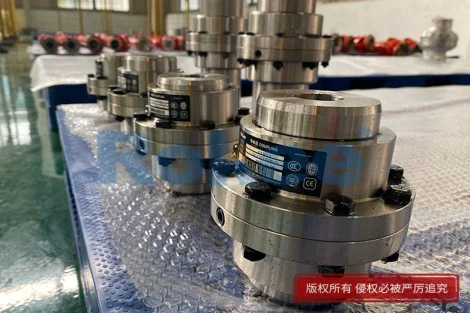
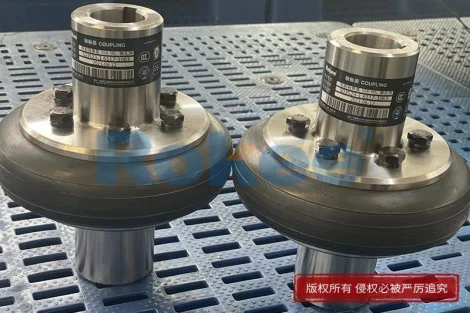
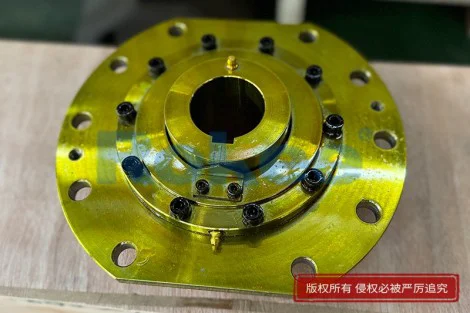
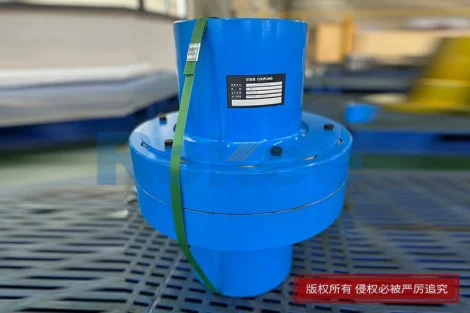
Double steel laminae couplings form a dual flexible transmission structure through two groups of steel laminae components matched with intermediate connecting structures, which fundamentally makes up for the performance defects of traditional coupling products and adapts to the complex working conditions of rockwool sandwich panel production line. The core structural advantage of this type of coupling lies in its dual laminae layout design, which doubles the angular displacement compensation capacity compared with single-lamina couplings, and achieves efficient absorption and buffering of axial, radial and angular multi-dimensional displacements between transmission shafts. In the daily operation of rockwool sandwich panel production lines, tiny misalignment deviations between the driving shaft and driven shaft of rolling machines, compound presses and conveying equipment are inevitable. The flexible deformation of double steel laminae can effectively eliminate the additional torque and mechanical stress caused by these deviations, ensuring that the power transmission process remains smooth and continuous without stuck or jitter phenomena. This structural characteristic enables the production line to maintain high-precision synchronous operation under long-term continuous working conditions, avoiding product quality problems such as uneven rockwool filling, inconsistent steel plate pressing density and panel surface warpage caused by transmission jitter.
In terms of operational stability and vibration suppression, double steel laminae couplings show outstanding adaptability to the cyclic vibration environment of sandwich panel production lines. The rolling, pressing and slitting processes in rockwool panel production will generate regular mechanical vibration, and the residual vibration in the transmission system will be transmitted along the equipment shaft system, affecting the operating accuracy of adjacent equipment and reducing the overall stability of the production line. The double-layer steel laminae structure has excellent dynamic balance performance and vibration damping characteristics. During high-speed and cyclic power transmission, it can effectively absorb and attenuate mechanical vibration generated by equipment operation, reduce vibration amplitude and vibration conduction range, and maintain the overall balance of the transmission system. For the composite pressing process that requires extremely high operating stability, the vibration suppression effect of double steel laminae couplings can ensure that the pressing pressure acts uniformly on the composite interface between rockwool and steel plate, avoid local hollowing and insufficient bonding strength of the sandwich panel, and greatly improve the yield and structural durability of finished products. At the same time, the good dynamic balance performance can reduce the abrasion of key components such as equipment bearings and gears, extend the service life of transmission components, and reduce the frequency of equipment maintenance and failure shutdowns.
The load resistance and fatigue resistance of double steel laminae couplings are highly compatible with the long-cycle and high-intensity operation mode of rockwool sandwich panel production lines. Modern sandwich panel production lines mostly adopt uninterrupted continuous production mode, and the transmission system needs to bear cyclic alternating loads for a long time. The steel laminae components of double steel laminae couplings are made of high-strength steel materials with optimized processing technology, which have excellent torsional stiffness and fatigue resistance. Under long-term alternating load operation, the laminae structure will not produce permanent deformation or fatigue damage, and can always maintain stable torque transmission efficiency. In the material conveying and rolling forming links of the production line, the equipment often produces instantaneous load fluctuation due to uneven raw material thickness and material feeding speed deviation. The flexible structure of double steel laminae can buffer instantaneous load impact, avoid sharp fluctuation of transmission torque, ensure the stability of equipment operating speed, and make the forming specification of rockwool sandwich panels more consistent. This stable load adaptation performance effectively solves the problem of unstable product quality caused by load changes in traditional transmission systems, and provides a reliable mechanical guarantee for standardized and batch production of sandwich panels.
In terms of equipment installation, debugging and later operation and maintenance, double steel laminae couplings have significant practical application advantages in rockwool sandwich panel production lines. The overall structure of the coupling is compact and reasonable, with high structural integration, which simplifies the shaft alignment process during equipment installation and debugging. Compared with complex transmission connecting structures, it can effectively shorten the equipment installation and commissioning cycle, improve the overall construction efficiency of the production line. In the daily operation process, the double steel laminae coupling has strong structural stability, no vulnerable parts and no need for frequent lubrication and maintenance, which greatly reduces the daily operation and maintenance cost of the production line. For the continuous automated production line that pursues high efficiency and low consumption, the maintenance-free operation characteristic of the coupling avoids production interruption caused by regular maintenance of transmission components, improves the overall operation rate of the production line, and creates better production benefits for industrial production. In addition, the structural scalability of double steel laminae couplings is strong, and the torque transmission range and displacement compensation capacity can be adapted according to the power parameters and operating requirements of different equipment in the production line, which can meet the matching use of low-power conveying equipment and high-power pressing and forming equipment, realizing the unified optimization of the transmission system of the whole production line.
In the actual production and application of rockwool sandwich panels, the application value of double steel laminae couplings is also reflected in the improvement of production line automation and intelligent operation level. With the continuous upgrading of the sandwich panel manufacturing industry, modern production lines are equipped with intelligent monitoring and automatic adjustment systems, which put forward higher requirements for the real-time accuracy and stability of equipment operation. The stable transmission performance of double steel laminae couplings ensures that the operating data of each equipment unit in the production line is accurate and synchronous, avoids data deviation caused by transmission jitter and shaft displacement, and provides reliable data support for the intelligent scheduling and automatic adjustment of the production line. At the same time, the good fault tolerance of the coupling can cope with slight parameter fluctuations in the production process, ensure that the automated production process is not easily interrupted, and improve the anti-interference ability and operation stability of the whole production line system.
Compared with other flexible coupling products applied in sandwich panel production lines, double steel laminae couplings have more comprehensive performance advantages in adapting to complex working conditions, stabilizing transmission accuracy and reducing equipment loss. Traditional belt couplings are prone to elastic sliding and wear, resulting in unstable transmission speed and short service life. Gear couplings have poor displacement compensation ability, large operation noise and serious mechanical wear. Single steel laminae couplings have limited compensation range and are only suitable for low-load and low-precision production links. Double steel laminae couplings integrate the advantages of large displacement compensation, high vibration damping efficiency, strong load resistance and long fatigue life, which can fully adapt to the full-process operation requirements of rockwool sandwich panel production from raw material feeding to finished product output. Through the accurate transmission and stable operation guarantee of the coupling, the production line can effectively reduce the defective rate of products, improve the dimensional accuracy and surface flatness of finished rockwool sandwich panels, and enhance the overall quality level of products.
In the context of the continuous improvement of industrial manufacturing precision and the continuous upgrading of building material production standards, the application prospect of double steel laminae couplings in rockwool sandwich panel production lines is becoming increasingly broad. The future development of sandwich panel production lines will move towards higher automation, higher precision and lower energy consumption, and the requirements for the stability, precision and durability of transmission components will be further improved. With its excellent comprehensive mechanical properties and strong working condition adaptability, double steel laminae couplings can continuously meet the upgrading needs of production line equipment, help optimize the overall operation efficiency of rockwool sandwich panel production lines, reduce equipment operation energy consumption and maintenance costs, and promote the standardized and high-quality development of the rockwool building material manufacturing industry. In the actual production application process, only by reasonably selecting the specification model of double steel laminae couplings according to the operating parameters and working characteristics of different equipment units in the production line and standardizing the installation and debugging process can the optimal transmission effect be exerted, and the maximum production efficiency and economic benefits of the rockwool sandwich panel production line be realized.