High Speed Diaphragm Coupling
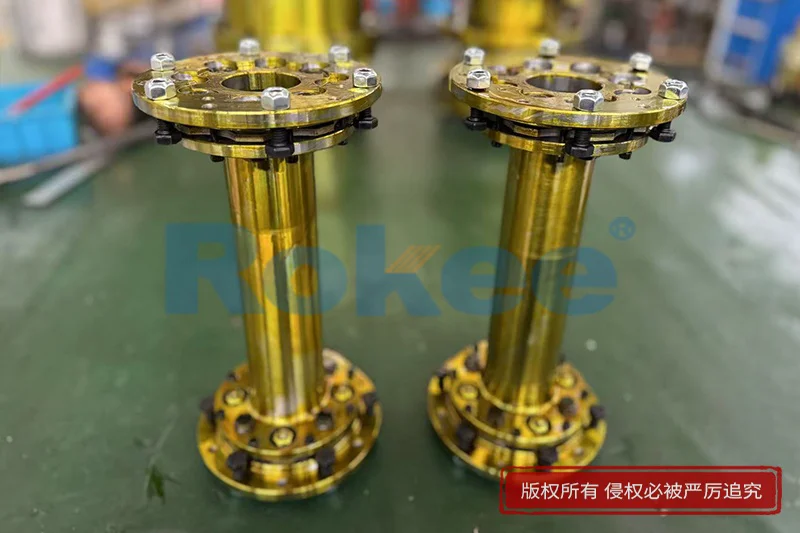
High speed diaphragm coupling is a high-performance flexible transmission component specially designed for high-speed rotating mechanical systems, serving as a core connecting unit between driving and driven equipment in modern industrial transmission systems. Unlike traditional rigid and elastic couplings that rely on rubber or spring deformation, this coupling adopts all-metal thin diaphragm structure, utilizing controllable elastic deformation of metal diaphragms to realize stable torque transmission and automatic compensation of various shaft misalignments. It perfectly adapts to high-speed, high-precision and high-stability operating scenarios, effectively solving common industrial problems such as vibration amplification, torque transmission deviation and equipment wear caused by shaft alignment errors during high-speed operation. With outstanding advantages of zero backlash, low vibration, fatigue resistance and maintenance-free operation, it has become an indispensable key component in high-end rotating machinery, covering energy power, industrial manufacturing, aerospace and other core industrial fields, and continuously optimizes the operational efficiency and service life of high-speed transmission systems.
The basic working principle of high speed diaphragm coupling centers on the elastic deformation characteristics of precision-processed metal diaphragms, which fundamentally distinguishes it from conventional transmission coupling structures. In the high-speed operating state of mechanical equipment, absolute coaxial alignment between the driving shaft and driven shaft is unattainable due to machining errors, assembly deviations, equipment operation vibration and thermal deformation during long-term operation. These inevitable deviations include angular deviation, parallel offset and axial displacement, which will cause additional stress and vibration in the transmission system. The metal diaphragm group of the coupling can produce micro and reversible elastic deformation following the rotation of the shaft system, flexibly absorbing and compensating all types of shaft misalignments in real time. During the whole torque transmission process, the diaphragm maintains uniform stress distribution, realizing continuous and stable power transmission without transmission lag or elastic slip. This unique working mechanism enables the coupling to keep excellent transmission accuracy even under ultra-high-speed rotating conditions, avoiding the resonance and impact problems caused by rigid connection, and greatly improving the overall operational stability of high-speed mechanical equipment.
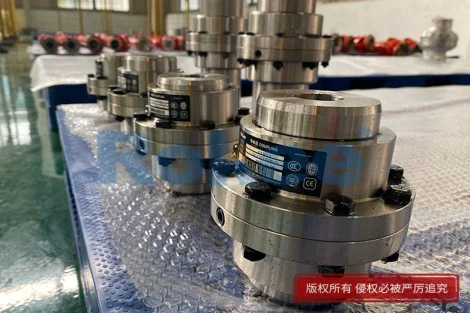
The structural design of high speed diaphragm coupling is highly refined and optimized for high-speed operating conditions, focusing on balancing structural simplicity, mechanical strength and dynamic stability. The core structure is composed of precision metal diaphragms, connecting hubs and intermediate spacing components, without any elastic vulnerable parts such as rubber gaskets and springs. The metal diaphragms are made of high-strength alloy materials with excellent fatigue resistance and toughness, processed through fine polishing and precision cutting to ensure uniform thickness and smooth surface, which guarantees consistent elastic deformation performance during high-speed rotation. Multiple diaphragms are superimposed and assembled in a standardized manner, which can disperse transmission stress and improve the overall load-bearing capacity of the coupling. The integrated hub structure realizes tight connection with the shaft body, effectively reducing assembly gaps and ensuring zero-backlash torque transmission. The overall compact and lightweight structural design reduces the rotational inertia of the transmission system, which is crucial for adapting to ultra-high-speed rotation. Meanwhile, the streamlined structural layout avoids air resistance and turbulence during high-speed operation, further suppressing vibration and noise, and making the coupling operate more smoothly in long-term high-speed working environments.
High speed diaphragm coupling possesses unparalleled performance advantages compared with traditional couplings, making it the preferred choice for high-speed precision transmission scenarios. First of all, it achieves complete zero-backlash transmission, and the rigid connection of metal diaphragms ensures no torque loss or angle deviation during power transmission, meeting the high-precision synchronization requirements of high-speed mechanical systems. Secondly, it has extremely low vibration and noise characteristics. The flexible deformation of the diaphragm can effectively isolate and absorb the vibration generated by equipment operation and shaft deviation, prevent vibration transmission between the driving and driven ends, and avoid vibration superposition in high-speed rotation. In addition, the all-metal structure has excellent temperature resistance and corrosion resistance, which can maintain stable mechanical performance in high-temperature, low-temperature and conventional corrosive working environments, without aging and failure problems of polymer materials. More importantly, the coupling has outstanding fatigue resistance. The optimized diaphragm stress structure avoids local stress concentration, and can withstand millions of high-speed rotation cycles and frequent load changes, maintaining stable transmission performance for a long time. Its low bearing load feature also reduces the abrasion of equipment bearings and shaft parts, indirectly extending the service life of the entire mechanical system.
The material selection of high speed diaphragm coupling is the core foundation to support its excellent high-speed performance, and all key components adopt high-performance metal materials tailored for extreme operating conditions. The diaphragm, as the most critical functional component, is mostly made of high-grade stainless steel and special alloy materials with high toughness, high fatigue strength and good elastic stability. These materials can maintain stable elastic deformation ability under high-speed cyclic loading, and will not produce plastic deformation or fatigue cracks due to long-term repeated stress. The connecting hub and intermediate components adopt high-strength alloy steel after forging and heat treatment, which has high rigidity and wear resistance, ensuring structural stability and connection firmness during high-speed rotation. All materials have undergone strict performance testing to adapt to the dynamic load and instantaneous impact load generated in high-speed operation. Compared with ordinary carbon steel and common elastic materials, the selected high-performance metals have better temperature adaptability, will not soften at high temperature or brittle at low temperature, and can maintain consistent mechanical properties in complex working conditions. The scientific material matching design ensures that each component gives full play to its performance advantages, realizing the perfect combination of high strength, high elasticity and high durability of the coupling.
High speed diaphragm coupling is widely applied in various high-end industrial fields that require high-speed, high-precision and high-stability transmission, covering multiple core industrial scenarios with stringent operating requirements. In the field of energy power, it is applied to high-speed rotating equipment such as gas turbines, power generators and large compressors, stably transmitting power for high-power and high-speed power equipment and ensuring the efficient and continuous operation of power systems. In precision industrial manufacturing, it matches with high-speed CNC machine tools, precision spindles and automated processing equipment, providing accurate power synchronization for high-precision processing and effectively improving product processing accuracy and qualification rate. In the field of fluid machinery, it serves high-speed fans, pumps and turbo transmission equipment, solving the vibration and deviation problems of fluid equipment during high-speed operation. In addition, it also plays an important role in aerospace equipment, high-speed testing instruments and special industrial mechanical equipment, meeting the extreme working requirements of ultra-high speed and ultra-high precision. Its strong adaptability and reliable performance make it a key supporting component for the upgrading and high-end development of modern industrial transmission systems.
In terms of operation and maintenance, high speed diaphragm coupling has obvious economic and practical advantages, fully adapting to the long-term continuous operation mode of modern industrial equipment. Benefiting from the all-metal integrated structure and zero vulnerable parts design, the coupling does not need regular replacement of elastic accessories, lubrication maintenance and gap adjustment required by traditional couplings, greatly reducing daily maintenance workload and equipment downtime. In the long-term high-speed operation process, its stable structural performance avoids frequent failure and shutdown maintenance caused by component aging and deformation. The installation and disassembly process is simple and efficient, with high assembly tolerance adaptability, which can effectively adapt to minor assembly errors and on-site working condition changes, reducing the difficulty of equipment assembly and debugging. During equipment operation, the coupling can automatically adjust and compensate for the shaft system changes caused by equipment aging and thermal deformation, maintaining long-term transmission stability. This low-maintenance and high-reliability operation feature not only improves the continuous operation efficiency of mechanical equipment, but also reduces the overall operation cost of the system, bringing significant comprehensive economic benefits to industrial production.
With the continuous upgrading of modern industrial machinery towards high speed, high precision and high intelligence, the technical development of high speed diaphragm coupling is also advancing continuously, showing clear optimization and innovation trends. At present, the industry is constantly optimizing the diaphragm structural shape and stress distribution through finite element analysis and dynamic simulation technology, further improving the misalignment compensation ability and fatigue life of the coupling under ultra-high-speed conditions. The application of new high-strength lightweight alloy materials and composite materials is gradually reducing the overall weight and rotational inertia of the coupling, making high-speed transmission more efficient and energy-saving. Meanwhile, the integrated and miniaturized structural design is becoming mainstream, which can adapt to the increasingly compact installation space of modern precision equipment while maintaining high transmission performance. In addition, the combination of precision manufacturing technology and intelligent detection technology enables the coupling to have more stable dynamic balance performance, effectively suppressing high-speed vibration and resonance. In the future, with the continuous progress of industrial manufacturing technology, high speed diaphragm coupling will break through more performance limits, adapt to more extreme high-speed working scenarios, and provide more reliable core support for the development of high-end modern mechanical transmission systems.