Universal Shaft for PU Sandwich Panel Line Heavy Load Drive
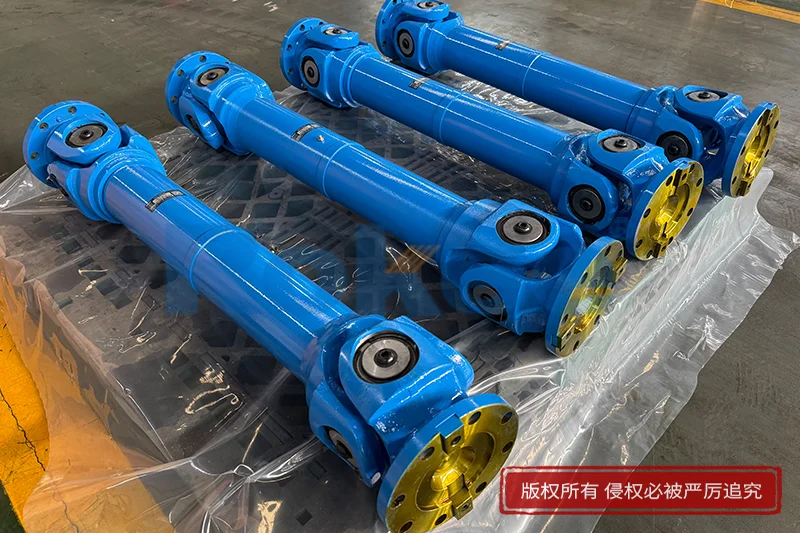
In the field of modern industrial manufacturing, the PU sandwich panel production line plays an important role in the construction, cold storage, and industrial building industries, with its efficient production capacity and stable product quality providing strong support for the development of related fields. The heavy load drive system is the core power transmission component of the entire production line, and the universal shaft, as a key part of this system, undertakes the important task of connecting different mechanical equipment, transmitting torque, and compensating for axial and angular deviations. In the heavy load operation environment of the PU sandwich panel production line, the performance and reliability of the universal shaft directly affect the overall operation efficiency, production stability, and service life of the production line. Therefore, in-depth understanding of the structural characteristics, performance advantages, application points, and maintenance methods of the universal shaft for PU sandwich panel line heavy load drive is of great practical significance for optimizing production efficiency, reducing equipment failure rates, and ensuring continuous and stable production.
The PU sandwich panel line involves multiple processes such as uncoiling, forming, foaming, compounding, and cutting, and each process requires stable power transmission to ensure the coordination and consistency of production operations. The heavy load drive system of the production line needs to bear large torque and dynamic load during operation, and at the same time, due to the layout differences of equipment in different processes, there are often deviations in the axis position between the driving end and the driven end, including angular deviation and axial displacement. The universal shaft, also known as the cardan shaft, is designed to solve the problem of power transmission between non-coaxial shafts, and can effectively transmit torque while compensating for these deviations, ensuring that the power is stably and efficiently transmitted to each functional component of the production line. Compared with other transmission components, the universal shaft has obvious advantages in adapting to heavy load, large angle deviation, and complex working conditions, making it an indispensable key component in the PU sandwich panel production line heavy load drive system.
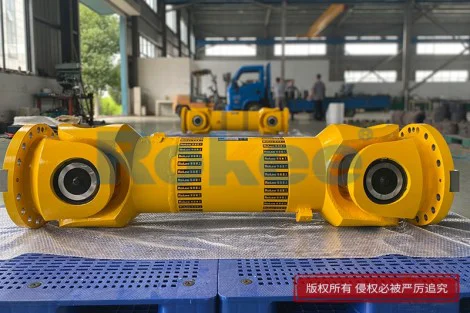
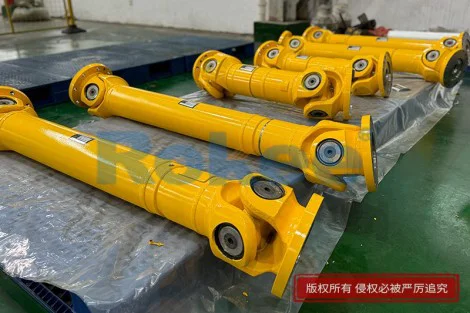
The structural design of the universal shaft for PU sandwich panel line heavy load drive is closely combined with the working characteristics of the production line, focusing on improving load-bearing capacity, transmission efficiency, and adaptability. The basic structure of a typical universal shaft includes cross shafts, yokes, bearings, spline shafts, and protective covers. The cross shaft is the core connecting component, with four ends respectively connected to the yokes of the driving end and the driven end through bearings, forming a hinge structure that can rotate freely. This structure allows the universal shaft to adjust the angle between the two connected shafts within a certain range, usually between 5° and 45°, so as to adapt to the axis deviation between different equipment in the production line. The yokes are connected to the driving shaft and the driven shaft respectively, and their structural strength directly determines the load-bearing capacity of the universal shaft. Therefore, the yokes are usually made of high-strength materials through forging and heat treatment processes to ensure that they can withstand large torque and impact load without deformation or damage.
Bearings are important components that ensure the flexible rotation of the cross shaft and the yokes. In the heavy load drive scenario of the PU sandwich panel production line, the bearings need to bear large radial and axial loads, and work in a harsh environment with dust, vibration, and variable temperature. Therefore, high-performance rolling bearings or sliding bearings with good wear resistance, corrosion resistance, and load-bearing capacity are usually selected. These bearings are pre-lubricated during production, which can reduce friction during operation, reduce wear, and extend the service life of the universal shaft. The spline shaft is used to connect the universal shaft with the driving or driven equipment, and its spline structure can realize axial sliding while transmitting torque, which is convenient for adjusting the installation distance between equipment and compensating for axial displacement caused by thermal expansion and contraction during operation. The protective cover is used to wrap the cross shaft, bearings, and other core components, preventing dust, impurities, and coolant from entering the internal structure, avoiding damage to the components, and ensuring the safe and stable operation of the universal shaft.
The material selection of the universal shaft is crucial to its performance and service life, especially in the heavy load drive environment of the PU sandwich panel production line, where the material needs to have excellent mechanical properties, wear resistance, and corrosion resistance. Common materials used for universal shafts include carbon steel, alloy steel, and ductile iron, among which alloy steel is widely used in heavy load scenarios due to its superior comprehensive performance. High-quality medium carbon steel such as 45# steel is often used for relatively important or heavy load-bearing shafts. After heat treatment processes such as quenching and tempering, its mechanical properties can be significantly improved, with appropriate hardness, strength, and toughness, which can meet the basic heavy load transmission needs. For more demanding heavy load and high torque scenarios, alloy steels such as 40Cr and 42CrMo are selected. These alloy steels add elements such as chromium and molybdenum on the basis of carbon steel, which significantly improve the hardenability, fatigue resistance, and wear resistance. After tempering treatment, their tensile strength and yield strength are greatly improved, which can withstand large dynamic loads and impact forces, and are suitable for the harsh working environment of PU sandwich panel production lines.
Ductile iron is also used in the production of universal shafts in some cases, especially for components with complex shapes. It has the advantages of low cost, relatively high strength, good wear resistance, vibration absorption, and easy processing, but its casting quality is not easy to control, and its reliability is relatively lower than that of steel materials, so it is usually used in non-critical transmission parts or light load scenarios. In addition, the surface of the universal shaft components often undergoes surface treatment processes such as shot peening, rolling, or plating, which can further improve the fatigue strength and wear resistance of the surface, reduce the impact of stress concentration, and extend the service life of the universal shaft. The selection of materials needs to comprehensively consider the load level, operating speed, environmental conditions, and other factors of the PU sandwich panel production line to ensure that the universal shaft can adapt to the actual working conditions and achieve stable and reliable operation.
In the PU sandwich panel production line, the universal shaft is widely used in various heavy load drive links, such as the drive system of the uncoiler, the transmission connection between the forming machine and the foaming machine, and the power transmission of the cutting machine. The uncoiler is an important equipment at the front end of the production line, which is responsible for uncoiling the steel coil used for the surface of the PU sandwich panel. During the uncoiling process, the uncoiler needs to provide stable torque to ensure that the steel coil is uncoiled at a uniform speed, and the universal shaft connects the motor and the uncoiler, transmitting the torque of the motor to the uncoiler while compensating for the axial and angular deviations between the motor and the uncoiler. This ensures that the uncoiling process is stable and smooth, avoiding problems such as uneven uncoiling speed and steel coil deviation, which affect the subsequent forming quality of the sandwich panel.
The forming machine and the foaming machine are core equipment in the production line. The forming machine shapes the surface steel plate into the required shape, and the foaming machine injects polyurethane foam into the middle of the two layers of steel plates to form the thermal insulation core layer. The power transmission between these two pieces of equipment requires high stability and accuracy, and the universal shaft plays a key connecting role. It can transmit the torque of the driving motor to the forming machine and the foaming machine stably, ensuring that the two pieces of equipment operate synchronously, and the speed and torque are matched accurately. At the same time, due to the different installation positions of the forming machine and the foaming machine, there is a certain axis deviation between them, and the universal shaft can effectively compensate for this deviation through its own structural characteristics, avoiding excessive stress on the transmission components, reducing wear and failure rates, and ensuring the stability of the forming and foaming processes.
The cutting machine is responsible for cutting the continuously produced PU sandwich panels into specified lengths. The cutting process requires the cutting machine to have stable power output and accurate speed control. The universal shaft connects the motor and the cutting blade, transmitting the torque of the motor to the cutting blade, ensuring that the cutting blade rotates at a uniform speed and has sufficient cutting force to cut the sandwich panels smoothly. In addition, during the long-term operation of the production line, the cutting machine may have slight position deviations due to vibration and other factors, and the universal shaft can adapt to these deviations through its own angle adjustment ability, ensuring that the cutting accuracy is not affected. The application of the universal shaft in these key links ensures the smooth progress of the entire PU sandwich panel production line, improves production efficiency, and ensures product quality.
The performance advantages of the universal shaft in the heavy load drive of the PU sandwich panel production line are mainly reflected in its strong load-bearing capacity, good deviation compensation ability, high transmission efficiency, and stable operation. In terms of load-bearing capacity, the universal shaft is designed according to the heavy load working conditions of the production line, and through reasonable structural design and material selection, it can bear large torque and dynamic load. The maximum torque that can be transmitted can reach several thousand Newton meters, and some heavy-duty universal shafts can even bear more than 900,000 Newton meters of torque, which can fully meet the power transmission needs of the PU sandwich panel production line. In terms of deviation compensation ability, the universal shaft can compensate for angular deviations between non-coaxial shafts and axial displacements within a certain range. The single-section universal shaft can usually achieve an angular deviation of up to 37°, and special designs can reach 45°, while the telescopic universal shaft can provide axial displacement compensation of 0-1000 mm, which can effectively solve the axis deviation problem between different equipment in the production line.
In terms of transmission efficiency, the universal shaft has a simple structure, small friction resistance during operation, and the transmission efficiency can reach more than 95%, which can effectively reduce energy loss and improve the energy utilization rate of the production line. At the same time, the universal shaft operates stably during operation, with low noise and small vibration, which can reduce the impact of the drive system on the surrounding equipment and the production environment, creating a stable and quiet production environment. In addition, the universal shaft has the advantages of simple structure, easy installation and maintenance, which can reduce the maintenance cost and workload of the production line, and improve the overall operation efficiency of the equipment.
However, in the actual operation process of the PU sandwich panel production line, the universal shaft will be affected by various factors, which may lead to wear, damage, and other problems, affecting the normal operation of the production line. Therefore, reasonable installation, regular maintenance, and scientific use of the universal shaft are essential to extend its service life and ensure its stable performance. In terms of installation, the universal shaft needs to be installed in accordance with the design requirements, ensuring that the connection between the yokes and the driving and driven shafts is firm, and the bolts are tightened according to the specified torque. Before installation, the surface of the flange and the spline shaft should be cleaned to remove oil stains and impurities, so as to avoid affecting the connection accuracy and transmission effect. At the same time, attention should be paid to checking whether the arrow marks of the spline shaft and the spline sleeve are aligned to ensure that the phase difference of the axis of the bearing holes of the yokes at both ends does not exceed the specified range.
In the process of handling and storage before installation, the universal shaft should be lifted horizontally using suitable nylon ropes to avoid vertical lifting, which may cause the spline parts to separate. The universal shaft should be transported and stored in a horizontal position, placed on a suitable wooden frame, and protected from impact, humidity, and condensation. For long-term storage, the machined parts should be protected against corrosion. For example, an oil-based transparent film can be used for short-term indoor storage, and a wax-based transparent film can be used for medium-term indoor storage or sea transportation. Before installation after long-term storage, the bearings and length compensator need to be re-lubricated to ensure flexible operation. In terms of lubrication, the universal shaft is pre-lubricated when it leaves the factory, but after a period of operation, it is necessary to supplement lubricating grease regularly. The bearing part should be supplemented with lubricating grease once a week in the initial stage of operation, and once a quarter after normal operation, while the spline pair side should be supplemented with lubricating grease once every six months. The selected lubricating grease should be suitable for the working conditions, such as No. 2 Industrial Lithium-based Grease, and a small amount of Molybdenum Disulfide (MoS2) can be added to the spline pair to improve the lubrication effect.
Regular inspection and maintenance are important measures to ensure the stable operation of the universal shaft. During the operation of the production line, the universal shaft should be inspected regularly, including checking for abnormal noise, axial movement of the cross shaft, normal radial runout, and whether the connecting bolts are loose. If any of the above phenomena are found, the machine should be stopped immediately for inspection, the cause should be analyzed, and maintenance or replacement should be carried out. The maintenance cycle of the universal shaft under normal operation is generally half a year to one year. During maintenance, the wear of the cross shaft journal, bearing outer ring, and short cylindrical roller contact surface should be checked, the radial clearance should be measured, and whether there are indentations, pitting, peeling, cracks, and other phenomena on the contact surface should be observed. The flange yoke and welding yoke should be inspected for crack hidden dangers by coloring flaw detection. If the spline pair is not sliding flexibly, or the wear and fit clearance are too large, or there is torsional deformation, it should be replaced or repaired. For high-speed operation of the universal shaft, balance test should be carried out when necessary to ensure stable operation.
In addition, attention should be paid to avoiding overloading the universal shaft for a long time and operating in violation of regulations, which will reduce its service life. During the operation of the production line, the load should be controlled within the rated load range of the universal shaft, and avoid sudden start and stop, which will cause impact load on the universal shaft. At the same time, the protective cover of the universal shaft should be kept intact to prevent foreign objects from entering the internal structure and causing damage to the components. In the event of failure of the universal shaft, it should be repaired or replaced in a timely manner, and the damaged components should not be used reluctantly, so as to avoid more serious equipment failures and production accidents.
With the continuous development of the PU sandwich panel industry, the production line is developing towards higher efficiency, larger scale, and more automation, which puts forward higher requirements for the heavy load drive system and the universal shaft. In the future, the universal shaft for PU sandwich panel line heavy load drive will be further optimized in terms of structural design, material selection, and performance improvement. For example, by adopting new materials and processing technologies, the load-bearing capacity and service life of the universal shaft will be improved; through the optimization of the structure, the deviation compensation ability and transmission efficiency of the universal shaft will be enhanced; and the intelligent monitoring function will be added to realize real-time monitoring of the operation status of the universal shaft, timely find potential faults, and improve the reliability and stability of the equipment.
In conclusion, the universal shaft is an indispensable key component in the heavy load drive system of the PU sandwich panel production line, with its unique structural characteristics and excellent performance, providing a reliable guarantee for the stable, efficient, and continuous operation of the production line. By in-depth understanding of the structural characteristics, material selection, application points, and maintenance methods of the universal shaft, and adopting scientific installation, use, and maintenance measures, the service life of the universal shaft can be effectively extended, the failure rate of the equipment can be reduced, the production efficiency of the PU sandwich panel production line can be improved, and the sustainable development of the PU sandwich panel industry can be promoted. In the increasingly competitive industrial market, the rational application and optimization of the universal shaft will become an important part of improving the core competitiveness of the PU sandwich panel production enterprise, helping the enterprise achieve better economic and social benefits.
In the field of modern industrial manufacturing, the PU sandwich panel production line plays an important role in the construction, cold storage, and industrial building industries, with its efficient production capacity and stable product quality providing strong support for the development of related fields. The heavy load drive system is the core power transmission component of the entire production line, and the universal shaft, as a key part of this system, undertakes the important task of connecting different mechanical equipment, transmitting torque, and compensating for axial and angular deviations. In the heavy load operation environment of the PU sandwich panel production line, the performance and reliability of the universal shaft directly affect the overall operation efficiency, production stability, and service life of the production line. Therefore, in-depth understanding of the structural characteristics, performance advantages, application points, and maintenance methods of the universal shaft for PU sandwich panel line heavy load drive is of great practical significance for optimizing production efficiency, reducing equipment failure rates, and ensuring continuous and stable production.
The PU sandwich panel production line involves multiple processes such as uncoiling, forming, foaming, compounding, and cutting, and each process requires stable power transmission to ensure the coordination and consistency of production operations. The heavy load drive system of the production line needs to bear large torque and dynamic load during operation, and at the same time, due to the layout differences of equipment in different processes, there are often deviations in the axis position between the driving end and the driven end, including angular deviation and axial displacement. The universal shaft, also known as the cardan shaft, is designed to solve the problem of power transmission between non-coaxial shafts, and can effectively transmit torque while compensating for these deviations, ensuring that the power is stably and efficiently transmitted to each functional component of the production line. Compared with other transmission components, the universal shaft has obvious advantages in adapting to heavy load, large angle deviation, and complex working conditions, making it an indispensable key component in the PU sandwich panel production line heavy load drive system.
The structural design of the universal shaft for PU sandwich panel line heavy load drive is closely combined with the working characteristics of the production line, focusing on improving load-bearing capacity, transmission efficiency, and adaptability. The basic structure of a typical universal shaft includes cross shafts, yokes, bearings, spline shafts, and protective covers. The cross shaft is the core connecting component, with four ends respectively connected to the yokes of the driving end and the driven end through bearings, forming a hinge structure that can rotate freely. This structure allows the universal shaft to adjust the angle between the two connected shafts within a certain range, usually between 5° and 45°, so as to adapt to the axis deviation between different equipment in the production line. The yokes are connected to the driving shaft and the driven shaft respectively, and their structural strength directly determines the load-bearing capacity of the universal shaft. Therefore, the yokes are usually made of high-strength materials through forging and heat treatment processes to ensure that they can withstand large torque and impact load without deformation or damage.
Bearings are important components that ensure the flexible rotation of the cross shaft and the yokes. In the heavy load drive scenario of the PU sandwich panel production line, the bearings need to bear large radial and axial loads, and work in a harsh environment with dust, vibration, and variable temperature. Therefore, high-performance rolling bearings or sliding bearings with good wear resistance, corrosion resistance, and load-bearing capacity are usually selected. These bearings are pre-lubricated during production, which can reduce friction during operation, reduce wear, and extend the service life of the universal shaft. The spline shaft is used to connect the universal shaft with the driving or driven equipment, and its spline structure can realize axial sliding while transmitting torque, which is convenient for adjusting the installation distance between equipment and compensating for axial displacement caused by thermal expansion and contraction during operation. The protective cover is used to wrap the cross shaft, bearings, and other core components, preventing dust, impurities, and coolant from entering the internal structure, avoiding damage to the components, and ensuring the safe and stable operation of the universal shaft.
The material selection of the universal shaft is crucial to its performance and service life, especially in the heavy load drive environment of the PU sandwich panel production line, where the material needs to have excellent mechanical properties, wear resistance, and corrosion resistance. Common materials used for universal shafts include carbon steel, alloy steel, and ductile iron, among which alloy steel is widely used in heavy load scenarios due to its superior comprehensive performance. High-quality medium carbon steel such as 45# steel is often used for relatively important or heavy load-bearing shafts. After heat treatment processes such as quenching and tempering, its mechanical properties can be significantly improved, with appropriate hardness, strength, and toughness, which can meet the basic heavy load transmission needs. For more demanding heavy load and high torque scenarios, alloy steels such as 40Cr and 42CrMo are selected. These alloy steels add elements such as chromium and molybdenum on the basis of carbon steel, which significantly improve the hardenability, fatigue resistance, and wear resistance. After tempering treatment, their tensile strength and yield strength are greatly improved, which can withstand large dynamic loads and impact forces, and are suitable for the harsh working environment of PU sandwich panel production lines.
Ductile iron is also used in the production of universal shafts in some cases, especially for components with complex shapes. It has the advantages of low cost, relatively high strength, good wear resistance, vibration absorption, and easy processing, but its casting quality is not easy to control, and its reliability is relatively lower than that of steel materials, so it is usually used in non-critical transmission parts or light load scenarios. In addition, the surface of the universal shaft components often undergoes surface treatment processes such as shot peening, rolling, or plating, which can further improve the fatigue strength and wear resistance of the surface, reduce the impact of stress concentration, and extend the service life of the universal shaft. The selection of materials needs to comprehensively consider the load level, operating speed, environmental conditions, and other factors of the PU sandwich panel production line to ensure that the universal shaft can adapt to the actual working conditions and achieve stable and reliable operation.
In the PU sandwich panel production line, the universal shaft is widely used in various heavy load drive links, such as the drive system of the uncoiler, the transmission connection between the forming machine and the foaming machine, and the power transmission of the cutting machine. The uncoiler is an important equipment at the front end of the production line, which is responsible for uncoiling the steel coil used for the surface of the PU sandwich panel. During the uncoiling process, the uncoiler needs to provide stable torque to ensure that the steel coil is uncoiled at a uniform speed, and the universal shaft connects the motor and the uncoiler, transmitting the torque of the motor to the uncoiler while compensating for the axial and angular deviations between the motor and the uncoiler. This ensures that the uncoiling process is stable and smooth, avoiding problems such as uneven uncoiling speed and steel coil deviation, which affect the subsequent forming quality of the sandwich panel.
The forming machine and the foaming machine are core equipment in the production line. The forming machine shapes the surface steel plate into the required shape, and the foaming machine injects polyurethane foam into the middle of the two layers of steel plates to form the thermal insulation core layer. The power transmission between these two pieces of equipment requires high stability and accuracy, and the universal shaft plays a key connecting role. It can transmit the torque of the driving motor to the forming machine and the foaming machine stably, ensuring that the two pieces of equipment operate synchronously, and the speed and torque are matched accurately. At the same time, due to the different installation positions of the forming machine and the foaming machine, there is a certain axis deviation between them, and the universal shaft can effectively compensate for this deviation through its own structural characteristics, avoiding excessive stress on the transmission components, reducing wear and failure rates, and ensuring the stability of the forming and foaming processes.
The cutting machine is responsible for cutting the continuously produced PU sandwich panels into specified lengths. The cutting process requires the cutting machine to have stable power output and accurate speed control. The universal shaft connects the motor and the cutting blade, transmitting the torque of the motor to the cutting blade, ensuring that the cutting blade rotates at a uniform speed and has sufficient cutting force to cut the sandwich panels smoothly. In addition, during the long-term operation of the production line, the cutting machine may have slight position deviations due to vibration and other factors, and the universal shaft can adapt to these deviations through its own angle adjustment ability, ensuring that the cutting accuracy is not affected. The application of the universal shaft in these key links ensures the smooth progress of the entire PU sandwich panel production line, improves production efficiency, and ensures product quality.
The performance advantages of the universal shaft in the heavy load drive of the PU sandwich panel production line are mainly reflected in its strong load-bearing capacity, good deviation compensation ability, high transmission efficiency, and stable operation. In terms of load-bearing capacity, the universal shaft is designed according to the heavy load working conditions of the production line, and through reasonable structural design and material selection, it can bear large torque and dynamic load. The maximum torque that can be transmitted can reach several thousand Newton meters, and some heavy-duty universal shafts can even bear more than 900,000 Newton meters of torque, which can fully meet the power transmission needs of the PU sandwich panel production line. In terms of deviation compensation ability, the universal shaft can compensate for angular deviations between non-coaxial shafts and axial displacements within a certain range. The single-section universal shaft can usually achieve an angular deviation of up to 37°, and special designs can reach 45°, while the telescopic universal shaft can provide axial displacement compensation of 0-1000 mm, which can effectively solve the axis deviation problem between different equipment in the production line.
In terms of transmission efficiency, the universal shaft has a simple structure, small friction resistance during operation, and the transmission efficiency can reach more than 95%, which can effectively reduce energy loss and improve the energy utilization rate of the production line. At the same time, the universal shaft operates stably during operation, with low noise and small vibration, which can reduce the impact of the drive system on the surrounding equipment and the production environment, creating a stable and quiet production environment. In addition, the universal shaft has the advantages of simple structure, easy installation and maintenance, which can reduce the maintenance cost and workload of the production line, and improve the overall operation efficiency of the equipment.
However, in the actual operation process of the PU sandwich panel production line, the universal shaft will be affected by various factors, which may lead to wear, damage, and other problems, affecting the normal operation of the production line. Therefore, reasonable installation, regular maintenance, and scientific use of the universal shaft are essential to extend its service life and ensure its stable performance. In terms of installation, the universal shaft needs to be installed in accordance with the design requirements, ensuring that the connection between the yokes and the driving and driven shafts is firm, and the bolts are tightened according to the specified torque. Before installation, the surface of the flange and the spline shaft should be cleaned to remove oil stains and impurities, so as to avoid affecting the connection accuracy and transmission effect. At the same time, attention should be paid to checking whether the arrow marks of the spline shaft and the spline sleeve are aligned to ensure that the phase difference of the axis of the bearing holes of the yokes at both ends does not exceed the specified range.
In the process of handling and storage before installation, the universal shaft should be lifted horizontally using suitable nylon ropes to avoid vertical lifting, which may cause the spline parts to separate. The universal shaft should be transported and stored in a horizontal position, placed on a suitable wooden frame, and protected from impact, humidity, and condensation. For long-term storage, the machined parts should be protected against corrosion. For example, an oil-based transparent film can be used for short-term indoor storage, and a wax-based transparent film can be used for medium-term indoor storage or sea transportation. Before installation after long-term storage, the bearings and length compensator need to be re-lubricated to ensure flexible operation. In terms of lubrication, the universal shaft is pre-lubricated when it leaves the factory, but after a period of operation, it is necessary to supplement lubricating grease regularly. The bearing part should be supplemented with lubricating grease once a week in the initial stage of operation, and once a quarter after normal operation, while the spline pair side should be supplemented with lubricating grease once every six months. The selected lubricating grease should be suitable for the working conditions, such as No. 2 Industrial Lithium-based Grease, and a small amount of Molybdenum Disulfide (MoS2) can be added to the spline pair to improve the lubrication effect.
Regular inspection and maintenance are important measures to ensure the stable operation of the universal shaft. During the operation of the production line, the universal shaft should be inspected regularly, including checking for abnormal noise, axial movement of the cross shaft, normal radial runout, and whether the connecting bolts are loose. If any of the above phenomena are found, the machine should be stopped immediately for inspection, the cause should be analyzed, and maintenance or replacement should be carried out. The maintenance cycle of the universal shaft under normal operation is generally half a year to one year. During maintenance, the wear of the cross shaft journal, bearing outer ring, and short cylindrical roller contact surface should be checked, the radial clearance should be measured, and whether there are indentations, pitting, peeling, cracks, and other phenomena on the contact surface should be observed. The flange yoke and welding yoke should be inspected for crack hidden dangers by coloring flaw detection. If the spline pair is not sliding flexibly, or the wear and fit clearance are too large, or there is torsional deformation, it should be replaced or repaired. For high-speed operation of the universal shaft, balance test should be carried out when necessary to ensure stable operation.
In addition, attention should be paid to avoiding overloading the universal shaft for a long time and operating in violation of regulations, which will reduce its service life. During the operation of the production line, the load should be controlled within the rated load range of the universal shaft, and avoid sudden start and stop, which will cause impact load on the universal shaft. At the same time, the protective cover of the universal shaft should be kept intact to prevent foreign objects from entering the internal structure and causing damage to the components. In the event of failure of the universal shaft, it should be repaired or replaced in a timely manner, and the damaged components should not be used reluctantly, so as to avoid more serious equipment failures and production accidents.
With the continuous development of the PU sandwich panel industry, the production line is developing towards higher efficiency, larger scale, and more automation, which puts forward higher requirements for the heavy load drive system and the universal shaft. In the future, the universal shaft for PU sandwich panel line heavy load drive will be further optimized in terms of structural design, material selection, and performance improvement. For example, by adopting new materials and processing technologies, the load-bearing capacity and service life of the universal shaft will be improved; through the optimization of the structure, the deviation compensation ability and transmission efficiency of the universal shaft will be enhanced; and the intelligent monitoring function will be added to realize real-time monitoring of the operation status of the universal shaft, timely find potential faults, and improve the reliability and stability of the equipment.
In conclusion, the universal shaft is an indispensable key component in the heavy load drive system of the PU sandwich panel production line, with its unique structural characteristics and excellent performance, providing a reliable guarantee for the stable, efficient, and continuous operation of the production line. By in-depth understanding of the structural characteristics, material selection, application points, and maintenance methods of the universal shaft, and adopting scientific installation, use, and maintenance measures, the service life of the universal shaft can be effectively extended, the failure rate of the equipment can be reduced, the production efficiency of the PU sandwich panel production line can be improved, and the sustainable development of the PU sandwich panel industry can be promoted. In the increasingly competitive industrial market, the rational application and optimization of the universal shaft will become an important part of improving the core competitiveness of the PU sandwich panel production enterprise, helping the enterprise achieve better economic and social benefits.