Lubrication Maintenance Of Barrel Gear Coupling And Maintenance Of PUR Sandwich Panel Production Line
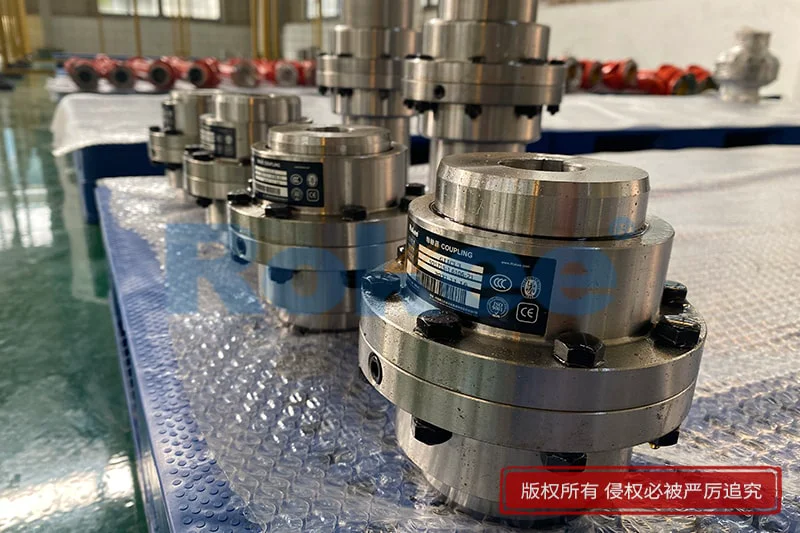
In modern industrial production, the stable operation of mechanical equipment is the core guarantee for improving production efficiency, reducing production costs and ensuring product quality. Barrel gear couplings, as important transmission components, are widely used in various mechanical transmission systems, especially in the transmission link of PUR sandwich panel production lines. Their working state directly affects the stability and safety of the entire production line. At the same time, the PUR sandwich panel production line is a complex integrated system composed of multiple functional modules. Each module's normal operation and coordinated work are the premise of continuous and efficient production. Therefore, doing a good job in the lubrication maintenance of barrel gear couplings and the comprehensive maintenance of the PUR sandwich panel production line is of great practical significance for extending the service life of equipment, reducing the frequency of equipment failures, and ensuring the smooth progress of production.
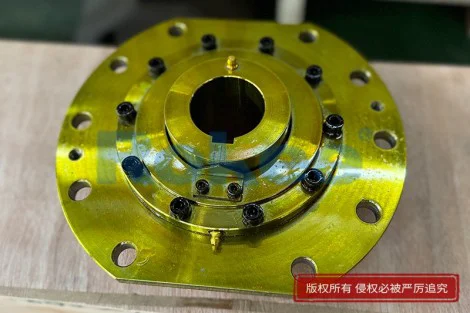
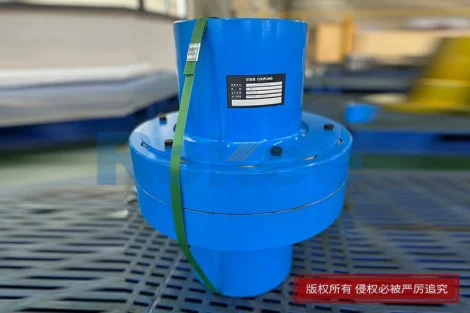
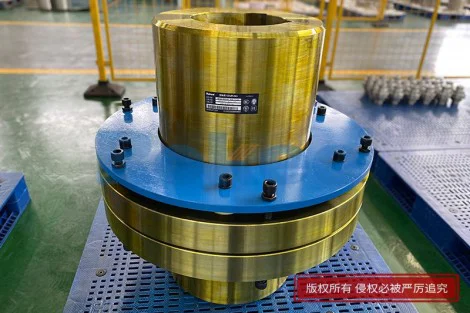
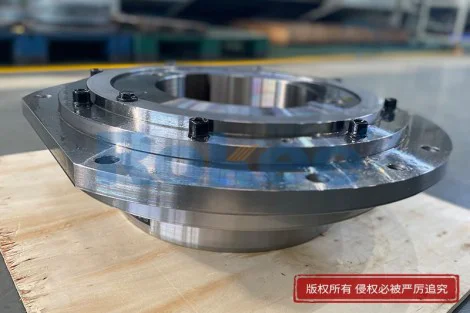
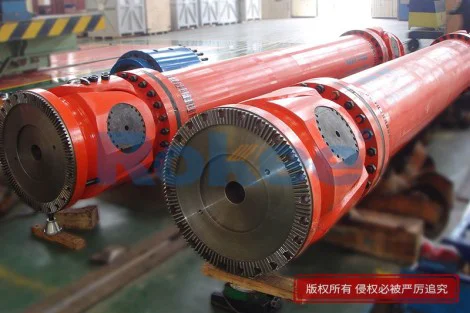
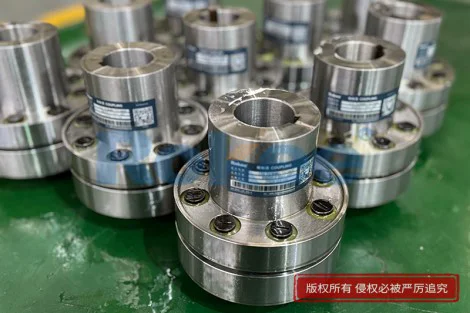
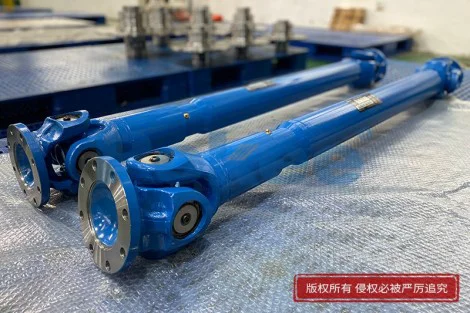
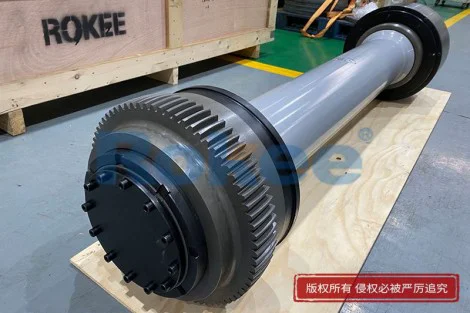
Barrel gear couplings are widely used in mechanical transmission due to their advantages of large transmission torque, good alignment performance, strong impact resistance and compact structure. They are often used to connect two shafts that need to transmit torque in the PUR sandwich panel production line, such as the transmission shaft of the uncoiler, the transmission part of the forming machine and the drive shaft of the cutting machine. In the long-term operation process, the gear teeth of the barrel gear coupling are in continuous meshing state, and there will be inevitable friction and wear between the tooth surfaces. If effective lubrication measures are not taken, the wear speed of the gear teeth will be accelerated, which will lead to the increase of transmission noise, the decrease of transmission efficiency, and even the damage of the gear teeth in serious cases, resulting in the shutdown of the entire production line. Therefore, lubrication maintenance is the key link to ensure the normal operation of the barrel gear coupling, and it is also an important part of the daily maintenance of the PUR sandwich panel production line.
The lubrication maintenance of barrel gear couplings needs to follow scientific principles and standardized operating procedures, starting from the selection of lubricants, lubrication methods, lubrication cycle and other aspects to ensure the lubrication effect. First of all, the selection of lubricants is the foundation of lubrication maintenance. The lubricant used for barrel gear couplings needs to have good lubricity, wear resistance, oxidation resistance and temperature resistance, so as to form a stable oil film on the tooth surface of the gear, reduce friction and wear, and prevent the tooth surface from being scratched, glued and corroded. In the PUR sandwich panel production line, the operating environment of the barrel gear coupling is usually accompanied by a certain temperature and dust, so the selected lubricant should also have good dust resistance and high-temperature stability, so as to avoid the deterioration of the lubricant under high temperature conditions and the loss of lubrication performance. Common lubricants suitable for barrel gear couplings include industrial gear oil of appropriate viscosity grade, which should be selected according to the working speed, transmission torque and operating temperature of the coupling. For example, in the transmission part with high speed and small torque, low-viscosity gear oil can be selected to ensure the fluidity of the lubricant and the rapid formation of the oil film; in the transmission part with low speed and large torque, high-viscosity gear oil can be selected to enhance the load-bearing capacity of the oil film and avoid the damage of the oil film under heavy load.
In addition to selecting the appropriate lubricant, the correct lubrication method is also an important factor to ensure the lubrication effect. The lubrication methods of barrel gear couplings mainly include oil immersion lubrication, oil injection lubrication and grease lubrication. Different lubrication methods are suitable for different working conditions. Oil immersion lubrication is suitable for couplings with low working speed and large volume. The gear part of the coupling is immersed in the lubricating oil, so that the tooth surface can be fully lubricated during the operation of the gear. However, it should be noted that the oil level should be controlled within a reasonable range. Too high oil level will increase the resistance of the gear operation and cause energy loss; too low oil level will not be able to fully lubricate the tooth surface, resulting in increased wear. Oil injection lubrication is suitable for couplings with high working speed and small volume. The lubricating oil is injected into the meshing part of the gear teeth through the oil injection hole by a lubricating pump, so as to realize continuous lubrication. This method can ensure that the lubricating oil can reach the friction surface in time, and is suitable for the working environment with high temperature and large load. Grease lubrication is suitable for couplings with low speed, light load and relatively closed working environment. Grease has good adhesion and sealing performance, which can effectively prevent dust and impurities from entering the gear meshing part, and maintain the lubrication effect for a long time. However, it should be noted that the grease should be replaced regularly, because the grease will gradually age and deteriorate after long-term use, resulting in the loss of lubrication performance.
The lubrication cycle of the barrel gear coupling is also an important part of lubrication maintenance. The lubrication cycle should be determined according to the working conditions of the coupling, such as working speed, transmission torque, operating temperature and environmental conditions. In the normal operation of the PUR sandwich panel production line, the lubricating oil of the barrel gear coupling should be regularly inspected and replaced. Generally speaking, the lubricating oil should be replaced every 6 to 12 months, but if the working environment is harsh, such as high temperature, high dust or heavy load, the replacement cycle should be appropriately shortened. Before replacing the lubricating oil, the inside of the coupling should be thoroughly cleaned to remove the old lubricating oil, impurities and wear debris, so as to avoid the mixing of old and new lubricating oil affecting the lubrication effect. At the same time, when adding lubricating oil, the oil level should be checked at any time to ensure that it is within the specified range. In addition, during the daily operation of the equipment, the lubrication status of the coupling should be regularly inspected, such as whether there is oil leakage, whether the lubricating oil is discolored or deteriorated, and whether the gear meshing part has abnormal noise. If any problems are found, timely measures should be taken to deal with them, so as to avoid the deterioration of the equipment state.
In addition to the lubrication maintenance of the barrel gear coupling, the comprehensive maintenance of the PUR sandwich panel production line is also crucial. The PUR sandwich panel production line is composed of multiple functional modules, including uncoiling module, feeding module, forming module, PUR foaming module, compounding module, cutting module and stacking module. Each module has its own unique structure and working principle, and the maintenance focus is also different. Only by doing a good job in the maintenance of each module can the stable operation of the entire production line be ensured.
The uncoiling module is the starting part of the PUR sandwich panel production line, which is mainly used to uncoil the raw materials (such as color steel plate, aluminum plate, etc.) into a flat state for subsequent processing. The maintenance of the uncoiling module mainly focuses on the uncoiling roller, tension control device and guide device. The uncoiling roller should be regularly inspected for wear, deformation and surface smoothness. If there is wear or deformation, it should be repaired or replaced in time to avoid affecting the flatness of the raw materials. The tension control device is used to control the tension of the raw materials during the uncoiling process, so as to ensure that the raw materials are not wrinkled or stretched. The tension control device should be regularly calibrated to ensure the accuracy of the tension control. The guide device is used to guide the raw materials to enter the next module smoothly. The guide roller should be regularly cleaned and lubricated to avoid the raw materials being scratched due to the stuck guide roller.
The feeding module is responsible for transporting the uncoiled raw materials to the forming module according to a certain speed and direction. The maintenance of the feeding module mainly includes the maintenance of the conveyor belt, roller and driving device. The conveyor belt should be regularly inspected for wear, aging and deviation. If the conveyor belt is worn or aging, it should be replaced in time; if there is deviation, the position of the roller should be adjusted to ensure the normal operation of the conveyor belt. The roller should be regularly cleaned and lubricated to reduce friction and wear. The driving device of the feeding module usually includes a motor and a reducer. The motor should be regularly inspected for temperature, noise and vibration. If there is abnormal temperature rise, noise or vibration, it should be stopped for inspection and maintenance. The reducer should be regularly inspected and replaced with lubricating oil to ensure its normal transmission performance.
The forming module is the core part of the PUR sandwich panel production line, which is used to form the raw materials into the required shape (such as corrugated shape, flat shape, etc.). The maintenance of the forming module mainly focuses on the forming roller, mold and adjusting device. The forming roller should be regularly inspected for wear, deformation and surface finish. If there is wear or deformation, it should be repaired or replaced to ensure the forming accuracy of the product. The mold should be regularly cleaned to remove the residual raw materials and impurities, so as to avoid affecting the forming effect of the product. The adjusting device is used to adjust the distance and angle between the forming rollers to meet the production needs of different specifications of products. The adjusting device should be regularly inspected and lubricated to ensure the flexibility and accuracy of the adjustment.
The PUR foaming module is the key part to ensure the thermal insulation performance of the PUR sandwich panel, which is used to mix the PUR raw materials and inject them into the gap between the two layers of face plates to form a foaming core layer. The maintenance of the PUR foaming module mainly includes the maintenance of the foaming machine, mixing device and feeding pipeline. The foaming machine should be regularly inspected for the working status of the pump, valve and sensor. The pump should be regularly cleaned and lubricated to ensure its normal working performance. The valve should be regularly inspected for leakage and flexibility. If there is leakage, it should be repaired or replaced in time. The sensor should be regularly calibrated to ensure the accuracy of the raw material ratio. The mixing device is used to mix the PUR raw materials evenly. The mixing blade should be regularly inspected for wear and deformation. If there is wear or deformation, it should be replaced in time to ensure the mixing effect. The feeding pipeline should be regularly cleaned to remove the residual foaming material, so as to avoid pipeline blockage.
The compounding module is used to bond the foaming core layer and the two layers of face plates into an integral PUR sandwich panel. The maintenance of the compounding module mainly includes the maintenance of the compounding roller, pressure device and heating device. The compounding roller should be regularly inspected for wear, deformation and surface smoothness. If there is wear or deformation, it should be repaired or replaced to ensure the bonding effect of the panel. The pressure device is used to apply a certain pressure to the compounded panel to ensure the tight bonding between the core layer and the face plate. The pressure device should be regularly inspected and adjusted to ensure the stability of the pressure. The heating device is used to heat the face plate and the foaming core layer to improve the bonding strength. The heating device should be regularly inspected for the working status of the heating tube and temperature control system. If the heating tube is damaged, it should be replaced in time; the temperature control system should be regularly calibrated to ensure the accuracy of the heating temperature.
The cutting module is used to cut the continuous PUR sandwich panel into products of specified length according to the production needs. The maintenance of the cutting module mainly includes the maintenance of the cutting knife, guide device and positioning device. The cutting knife should be regularly inspected for wear and sharpness. If the cutting knife is worn or not sharp enough, it should be sharpened or replaced in time to ensure the cutting quality and efficiency. The guide device is used to guide the panel to enter the cutting position accurately. The guide roller should be regularly cleaned and lubricated to avoid the panel deviating during the cutting process. The positioning device is used to determine the cutting length. The positioning device should be regularly calibrated to ensure the accuracy of the cutting length.
The stacking module is used to stack the cut PUR sandwich panel neatly for storage and transportation. The maintenance of the stacking module mainly includes the maintenance of the stacking mechanism, conveyor roller and lifting device. The stacking mechanism should be regularly inspected for the working status of the mechanical arm and clamping device. The mechanical arm should be regularly lubricated to ensure its flexibility; the clamping device should be regularly inspected for wear and clamping force. If there is wear, it should be repaired or replaced in time to avoid the panel falling during stacking. The conveyor roller should be regularly cleaned and lubricated to ensure the smooth transportation of the panel. The lifting device is used to lift the panel to the specified height for stacking. The lifting device should be regularly inspected for the working status of the hydraulic system or electric system. If there is abnormal noise or movement, it should be stopped for inspection and maintenance.
In addition to the maintenance of each functional module, the daily inspection and maintenance of the entire PUR sandwich panel production line is also indispensable. The daily inspection should include the inspection of the equipment's operating status, such as whether there is abnormal noise, vibration, temperature rise and leakage; the inspection of the electrical system, such as whether the wires are loose, whether the electrical components are damaged; the inspection of the safety protection device, such as whether the safety door, emergency stop button are in normal working condition. For the problems found in the daily inspection, they should be recorded in detail and dealt with in a timely manner. At the same time, the equipment should be regularly maintained comprehensively, including cleaning, lubrication, adjustment, fastening and replacement of vulnerable parts. The maintenance records should be kept properly, so as to provide a basis for the subsequent maintenance work and equipment improvement.
It should be noted that the maintenance work of the barrel gear coupling and the PUR sandwich panel production line should be carried out by professional maintenance personnel who are familiar with the structure and working principle of the equipment. Before carrying out the maintenance work, the power supply of the equipment should be cut off, and the safety warning signs should be hung to prevent accidental start-up of the equipment and ensure the personal safety of the maintenance personnel. At the same time, the maintenance personnel should strictly follow the maintenance procedures and operating specifications to avoid improper maintenance leading to equipment damage or safety accidents. In addition, the maintenance personnel should also receive regular training to master the latest maintenance technology and methods, so as to improve the maintenance level and ensure the maintenance quality.
In conclusion, the lubrication maintenance of the barrel gear coupling and the comprehensive maintenance of the PUR sandwich panel production line are important links to ensure the stable operation of the equipment and the smooth progress of production. By selecting appropriate lubricants, adopting correct lubrication methods and strictly following the lubrication cycle, the service life of the barrel gear coupling can be extended, and the transmission efficiency and stability can be improved. By doing a good job in the maintenance of each functional module of the PUR sandwich panel production line, regularly carrying out daily inspection and comprehensive maintenance, the frequency of equipment failures can be reduced, the production efficiency can be improved, and the quality of the products can be ensured. Therefore, enterprises should attach great importance to the maintenance work of the equipment, establish a sound maintenance system, and arrange professional personnel to be responsible for the maintenance work, so as to provide a strong guarantee for the sustainable development of the enterprise.