Tyre Type Coupling

Tyre type coupling is a widely adopted flexible transmission component in modern mechanical systems, distinguished by its unique elastic tyre structure that bridges driving and driven mechanical shafts. As a core connecting part for power transmission, it primarily relies on the elastic deformation of rubber tyre components to transmit torque, while integrating multiple practical functions such as vibration damping, shock absorption, and multi-directional displacement compensation. Different from rigid couplings and other flexible coupling types, this coupling features outstanding structural flexibility and adaptive performance, making it highly compatible with complex and variable industrial operating conditions. Its simple assembly structure, maintenance-free operation, and stable working performance enable it to effectively resolve common mechanical operation problems including shaft misalignment, operational vibration, and instantaneous impact loads. It has become an indispensable basic component in general machinery, fluid equipment, and conveying systems, providing reliable guarantee for the long-term stable operation of various mechanical transmission devices.
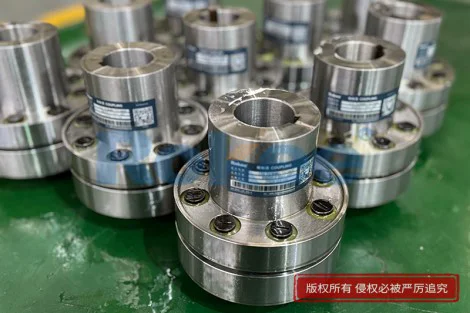
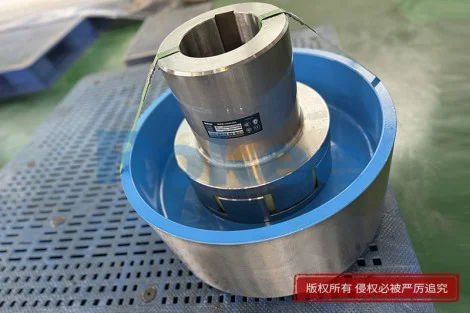
The basic structural composition of tyre type coupling is simple and scientific, mainly consisting of two symmetric metal hubs and an integral elastic rubber tyre body, with no complex auxiliary transmission parts or precision locking structures. The metal hubs are responsible for connecting the driving and driven shafts respectively, achieving fixed assembly with mechanical shafts through conventional fastening structures, while the vulcanized rubber tyre element serves as the core elastic transmission medium between the two hubs. The overall structure adopts a modular integrated design, where the rubber tyre and metal hubs form a unified whole through precise assembly and friction matching, ensuring synchronous rotation during equipment operation. This structural design abandons the rigid contact transmission mode of traditional couplings, replacing hard friction and rigid torque transmission with flexible elastic deformation. The open and streamlined structural layout not only reduces the overall volume and assembly difficulty of the coupling but also avoids the structural defects of easy jamming and wear of multi-part combined couplings. In actual assembly, workers can complete installation and positioning without professional precision calibration tools, which greatly improves the on-site assembly efficiency of mechanical equipment and reduces the technical threshold of equipment debugging.
The working principle of tyre coupling centers on the elastic deformation and friction transmission characteristics of rubber materials, realizing efficient and stable power transmission in mechanical systems. During equipment operation, the driving shaft drives one side of the metal hub to rotate, and the torque is transmitted to the rubber tyre body through the friction force between the hub end face and the tyre contact surface. Under the action of torque, the rubber tyre produces mild torsional shear elastic deformation, which drives the other side hub and the connected driven shaft to rotate synchronously, thus completing the whole process of power transmission. When the connected mechanical shafts produce angular, radial or axial displacement due to installation errors, equipment operation vibration or frame slight deformation, the high elasticity of the rubber tyre can adapt to such multi-dimensional displacement changes through self-flexion and torsion deformation. This flexible adaptation effectively avoids rigid extrusion and stress concentration between shafts. In addition, the rubber tyre can absorb and dissipate the instantaneous impact energy generated by equipment start-stop, load mutation and operational vibration through elastic deformation, weakening the fluctuation of transmission torque and ensuring the continuity and stability of power output in the whole mechanical system.
Tyre type coupling boasts excellent comprehensive performance advantages, which make it stand out among various flexible coupling products and gain wide industrial recognition. Its most prominent advantage lies in the superior multi-directional displacement compensation ability, which can adapt to larger shaft misalignment ranges than jaw couplings, gear couplings and other common types. It can effectively buffer and compensate the coaxial deviation, radial runout and axial displacement of the two connected shafts caused by manufacturing and installation errors and long-term operational deformation, greatly reducing the additional mechanical stress borne by shafts, bearings and equipment bodies. Secondly, it has remarkable vibration damping and shock absorption performance. The rubber elastic element can effectively suppress torsional vibration and mechanical resonance generated during equipment operation, convert vibration and impact energy into elastic potential energy and dissipate it slowly, reducing equipment operation noise and vibration amplitude. Moreover, the coupling has extremely low daily maintenance cost, as its fully flexible rubber structure does not need lubrication and oiling during operation, avoiding the pollution of lubricating media to the equipment and working environment. The overall structure is wear-resistant and durable, and the damaged rubber tyre element can be replaced independently without replacing the whole coupling, which greatly saves equipment operation and maintenance costs.
In terms of operational stability and environmental adaptability, tire coupling shows strong tolerance to complex working conditions and variable load environments. It can maintain stable transmission performance under frequent start-stop, intermittent load and variable speed operation states, which are common in industrial production. For mechanical equipment with unstable load such as frequent overload and instantaneous impact, the elastic buffer structure of the coupling can effectively decompose sudden load pressure, protect the transmission shaft, motor and reducer from impact damage, and extend the service life of core equipment components. In terms of environmental adaptation, the optimized rubber formula enables the tyre element to resist mild temperature changes and conventional atmospheric corrosion, and can work stably in conventional indoor and outdoor industrial environments without being easily affected by dust, humidity and other environmental factors. Its flexible transmission characteristics also avoid rigid torque mutation during equipment operation, effectively prevent equipment failure and shutdown caused by transmission jamming, and improve the continuous operation capacity of production lines. Compared with rigid couplings which are prone to shaft damage under misalignment conditions and metal elastic couplings which have poor vibration damping effects, it has more balanced and reliable comprehensive environmental adaptability.
Tyre type coupling is widely applied in various general industrial mechanical transmission scenarios, covering multiple fields of mechanical production and industrial manufacturing. It is the preferred connecting component for fluid conveying equipment such as various pumps and compressors, which often face unstable load and slight vibration during operation, and the coupling can effectively buffer vibration and stabilize power transmission to ensure the efficient operation of fluid conveying systems. In material conveying equipment such as belt conveyors and screw conveyors, it adapts to the vibration and displacement generated by long-distance conveying and intermittent operation, avoiding transmission failure caused by shaft deviation. It is also widely used in power generation, ventilation and heat dissipation equipment, as well as light industrial processing machinery, providing stable power connection for low and medium-speed mechanical transmission systems. In addition, it is applicable to various mechanical devices with frequent start-stop and variable load operation requirements, effectively reducing the failure rate of transmission parts. Its simple structure, convenient replacement and stable performance make it suitable for both small and medium-sized mechanical supporting equipment and large-scale continuous production line systems, with extremely high industrial practicality and universality.
Despite its numerous performance advantages, tyre type coupling also has certain inherent functional limitations in practical application, requiring reasonable type selection and standardized use according to working conditions. Its main limitation is the relatively low bearing capacity compared with metal rigid couplings, making it unsuitable for high-torque and heavy-load precision transmission scenarios. When bearing excessive torsional angle, the rubber tyre will produce obvious distortion deformation, resulting in slight shrinkage of axial size and generating additional axial force on the connected shaft parts, which increases the operating load of equipment bearings. In high-speed operation environments, the centrifugal force generated by the rotation of the tyre outer edge will further amplify the additional axial force, affecting the operational precision of high-speed equipment. Meanwhile, long-term continuous alternating load operation will cause fatigue loss of the rubber material, leading to gradual aging and deformation of the tyre element after long-term use. Therefore, in practical application, it is necessary to avoid over-speed and over-load operation, and regular visual inspection of the rubber element is required to replace aging and deformed parts in time, so as to maintain the best transmission performance of the coupling.
With the continuous upgrading of modern industrial mechanical transmission technology, tyre type coupling is constantly optimized in material formula and structural design, further expanding its application value in industrial fields. Modern optimized tyre type coupling adopts enhanced rubber composite materials, which effectively improves the wear resistance, aging resistance and fatigue resistance of the elastic element, prolonging the overall service life on the basis of retaining original flexible damping and displacement compensation advantages. The optimized structural design reduces the additional axial force generated during operation, improving the operational stability under medium and high-speed working conditions. As industrial equipment develops towards high efficiency, low noise and low failure rate, the flexible transmission and buffer protection functions of tyre type coupling are more in line with the development needs of modern intelligent and low-consumption mechanical systems. In the future, with the continuous innovation of new elastic materials and processing technology, tyre type coupling will break through more original performance limitations, adapt to more diversified and high-standard industrial working conditions, and continue to play an important role in the field of mechanical power transmission.