Rubber Tire Coupling

In modern industrial transmission systems, rubber tire couplings play an indispensable role as flexible connection components, bridging the gap between power sources and executive mechanisms to ensure stable, efficient and safe torque transmission. Unlike rigid couplings that rely on direct hard connection, rubber tire couplings utilize the unique elastic properties of rubber materials to achieve flexible power transmission, which not only compensates for shaft misalignments caused by installation errors, thermal expansion or mechanical vibration but also absorbs impact loads and reduces operational noise, effectively protecting the integrity of the entire transmission system and extending the service life of related equipment. With the continuous upgrading of industrial production technologies, the application scope of rubber tire couplings has expanded from traditional general machinery to high-demand fields such as metallurgy, mining, chemical industry, construction machinery and textile machinery, becoming a key component supporting the stable operation of industrial production. To fully understand the value and application potential of rubber tire couplings, it is necessary to conduct an in-depth analysis of their structure, performance, types and application scenarios, which can provide effective guidance for the rational selection, correct installation and scientific maintenance of the couplings in practical industrial production.
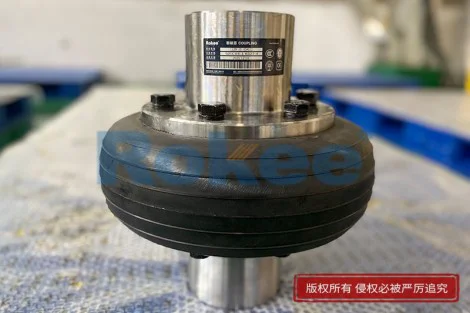
The structure of a rubber tire coupling is relatively simple but scientifically designed, with each component undertaking specific functions to ensure the overall performance of the coupling. Generally, a standard rubber tire coupling is composed of three core parts: two metal half-couplings (flanges), a rubber tire elastomer and a set of connecting fasteners. The metal half-couplings, as the key components connecting the driving shaft and the driven shaft, are usually made of high-strength cast iron, cast steel or 45# steel, which are processed through precision machining processes such as turning, milling and drilling to ensure high dimensional accuracy and structural strength. The surface of the half-couplings is usually treated with anti-corrosion processes such as galvanizing or painting to enhance their resistance to harsh working environments such as humidity and dust. Each half-coupling is equipped with a shaft hole that matches the size of the connected shaft, and keyways or set screws are designed to ensure a firm connection between the half-coupling and the shaft, preventing relative sliding during torque transmission. In addition, the end face of the half-coupling is evenly distributed with bolt holes, which are used to connect with the rubber tire elastomer through fasteners, forming a complete torque transmission path.
The rubber tire elastomer is the core functional component of the rubber tire coupling, determining the coupling's elastic performance, damping effect and service life. It is usually made of high-quality natural rubber, neoprene, polyurethane or other elastic materials, and some high-performance models will embed nylon threads, nylon cloth or steel wire mesh as a skeleton reinforcement layer inside the elastomer to improve its tear resistance, tensile strength and fatigue resistance. The elastomer is processed into a tire-like shape, which is not only conducive to increasing the contact area with the metal half-couplings but also enables it to generate uniform elastic deformation during torque transmission, thereby achieving better shock absorption and displacement compensation effects. The connection between the rubber tire elastomer and the metal half-couplings is mainly realized through high-temperature vulcanization technology, which firmly bonds the elastomer to the metal surface, ensuring that there is no relative displacement between the two during operation and improving the reliability of torque transmission. Some special structural designs also use internal pressure plates and bolts to fix the elastomer to the half-couplings, which facilitates the replacement of the elastomer when it is worn or damaged, reducing maintenance costs and downtime.
The connecting fasteners mainly include bolts, nuts and washers, which are used to tightly connect the two metal half-couplings and the rubber tire elastomer. The bolts are usually made of high-strength alloy steel, which has excellent tensile strength and shear resistance to withstand the large torque and impact force generated during operation. The washers are used to distribute the pressure of the bolts evenly on the surface of the elastomer and the half-couplings, avoiding local stress concentration that may damage the elastomer or the half-couplings. In the assembly process, the pre-tightening force of the bolts needs to be strictly controlled: excessive pre-tightening force may cause the elastomer to be compressed and deformed, affecting its elastic performance; insufficient pre-tightening force may lead to loose connection, resulting in relative sliding between components and even failure of torque transmission. The overall structural design of the rubber tire coupling is compact, with a small volume and light weight, which can save installation space and reduce the rotational inertia of the transmission system, making it suitable for installation in limited space environments.
The performance of rubber tire couplings is closely related to their structural design and material selection, and their core performance advantages are mainly reflected in flexibility, shock absorption, displacement compensation, electrical insulation and maintenance convenience. Flexibility is one of the most prominent characteristics of rubber tire couplings. Due to the high elasticity of the rubber tire elastomer, the coupling can generate reversible torsional shear deformation during torque transmission, which not only ensures the smooth transmission of torque but also can adapt to the slight relative movement between the two shafts, avoiding the rigid impact caused by direct connection. This flexibility makes the rubber tire coupling particularly suitable for occasions with frequent start-stop, variable load and positive and negative rotation, as it can effectively buffer the impact generated during start-stop and load change, reducing the stress on the shaft, bearing and other components.
Shock absorption and noise reduction performance is another important advantage of rubber tire couplings. In the operation process of industrial machinery, especially in equipment such as crushers, pumps and motors, a large amount of vibration and noise will be generated due to unbalanced load, mechanical friction or impact. The rubber tire elastomer has excellent damping properties, which can absorb and dissipate the vibration energy generated by the equipment, reduce the transmission of vibration between the driving shaft and the driven shaft, and thereby reduce the overall noise of the equipment. Studies have shown that high-quality rubber tire couplings can absorb up to 30% of the impact energy, which significantly reduces the wear and tear of mechanical components and improves the operational stability of the equipment. In addition, the damping effect of the elastomer can also reduce the resonance phenomenon of the transmission system, avoiding the damage to the equipment caused by resonance.
Displacement compensation capacity is an essential performance of rubber tire couplings in practical applications. Due to installation errors, thermal expansion of the shaft during operation, foundation settlement or other factors, there will often be axial, radial and angular misalignments between the driving shaft and the driven shaft. If these misalignments are not compensated, they will cause additional torque and stress on the shaft and bearing, leading to premature wear or failure of the components. The rubber tire elastomer can effectively compensate for these misalignments through its own elastic deformation: the axial compensation amount can reach ±2mm to ±5mm, the radial compensation amount is about ±0.5mm to ±1mm, and the angular compensation can reach ±1° to ±5°, which ensures the stable transmission of torque even under the condition of shaft misalignment. This displacement compensation capacity greatly reduces the requirements for installation accuracy, simplifies the installation process and reduces the installation cost.
Rubber tire couplings also have good electrical insulation performance. The rubber tire elastomer is an insulator, which can effectively block the stray current generated in the transmission system, preventing the stray current from passing through the shaft and bearing, thus avoiding electrolytic corrosion of the bearing and protecting the service life of the bearing. This performance makes rubber tire couplings particularly suitable for motor-driven occasions, where stray current is likely to occur. In addition, rubber tire couplings have the advantage of no need for lubrication. Unlike gear couplings or universal couplings that require regular lubrication to reduce friction, the rubber tire elastomer itself has good self-lubricating properties, which can avoid the trouble of lubricant replacement and reduce maintenance workload and maintenance costs. At the same time, the simple structure of the coupling also makes its installation and disassembly very convenient, which is conducive to daily inspection and maintenance.
However, rubber tire couplings also have certain performance limitations. Due to the material characteristics of the rubber elastomer, their torque-bearing capacity is relatively lower than that of rigid couplings or gear couplings, and they are not suitable for heavy-load transmission occasions with extremely large torque. In addition, the operating temperature range of the rubber elastomer is limited: the operating temperature range of natural rubber elastomers is usually -50°C to +50°C, and that of neoprene elastomers is -15°C to +70°C. If the operating temperature exceeds this range, the elastic performance of the elastomer will be significantly reduced, and it may even aging, cracking or melting, leading to coupling failure. In addition, when the rubber elastomer comes into contact with lubricants, oils or chemical substances, it may be corroded, which affects its service life. Therefore, in practical applications, it is necessary to select the appropriate type of rubber tire coupling according to the specific operating conditions.
According to the differences in structural form, connection method and performance characteristics, rubber tire couplings can be divided into several types, each of which has its own unique design and application scope. The most common types include standard type rubber tire couplings, flange type rubber tire couplings, brake wheel type rubber tire couplings, UL type rubber tire couplings, LLA type rubber tire couplings and LLB type rubber tire couplings. These types of couplings are optimized for different application scenarios, ensuring that they can meet the diverse needs of industrial production.
Standard type rubber tire couplings are the most widely used type, with a symmetrical tire structure and simple design. They are mainly composed of two metal half-couplings and a closed rubber tire elastomer, which are connected through bolts. This type of coupling has balanced performance in terms of flexibility, shock absorption and displacement compensation, and is suitable for general industrial transmission occasions with medium torque, such as fans, pumps, conveyors and general machinery. The standard type rubber tire coupling has the advantages of compact structure, low cost and easy maintenance, making it the preferred choice for many general industrial applications.
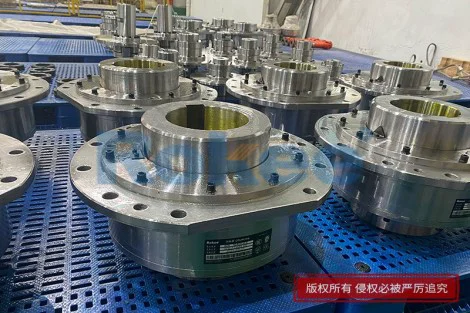
Flange type rubber tire couplings are improved on the basis of standard type couplings, with a flange connection structure on the half-couplings. This design makes the installation and disassembly of the coupling more convenient, especially suitable for occasions where the equipment needs to be frequently disassembled and maintained. The flange connection can also improve the connection strength between the half-coupling and the shaft, ensuring more stable torque transmission. Flange type rubber tire couplings are widely used in mechanical equipment that requires frequent maintenance, such as chemical pumps, mixers and textile machinery.
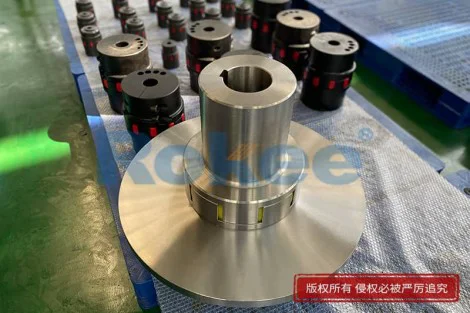
Brake wheel type rubber tire couplings integrate the braking function on the basis of the standard structure, with a brake wheel installed on one of the half-couplings. This type of coupling can not only realize torque transmission and displacement compensation but also can quickly brake the equipment when needed, which is suitable for occasions that require rapid braking, such as hoisting machinery, cranes and conveying equipment. The brake wheel is usually made of high-strength cast iron or steel, with good wear resistance and heat dissipation performance, ensuring the reliability of the braking function.
UL type rubber tire couplings adopt a structure in which the rubber tire elastomer is vulcanized and bonded with a metal connecting plate with threaded holes, and then directly connected to the two half-couplings through bolts to realize torque transmission and displacement compensation. This type of coupling focuses on lightweight and efficient buffering, with a thinner tire body and stronger elastic deformation capacity, so it has excellent shock absorption effect. UL type rubber tire couplings are suitable for occasions with high requirements for transmission stability and frequent impact loads, such as compressors, small fans and automobile engine auxiliary transmission systems.
LLA type rubber tire couplings use two half-couplings to connect both sides of the elastic tire body through internal pressure plates and bolts. The most prominent feature of this type of coupling is the open structure of the tire body, which makes it very convenient to replace the elastic tire body without disassembling the entire transmission system. LLA type rubber tire couplings are suitable for harsh working conditions such as humidity, dust, impact, vibration, frequent start-stop and positive and negative rotation changes, such as metallurgical equipment, sintering machines, crushers and textile machinery. In addition, when overloaded, the clamping flaps of the half-couplings can play a protective role, avoiding malignant accidents.
LLB type rubber tire couplings, also known as metallurgical equipment-specific rubber tire couplings, are high-elastic couplings with a closed tire body design. The tire body is thicker than that of UL type couplings, with higher structural strength and more stable torque transmission efficiency. This type of coupling has a wide torque transmission range, covering 10N·m to 20000N·m, and an operating temperature range of -20°C to +80°C, which is suitable for heavy-load, high-speed industrial scenarios. LLB type rubber tire couplings are widely used in mining main shaft hoists, port gantry cranes, large fans and other equipment, and can adapt to harsh environments such as outdoor humidity and salt spray.
In addition to the above common types, there are also some special types of rubber tire couplings, such as pneumatic rubber tire couplings and hydraulic rubber tire couplings. Pneumatic rubber tire couplings control the maximum transmitted torque by changing air pressure, can be engaged or disengaged during the operation of the driving machinery, and have the advantages of smooth transition and remote control, which are suitable for occasions that require frequent engagement and disengagement, such as automatic production lines. Hydraulic rubber tire couplings use hydraulic pressure to realize torque transmission and buffering, with strong load-bearing capacity and stable performance, which are suitable for heavy-duty transmission occasions such as metallurgical rolling mills and large-scale mining equipment.
The wide range of applications of rubber tire couplings is closely related to their excellent performance and diverse types, covering almost all fields of industrial production and even some special fields. In the metallurgical industry, rubber tire couplings are widely used in various equipment such as rolling mills, sintering machines, crushers, conveyors and blast furnaces. The metallurgical production environment is harsh, with large vibration, frequent start-stop and large load changes. Rubber tire couplings can effectively absorb impact, compensate for shaft misalignment and reduce noise, ensuring the stable operation of the equipment. For example, in the rolling mill system, the rubber tire coupling connects the motor and the rolling mill, which can buffer the impact generated during the rolling process, protect the rolling mill and the motor from damage, and improve the quality of the rolled products.
In the mining industry, rubber tire couplings are used in mining equipment such as coal mining machines, shearers, conveyors and hoists. The mining environment is humid, dusty and has large impact loads. The rubber tire coupling's good dust-proof, moisture-proof and shock absorption performance can adapt to this harsh environment. For example, in the coal conveyor system, the rubber tire coupling can compensate for the shaft misalignment caused by the long-distance transmission of the conveyor, ensure the smooth transmission of torque, and reduce the failure rate of the conveyor. In the hoist system, the brake wheel type rubber tire coupling can realize rapid braking, ensuring the safety of the hoisting operation.
In the chemical industry, rubber tire couplings are used in chemical pumps, mixers, reactors, dryers and other equipment. The chemical production process often involves corrosive media and high-temperature environments, so the rubber tire elastomer of the coupling needs to be made of corrosion-resistant and high-temperature-resistant materials such as neoprene or polyurethane. Rubber tire couplings can effectively absorb the vibration generated by the chemical equipment, avoid the leakage of corrosive media caused by equipment vibration, and ensure the safety and stability of the chemical production process. For example, in the mixer system, the rubber tire coupling can buffer the impact generated during the mixing process, ensure the uniform mixing of materials, and reduce the noise of the equipment.
In the construction machinery industry, rubber tire couplings are used in excavators, loaders, bulldozers, cranes and other equipment. Construction machinery often works in harsh construction sites with large vibration, impact and frequent load changes. Rubber tire couplings can adapt to these working conditions, ensure the reliable transmission of torque, and protect the engine and other key components. For example, in the excavator's hydraulic system, the rubber tire coupling connects the engine and the hydraulic pump, which can absorb the impact generated by the engine's start-stop and load change, ensure the stable operation of the hydraulic system, and improve the work efficiency of the excavator.
In the textile machinery industry, rubber tire couplings are used in spinning machines, weaving machines, printing and dyeing machines and other equipment. Textile machinery has high requirements for transmission stability and low noise, and the rubber tire coupling's good shock absorption and noise reduction performance can meet these requirements. For example, in the spinning machine system, the rubber tire coupling connects the motor and the spinning frame, which can reduce the vibration of the spinning frame, ensure the stability of the yarn spinning process, and improve the quality of the yarn.
In addition to the above industries, rubber tire couplings are also widely used in other fields such as power generation, water treatment, food processing and automobile manufacturing. In the power generation industry, they are used in pumps, compressors and other auxiliary equipment of power plants to ensure the stable operation of the power generation system; in the water treatment industry, they are used in water pumps and sewage treatment equipment to adapt to the humid environment and ensure the smooth operation of water treatment; in the food processing industry, they are used in mixers, conveyors and other equipment, with the advantages of no lubrication and easy cleaning, ensuring food safety; in the automobile manufacturing industry, they are used in auxiliary transmission systems such as automobile engines and air conditioners, with compact structure and light weight, saving installation space.
When selecting a rubber tire coupling in practical applications, it is necessary to comprehensively consider various factors such as the transmitted torque, operating speed, shaft misalignment, working environment and maintenance requirements to ensure that the selected coupling is compatible with the equipment. First of all, the nominal torque of the coupling should be greater than the maximum torque generated by the equipment during operation to avoid coupling failure due to insufficient torque-bearing capacity. Secondly, the operating speed of the coupling should match the speed of the equipment. Excessive speed will lead to premature wear of the rubber elastomer and even coupling failure. In addition, the working environment should be considered: in humid, dusty or corrosive environments, couplings with good anti-corrosion and dust-proof performance should be selected; in high-temperature environments, couplings with high-temperature-resistant rubber elastomers should be selected. Finally, the maintenance requirements should be considered: for occasions that require frequent maintenance, couplings with easy replacement of the elastomer (such as LLA type) should be selected to reduce maintenance costs and downtime.
In the process of installation and use, correct operation and scientific maintenance are also important to ensure the service life and performance of rubber tire couplings. During installation, the coaxiality of the two shafts should be adjusted as much as possible to reduce the misalignment between the shafts, which can reduce the additional stress on the coupling and extend its service life. At the same time, the pre-tightening force of the bolts should be strictly controlled to ensure that the connection is firm without damaging the rubber elastomer. During use, regular inspection of the coupling is required, including checking the wear of the rubber elastomer, the tightness of the bolts and the corrosion of the metal half-couplings. If the rubber elastomer is found to be aging, cracking or worn, it should be replaced in time; if the bolts are loose, they should be tightened in time; if the metal parts are corroded, anti-corrosion treatment should be carried out. In addition, the operating temperature of the coupling should be monitored to avoid overheating of the elastomer due to excessive temperature.
With the continuous development of industrial technology, the performance and types of rubber tire couplings are also constantly improving and enriching. In the future, with the application of new materials, new processes and new technologies, rubber tire couplings will have higher torque-bearing capacity, better high-temperature resistance and corrosion resistance, and more diverse types, which can better meet the needs of modern industrial production. For example, the use of composite rubber materials reinforced with carbon fiber can improve the tensile strength and fatigue resistance of the elastomer; the application of precision machining technology can improve the dimensional accuracy and structural stability of the coupling; the integration of intelligent monitoring technology can realize real-time monitoring of the operating status of the coupling, timely find potential faults and improve the reliability of the transmission system.
In conclusion, rubber tire couplings, as important flexible transmission components in industrial systems, have won a wide range of applications in various industries due to their simple structure, excellent flexibility, shock absorption, displacement compensation and other performance advantages, as well as diverse types. Understanding the structure, performance, types and applications of rubber tire couplings is of great significance for the rational selection, correct use and scientific maintenance of the couplings in practical industrial production. In the future, with the continuous progress of industrial technology, rubber tire couplings will play a more important role in the development of industrial production, providing more reliable support for the stable, efficient and safe operation of industrial equipment.