Flexible Tire Coupling
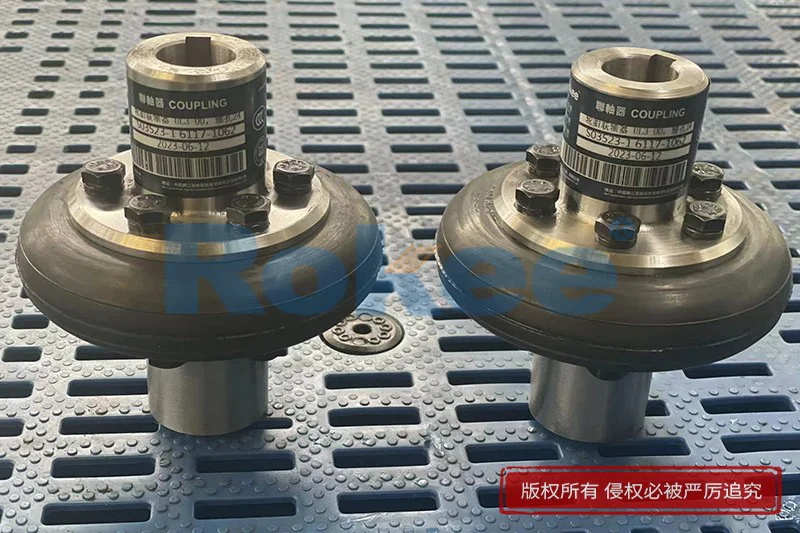
In the intricate ecosystem of mechanical power transmission, flexible tire couplings stand out as indispensable elastic connecting components that bridge the gap between rigid power transmission efficiency and adaptive operational flexibility. As a core part of shaft connection systems in industrial machinery, these specialized couplings are engineered to address the common operational challenges of mechanical transmission systems, including shaft misalignment, operational vibration, instantaneous impact loads, and mechanical stress concentration. Unlike traditional rigid couplings that prioritize absolute transmission accuracy at the cost of flexibility or ordinary flexible couplings with limited compensation capacity, flexible tire couplings integrate excellent displacement adaptability, superior damping performance, and stable torque transmission capability, making them widely applicable in diverse industrial mechanical scenarios that demand smooth operation and equipment protection.
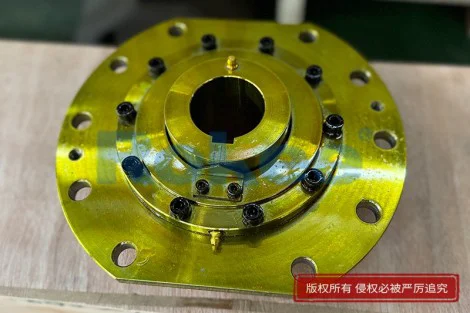
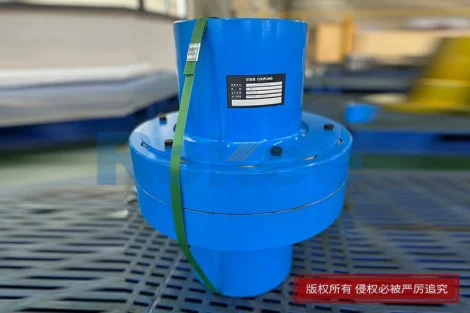
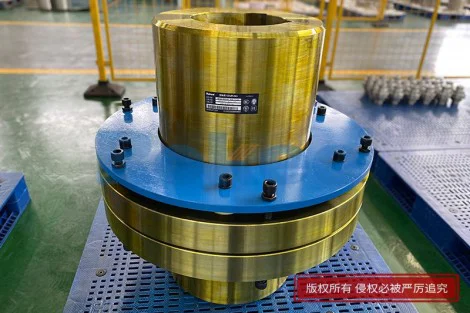
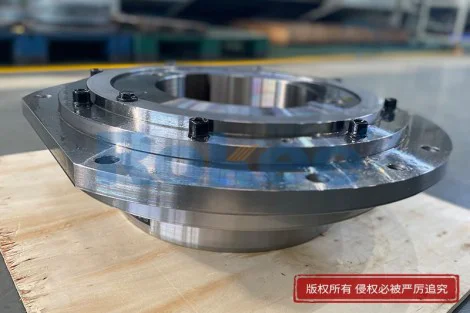
The basic structural composition of flexible tire couplings is simple yet scientifically sophisticated, consisting primarily of an elastic tire-shaped rubber component and paired metal half-coupling flanges. The core functional unit is the integrated rubber tire body formed by high-performance elastomer materials through specialized vulcanization processing, which is firmly bonded with metal flange structures to form a complete power transmission assembly. The internal fabric reinforcement layer embedded in the rubber tire body further enhances the structural stability and tensile resistance of the coupling, effectively avoiding localized deformation and damage under long-term torque load. This unique structural design abandons complex meshing or key connection structures adopted by traditional couplings, relying on the elastic deformation of the rubber tire body and friction transmission between components to complete torque transmission, which fundamentally optimizes the stress state of the entire transmission system.
The working mechanism of flexible tire couplings is based on the elastic deformation characteristics of polymer rubber materials. During equipment operation, the driving shaft drives the connected metal half-coupling to rotate, and torque is evenly transmitted to the rubber tire body through the flange structure. With the torsional and shear deformation of the elastic tire body, the torque is stably transferred to the driven half-coupling and the connected driven shaft, realizing synchronous rotation and power transmission of the two shafts. In this operating process, the elastic characteristics of the rubber tire body play a multi-dimensional regulatory role. When relative displacement occurs between the driving shaft and the driven shaft due to installation errors, equipment operation vibration, or mechanical aging deformation, the tire body can produce gentle elastic deformation in multiple directions to adapt to the displacement deviation, eliminating the rigid extrusion stress between shafts caused by misalignment.
One of the most prominent advantages of flexible tire couplings is their exceptional multi-dimensional misalignment compensation capability, which far surpasses that of most conventional coupling types. In actual industrial operation, absolute coaxial alignment of two connected shafts is almost unattainable. Tiny parallel radial displacement, angular deflection, and axial displacement are inevitable during equipment installation and long-term operation. Rigid couplings cannot adapt to such deviations, which will lead to severe mechanical wear, increased bearing load, and even shaft deformation and equipment failure over time. Flexible tire couplings, however, can simultaneously compensate for radial parallel deviation, angular misalignment, and axial displacement through the flexible deformation of the tire body. The low restoring force generated during deformation ensures that no additional excessive mechanical stress is applied to the shaft system, bearings, and related transmission components, effectively protecting the core mechanical structure of the equipment.
In addition to superior displacement compensation performance, flexible tire couplings possess outstanding vibration damping and shock absorption properties, which are crucial for maintaining the stability of mechanical operation. Most industrial mechanical equipment will produce periodic rotary vibration during continuous operation, and frequent start-stop, sudden load changes, and impact working conditions will generate instantaneous impact vibration and pulse load. These vibration and impact forces will propagate along the transmission shaft system, causing resonance of the equipment, accelerating component fatigue wear, and generating operational noise. The high-damping rubber material of the tire coupling can effectively absorb and consume vibration energy and instantaneous impact force in the transmission process. The elastic buffer structure disperses concentrated impact loads into uniform elastic deformation energy, which is gradually dissipated in the form of internal friction of the material, thereby suppressing vibration transmission, reducing equipment operation noise, and avoiding structural damage caused by long-term vibration fatigue.
The torsional flexibility and backlash-free transmission characteristics of flexible tire couplings further optimize the quality of power transmission. In the operation of precision transmission systems, tiny transmission backlash will lead to delayed power response and unstable speed regulation, affecting the overall operating accuracy of the equipment. The integrated elastic structure of the tire coupling realizes completely backlash-free torque transmission, ensuring real-time and synchronous power output between the driving and driven ends. At the same time, its low torsional stiffness enables the coupling to produce mild torsional deformation during torque fluctuation, buffering the torque mutation generated by unstable load, and making the power transmission process more stable and continuous. This performance is particularly critical for equipment with variable load operation and frequent start-stop cycles, which can effectively avoid torque shock damage to motors, reducers, and working components.
In terms of structural performance and operational adaptability, flexible tire couplings also have unique practical advantages. The overall structure is compact and reasonable, with no complex auxiliary transmission parts, which greatly reduces the failure rate of the coupling itself. The optimized structural design allows for radial assembly and disassembly without the need to displace or disassemble the connected driving and driven equipment, which significantly simplifies installation, replacement, and maintenance operations. This convenient assembly feature shortens equipment downtime during maintenance, improves the operational efficiency of the production line, and reduces the difficulty of daily equipment maintenance. Moreover, the rubber tire body has good environmental adaptability, with stable performance in conventional industrial temperature ranges and dusty, mildly humid working environments, and is not prone to aging failure or performance attenuation in conventional working conditions.
Compared with other common flexible coupling types, flexible tire couplings show comprehensive performance advantages in complex working conditions. Gear couplings have high torque transmission efficiency but poor vibration damping effect and limited misalignment compensation range, and they are prone to gear wear and lubrication failure after long-term operation. Diaphragm couplings have high precision but weak impact resistance and are easily damaged under sudden impact loads. Spring couplings have good flexibility but unstable transmission accuracy and poor adaptability to large misalignment. In contrast, flexible tire couplings balance transmission stability, misalignment compensation, vibration damping, and impact resistance, and can maintain long-term stable operation in harsh working conditions with frequent load changes, severe vibration, and large shaft displacement deviation.
The application scenarios of flexible tire couplings cover a wide range of industrial mechanical fields, especially suitable for transmission equipment with frequent start-stop, variable load operation, and high stability requirements. In material conveying machinery such as belt conveyors and screw conveyors, equipment often faces unstable load changes and instantaneous impact loads during material transportation, and shaft misalignment is easy to occur after long-term operation. The flexible tire coupling can effectively adapt to these working characteristics, absorb impact vibration during operation, ensure continuous and stable operation of conveying equipment, and avoid equipment shutdown failures caused by transmission system abnormalities. In fluid power equipment including fans, water pumps, and air compressors, the vibration generated by high-speed operation is easy to affect the operational stability of the entire unit. The vibration damping performance of tire couplings can effectively isolate vibration transmission between the motor and the working machine, reduce the vibration amplitude of the equipment unit, and extend the service life of bearings and seals.
In addition, flexible tire couplings are also widely used in general industrial machinery, metallurgical equipment, chemical machinery, and building materials production equipment. In metallurgical and chemical production scenarios, equipment needs to operate continuously for a long time with high operational stability requirements. The durable structure and stable performance of tire couplings can adapt to long-term continuous operation, reducing frequent equipment maintenance and replacement. In building materials and mining machinery, equipment often operates in dusty and high-vibration environments, and the good environmental adaptability and impact resistance of flexible tire couplings can effectively resist the adverse effects of harsh working conditions on the transmission system, ensuring the reliability of mechanical power transmission.
In terms of service life and operational economy, flexible tire couplings also have obvious advantages. The high-quality elastomer material and integrated vulcanization process endow the tire body with excellent wear resistance, aging resistance, and fatigue resistance. Under normal operating conditions, the coupling can maintain stable performance for a long time without frequent replacement. Its simple structure reduces daily maintenance workload, requiring only regular visual inspection of the rubber body for aging, cracking, or excessive deformation, with no need for complex lubrication, calibration, and other maintenance operations. The low maintenance cost and long service cycle make it a cost-effective choice for industrial mechanical transmission systems, helping enterprises reduce equipment operation and maintenance costs while ensuring operational stability.
Despite its excellent comprehensive performance, flexible tire couplings also have inherent performance limitations applicable to specific working conditions. Due to the material characteristics of rubber elastomers, the bearing capacity of flexible tire couplings is lower than that of metal rigid couplings and heavy-duty gear couplings, so they are not suitable for ultra-high torque and ultra-high load working scenarios. In addition, when the relative torsion angle of the two shafts is too large, the tire body will produce obvious torsional deformation, resulting in slight changes in axial size and generating tiny additional axial force on the shaft system. However, these limitations only appear in extreme working conditions and have little impact on conventional industrial application scenarios, and can be completely avoided through reasonable model selection and installation calibration.
With the continuous upgrading of industrial manufacturing technology and the gradual improvement of mechanical equipment precision and stability requirements, the performance optimization of flexible tire couplings is also advancing continuously. The continuous innovation of elastomer materials further improves the high-temperature resistance, low-temperature resistance, aging resistance, and load-bearing capacity of the tire body. The optimization of structural design makes the misalignment compensation range more accurate and the vibration damping efficiency higher, enabling flexible tire couplings to adapt to more diversified and high-standard industrial working conditions. As a key flexible transmission component, it will continue to play an irreplaceable role in modern industrial mechanical transmission systems, providing reliable technical support for the stable, efficient, and low-consumption operation of various mechanical equipment.
In summary, flexible tire couplings rely on their unique elastic tire structure, excellent multi-dimensional misalignment compensation capability, efficient vibration damping and shock absorption performance, stable backlash-free transmission, and convenient installation and maintenance characteristics, becoming a vital connecting component in the field of mechanical power transmission. It effectively solves many common pain points in traditional transmission systems, such as poor flexibility, insufficient vibration resistance, easy component wear, and high maintenance costs. With the dual advantages of reliable performance and strong applicability, it has been widely recognized and applied in various industrial fields, and its application value and development prospect will be further expanded with the progress of industrial mechanical technology.