Flexible Pin Coupling
Flexible pin coupling is a widely adopted mechanical transmission component designed to connect two rotating shafts and transmit torque while addressing common operational challenges in mechanical drive systems. Featuring a ingenious combination of rigid metal structural parts and flexible elastic components, this coupling relies on elastic pins and buffer sleeves to achieve power transmission, differing significantly from rigid couplings that lack adaptive deformation capacity. Its core functional advantages lie in moderate misalignment compensation, effective vibration damping and reliable shock absorption, which enable it to adapt to minor axial, radial and angular deviations between connected shafts caused by installation errors or operational deformation. With a simple and compact structure, convenient assembly and maintenance, and no need for regular lubrication, it suits medium and low-speed torque transmission scenarios in most general mechanical equipment. This article comprehensively elaborates on its structural composition, working principles, core performance advantages, material characteristics, application scenarios, installation maintenance essentials and operational value in mechanical systems.
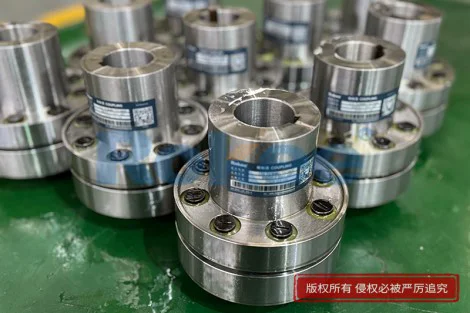
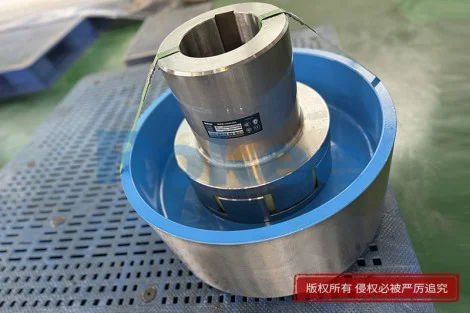
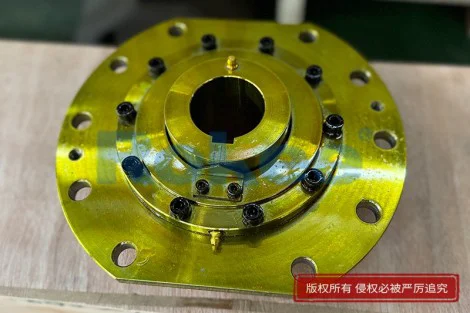
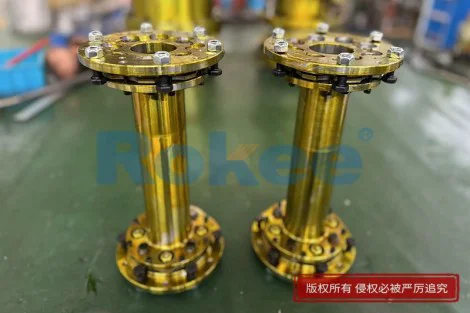
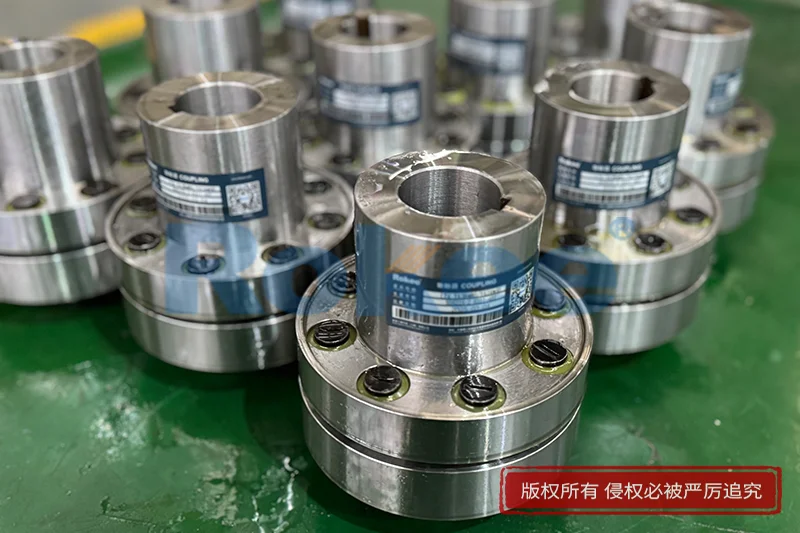
The structural design of flexible pin coupling focuses on balancing transmission stability and adaptive flexibility, consisting mainly of two symmetrical metal half-couplings, multiple elastic pin components and matching flexible buffer sleeves. The two half-couplings are installed on the driving shaft and driven shaft respectively, serving as the main rigid bearing and force-transmitting framework of the device. The elastic pins are evenly distributed on the flange surfaces of the two half-couplings, penetrating the reserved mounting holes to connect the two parts into a complete transmission whole. Unlike rigid pin structures, each pin is wrapped with a high-elasticity buffer sleeve made of polymer elastic materials, which forms the core flexible functional unit of the coupling. All structural parts adopt standardized modular design, with no overly complex auxiliary mechanisms, making the overall structure compact and lightweight. This simplified structure not only reduces the overall space occupation of the transmission system but also lowers the difficulty of mechanical processing and subsequent daily maintenance. The matching tolerance between pins, sleeves and half-coupling holes is precisely controlled to ensure stable torque transmission while reserving a tiny deformation space for elastic components, laying a structural foundation for its adaptive misalignment compensation and vibration reduction functions.
The working principle of flexible pin coupling is based on the elastic deformation characteristics of flexible materials and mechanical torque transmission logic, realizing efficient and stable power delivery with adaptive buffering. During equipment operation, the driving half-coupling rotates synchronously with the driving shaft, and the rotational torque is transmitted to the elastic pins through the contact of the flange hole wall. Driven by the pins, the driven half-coupling and the connected driven shaft rotate synchronously, completing the basic power transmission process. When minor misalignment exists between the two shafts due to installation deviation, equipment vibration or thermal deformation during operation, the flexible sleeves outside the pins will produce controllable elastic compression, stretching and bending deformation. This subtle deformation can effectively offset the positional deviation of the shafts, avoiding rigid friction and extrusion between metal parts. In addition, when the mechanical system generates instantaneous impact load or torsional vibration due to start-stop, load mutation or unstable operation, the elastic components can absorb and dissipate part of the impact energy and vibration energy through repeated micro-deformation. This working mechanism fundamentally avoids the stress concentration caused by rigid transmission, protects the shaft system, bearings and other key components from excessive load damage, and ensures the continuous and stable operation of the transmission system.
Flexible pin coupling possesses multiple core performance advantages that make it superior to many traditional transmission couplings in general mechanical scenarios. First of all, it has excellent multi-dimensional misalignment compensation capability, which can adapt to axial displacement, radial offset and angular deflection of the connected shafts within a reasonable range. This adaptability greatly reduces the assembly precision requirements of mechanical equipment and tolerates minor structural changes during long-term operation, effectively reducing the failure rate of shaft system transmission. Secondly, its outstanding vibration damping and shock buffering performance can effectively suppress torsional vibration in the transmission process and weaken the impact force of sudden load changes, optimizing the operating stability of the whole machine. Moreover, the coupling operates with low noise and small friction loss during use. The flexible contact between internal components avoids harsh metal collision and friction noise of rigid couplings, creating a better mechanical operation environment. In addition, it has strong operational reliability and long service life under medium and low load conditions. The elastic buffer structure disperses the concentrated stress of torque transmission, reducing the wear and fatigue damage of metal parts. Meanwhile, its maintenance-free design in daily use saves a lot of operational and maintenance costs for mechanical equipment, improving the overall economic efficiency of equipment operation.
The performance and service life of flexible pin coupling are closely determined by the selection of core manufacturing materials, and the material collocation follows the principle of rigid main body and flexible auxiliary parts. The two half-couplings are mostly made of high-strength cast metal materials with good rigidity, toughness and compressive resistance. These metal materials can bear long-term torque load and external mechanical pressure, ensuring the overall structural stability and deformation resistance of the coupling, and are not easy to produce permanent deformation during long-term continuous operation. The core flexible buffer sleeves and elastic pins are mainly made of high-elasticity and wear-resistant polymer materials, including modified polyurethane, high-quality rubber and engineering plastics. These materials have excellent elastic recovery performance, can produce reversible deformation repeatedly under load, and maintain stable elasticity for a long time. They also have good wear resistance, aging resistance and anti-fatigue properties, which can resist the wear caused by frequent friction and the performance degradation caused by long-term environmental erosion. The scientific collocation of rigid and flexible materials enables the coupling to maintain high-efficiency torque transmission capacity on the basis of having flexible buffering and compensation functions, realizing the perfect balance between transmission rigidity and operational flexibility in mechanical systems.
Flexible pin coupling is widely applicable to various medium and low-speed, medium and low-torque mechanical transmission scenarios, covering most general industrial mechanical equipment. It is commonly used in conventional power transmission equipment such as fans, water pumps, reducers and conveyors, which often have minor installation deviations and frequent start-stop states. In these devices, the coupling can effectively buffer the start-stop impact, stabilize the transmission speed and reduce the vibration of the whole machine. It is also suitable for light industrial machinery, textile equipment and food processing machinery that require low noise and stable operation, as its flexible transmission characteristics can avoid mechanical resonance and reduce operating noise to meet the quiet operation requirements of precision light industry equipment. In addition, it performs well in general engineering machinery and agricultural machinery with complex and variable working conditions. The harsh working environment such as uneven load and minor vibration impact in field operation can be well adapted by its misalignment compensation and shock absorption functions. Due to its simple structure and low replacement cost, it is also widely used in various civil mechanical equipment and small automated production lines, providing stable and reliable basic transmission support for different types of mechanical systems.
Scientific installation and standardized daily maintenance are key factors to ensure the long-term stable operation of flexible pin coupling and give full play to its performance advantages. During installation, the coaxiality of the driving shaft and driven shaft should be strictly adjusted to minimize installation misalignment. Although the coupling has compensation capability, excessive deviation will increase the deformation load of elastic components and accelerate aging and wear. The pins and buffer sleeves should be installed in place symmetrically to ensure uniform stress of each flexible unit and avoid local overload damage. After installation, the rotational flexibility of the coupling should be checked to ensure no jamming or abnormal friction. In daily operation, regular visual inspection is required to observe the integrity of elastic sleeves and pins, check for aging, cracking, excessive wear or deformation failure of flexible components. Loose assembly state of half-couplings and pins should also be checked regularly to ensure firm connection. Since the coupling does not need lubrication, excessive oil contamination on the surface should be avoided to prevent the elastic materials from being corroded and deteriorated. Timely replacement of worn and aging flexible parts can effectively avoid transmission failure and ensure the continuous and efficient operation of the mechanical transmission system.
In the field of mechanical transmission systems, flexible pin coupling occupies an indispensable basic position by virtue of its unique structural design and comprehensive functional advantages. It solves many common pain points of traditional couplings in practical application, including poor adaptability to shaft misalignment, insufficient shock resistance, high maintenance cost and loud operating noise. Its integration of torque transmission, deviation compensation, vibration damping and impact buffering functions greatly optimizes the operating performance of general mechanical equipment and extends the service life of key transmission components. With the continuous development of mechanical industry towards high efficiency and stability, the application value of flexible pin coupling is further highlighted. Its simple and reliable structure, convenient use and low comprehensive operation cost make it one of the most cost-effective basic transmission components in general mechanical scenarios. In the future, with the continuous upgrading of elastic material technology and structural optimization design, the performance of flexible pin coupling will be further improved, and its application scope will be more extensive, providing more stable and efficient basic support for the safe and reliable operation of various mechanical transmission systems.