Cardan Driveshaft For Heavy Machinery
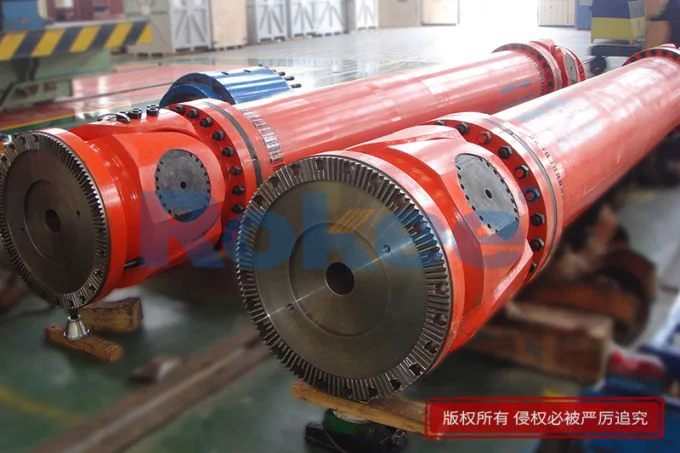
Cardan driveshafts stand as indispensable power transmission components for modern heavy machinery, serving as a flexible mechanical bridge that transfers rotational torque and motion between misaligned, spatially separated mechanical parts. Unlike rigid transmission shafts that rely on precise linear alignment, this specialized universal shaft structure adapts to angular deflection, axial displacement, and minor radial deviations generated during equipment operation, perfectly matching the complex and dynamic working states of construction, mining, metallurgical and large agricultural machinery. In heavy-load operating scenarios, machinery often undergoes frequent vibration, structural deformation and position shift, which would easily cause rigid transmission failure and component damage. The cardan driveshaft effectively solves this pain point through its unique universal joint design, maintaining stable and efficient power output while buffering mechanical impact. It integrates high load-bearing performance, structural flexibility and durable wear resistance, directly determining the operating stability, working efficiency and service life of heavy machinery, making it a core foundational component for ensuring continuous and reliable operation of large industrial equipment.
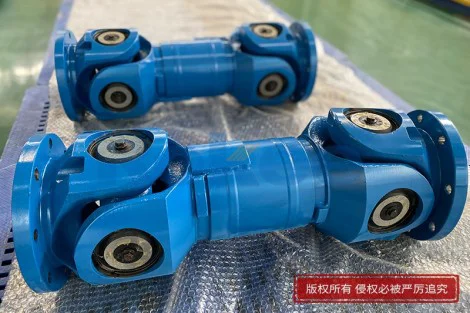
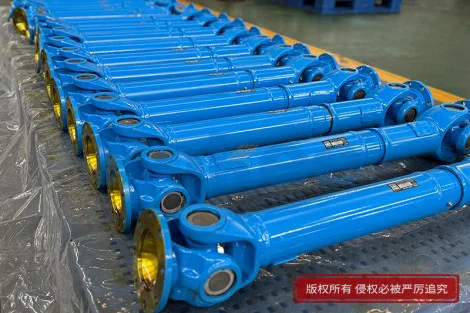
The core structural composition of heavy machinery cardan driveshafts is scientifically optimized for extreme load and harsh working conditions, consisting of multiple precision-machined components that cooperate closely to realize flexible power transmission. The universal joint assembly acts as the functional core of the entire driveshaft, composed of cross shafts, joint yokes and high-precision bearing groups. The cross shaft connects two sets of yokes in a crisscross structure, enabling multi-angle rotational deflection and eliminating transmission dead angles caused by shaft misalignment. Different from ordinary lightweight cardan shafts for civilian equipment, heavy-duty models adopt thickened integral forged yokes and enlarged cross-section cross shafts, which greatly enhance structural rigidity and anti-deformation ability under high torque. The middle shaft body usually uses high-strength alloy steel seamless pipes, with thicker pipe walls and optimized internal metallographic structure to resist torsional deformation and fatigue fracture under long-term heavy load. Most configurations are equipped with telescopic spline structures, which can automatically compensate for axial distance changes caused by machinery vibration and structural displacement during operation. Meanwhile, sealed bearing units and dust-proof protective sleeves are standard configurations to isolate dust, sediment and humid air in harsh working environments, reducing friction loss and preventing component corrosion, ensuring the basic operational stability of the driveshaft in complex working conditions.
The working principle of cardan driveshafts for heavy machinery is based on the geometric motion characteristics of universal joints and mechanical torque transmission rules, realizing stable power output under variable alignment conditions. When the power source outputs rotational motion, the torque is first transmitted to the input yoke of the universal joint, which drives the cross shaft to perform synchronous rotational motion. The cross shaft then drives the output yoke and the connected middle shaft body to rotate, completing the primary transmission of power. When the connected mechanical parts produce angular deviation or position offset due to equipment operation, the cross shaft and bearing group can flexibly rotate and deflect within a certain angle range, adapting to the real-time change of shaft center angle without interrupting torque transmission. The double universal joint structure commonly used in heavy-duty models can effectively compensate for the speed fluctuation problem of single universal joint transmission, ensuring constant and uniform rotational speed of the output end and avoiding torsional impact on machinery caused by unstable power transmission. The telescopic spline structure moves freely axially with the operation of the equipment, offsetting the axial distance change between the power end and the load end. Through the coordinated operation of multiple structural units, the driveshaft converts irregular and variable-position power input into stable and continuous power output, adapting to the dynamic working characteristics of heavy machinery.
Material selection for heavy machinery cardan driveshafts is strictly oriented to high load resistance, fatigue resistance and environmental adaptability, which is the key to determining product performance and service life. The main shaft body and core force-bearing components such as cross shafts and yokes are mostly made of high-strength alloy structural steel with excellent comprehensive mechanical properties. This type of material has high tensile strength, yield strength and torsional resistance, and can withstand long-term alternating torque, instantaneous impact load and mechanical extrusion without permanent deformation. After precision forging and multiple heat treatment processes including quenching and tempering, the material internal stress is eliminated, the structural toughness and fatigue resistance are significantly improved, and the problem of brittle fracture under low-temperature or high-load working conditions is avoided. The bearing components adopt high-hardness wear-resistant alloy materials, which reduce friction coefficient while ensuring load-bearing capacity, effectively resisting long-term rotational wear and extending the service life of movable parts. The surface of key components is treated with anti-corrosion and wear-resistant coating processes to cope with harsh working environments such as outdoor exposure, muddy working conditions and industrial corrosive gas erosion. Scientific material matching and processing technology enable the driveshaft to maintain stable mechanical performance in high-intensity continuous operation, reducing frequent replacement and maintenance caused by material failure.
Cardan driveshafts for heavy machinery exhibit outstanding performance advantages in extreme working scenarios, making them irreplaceable compared with other transmission components. First of all, they have excellent misalignment compensation capability, which can adapt to angular deflection, axial displacement and radial offset generated during the operation of heavy equipment, solving the transmission failure problem of rigid shafts caused by slight structural deformation and position change of machinery. Secondly, they have ultra-high torque transmission capacity, and the reinforced structural design and high-strength materials enable them to bear the huge power load required by large-scale mining, construction and metallurgical machinery, realizing efficient and lossless torque transmission. In terms of operational stability, the optimized universal joint structure and precision bearing matching effectively buffer mechanical vibration and instantaneous impact load, reducing the vibration amplitude of the whole machine and lowering equipment operation noise. In addition, this type of driveshaft has strong environmental adaptability, and the fully sealed protective structure can resist the interference of dust, gravel, moisture and other harsh factors, ensuring normal operation in complex working conditions. Its modular structural design also brings good maintainability, with independent and replaceable single components, which reduces the difficulty and cost of equipment maintenance while ensuring the overall transmission performance.
Cardan driveshafts are widely applied in various types of heavy machinery and industrial equipment, covering multiple core industrial fields that rely on high-power flexible transmission. In construction machinery, they serve as key transmission parts for large excavators, cranes, bulldozers and road rollers, adapting to the frequent walking, lifting and telescopic actions of equipment, and stably transmitting power to walking mechanisms and working devices. In mining machinery, they are applied to ore crushers, mining conveyors and underground tunneling equipment, enduring long-term high-load operation and severe vibration in mine working environments to ensure continuous production operation. In the metallurgical industry, they undertake the power transmission work of rolling mills, forging equipment and high-temperature processing machinery, adapting to the thermal deformation and structural displacement of equipment under high-temperature working conditions. Large-scale agricultural machinery such as heavy-duty harvesters and rotary tillers also relies on cardan driveshafts to transmit power, coping with complex field working conditions and uneven load changes. In addition, they are also widely used in port handling equipment, large industrial pumps and heavy lifting machinery, providing reliable power transmission support for various high-load and high-intensity industrial production scenarios.
Daily maintenance and reasonable fault prevention are crucial to prolonging the service life and maintaining the stable performance of heavy machinery cardan driveshafts. In routine equipment inspection, it is necessary to regularly check the operating state of the universal joint, observe whether there is abnormal jitter, noise or stuck rotation during operation, and timely check the wear degree of cross shafts and bearings. Regularly supplement and replace special lubricating grease for the transmission part to ensure sufficient lubrication between movable components, reduce friction and wear, and avoid component damage caused by dry friction. It is essential to check the tightness of all fastening parts to prevent bolt loosening caused by long-term equipment vibration, which may lead to structural deviation and transmission instability. The sealing protection structure should be inspected regularly to ensure intact dust-proof and anti-corrosion effects, and replace damaged protective sleeves and sealing rings in time to prevent foreign matter from entering the interior and causing component wear and corrosion. During equipment operation, avoid long-term overload operation and sudden start-stop impact, which can effectively reduce the alternating load and fatigue loss of the driveshaft. Scientific and standardized maintenance can not only maintain the efficient transmission performance of the cardan driveshaft, but also avoid sudden equipment failure, reduce downtime loss, and improve the overall operational efficiency of heavy machinery.
With the continuous upgrading of heavy industrial equipment towards large-scale, high-power and high-efficiency development, the technical iteration of cardan driveshafts for heavy machinery is also advancing continuously. Modern industrial production puts forward higher requirements on the load-bearing capacity, transmission efficiency, fatigue resistance and service life of transmission components, which promotes the continuous optimization of driveshaft structure and manufacturing technology. New high-performance alloy materials and precision integrated processing technologies are gradually applied to production, further improving the structural strength and comprehensive mechanical properties of products. The optimized universal joint geometric design and bearing matching structure effectively reduce transmission friction loss and improve power transmission efficiency. At the same time, the integrated and lightweight structural design reduces the self-weight of the driveshaft while ensuring load-bearing performance, lowering the overall energy consumption of equipment operation. In the future, with the integration of intelligent monitoring technology, cardan driveshafts will realize real-time monitoring of operating status, wear degree and load changes, helping equipment achieve predictive maintenance. As a core basic component of heavy machinery, cardan driveshafts will continue to iterate and upgrade to adapt to the increasingly complex industrial working conditions and high-standard production needs, providing more reliable support for the stable operation of modern heavy industry.