Bridge Crane Drum Coupling

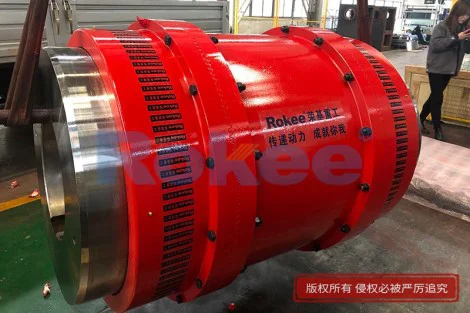
Bridge crane drum coupling is an indispensable flexible transmission component specially designed for the lifting and operating system of bridge cranes, serving as the core connecting medium between the reducer output shaft and the wire rope drum. Unlike ordinary mechanical couplings that only focus on simple torque transmission, this specialized coupling integrates dual functions of power transmission and load bearing, perfectly adapting to the complex working conditions of bridge cranes such as heavy load operation, frequent start-stop, and dynamic load fluctuation. Its unique drum-shaped tooth structure endows it with excellent misalignment compensation capability, which can effectively offset axial, radial and angular deviations generated during the long-term operation of crane transmission systems. As a key buffer and protection component, it alleviates operating vibration and impact force, reduces mechanical wear of core equipment, and maintains the stability and continuity of the crane’s lifting operation. It runs through the whole working cycle of load lifting, transferring and landing, and directly affects the operating efficiency, mechanical stability and service life of the entire bridge crane equipment.
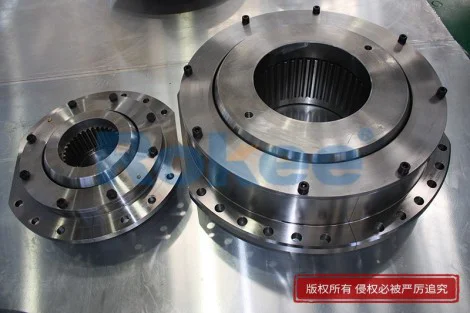
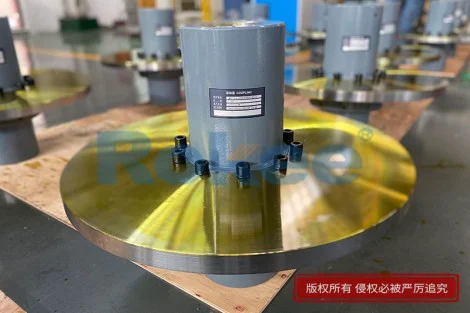
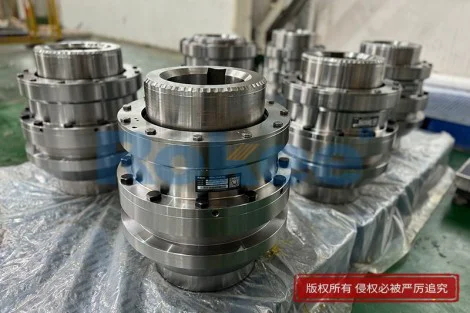
The structural design of bridge crane drum coupling is the fundamental support for its superior working performance, adopting an integrated flexible gear structure that differs greatly from traditional straight-tooth couplings. The main components include drum-shaped outer tooth half-coupling, inner gear ring flange, professional sealing components and matched fastening parts, forming a closed and stable meshing transmission system. The most distinctive feature lies in the drum-shaped arc tooth profile of the outer gear sleeve, whose spherical center is always located on the gear axis. This optimized tooth shape changes the linear contact state of traditional straight teeth, realizing uniform surface contact during meshing. The inner gear ring is closely connected with the crane drum, while the outer tooth half-coupling is matched with the reducer output shaft, forming a complete power transmission path. The internal reserved tooth gap of the structure is reasonably expanded, providing sufficient deformation space for flexible adjustment during equipment operation. In addition, the built-in sealing structure can effectively isolate external dust, moisture and fine sundries, preventing abrasive wear of the meshing tooth surface and ensuring the long-term stable operation of the internal transmission structure in harsh industrial environments.
The core working principle of bridge crane drum coupling revolves around precise gear meshing transmission and flexible misalignment compensation, realizing efficient and stable power output of the crane lifting system. During equipment operation, the power adjusted in speed and amplified in torque by the reducer is transmitted to the outer tooth sleeve of the drum coupling, and the torque is stably transferred to the inner gear ring through the close meshing of drum-shaped teeth and inner gear teeth, thereby driving the wire rope drum to rotate and complete the lifting and lowering of goods. When the bridge crane operates for a long time, structural deformation, installation errors and mechanical wear will inevitably cause tiny axis deviations between the reducer and the drum. The flexible drum-shaped tooth structure can automatically adapt to these multi-dimensional deviations, avoiding local stress concentration caused by rigid transmission. While transmitting power efficiently, it buffers the instantaneous impact force generated by frequent start-stop and load mutation, disperses the bearing pressure on the tooth surface, and ensures that the transmission system maintains a stable operating state under dynamic load changes, avoiding jitter or stuck faults in the lifting process.
The functional advantages of bridge crane drum coupling are highly targeted to the operating characteristics of bridge cranes, making it irreplaceable in crane transmission systems. First of all, it has excellent comprehensive misalignment tolerance, which can synchronously compensate axial displacement, radial deflection and angular offset generated in the operation process, effectively solving the transmission failure problem caused by axis dislocation. Secondly, its uniform tooth surface stress distribution greatly reduces local wear and fatigue damage, improving the overall durability of the coupling. Different from rigid couplings that are prone to hard collision and vibration, its flexible meshing structure can absorb operating vibration and noise, optimize the working environment of the crane transmission system, and reduce the fatigue loss of mechanical parts. In addition, this coupling has strong heavy-load adaptability, which can keep stable transmission efficiency under long-term heavy-load operation without slipping or power attenuation. It also has a certain axial limiting function, which can prevent the wire rope drum from unnecessary axial displacement during rotation, ensure the accurate winding and unwinding of the steel wire rope, and avoid safety hazards such as rope disorder and rope abrasion.
In the actual operation scenario of bridge cranes, the drum coupling undertakes important mechanical protection functions for the entire lifting transmission system. The bridge crane often faces complex working conditions such as uneven load distribution, frequent commutation operation and sudden load change in industrial production. These working conditions will produce huge instantaneous impact load on the transmission system, which is easy to cause damage to reducer bearings, drum shafts and connecting parts. As a flexible buffer component, the drum coupling can absorb most of the instantaneous impact force through the elastic coordination of its meshing structure, convert sudden rigid impact into gentle flexible transmission, and protect high-precision core components from impact damage. When the equipment is overloaded slightly, the tooth surface meshing gap can produce tiny adaptive deformation to release partial overload pressure, avoiding direct fracture of mechanical parts. This passive protection mechanism greatly reduces the failure rate of the crane transmission system, extends the service cycle of supporting equipment, and reduces the frequency of equipment shutdown maintenance and component replacement in industrial production.
Daily maintenance and condition monitoring of bridge crane drum coupling are key links to maintain its long-term stable performance and extend service life. In the continuous industrial operation process, the meshing tooth surface will produce tiny friction loss, and the internal lubricating grease will gradually consume and age, so regular lubrication maintenance is essential. Scientific lubrication can reduce meshing friction and wear, avoid dry grinding of tooth surfaces, and maintain the flexibility of flexible compensation. At the same time, it is necessary to regularly check the tightness of fastening parts and the integrity of sealing components. Loose connecting parts will cause transmission jitter and abnormal noise, while damaged seals will lead to dust and water ingress, causing corrosion and abrasive wear of internal gear structures. In daily inspection, attention should be paid to observing the operating state of the coupling, including whether there is abnormal vibration, irregular noise and local temperature overheating during operation. Timely cleaning of surface dirt and replacement of aging lubricants can effectively avoid minor defects evolving into major faults, ensure that the coupling always maintains efficient transmission performance, and guarantee the continuous and safe operation of bridge crane equipment.
The service life and comprehensive performance of bridge crane drum coupling are affected by multiple operating and environmental factors, and reasonable use and matching can maximize its application value. The load fluctuation frequency and start-stop times of the crane are the main factors affecting the wear rate of the coupling. Long-term high-frequency impact operation will accelerate the fatigue wear of the tooth surface and reduce the flexible compensation ability of the structure. In addition, the industrial operating environment also has an obvious impact on its performance. Humid, dusty or corrosive working environments will accelerate the aging of sealing parts and the corrosion of gear structures, leading to reduced transmission accuracy. The installation accuracy in the early stage of equipment commissioning is also crucial. Excessive reserved axis deviation will make the coupling work in an over-compensated state for a long time, increasing operating load and wear loss. Reasonable matching of coupling specifications according to actual operating load, standardizing installation and commissioning processes, and implementing refined daily maintenance can effectively stabilize its transmission performance, delay aging and wear, and reduce the comprehensive operating cost of bridge crane equipment.
With the continuous upgrading of bridge crane intelligent and high-efficiency operation requirements, the optimization and development of drum coupling technology are also advancing continuously. Traditional drum couplings mainly focus on basic power transmission and misalignment compensation functions, while the optimized new generation products pay more attention to high wear resistance, low noise operation and long-life stability. Through optimized tooth profile processing technology and high-strength wear-resistant materials, the structural rigidity and fatigue resistance of the coupling are further improved, adapting to higher frequency and heavier load crane operation scenarios. At the same time, the integrated sealing and lubrication structure is continuously optimized to enhance the environmental adaptability of the equipment and reduce the difficulty of later maintenance. In the field of modern industrial lifting, the performance improvement of drum coupling not only optimizes the operating stability of single bridge crane equipment, but also provides a reliable basic guarantee for the efficient and safe operation of the entire industrial lifting system, showing important practical application value and development potential.