Rubber Tyre Coupling

In the complex and interconnected system of modern mechanical transmission, flexible coupling components serve as critical transitional structures that balance power transmission efficiency and equipment operational stability. Among various flexible coupling types, rubber tyre coupling stands out as a highly adaptable and reliable transmission component, widely applied in diverse industrial mechanical systems that require stable torque transmission, vibration suppression and displacement compensation. As a core elastic transmission part, it abandons the rigid connection mode of traditional transmission components and relies on the unique elastic deformation characteristics of rubber materials to realize flexible connection between driving and driven shafts, effectively solving many common operational problems in mechanical transmission processes, including shaft misalignment, mechanical vibration, impact load and structural stress concentration. With the continuous upgrading of industrial manufacturing technology and the increasingly stringent requirements for equipment operational stability and service life, the application value and market adaptability of rubber tyre coupling have been further highlighted, becoming an indispensable basic component in heavy-duty, variable-load and high-vibration mechanical operation scenarios.
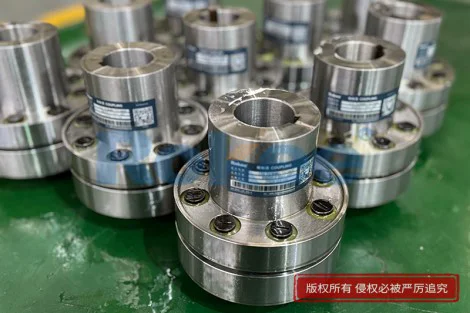
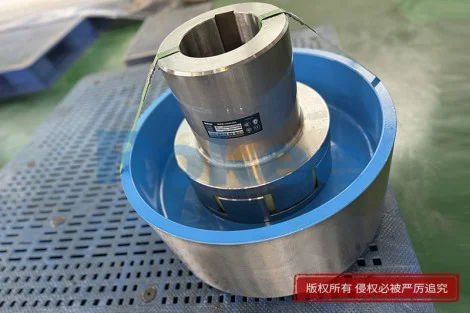
The basic structural composition of rubber tyre coupling is simple and scientific, mainly consisting of two metal flanges and an integrated rubber tyre elastic element. The metal flanges, usually made of high-strength steel or cast iron materials with excellent rigidity and wear resistance, are responsible for connecting the driving shaft and driven shaft respectively, ensuring stable docking with mechanical shafts and reliable bearing of transmission torque. The core functional part is the vulcanized rubber tyre component fixed between the two flanges. Through professional vulcanization technology, the rubber body is tightly combined with the metal flange structure, forming an integrated transmission whole without gaps and relative sliding during operation. This special structural design fundamentally differentiates it from rigid couplings and other types of flexible couplings. Different from gear couplings that rely on meshing transmission and disc couplings that depend on thin plate deformation, rubber tyre coupling uses the overall shear deformation and torsional deformation of the rubber tyre body to complete torque transmission. When the driving shaft rotates, the metal flange drives the rubber tyre elastic element to produce uniform elastic deformation, and the deformation force is converted into driving torque to drive the driven shaft to operate synchronously, realizing continuous and stable power transmission between mechanical systems.
One of the most prominent core performances of rubber tyre coupling is its excellent multi-dimensional misalignment compensation capability. In actual industrial production, due to machining errors of mechanical equipment, installation deviation of shafting structures, foundation settlement of equipment bases, thermal expansion and contraction of components during long-term operation, and mechanical wear after long-time service, the connecting shafts of transmission equipment often produce different degrees of displacement deviation. These deviations include radial parallel displacement, angular deflection and axial displacement, which are unavoidable in practical mechanical operation. Rigid transmission components cannot adapt to such deviations, and long-term operation will cause severe additional mechanical stress on shafts, bearings and equipment bodies, leading to accelerated component wear, increased operational noise, and even equipment failure and shutdown in severe cases. The rubber tyre coupling, with its special annular elastic structure, can effectively compensate for various shaft misalignments. Its flexible rubber body can produce adaptive deformation in multiple directions, tolerating a certain range of angular deviation and parallel offset, and automatically adjust the stress distribution during power transmission. This autonomous compensation function eliminates additional structural stress caused by shaft misalignment, protects the integrity of the shafting system and supporting components, and greatly improves the fault tolerance of mechanical transmission systems in complex operating environments.
Superior vibration damping and shock absorption performance is another key advantage that makes rubber tyre coupling widely popular in industrial applications. Most industrial mechanical equipment will generate continuous vibration during high-speed operation, and frequent start-stop, sudden load changes and impact working conditions will produce instantaneous strong impact loads. These vibrations and impacts will be transmitted along the shafting system, causing resonance of the whole equipment, aggravating component fatigue wear, reducing equipment operation accuracy, and shortening the overall service life of mechanical equipment. The rubber material itself has good internal damping characteristics and elastic buffering performance. The thickened annular tyre structure further amplifies the vibration absorption and energy dissipation effect. During equipment operation, the rubber tyre element can effectively absorb the vibration energy generated by mechanical operation, convert mechanical vibration energy into internal energy consumption through microscopic elastic deformation of the material, and suppress the transmission of vibration and noise between the driving end and the driven end. For instantaneous impact loads generated by equipment startup, shutdown and load mutation, the rubber body can produce rapid buffering deformation, disperse instantaneous impact force, avoid rigid impact between mechanical structures, and maintain the stability of the overall operation state of the equipment. This performance is particularly critical for high-precision mechanical equipment and heavy-duty industrial equipment that operates continuously for a long time.
In terms of operational adaptability and environmental resistance, rubber tyre coupling shows strong comprehensive performance advantages compared with traditional coupling products. First of all, it has good electrical insulation performance. The integrated rubber elastic body completely isolates the two metal flanges, forming an effective insulating structure, which can prevent current conduction between the driving and driven shafts, avoid stray current interference and electrostatic accumulation in mechanical operation, and play a good protective role for electrical control systems and precision mechanical components in equipment. Secondly, professional rubber formula and vulcanization process endow the product with excellent environmental adaptability. It can maintain stable elastic performance and structural integrity in conventional humid, dusty and weakly corrosive working environments, and is not easy to age, deform or fail in a short time. In addition, the special structural design enables the rubber tyre coupling to adapt to variable load operation conditions. It can keep stable transmission efficiency under both light-load low-speed operation and heavy-load high-speed operation, and will not produce torque fluctuation or structural failure due to load changes, showing excellent operational stability in complex and variable industrial working conditions.
The maintenance-free operational characteristic further reduces the comprehensive use cost and operation difficulty of rubber tyre coupling in industrial scenarios. Different from gear couplings, bearing couplings and other components that require regular lubrication, oil replacement and wear inspection, rubber tyre coupling has an integrated closed elastic structure with no relative friction and meshing movement between internal parts during operation. There is no wear loss of transmission pairs and no need for regular lubrication maintenance. In the long-term operation process, it only needs regular visual inspection of the rubber body for obvious aging, cracking and deformation, and the daily maintenance workload is extremely low. This maintenance advantage is particularly prominent for large-scale industrial equipment and equipment working in remote and harsh environments. It not only saves a lot of manual maintenance time and maintenance costs for enterprises, but also avoids equipment shutdown and production interruption caused by regular maintenance, effectively improving the continuous operation efficiency of production lines. At the same time, its simple overall structure brings convenient installation and replacement operations. The modular design of flanges and elastic tyre elements enables operators to complete assembly, disassembly and replacement quickly without professional precision tools and complex operation processes, which greatly improves the efficiency of equipment maintenance and fault handling.
Rubber tyre coupling has a wide coverage of industrial application scenarios, showing high adaptability in multiple industrial fields. In the mining industry, mechanical equipment such as crushers and ball mills often work in high-impact, high-vibration and dusty harsh environments, with frequent load changes and severe mechanical vibration during operation. The vibration damping and impact resistance performance of rubber tyre coupling can effectively buffer the strong vibration and impact generated by equipment operation, protect the precision transmission structure of the equipment, and reduce the failure rate of mining equipment. In the paper-making industry, large-diameter roller transmission equipment will produce thermal expansion and contraction due to long-term high-temperature operation, and the shafting position will deviate slightly. The multi-dimensional displacement compensation capability of rubber tyre coupling can well adapt to the structural changes caused by thermal deformation, ensuring the synchronization accuracy and transmission stability of roller operation. In the energy and power industry, large-scale fan and water pump units have long shafting systems, and equipment foundation settlement and component aging will inevitably lead to shaft misalignment during long-term operation. The autonomous compensation function of rubber tyre coupling can eliminate the adverse effects of shaft deviation, maintain the long-term stable operation of fan and pump equipment, and reduce operational energy consumption and component wear.
In marine transportation and hydraulic transmission systems, rubber tyre coupling also shows unique application advantages. Marine propulsion equipment and on-board mechanical systems often face complex environmental influences such as humidity and alternating load impact. The good environmental resistance and impact buffering performance of rubber materials can adapt to marine working conditions, stabilize the power transmission of ship propulsion systems, and reduce the vibration and noise of ship operation, improving the comfort and stability of ship navigation. In general industrial hydraulic and pneumatic transmission equipment, the flexible transmission characteristic of rubber tyre coupling can buffer the pressure fluctuation of fluid transmission, avoid the rigid impact of hydraulic impulse on mechanical structures, and protect the service life of hydraulic components and mechanical transmission structures. In addition, in generator sets, compressor equipment and frequency conversion speed regulation mechanical systems, rubber tyre coupling can suppress vibration resonance caused by speed change and load fluctuation, ensure the stable output of equipment power, and improve the overall operation accuracy and reliability of the equipment.
Although rubber tyre coupling has many comprehensive performance advantages, it also has certain application limitations in practical industrial use, which needs reasonable attention in type selection and application. Compared with compact gear couplings and disc couplings, the overall radial volume of rubber tyre coupling is larger, which requires larger installation space for equipment shafting. Therefore, it is not suitable for mechanical equipment with extremely compact structural layout and limited installation space. In addition, the high-temperature resistance of conventional rubber materials has a certain upper limit. In long-term ultra-high temperature working environments, rubber aging speed will be accelerated, and elastic performance will be reduced, affecting the service life and transmission stability of the coupling. At the same time, in extreme low-temperature environments, the rubber body will become hard and brittle, and the buffering and compensation performance will be slightly reduced. For special working conditions such as ultra-high temperature, ultra-low temperature and strong chemical corrosion, it is necessary to select rubber tyre coupling with special modified rubber materials to adapt to extreme environments and ensure operational reliability.
With the continuous progress of material science and mechanical design technology, the performance of rubber tyre coupling is also constantly optimized and upgraded. Modern rubber modification technology effectively improves the aging resistance, high and low temperature resistance and corrosion resistance of rubber materials, expanding the adaptable working condition range of the coupling. Optimized structural design further balances the transmission torque density and flexibility of the product, realizing larger torque transmission in a smaller structural volume, solving the problem of large volume of traditional products, and improving the compactness of product application. At the same time, personalized customized design can meet the differentiated needs of different industrial equipment for displacement compensation range, vibration damping effect and load resistance, making the product more adaptable to diversified and refined industrial production needs.
In the entire mechanical transmission system, rubber tyre coupling undertakes the important functions of connecting power transmission, buffering operational vibration, compensating structural deviation and protecting mechanical equipment. Its flexible transmission mode makes up for many defects of rigid transmission components, provides a stable and reliable connection solution for various complex industrial mechanical systems, and plays an important role in reducing equipment failure rate, extending equipment service life, reducing enterprise operation and maintenance costs, and improving production operational efficiency. In the future, with the continuous development of intelligent manufacturing and high-efficiency industrial production, the requirements for the stability, durability and environmental adaptability of basic transmission components will continue to improve. Relying on continuous material optimization and structural innovation, rubber tyre coupling will occupy a more important position in the field of industrial transmission, and provide more reliable basic support for the stable operation of modern mechanical equipment in more industrial scenarios.