Elastic Tyre Coupling

In the field of mechanical power transmission, the stability, flexibility, and durability of connecting components directly determine the overall operational efficiency and service life of industrial equipment. Among various flexible transmission components, the elastic tyre coupling stands out as a highly practical and versatile solution, widely adopted in diverse mechanical systems that require stable torque transmission, vibration attenuation, and shaft displacement compensation. As a core flexible connection device, it bridges driving and driven shafts, realizing continuous and efficient power transfer while effectively resolving various operational interference problems caused by shaft misalignment, mechanical vibration, and instantaneous impact loads. Its unique structural design and elastic working mechanism make it irreplaceable in medium and low-speed, heavy-duty, and frequently starting mechanical scenarios, delivering reliable protection for industrial transmission systems.
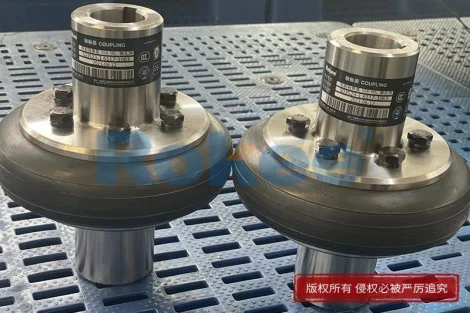
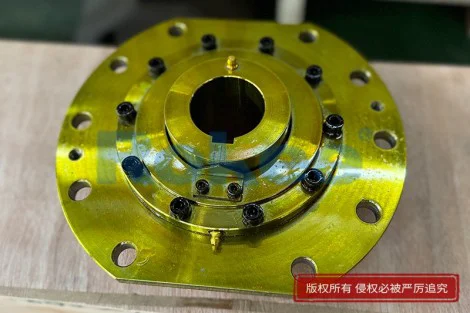
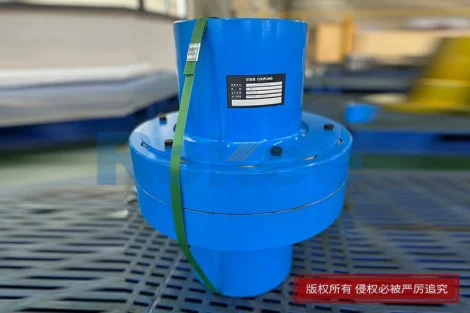
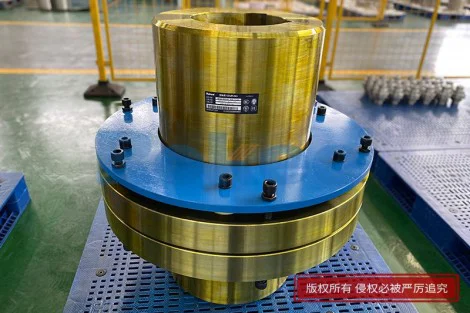
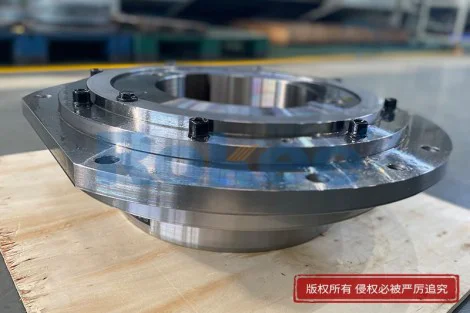
The basic structure of the elastic tyre coupling follows a concise and reasonable design logic, consisting mainly of integral tyre-shaped elastic elements and paired metal connecting flanges. The core functional component is the annular elastic tyre body, which is processed from high-performance rubber composite materials with reinforced fiber layers embedded inside. This special material formula and structural craftsmanship endow the tyre element with excellent torsional elasticity, shear resistance, and deformation recovery capability, avoiding the structural defects of rigid transmission parts that are prone to stress concentration and brittle damage. The metal flanges on both sides are made of high-strength steel materials with standardized connection structures, which are stably fixed with the elastic tyre body through uniform bolt fastening, forming an integrated transmission assembly. Different from split elastic coupling structures, the integral tyre elastic element features no splicing gaps, ensuring uniform force bearing during operation and effectively preventing local fatigue damage caused by uneven load distribution. The overall structural composition minimizes the number of auxiliary parts, realizing a compact and lightweight layout while maintaining high structural stability, which facilitates integration and installation in various limited mechanical spaces.
The working principle of the elastic tyre coupling relies on the elastic deformation characteristics of the rubber tyre element to achieve dual functions of torque transmission and error compensation. During equipment operation, the rotational torque of the driving shaft is first transmitted to the metal flange on the driving side, and then evenly transferred to the elastic tyre body through the fastening friction and extrusion force between the flange and the tyre element. Driven by torque, the rubber tyre body produces mild torsional shear deformation, driving the driven-side flange and the connected driven shaft to rotate synchronously, thereby completing continuous power transmission. When the connected two shafts produce inevitable displacement deviations due to assembly errors, equipment operation vibration, or mechanical thermal deformation, the high flexibility of the tyre element can adaptively compensate for multiple forms of misalignment. It can effectively accommodate axial displacement generated by shaft thermal expansion and contraction, radial offset caused by equipment installation deviation, and angular deflection formed by asynchronous shaft rotation angles. This flexible compensation mode avoids the rigid extrusion and friction between shafts in traditional rigid transmission structures, fundamentally reducing additional mechanical stress on shafts, bearings, and other core components.
Beyond basic power transmission and displacement compensation, the elastic tyre coupling exhibits outstanding vibration damping and impact buffering performance, which is one of its most prominent functional advantages. In industrial production scenarios such as frequent equipment starting and stopping, sudden load changes, and alternating positive and negative operation, mechanical systems often generate instantaneous impact loads and high-frequency vibration. These unstable mechanical energies are easily transmitted along the transmission shaft, causing equipment operation jitter, component wear acceleration, and even abnormal noise and structural fatigue. The rubber tyre element of the coupling has excellent damping characteristics, which can effectively absorb and consume instantaneous impact energy and vibration energy generated during operation. When subjected to sudden load impact, the elastic tyre body produces slow and reversible deformation, dispersing concentrated impact force into uniform elastic stress, avoiding instantaneous overload damage to transmission components. For long-term high-frequency mechanical vibration, the internal friction of the rubber material can continuously attenuate vibration energy, block vibration transmission between the driving and driven ends, and maintain the smooth and stable operation of the entire mechanical system.
Compared with other types of elastic couplings, the elastic tyre coupling has comprehensive performance advantages in adaptability, stability, and service life. Many traditional elastic couplings rely on discrete elastic pins or clamping rubber blocks for force transmission, which are prone to local wear, aging, and loosening after long-term operation, leading to reduced transmission accuracy and frequent component replacement. In contrast, the integral tyre elastic structure realizes omnidirectional uniform force bearing, with no vulnerable discrete parts, greatly improving overall structural reliability. Its torsional stiffness is low and elastic uniformity is good, enabling it to maintain stable transmission accuracy under variable load conditions, without obvious torque fluctuation or rotation deviation. In terms of environmental adaptability, the optimized rubber composite material can resist the erosion of conventional industrial oil stains, dust, and humid environments, and maintain stable elastic performance within a wide temperature range, avoiding performance attenuation caused by environmental changes. Additionally, this coupling has excellent overload protection capability. When the equipment encounters extreme overload conditions, the elastic deformation of the tyre body increases to a certain extent to buffer excessive torque, preventing rigid fracture of transmission parts and effectively protecting motors, reducers, and other key equipment from overload damage.
The superior comprehensive performance enables elastic tyre couplings to be widely applied in numerous industrial mechanical transmission systems. In traditional manufacturing industries such as conveying machinery, mixing equipment, and processing machinery, equipment often operates with frequent start-stop cycles and unstable loads, and the coupling’s vibration damping and buffering functions can effectively reduce equipment failure rates and extend mechanical service life. In building material production, chemical industry, and environmental protection equipment, the working environment is usually accompanied by dust, humidity, and medium corrosion, and the good environmental adaptability of the tyre coupling ensures long-term stable operation of the transmission system under harsh conditions. In power transmission and metallurgical machinery, which require heavy-load and stable power output, its excellent torque transmission capacity and displacement compensation performance can eliminate transmission errors caused by equipment operation deformation and improve the overall operation precision of mechanical systems. Moreover, it also shows good application value in agricultural machinery, general industrial transmission equipment, and other fields, adapting to different working conditions of medium and low-speed rotation and variable load operation.
In terms of installation, maintenance, and later operation cost control, the elastic tyre coupling also has obvious practical advantages. Its structural design is simple and intuitive, with no complex assembly procedures or precision matching requirements. The integral tyre element and paired flanges can be quickly positioned and installed through conventional fastening tools, and the disassembly and replacement process is also extremely convenient, without the need for professional and complex technical operations. This feature greatly shortens the equipment shutdown maintenance time in industrial production, reduces the impact of maintenance work on production efficiency, and improves the overall operational continuity of the production line. In daily operation, the coupling has extremely low maintenance costs, requiring no regular lubrication, gap adjustment, or precision calibration like gear couplings and bearing-type transmission components. The high wear resistance and aging resistance of the rubber tyre element ensure long-term stable performance, with a long service cycle and low replacement frequency, effectively reducing the daily operation and maintenance investment of mechanical equipment.
In actual industrial operation practice, the service performance and service life of elastic tyre couplings are closely related to material performance matching and working condition adaptation. The high-quality rubber tyre element undergoes precise vulcanization and reinforcement treatment, with tight internal fiber structure combination, good deformation recovery ability, and no permanent deformation after long-term repeated elastic deformation. For long-term continuous operation equipment, this stable elastic performance can ensure consistent transmission effect throughout the service cycle, avoiding gradual deterioration of vibration damping and compensation performance caused by material fatigue. At the same time, the friction transmission mode adopted by the coupling can avoid stress concentration on the shaft keyway, reduce the wear and deformation of the shaft connection part, and better protect the precision of the shaft structure. In frequent forward and reverse rotation working scenarios, the flexible connection mode can eliminate the rigid collision between transmission parts, reduce mechanical backlash, and make power transmission more responsive and stable.
With the continuous upgrading of modern industrial mechanical equipment towards high efficiency, stability, and low failure rate, the application value of elastic tyre couplings is constantly highlighted. Traditional rigid transmission structures can no longer meet the vibration reduction and error compensation requirements of high-precision and high-stability mechanical systems, while ordinary elastic couplings have limitations in service life and environmental adaptability. As a mature and optimized flexible transmission component, the elastic tyre coupling perfectly balances transmission efficiency, vibration damping performance, environmental adaptability, and maintenance convenience. It not only ensures efficient and stable torque transmission of mechanical equipment but also provides comprehensive protection for various transmission components, reducing equipment failure losses and operation and maintenance costs. In the future development of industrial machinery, with the continuous optimization of material formulas and structural designs, the comprehensive performance of elastic tyre couplings will be further improved, and their application scope in intelligent manufacturing, automated production lines, and high-end mechanical equipment will be more extensive, becoming an indispensable basic component in modern mechanical transmission systems.