Custom Solution For Anti-fatigue Steel Laminae Couplings Of Rockwool Sandwich Panel Production Line

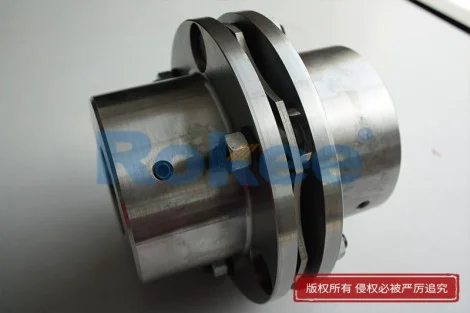
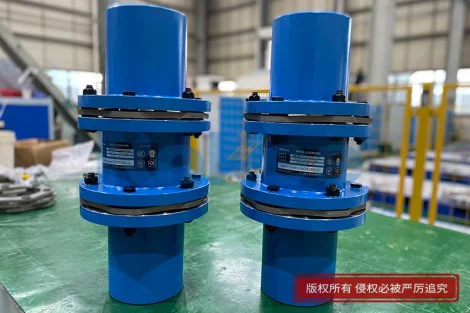
Rockwool sandwich panel production lines operate under continuous, high-intensity industrial working conditions, where the stability and durability of transmission components directly determine the overall production efficiency and product consistency of the entire line. As a core transmission component responsible for torque transmission and shaft misalignment compensation, steel laminae couplings bear alternating loads, frequent vibration, and multi-dimensional displacement impacts during long-term continuous operation. Conventional standard couplings often suffer from fatigue deformation, elastic attenuation, and structural loosening after long-term service in rockwool panel production scenarios, which easily leads to transmission deviation, equipment jitter, and even unplanned downtime, seriously restricting the continuous and stable operation of the production line. In view of the personalized and harsh working condition characteristics of rockwool sandwich panel production, the customized anti-fatigue steel laminae coupling solution is developed to target the pain points of traditional coupling applications, realizing adaptive optimization in material selection, structural design, stress distribution, and fatigue resistance, so as to match the long-cycle and high-stability operation requirements of professional production lines.
The operational characteristics of rockwool sandwich panel production line lay forward unique and stringent performance requirements for steel laminae couplings. Different from general mechanical transmission equipment, the production process of rockwool sandwich panels includes raw material feeding, roller pressing, composite bonding, fixed-length cutting, and finished product conveying, with the entire production process running uninterruptedly for a long time. The frequent start-stop, cyclic load impact, and continuous micro-vibration generated by the operation of multiple rollers and transmission devices make the coupling always in a complex alternating stress state. Meanwhile, the production environment of rockwool panels contains tiny fiber dust and slight temperature fluctuation, which will cause slow erosion and performance attenuation to conventional coupling structures and materials. Standard steel laminae couplings are designed for conventional industrial scenarios, with uniform laminae thickness, single stress structure, and limited fatigue resistance. When applied to rockwool panel production lines, they are prone to local stress concentration after repeated cyclic deformation, resulting in micro-cracks on the surface of steel laminae, gradual reduction of elastic compensation capacity, and finally failure of torque transmission accuracy and structural stability. The customized anti-fatigue solution is precisely oriented to these scenario-specific failure risks, carrying out targeted technical optimization from the source of material performance and structural mechanics.
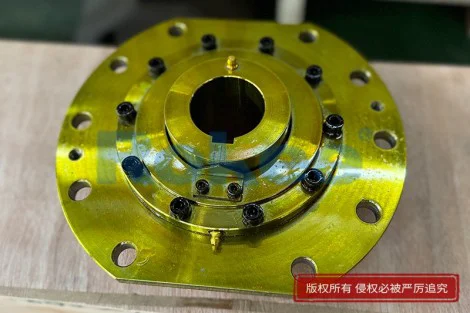
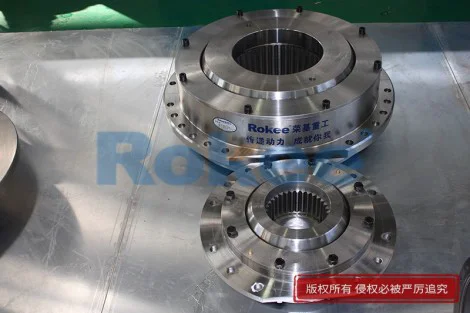
Material optimization is the core foundation for improving the anti-fatigue performance of customized steel laminae couplings. The laminae group, as the key elastic deformation component of the coupling, needs to maintain stable elastic performance, high tensile strength, and excellent fatigue resistance under long-term repeated deformation. The customized solution adopts high-purity alloy steel materials with refined grain structure, which undergoes special heat treatment processes to eliminate internal residual stress generated during forging and processing. Compared with ordinary carbon steel and conventional alloy steel, the optimized material has more uniform internal organizational structure, lower stress sensitivity, and stronger resistance to alternating load impact. In the long-term cyclic deformation process, the material can maintain stable elastic modulus, avoid rapid attenuation of elastic performance caused by frequent stretching and compression, and effectively delay the generation and expansion of micro-fatigue cracks. In addition, the surface of the steel laminae is treated with enhanced anti-corrosion and wear-resistant processing, which can resist the erosion of rockwool fiber dust and slight humid environment in the production workshop, prevent surface oxidation and material performance degradation, and further extend the stable service cycle of the coupling under complex production environmental conditions. The matching hub and connecting components are made of high-strength forged steel with integrated forming technology, which avoids structural defects such as internal pores and cracks caused by traditional casting process, ensures overall structural rigidity, and provides reliable structural support for the anti-fatigue operation of the laminae group.
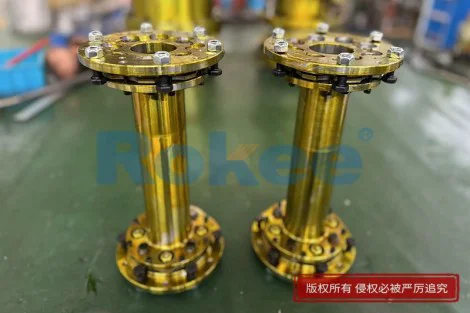
Structural personalized optimization is the key to realize the adaptive matching between anti-fatigue steel laminae couplings and rockwool sandwich panel production line working conditions. The customized solution breaks through the single structural design of standard couplings, and carries out targeted structural improvement combined with the load characteristics and displacement compensation requirements of rockwool panel transmission equipment. Firstly, the layered combination structure of the steel laminae group is optimized. By adjusting the thickness matching and interval layout of single lamina, the stress distribution of the entire laminae group is more uniform during torque transmission and displacement compensation. The traditional single-thickness laminae structure is easy to form local overstress at the edge and connecting part during deformation, while the customized graded thickness design can disperse concentrated stress, make the deformation of each steel lamina coordinated and consistent, avoid individual lamina overloading and premature fatigue failure, and significantly improve the overall cyclic deformation resistance of the coupling. Secondly, the connecting structure between the laminae group and the hub is optimized. The positive locking and friction composite connection mode is adopted to eliminate the transmission backlash existing in traditional connection structures. This design ensures zero clearance torque transmission in high-speed and cyclic load operation, avoids impact friction and alternating stress concentration caused by backlash, and effectively reduces the fatigue loss of structural components during frequent start-stop and variable-load operation of the production line.
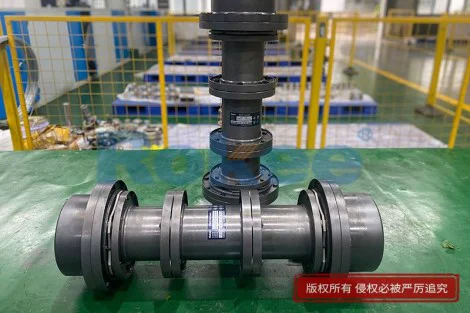
In terms of displacement compensation structure, the customized anti-fatigue steel laminae coupling retains the excellent multi-dimensional displacement compensation capability of traditional laminae couplings, and further optimizes the deformation coordination mechanism. The production line of rockwool sandwich panels will produce slight axial, radial and angular shaft misalignment due to equipment vibration, foundation settlement and component wear during long-term operation. The optimized laminae group structure can realize flexible elastic deformation in multiple directions, accurately compensate for various misalignment deviations generated in the operation of transmission shafts, avoid additional bending stress and shear stress caused by shaft misalignment, and reduce the fatigue load of the coupling and supporting transmission components. Different from the excessive deformation risk of ordinary couplings under large misalignment, the customized structure limits the elastic deformation range within the optimal stress interval through structural parameter calibration, which not only ensures sufficient displacement compensation capacity, but also avoids structural fatigue damage caused by excessive single deformation, realizing the balance between compensation flexibility and structural stability.
The anti-fatigue performance of the customized coupling is further improved through finite element stress simulation and working condition adaptation test optimization. In the design stage, according to the actual operating parameters of different transmission stations of the rockwool sandwich panel production line, including conventional operating torque, peak impact load, start-stop frequency and operating speed, the finite element simulation technology is used to analyze the stress distribution and deformation law of the coupling under full-cycle working conditions. The simulation results guide the fine adjustment of laminae structural parameters, connection pretightening force and overall rigidity, so that the coupling can maintain the optimal stress state under both rated load and instantaneous impact load. Meanwhile, targeted fatigue cycle tests are carried out for the working condition characteristics of the production line. Through simulating long-term continuous operation and frequent load impact in actual production, the structural fatigue resistance and performance stability of the coupling are verified and optimized iteratively. This scenario-oriented test optimization mode enables the customized coupling to completely adapt to the special load cycle characteristics of rockwool panel production, and solves the problem that standard couplings are difficult to adapt to long-term high-frequency cyclic operation.
In terms of overall operation performance, the customized anti-fatigue steel laminae coupling has significant advantages in transmission stability, vibration damping and long-term reliability. The high-precision zero-backlash transmission structure ensures synchronous and accurate torque and speed transmission, avoids transmission deviation and equipment jitter caused by clearance vibration, and provides stable transmission guarantee for the consistent thickness and structural uniformity of rockwool sandwich panels in continuous production. The flexible elastic deformation characteristics of the steel laminae group can effectively absorb the vibration and impact generated by equipment operation, reduce the load impact on motors, reducers and roller transmission components, reduce the overall vibration amplitude of the transmission system, and create a stable operating environment for high-precision panel composite molding. In addition, the optimized anti-fatigue structure and high-performance materials make the coupling have no vulnerable wearing parts, realizing long-term maintenance-free operation in the production process, effectively reducing the frequency of equipment shutdown maintenance and component replacement, and improving the continuous operation rate and production efficiency of the rockwool sandwich panel production line.
The practical application value of the customized anti-fatigue steel laminae coupling solution is fully reflected in the long-term stable operation of rockwool sandwich panel production lines. In the actual production process, the traditional coupling fatigue failure problems such as elastic failure, structural loosening and transmission jitter are completely solved. The uniform stress distribution and excellent cyclic deformation resistance enable the coupling to maintain stable mechanical performance after millions of cyclic operations, without obvious attenuation of transmission accuracy and compensation capacity. The excellent environmental adaptability can resist the interference of dust and slight temperature changes in the production workshop, ensuring consistent performance output in long-cycle industrial production. For rockwool sandwich panel production enterprises, the application of this customized solution not only reduces the equipment failure rate and maintenance cost caused by coupling failure, but also avoids product quality fluctuations and production efficiency losses caused by transmission system instability, helping enterprises realize stable, efficient and low-cost continuous production.
With the continuous upgrading of rockwool sandwich panel production technology towards high-speed, continuous and high-precision direction, the requirements for the reliability and durability of production line transmission components are constantly improving. The standardized general coupling products can no longer meet the personalized and high-standard operation needs of professional production lines. The customized anti-fatigue steel laminae coupling solution, which takes the actual working conditions and operational pain points of rockwool sandwich panel production lines as the core, realizes the precise matching of product performance and scenario requirements through material optimization, structural innovation and working condition adaptive calibration. It effectively makes up for the performance defects of standard couplings in long-term high-frequency cyclic operation, provides more reliable transmission support for the stable operation of rockwool sandwich panel production lines, and has important practical significance for improving the overall operational level and economic benefit of industrial production lines. In the follow-up, with the further optimization of production line operating parameters and the upgrading of production processes, the customized solution can also carry out dynamic adaptive adjustment according to new working condition characteristics, continuously optimize anti-fatigue performance and transmission stability, and meet the long-term development needs of high-efficiency and high-quality production of rockwool sandwich panels.