Universal Joint Coupling for PIR Sandwich Panel Production Line Adapts to High Frequency Start-Stop Conditions
The continuous evolution of building energy-saving material manufacturing technology has raised higher requirements for the operational stability and adaptive capacity of core transmission components in automated production lines. PIR sandwich panels, as mainstream high-efficiency thermal insulation and structural building materials, feature dense foam structure, excellent thermal insulation performance and high mechanical strength, and are widely applied in industrial factory buildings, cold storage engineering and modern building enclosure systems. The production process of PIR sandwich panels involves continuous feeding, foaming, compounding, pressing, cutting and stacking procedures, and the entire automated line needs to frequently switch between startup, operation, deceleration and shutdown states according to production rhythm, raw material supply and processing parameter adjustments. Such high frequency start-stop working conditions bring severe mechanical challenges to the transmission system, making the selection and performance optimization of coupling components crucial to the overall operational reliability of the production line. As a key flexible transmission component, universal joint coupling shows unique structural advantages and excellent dynamic adaptability in matching the high-frequency start-stop operation of PIR sandwich panel production lines, effectively solving the transmission failure problems caused by frequent load switching, shaft misalignment and instantaneous torque fluctuation in automated production processes.
The operational characteristics of PIR sandwich panel production line determine the special working environment of the transmission system. Different from traditional steady-speed continuous production equipment, the automated production line for PIR sandwich panels needs to adjust operating status in real time to cooperate with the continuous foaming and curing process of polyurethane materials. In the actual production process, inconsistent feeding speed of base materials, real-time adjustment of pressing pressure, and synchronous coordination of cutting and positioning actions will all lead to frequent start and stop of driving motors and transmission mechanisms. This high-frequency alternating working state will generate instantaneous impact load at the moment of startup and shutdown, forming periodic dynamic shock on the transmission shaft system. For rigid transmission components, frequent impact load is prone to cause abnormal wear of shaft parts, connection loosening and instantaneous transmission deviation, which will further lead to inconsistent panel thickness, uneven compounding and inaccurate cutting size of PIR sandwich panels, affecting product quality stability. In addition, the long-term continuous operation of the production line will produce slight structural deformation and installation offset of equipment frames, resulting in angular and axial misalignment between the driving shaft and driven shaft of the transmission system. The superposition of frequent start-stop impact and shaft misalignment greatly tests the fatigue resistance, shock resistance and displacement compensation capability of transmission couplings, which puts forward higher technical requirements for the structural design and material performance of universal joint couplings.
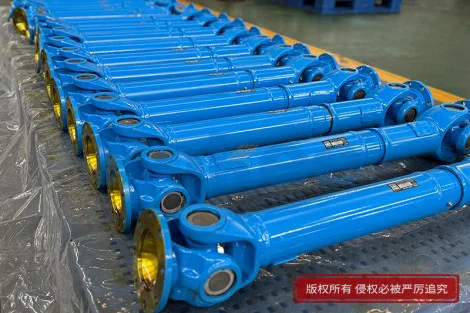
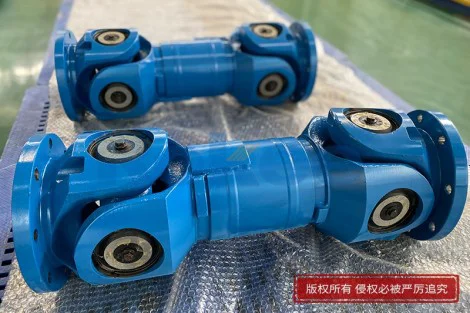
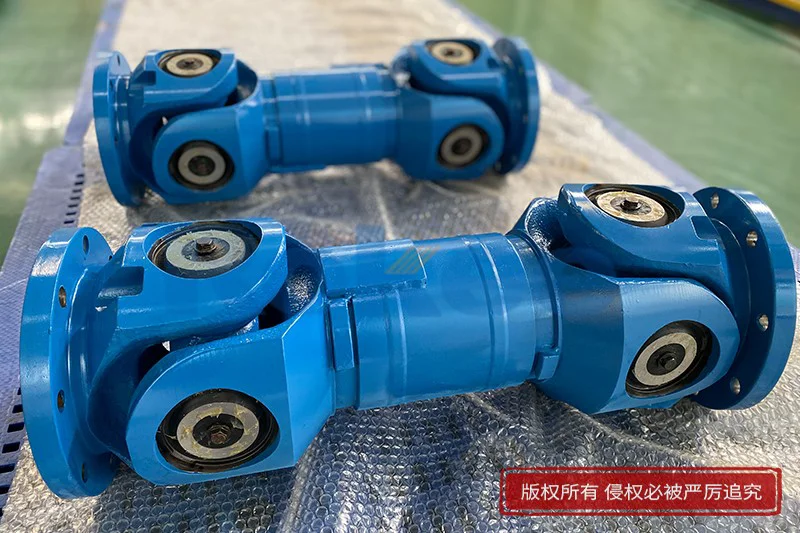
The excellent adaptive performance of universal joint coupling in high-frequency start-stop working conditions originates from its unique spatial linkage mechanical structure and flexible transmission mechanism. The core structure of the universal joint coupling consists of two fork-shaped yokes, a cross-shaped intermediate spider and precision roller bearing components, forming a multi-degree-of-freedom articulated motion system. Based on the spatial multi-linkage motion principle, this structure can convert the fixed-axis rotary motion of the driving shaft into the spatial composite swinging and rotating motion of the cross spider, and then stably convert it into the uniform rotary motion of the driven shaft, realizing continuous and efficient torque and power transmission between misaligned shafts. In the working process, the two yokes can independently pivot around the two perpendicular axes of the cross spider, which enables the coupling to have reliable angular displacement compensation capability. It can adapt to the shaft angle deviation within the conventional operating range generated by equipment installation errors and operational deformation, and maintain stable transmission state without generating additional structural stress. This inherent flexible compensation characteristic fundamentally avoids the rigid extrusion and friction between transmission components caused by shaft misalignment, and greatly reduces the structural vibration and impact loss during equipment start-stop switching.
In view of the high-frequency start-stop operation characteristics of PIR sandwich panel line, the structural design of universal joint coupling has obvious technical advantages over traditional coupling products. Traditional rigid couplings lack displacement compensation capability, and cannot buffer the instantaneous impact torque generated during frequent start and stop processes. Long-term operation will easily cause fatigue damage of shaft parts and bolt loosening, leading to transmission jitter and equipment failure. ordinary elastic couplings rely on elastic deformation of rubber or polymer materials to achieve buffering and shock absorption, but elastic materials are prone to aging, fatigue deformation and stiffness attenuation under long-term periodic impact load, resulting in reduced transmission accuracy and short service life, which cannot meet the long-term stable operation requirements of continuous production lines. In contrast, the universal joint coupling adopts an all-metal mechanical articulated structure, which has excellent structural rigidity and fatigue resistance. The cross spider and roller bearing components form a low-friction rotating pair, which can flexibly respond to instantaneous load changes during start-stop switching. At the moment of equipment startup, the articulated structure can slowly release torque through flexible pivoting motion, avoiding instantaneous concentrated impact on the transmission shaft system; during equipment shutdown and deceleration, it can effectively buffer the inertial impact generated by the operation of mechanical parts, reduce the vibration amplitude of the transmission system, and maintain the continuity and stability of power transmission in the whole dynamic switching process.
The dynamic transmission characteristics of universal joint coupling are highly matched with the operating rhythm of PIR sandwich panel production lines. In the high-frequency start-stop cycle, the instantaneous transmission ratio of the universal joint coupling has regular fluctuation characteristics, and the average transmission ratio remains stable at a fixed value in a single rotation cycle, which ensures the overall synchronization of the transmission speed of the production line. The slight periodic fluctuation of instantaneous speed can form a natural flexible buffer effect in the start-stop switching stage, effectively absorbing the mechanical shock generated by sudden load changes, and will not affect the overall processing accuracy of PIR sandwich panels. For the continuous compounding and pressing process of PIR sandwich panels, stable transmission speed and uniform torque output are the key to ensure the flatness and structural uniformity of panel products. The universal joint coupling can always maintain synchronous torque transmission under frequent start-stop conditions, avoid the problem of uneven material foaming and compounding dislocation caused by transmission jitter, and effectively improve the yield of finished panels. At the same time, the axial and angular multi-dimensional displacement compensation capability of the universal joint coupling can adapt to the tiny structural changes of the production line equipment during long-term operation, avoid transmission clamping stagnation and power loss caused by equipment deformation, and ensure the long-term stable operation of the production line.
The material selection and process optimization of universal joint coupling further enhance its adaptability to high-frequency start-stop working conditions in PIR sandwich panel production. The main body of the coupling is made of high-strength alloy materials with excellent toughness and fatigue resistance, which can resist long-term periodic impact load and avoid structural fracture and deformation. The surface of key moving parts is treated with precision finishing and anti-wear treatment, which reduces the friction coefficient of the rotating pair, lowers the heat generation and wear loss during frequent rotating switching, and effectively extends the service life of components. The built-in roller bearing structure can disperse the concentrated pressure generated by instantaneous torque impact, reduce the contact fatigue of parts, and ensure the flexible and stable operation of the articulated structure in thousands of start-stop cycles. In the actual production scenario of PIR sandwich panels, the production line needs to complete dozens of start-stop switching operations every hour due to material replacement, parameter adjustment and equipment inspection. The optimized universal joint coupling can maintain stable mechanical performance under such continuous cyclic working conditions, without obvious wear failure and transmission accuracy attenuation, reducing the frequency of equipment shutdown maintenance and parts replacement.
The application of universal coupling in PIR sandwich panel production lines also brings significant energy-saving and efficiency-improving effects. Frequent start-stop of traditional transmission systems is often accompanied by large inertial energy loss and transmission friction loss, resulting in high energy consumption and low operational efficiency of equipment. The flexible transmission structure of the universal joint coupling can effectively reduce the inertial resistance of the transmission system during start-stop switching, make the power output of the driving motor more smooth and efficient, and reduce invalid energy consumption. At the same time, the stable transmission state avoids the production pause and material waste caused by transmission failure and product quality problems, improves the continuous operation efficiency of the production line, and reduces the comprehensive production cost. In the cutting and stacking link of PIR sandwich panels, the high-precision synchronous transmission performance of the universal joint coupling ensures the positioning accuracy of cutting equipment and the stability of stacking action, avoids dimensional deviation and product damage caused by transmission jitter, and further improves the overall production efficiency and product qualification rate of the production line.
In the long-term operation and maintenance of PIR sandwich panel production lines, the structural advantages of universal joint coupling are further reflected in convenient maintenance and strong working stability. The standardized and integrated structural design makes the coupling have fewer vulnerable parts and simple assembly relationship. Daily maintenance only needs regular lubrication of rotating parts and inspection of connection state, without complex disassembly and debugging work. Compared with other types of couplings that are prone to elastic fatigue and structural loosening, the all-metal mechanical structure of the universal joint coupling has higher operational reliability, can adapt to long-term uninterrupted high-frequency start-stop operation, and reduces the downtime loss caused by equipment failure. In addition, the strong environmental adaptability of the universal joint coupling enables it to operate stably in the production environment of PIR sandwich panels with certain dust and temperature humidity changes, without being affected by minor environmental factors, ensuring the continuous and stable operation of the production line.
With the continuous upgrading of PIR sandwich panel manufacturing industry towards high automation, high precision and high efficiency, the production line puts forward more stringent requirements on the dynamic performance and stability of transmission components. High-frequency start-stop operation has become a normal working state of intelligent automated production lines, and the traditional transmission components can no longer meet the needs of high-precision and high-stability production. The universal joint coupling, with its unique flexible articulated structure, excellent displacement compensation capability, strong shock resistance and fatigue resistance, perfectly adapts to the working characteristics of PIR sandwich panel production lines. It solves a series of production problems such as unstable transmission, easy equipment failure and inconsistent product quality caused by frequent start-stop and shaft misalignment, and provides reliable technical support for the stable operation and efficiency improvement of PIR sandwich panel production equipment. In the future, with the further optimization of structural design and material technology, universal joint couplings will show more excellent adaptive performance in high-frequency dynamic working conditions, and play a more important role in the intelligent and high-quality development of building energy-saving material manufacturing industry.