Barrel Coupling For Compressor

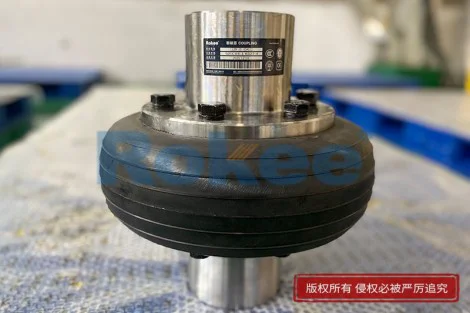
In industrial power transmission systems that support compressor operation, barrel couplings stand out as a reliable and high-performance mechanical component designed to connect driving and driven shafts while ensuring stable torque transfer and adaptive operational compensation. As a core connecting part between compressors and their matching power devices, these specialized couplings are engineered to address the unique operating characteristics of compressor equipment, including continuous high-load rotation, frequent minor shaft displacement, and harsh working environments filled with vibration and temperature fluctuations. Unlike conventional coupling structures that rely on linear or point contact for power transmission, barrel couplings adopt a unique curved surface contact design, which fundamentally optimizes stress distribution during operation and delivers superior durability and stability for long-term compressor system operation.
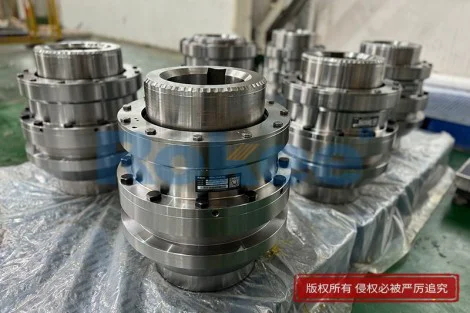
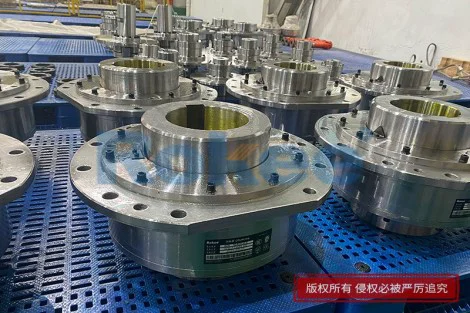
The basic structural composition of barrel couplings for compressors is refined to adapt to the compact and high-strength operational requirements of compressor units, mainly consisting of two symmetrical hub bodies, precision-machined barrel-shaped rolling elements, protective sealing components, and auxiliary fastening structures. All core load-bearing parts are manufactured with high-precision machining technology to ensure the perfect fit between barrel rolling elements and the semicircular groove structures on the inner wall of the hub. This structural design abandons the defect of local stress concentration caused by linear contact in traditional pin couplings. The overall surface contact formed by the curved barrel elements can evenly disperse the torque and impact force generated during compressor operation, effectively reducing local fatigue wear and extending the overall service life of the transmission system. The internal assembly structure is compact and streamlined, which avoids excessive space occupation and fully adapts to the compact installation layout of most industrial compressor equipment.
The working principle of barrel couplings in compressor systems centers on efficient torque transmission and flexible misalignment compensation. When the power drive device starts and operates, the driving hub rotates synchronously with the input shaft, and the barrel-shaped rolling elements embedded in the hub grooves rely on contact pressure and shear force to drive the driven hub and compressor shaft to rotate stably, realizing continuous and lossless power transmission. During the long-term operation of the compressor, affected by equipment vibration, foundation slight settlement, thermal expansion and contraction of metal components, and assembly errors, the connecting shafts will inevitably produce minor axial displacement, radial deviation and angular deflection. The curved surface characteristics of barrel rolling elements allow adaptive sliding and fine adjustment in the matching grooves, which can effectively absorb and compensate for these subtle misalignments. This flexible compensation mechanism avoids the additional bending stress and friction loss caused by rigid shaft connection, ensuring that the compressor maintains stable rotational efficiency even in dynamic working conditions.
Compressors belong to typical continuous operation industrial equipment, which often runs for thousands of hours without shutdown, and puts forward extremely strict requirements on the stability, fatigue resistance and impact resistance of supporting transmission components. Barrel couplings are highly compatible with the operational characteristics of compressors due to their unique structural advantages. First of all, the torsionally rigid structural design enables the coupling to maintain high-precision torque transmission without torsional deformation during high-speed and high-load operation, ensuring the stable output of compressor power and avoiding pressure fluctuation and operation failure caused by power transmission lag. Secondly, the surface contact transmission mode greatly improves the load-bearing capacity of the coupling, which can withstand the instantaneous impact load generated during compressor start-up, shutdown and load switching, and effectively buffer the mechanical vibration generated by the reciprocating operation of the compressor.
In terms of environmental adaptability, barrel couplings for compressors are equipped with optimized sealing structures, which can form an effective protective barrier for internal rolling elements. The integrated inner and outer protective covers and embedded sealing accessories can prevent external dust, metal debris, moisture and other pollutants from entering the internal matching gap, while avoiding the leakage of internal lubricating media. This excellent sealing performance enables the coupling to operate stably in various harsh working scenarios such as factory production workshops, outdoor industrial stations and petrochemical operation environments where compressors are widely used. It effectively reduces the failure rate of internal component abrasion, jamming and corrosion caused by environmental interference, and ensures the continuous and reliable operation of the compressor transmission system.
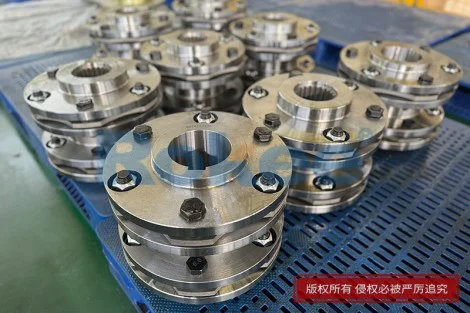
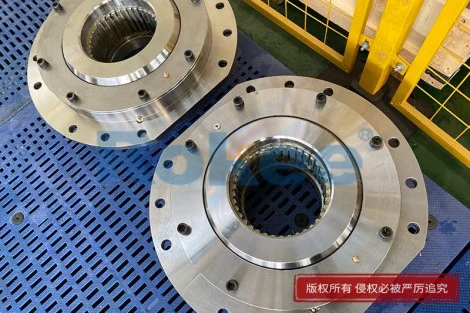
Compared with gear couplings, diaphragm couplings and other common compressor supporting transmission parts, barrel couplings show unique comprehensive performance advantages. Gear couplings have high torque transmission capacity, but their tooth surface meshing structure is prone to abrasion and tooth breakage under long-term vibration, and the later maintenance cost is high. Diaphragm couplings have good flexibility, but their thin-wall structure has limited bearing capacity and is easy to produce fatigue damage under long-term high-load operation of compressors. In contrast, barrel couplings balance rigidity and flexibility perfectly. They not only have high rigidity to meet the high-precision power transmission requirements of compressors, but also have flexible misalignment compensation capability to adapt to the dynamic operation deviation of equipment. In addition, the internal rolling friction structure of barrel couplings can reduce the friction coefficient during operation, lower the heat generation of the transmission system, and avoid the performance attenuation caused by high-temperature aging of components during long-term continuous operation of compressors.
The operational stability of barrel couplings directly affects the overall operating efficiency and failure rate of compressor units. In the actual operation of compressor systems, slight shaft misalignment that cannot be eliminated by manual assembly is the main cause of equipment wear and energy consumption increase. Traditional rigid couplings cannot compensate for these deviations, which will lead to increased friction between shafts, accelerated wear of compressor bearings, and even abnormal vibration and noise of the whole machine. Barrel couplings can intelligently adapt to various minor deviations in the operation process, eliminate additional mechanical stress, reduce the operating load of compressor bearings and other core components, and effectively reduce equipment operation energy consumption. At the same time, the uniform stress distribution structure avoids local overheating and fatigue damage of components, greatly reduces the frequency of unexpected shutdown and maintenance of compressors, and improves the continuous operation efficiency of industrial production lines.
The installation and commissioning process of barrel couplings for compressors is efficient and convenient, with low requirements for assembly precision and simple operation steps. Before installation, it is only necessary to clean the matching surfaces of the driving and driven shafts and the internal grooves of the coupling hubs to ensure no impurities affect the assembly accuracy. During installation, the barrel rolling elements are placed in the preset grooves in order, and the two hubs are butted and fixed along the shaft body. The flexible compensation margin of the coupling itself can tolerate reasonable assembly errors, avoiding the time-consuming and labor-intensive high-precision alignment work required by rigid couplings. After installation, the equipment can be put into trial operation directly, and the coupling can automatically adapt to the optimal operating state with the rotation of the shaft body. This convenient installation feature not only shortens the equipment assembly cycle, but also reduces the technical threshold for on-site equipment maintenance and replacement.
Daily maintenance and upkeep of barrel couplings is simple and feasible, which is an important reason for their wide application in compressor supporting systems. The core of daily maintenance is to keep the internal lubrication state stable and the sealing structure intact. The internal rolling contact structure of the coupling relies on lubricating media to reduce friction and wear. Regular inspection of lubrication status and timely supplement of lubricating materials can ensure the flexible operation of rolling elements and avoid dry friction damage. At the same time, regular inspection of the sealing accessories can prevent aging, deformation and damage of the sealing structure, ensure the internal cleanliness of the coupling, and avoid component wear caused by pollutant invasion. In the long-term operation process, the wear degree of barrel rolling elements is uniform due to surface contact, and there will be no sudden failure of individual components. The regular inspection cycle is long, and the maintenance cost and labor investment are far lower than those of other types of couplings.
Barrel couplings are applicable to almost all types of industrial compressor equipment, including reciprocating compressors, screw compressors, centrifugal compressors and rotary compressors, covering multiple industrial fields such as mechanical manufacturing, chemical production, petroleum processing, pharmaceutical production and air supply engineering. Different types of compressors have different operating characteristics: reciprocating compressors have obvious periodic vibration and impact load, screw compressors run continuously with stable load but high rotating speed, and centrifugal compressors have high requirements for transmission stability. The adaptive structural design of barrel couplings can meet the matching needs of different compressor types, effectively buffer vibration and impact, stabilize power transmission, and ensure that compressors of different working modes can maintain efficient and stable operation.
With the continuous upgrading of industrial compressor equipment towards high efficiency, energy saving and long-life operation, the structural design and performance of barrel couplings are also constantly optimized and upgraded. Modern optimized barrel couplings adopt more streamlined hub structures and more precise barrel rolling element processing technologies, further improving the contact uniformity and load-bearing capacity of the transmission structure. The upgraded sealing and lubrication system adapts to higher temperature and more complex environmental working conditions, expanding the application scope in extreme industrial scenarios. At the same time, the lightweight structural optimization reduces the overall self-weight of the coupling, avoids additional load on the compressor shaft body, and further improves the energy-saving effect of the equipment operation.
In actual industrial operation cases, compressor units equipped with barrel couplings show excellent comprehensive operating effects. The stable power transmission capacity ensures the stable air pressure and flow output of the compressor, avoiding production quality fluctuations caused by unstable equipment operation. The efficient misalignment compensation and vibration buffering performance greatly reduce the wear loss of compressor bearings, shafts and other core components, prolong the overall service life of the compressor unit, and reduce the downtime loss and component replacement cost caused by equipment failure. The reliable sealing and anti-pollution performance enables the compressor to operate stably in high-dust, high-humidity and corrosive industrial environments, ensuring the continuity and stability of industrial production.
In conclusion, barrel couplings have become an indispensable core supporting component in compressor transmission systems by virtue of their compact and reasonable structural design, efficient torque transmission performance, excellent misalignment compensation capability, strong environmental adaptability and low maintenance cost. They solve many pain points in the matching operation of traditional couplings and compressors, such as easy wear, poor stability, high energy consumption and cumbersome maintenance. With the continuous development of industrial automation and high-efficiency production, the market demand for high-stability and long-life compressor supporting transmission components will continue to grow, and barrel couplings will play a more important role in the field of industrial compressor equipment supporting with their superior comprehensive performance, providing reliable basic guarantee for the stable and efficient operation of various industrial compression systems.