Universal Joint Coupling and PIR Sandwich Panel Production Line Cooperate to Improve Quality
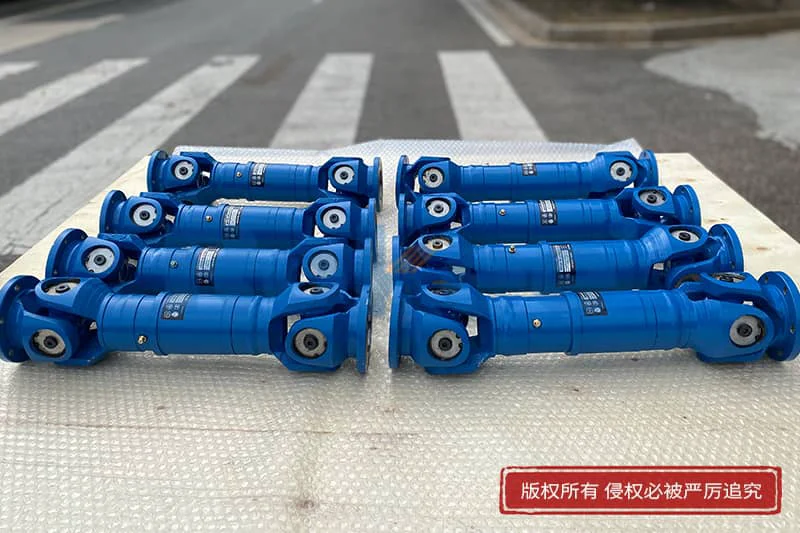
The continuous advancement of modern building material manufacturing has raised unprecedented standards for the stability, precision, and consistency of industrial production processes. PIR sandwich panels, as high-performance thermal insulation and structural building materials, are widely applied in industrial construction, cold chain storage, and energy-saving architectural projects, where their product quality directly determines the safety, durability, and functional performance of terminal building facilities. The overall quality of PIR sandwich panels is not only dependent on raw material formulation and post-production curing processes but also closely linked to the operational stability of the entire automated production line. As a core flexible transmission component, universal joint couplings play an irreplaceable role in optimizing the operating state of PIR sandwich panel production lines, realizing precise coordination between various production units, and fundamentally promoting the overall improvement of product manufacturing quality through efficient mechanical transmission and dynamic error compensation. In the continuous flow manufacturing mode of PIR sandwich panels, every link from raw material uncoiling, surface leveling, foam compounding, composite pressing to fixed-size cutting requires synchronous and stable power support, and the cooperative operation between universal joint couplings and production line equipment has become a key mechanical guarantee for eliminating production fluctuations and standardizing product quality.
Different from ordinary industrial product production, PIR sandwich panel manufacturing is a highly continuous and integrated process that cannot tolerate frequent equipment jitter, transmission deviation, or intermittent operating errors. Any minor instability in the transmission system will be amplified in the continuous production process, leading to uneven panel thickness, inconsistent surface flatness, unstable foam density, and interface delamination between core materials and surface layers, all of which are critical quality defects affecting the service performance of finished panels. Traditional production line transmission systems mostly adopt rigid connection structures, which can only adapt to ideal coaxial operating conditions. In actual long-term production operation, equipment installation deviations, mechanical vibration generated by high-speed operation, thermal deformation caused by long-time equipment heating, and minor structural displacement of the frame will lead to angular and axial misalignment between transmission shafts. These subtle deviations are difficult to eliminate through manual debugging, yet they will cause uneven torque transmission, local equipment wear, and asynchronous operation of front and rear production units, ultimately resulting in fluctuating product quality and increased defective rates. The application of universal joint couplings perfectly solves the pain points of rigid transmission, bringing flexible and adjustable transmission performance to PIR sandwich panel production lines, and building a stable mechanical operation foundation for standardized and high-quality production.
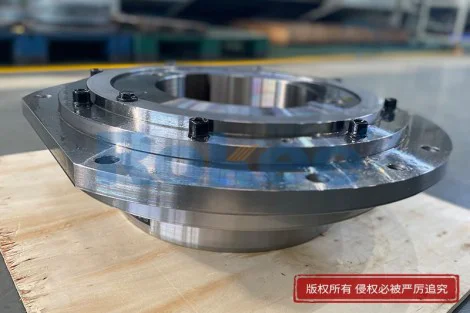
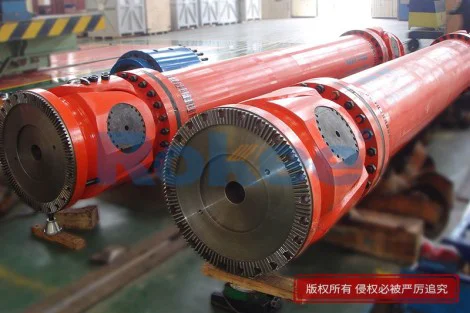
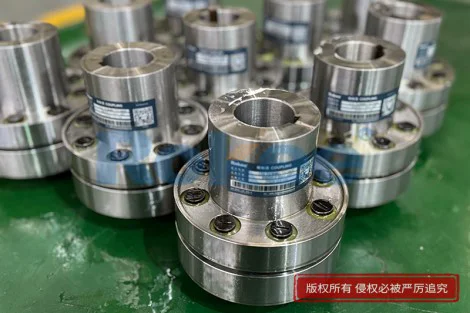
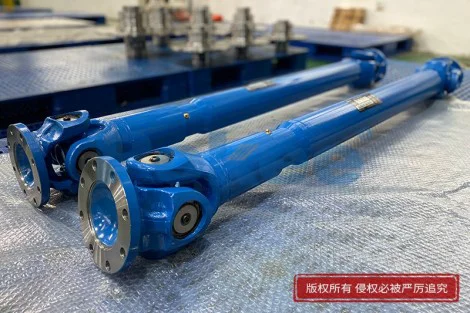
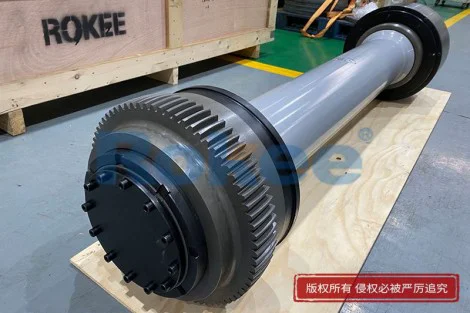
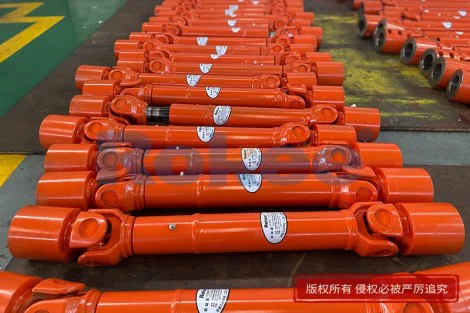
The core value of universal joint couplings in PIR sandwich panel production line lies in their excellent misalignment compensation capability and stable torque transmission performance. Structurally, universal joint couplings adopt a flexible hinge connection design, which can effectively adapt to angular deviation, axial displacement, and radial offset between driving shafts and driven shafts within a certain range. This unique structural advantage enables the production line to maintain consistent and efficient power output even when there are inevitable installation errors, operational vibration, and thermal deformation, avoiding the torque loss and transmission stagnation common in rigid connection structures. In the uncoiling and leveling stage of PIR sandwich panel surface materials, stable and uniform rotational power is required to ensure constant-speed feeding of metal or non-metal surface materials. Slight shaft misalignment in this link will cause intermittent tension changes in surface materials, leading to material wrinkling, uneven feeding speed, and inconsistent reserved material length, which directly affect the flatness and dimensional accuracy of the final panels. With the adaptive compensation of universal joint couplings, the transmission system can always maintain synchronous operation, eliminate tension fluctuation during material feeding, and ensure the flat and orderly conveying of surface materials, laying a foundation for the uniform composite processing of subsequent core materials.
In the core foaming and composite pressing stage of PIR sandwich panels, the cooperative effect of universal joint couplings and production line equipment is more prominent and directly determines the core quality indicators of finished products such as foam density uniformity, bonding firmness, and overall flatness. The PIR foam compounding and pouring process requires precise and stable operation of mixing and conveying equipment, and the pressing and laminating equipment needs to maintain constant pressure and uniform operating speed to ensure that the foaming material is evenly filled and fully bonded with the upper and lower surface materials. When the production line runs for a long time, the continuous operation of power components will generate slight vibration and thermal expansion, causing tiny offset changes in the transmission shaft position of pressing equipment. Rigid transmission structures will transmit these offsets directly to the pressing rollers, resulting in uneven pressing gaps, local excessive pressure or insufficient pressure, and further causing problems such as partial bulging, depression, and uneven core material density of sandwich panels. Universal joint couplings can dynamically absorb and compensate for these real-time offset changes, keep the transmission state of pressing equipment stable, ensure the consistency of pressing gaps and operating speed in the full production section, and make the foaming reaction and composite bonding process proceed in a uniform and stable mechanical environment.
The stable transmission performance of universal joint couplings also effectively reduces equipment operation vibration and running noise, creating a more stable production environment for PIR sandwich panel quality optimization. Mechanical vibration is an invisible factor affecting product precision in continuous production. Long-term high-frequency vibration will disrupt the uniform progress of PIR foam polymerization reaction, lead to inconsistent cell structure of the core foam, reduce the thermal insulation performance and structural stability of the panel, and also cause relative displacement between surface materials and core materials during the composite process, inducing hidden delamination dangers. Universal joint couplings can buffer and absorb the vibration generated during equipment operation through their flexible connection structure, avoid vibration resonance between multiple production equipment, reduce the overall vibration amplitude of the production line, and maintain a stable production microenvironment. At the same time, the optimized transmission state reduces friction and impact between mechanical components, effectively lowers equipment operating noise, reduces mechanical loss caused by rigid collision, and extends the stable service cycle of production equipment. The long-term stable operation of equipment further avoids quality fluctuations caused by equipment aging and performance attenuation, realizing continuous and stable output of high-quality products.
In the fixed-size cutting and finishing stage of PIR sandwich panels, the precise transmission guarantee provided by universal joint couplings is crucial to improve the dimensional accuracy and appearance quality of finished products. The fixed-length cutting process requires the cutting equipment to complete rapid and accurate positioning and cutting according to the conveying speed of the front-end panel. The asynchronous transmission of the front and rear equipment will lead to inaccurate cutting length, irregular cutting sections, and burrs on the panel edges, increasing subsequent processing costs and reducing product qualification rate. Universal joint couplings realize synchronous linkage operation between the conveying system and cutting system, ensure that the cutting action is highly matched with the panel conveying speed, effectively control the dimensional error of finished panels within a small range, and improve the overall dimensional uniformity and appearance finish of products. For high-standard building material applications with strict requirements on panel assembly accuracy, this precise transmission cooperation can effectively reduce the assembly gap of on-site construction, improve the overall installation quality of the project, and reflect the high-precision manufacturing level of products.
The long-term cooperative operation of universal joint couplings and PIR sandwich panel production lines also brings significant optimization effects on production consistency and quality stability in batch manufacturing. Industrial mass production of building materials requires thousands of finished panels to maintain consistent quality indicators, and minor systematic transmission errors will form cumulative quality differences in long-term continuous production. Rigid transmission equipment is prone to gradual component wear and transmission deviation accumulation after long-term operation, resulting in gradual changes in panel thickness, density, and bonding strength in batch production. Universal joint couplings can always maintain stable transmission efficiency and synchronous operation accuracy through dynamic error compensation, avoid cumulative deviation of the production system, ensure that each panel in the batch production process maintains consistent processing parameters and molding effects, and greatly reduce the batch quality difference of products. This stable batch production capability enables PIR sandwich panels to maintain unified performance indicators in large-scale engineering applications, effectively avoiding engineering quality risks caused by inconsistent product quality.
In addition to direct quality improvement, the matching operation of universal joint couplings and PIR sandwich panel production lines also optimizes the production quality control system from the perspective of equipment operation maintenance. The flexible transmission structure reduces rigid wear and impact damage of production line components, reduces the failure rate of transmission system components, and avoids unplanned production shutdowns caused by transmission failure. Frequent startup and shutdown of the production line will seriously affect the foaming curing effect of PIR materials, leading to unstable core material structure and reduced bonding strength. The stable and continuous operating state guaranteed by universal joint couplings enables the PIR foaming and composite process to maintain a continuous and stable reaction environment, ensures the full progress of material curing and molding, and improves the structural stability and durability of finished products. At the same time, the reduction of equipment failure and maintenance frequency avoids quality fluctuations caused by equipment debugging and parameter resetting after maintenance, further standardizing the production process and consolidating the quality foundation of products.
With the continuous upgrading of the building material manufacturing industry towards high precision and high stability, the refinement requirements for PIR sandwich panel production processes are constantly improving, and the role of basic mechanical transmission components in quality optimization has become increasingly prominent. Universal joint couplings, as an important bridge to realize synchronous linkage of various production units, are no longer simple connecting parts in the production line, but core functional components that restrict the overall production quality level. Their excellent adaptive transmission performance, dynamic error compensation capability, and stable long-term operating performance perfectly adapt to the continuous and refined production characteristics of PIR sandwich panels, solving many quality pain points that are difficult to eliminate in traditional rigid production systems. Through in-depth cooperation with PIR sandwich panel production lines, universal joint couplings realize the organic coordination of mechanical operation and material processing, make the whole production process more standardized, precise and stable, and effectively promote the overall upgrading of product quality in terms of dimensional accuracy, structural stability, appearance finish and batch consistency.
In the future development of intelligent and refined building material manufacturing, the cooperative matching degree between basic mechanical components and production line equipment will continue to be improved. The optimized application of universal joint couplings will further release the production potential of PIR sandwich panel production lines, provide more reliable mechanical support for high-quality and high-efficiency manufacturing, and help PIR sandwich panels maintain stable and excellent performance in more high-standard building engineering applications. The organic combination of flexible transmission technology and continuous production technology will continue to solve the quality instability problems in industrial manufacturing, bring more standardized and high-quality product output to the building material industry, and lay a solid foundation for the high-quality development of modern energy-saving building engineering.