Transmission Cardan Shaft Coupling for PUF Sandwich Panel Manufacturing Machinery Fault Diagnosis and Solution
In the modern construction and industrial manufacturing fields, polyurethane foam (PUF) sandwich panels have become an indispensable building material due to their excellent thermal insulation, soundproofing, structural stability, and environmental friendliness. These panels, composed of two outer facing materials and a rigid PUF core, are widely used in external walls, roofs, cold storage facilities, and various prefabricated buildings, driving the continuous development and innovation of their production technology. The PUF sandwich panel manufacturing machinery is a complex integrated system that involves multiple continuous processes, including uncoiling of facing materials, roll forming, preheating, PUF foaming, lamination, curing, and cutting. Each link requires precise and stable power transmission to ensure the consistency of product quality and the efficiency of the production process. Among the numerous components that make up the transmission system of the manufacturing machinery, the transmission cardan shaft coupling, also known as the universal joint coupling, plays an irreplaceable core role. Its unique structural design enables it to transmit rotational power between two shafts that may be misaligned, accommodating angular, parallel, and axial misalignment caused by installation limitations, thermal expansion, and equipment vibration during long-term operation. This adaptability makes it an essential component in the power transmission system of PUF sandwich panel manufacturing machinery, as it ensures smooth power delivery even under the harsh operating conditions of continuous high-load operation. However, like any mechanical component, the cardan shaft coupling is prone to various faults due to factors such as long-term wear, improper installation, insufficient maintenance, and harsh working environments. These faults not only affect the normal operation of the coupling itself but also lead to unstable power transmission, reduced production efficiency, increased material waste, and even serious damage to other key components of the manufacturing machinery. Therefore, conducting in-depth research on the fault diagnosis methods and corresponding solutions of the transmission cardan shaft coupling for PUF sandwich panel manufacturing machinery is of great practical significance for ensuring the stable operation of the production line, reducing maintenance costs, and improving the overall economic benefits of the enterprise.
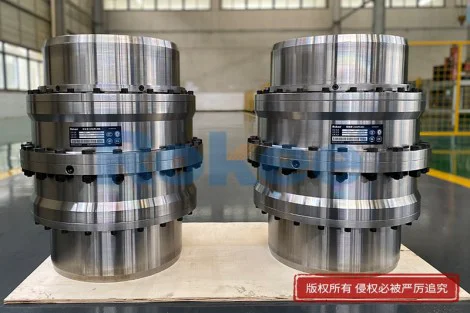
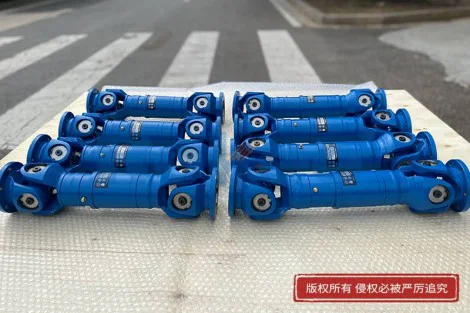
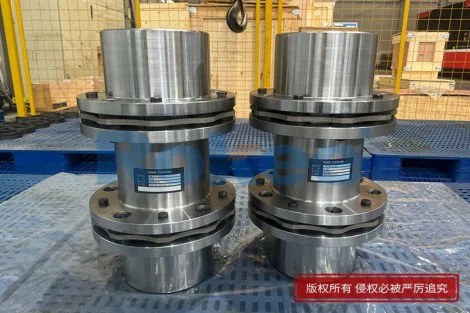
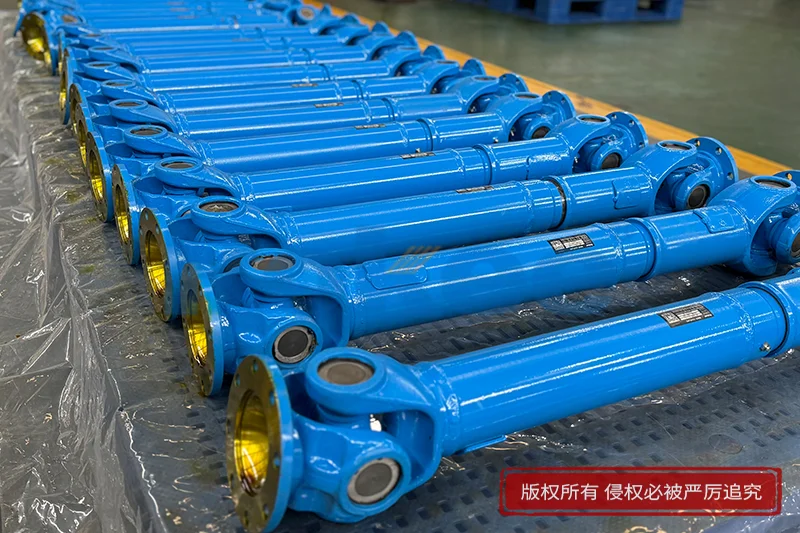
To effectively diagnose and solve the faults of the cardan shaft coupling, it is first necessary to understand its structural composition and working principle, as well as the specific operating environment and load characteristics in the PUF sandwich panel manufacturing process. The cardan shaft coupling is mainly composed of two or more universal joints connected by an intermediate shaft, with each universal joint consisting of a cross-shaped member (commonly known as a spider), needle bearings, and yoke-shaped end fittings. The yoke fittings are securely attached to the driving shaft and driven shaft of the manufacturing machinery, typically via splines, flanges, or keyed joints to ensure no slippage and full torque transfer. The cross-shaped spider, positioned at the junction of the yokes, has four perpendicular arms that fit precisely into the bearing housings of the yokes, facilitating smooth rotation and torque transmission. The needle bearings reduce friction between the spider and yokes, ensuring efficient and low-wear operation. The core working principle of the cardan shaft coupling is to achieve reliable transmission of torque and rotational motion between misaligned shafts; its articulated structure allows the connected shafts to deflect within a certain angle range (usually 5° to 45°) while maintaining continuous motion, compensating for axial, radial, and angular deviations caused by installation errors, thermal expansion, or dynamic load-induced movement during the operation of the PUF sandwich panel manufacturing machinery. In the specific working scenario of PUF sandwich panel production, the cardan shaft coupling is responsible for transmitting power from the main motor to various executing components, such as the uncoiler, roll forming system, foaming system, and cutting system. These components operate at different speeds and loads, and the coupling must adapt to frequent speed changes and alternating loads, which puts significant pressure on its structural integrity and service life. Additionally, the manufacturing environment often contains dust, foam residues, and occasional temperature fluctuations, which further accelerate the wear and aging of the coupling components, increasing the risk of faults.
The faults of the cardan shaft coupling in PUF sandwich panel manufacturing machinery often manifest in specific symptoms, and accurate identification of these symptoms is the basis for effective fault diagnosis. Through long-term observation and practice, it has been found that the common faults of the cardan shaft coupling mainly include vibration and noise abnormalities, excessive heating, wear of key components, misalignment, fatigue failure, and corrosion, each with distinct manifestation characteristics and underlying causes. Vibration and noise abnormalities are the most common and easily detectable faults. During the operation of the manufacturing machinery, if there is a periodic vibration that increases with the speed of the equipment, accompanied by harsh noises such as "clicking" or "grinding", it is usually an indication of a fault in the cardan shaft coupling. The main causes of this fault include unbalanced intermediate shaft, wear of the cross-shaped spider or needle bearings, loose connection bolts, or misalignment between the driving and driven shafts. When the intermediate shaft is unbalanced, the centrifugal force generated during high-speed rotation will cause periodic vibration, which is transmitted to the entire transmission system and even the entire manufacturing machinery, affecting the stability of the production process. Wear of the spider or needle bearings will lead to increased friction between components, resulting in abnormal noise and vibration, and if not addressed in a timely manner, it will further exacerbate the wear of other components. Loose connection bolts will cause relative movement between the coupling and the shafts, leading to unstable power transmission and vibration, and in severe cases, may cause the coupling to detach from the shafts, resulting in equipment shutdown.
Excessive heating of the cardan shaft coupling is another common fault that seriously affects its service life. Under normal operating conditions, the coupling will generate a certain amount of heat due to friction, but the temperature should be within a reasonable range (usually not exceeding 60°C). If the surface temperature of the coupling exceeds this range, and there is a burning smell or discoloration of the surface material, it indicates excessive heating. The main causes of excessive heating include insufficient lubrication, excessive friction caused by misalignment, overload operation, and blocked heat dissipation. Lubrication is crucial for the normal operation of the cardan shaft coupling; the needle bearings and the contact surfaces between the spider and yokes rely on lubricating oil to reduce friction and wear. If the lubricating oil is insufficient, deteriorated, or contaminated, the friction between components will increase significantly, generating a large amount of heat. Misalignment between the driving and driven shafts will cause uneven force on the coupling components, leading to local excessive friction and heat generation. Overload operation means that the torque transmitted by the coupling exceeds its design limit, resulting in increased energy loss and heat generation. In addition, if the coupling is surrounded by foam residues, dust, or other debris, the heat dissipation effect will be affected, leading to heat accumulation and excessive temperature rise.
Wear of key components is a fundamental fault that leads to various other faults of the cardan shaft coupling, and it is mainly manifested in the wear of the cross-shaped spider, needle bearings, yokes, and spline connections. The cross-shaped spider is subjected to alternating torque during operation, and its four arms are in constant contact with the needle bearings, leading to gradual wear of the arm surfaces. If the wear exceeds the allowable limit, the fit between the spider and the bearings will become loose, resulting in vibration and noise. The needle bearings are vulnerable to wear due to long-term friction and load-bearing; worn bearings will cause increased clearance, leading to unstable rotation of the spider and affecting the accuracy of power transmission. The yokes are prone to wear at the bearing housings, which will cause the bearings to fit loosely, leading to abnormal movement of the spider. The spline connections between the coupling and the shafts are also prone to wear due to frequent axial movement and torque transmission, resulting in increased clearance and loose connection, which affects the stability of power transmission. The main causes of component wear include insufficient lubrication, long-term overload operation, presence of impurities in the working environment, and improper installation. For example, dust and foam residues in the PUF sandwich panel manufacturing environment can enter the coupling through gaps, causing abrasive wear of the components, accelerating the wear process.
Misalignment is a common fault that is often overlooked but has a significant impact on the service life of the cardan shaft coupling. Misalignment mainly includes angular misalignment, parallel misalignment, and axial misalignment, which may be caused by improper installation, foundation settlement of the manufacturing machinery, thermal expansion of the shafts during operation, or vibration-induced displacement. Angular misalignment occurs when the central axes of the driving and driven shafts intersect at a certain angle, which will cause uneven force on the coupling components, leading to increased wear, vibration, and noise. Parallel misalignment occurs when the central axes of the two shafts are parallel but not coincident, resulting in lateral force on the coupling, leading to wear of the spline connections and bearings. Axial misalignment occurs when the two shafts move axially relative to each other, which will cause excessive axial force on the coupling, affecting the fit between components and leading to abnormal operation. If misalignment is not corrected in a timely manner, it will not only accelerate the wear of the coupling but also cause damage to the bearings, shafts, and other components of the transmission system, increasing maintenance costs and downtime.
Fatigue failure and corrosion are also important faults affecting the service life of the cardan shaft coupling in PUF sandwich panel manufacturing machinery. Fatigue failure occurs when the coupling is subjected to repetitive stress cycles for a long time, leading to the formation and expansion of microscopic cracks on the surface of components such as the intermediate shaft, spider, and yokes. These cracks will gradually expand under the action of alternating torque, eventually leading to component fracture and coupling failure. The main causes of fatigue failure include improper design, selection of low-quality materials, long-term overload operation, and frequent start-stop of the equipment. Corrosion mainly occurs when the coupling is exposed to a humid environment or corrosive substances (such as residual chemicals in the PUF foaming process). Corrosion will cause pitting, cracking, and weakening of the component materials, reducing the structural strength of the coupling and leading to premature failure. In the PUF sandwich panel manufacturing process, if the foam injection system has leaks, the corrosive components in the foam raw materials may come into contact with the coupling, accelerating corrosion.
To accurately diagnose the faults of the cardan shaft coupling, it is necessary to adopt scientific and systematic diagnosis methods, combining subjective observation with objective detection, to ensure the accuracy and reliability of the diagnosis results. Subjective observation is the most basic and direct diagnosis method, mainly relying on the operator's experience to observe the operating status of the coupling. Operators can regularly check the coupling for abnormal vibration, noise, and temperature during the operation of the manufacturing machinery. For example, by touching the surface of the coupling with their hands (after ensuring safety), they can judge whether the temperature is excessive; by listening carefully, they can identify abnormal noises and determine the possible fault location. In addition, operators can also observe the appearance of the coupling, such as whether there are signs of wear, corrosion, oil leakage, or loose bolts, which can provide important clues for fault diagnosis. However, subjective observation has certain limitations, as it relies heavily on the operator's experience and cannot accurately detect hidden faults or quantify the degree of faults.
Objective detection methods are more accurate and reliable, and are widely used in the fault diagnosis of cardan shaft couplings. These methods mainly include vibration detection, temperature detection, lubricating oil analysis, and geometric accuracy detection. Vibration detection is one of the most commonly used objective detection methods, which uses professional vibration sensors to collect the vibration signals of the coupling during operation, and then analyzes the frequency, amplitude, and other parameters of the signals to identify faults. For example, unbalanced intermediate shaft will cause vibration signals with a frequency consistent with the rotation frequency of the coupling; wear of the needle bearings will cause high-frequency vibration signals. By comparing the collected vibration signals with the normal vibration parameters, the type and degree of the fault can be accurately determined. Temperature detection uses infrared thermometers or temperature sensors to measure the surface temperature of the coupling in real-time, monitor the temperature change trend, and judge whether there is excessive heating. If the temperature exceeds the normal range, further inspection can be carried out to find the cause of the excessive heating, such as insufficient lubrication or misalignment.
Lubricating oil analysis is an effective method to detect early faults of the cardan shaft coupling. The lubricating oil of the coupling contains wear debris, metal particles, and other impurities generated during the operation of the components. By analyzing the physical and chemical properties of the lubricating oil (such as viscosity, moisture content, and acid value) and the content and type of metal particles, the wear status of the coupling components can be judged. For example, if the lubricating oil contains a large number of iron particles, it indicates that the iron components of the coupling (such as the spider, yokes, or bearings) are severely worn; if the viscosity of the lubricating oil decreases significantly, it indicates that the lubricating oil has deteriorated and needs to be replaced. Geometric accuracy detection is mainly used to detect the misalignment and geometric deviation of the coupling. Professional tools such as dial indicators and laser alignment instruments can be used to measure the angular misalignment, parallel misalignment, and axial misalignment between the driving and driven shafts, as well as the runout of the intermediate shaft, to determine whether the coupling is operating within the allowable geometric accuracy range. Laser alignment instruments have the advantages of high accuracy and fast detection, and can quickly and accurately measure the misalignment of the shafts, providing a reliable basis for fault correction.
After accurately diagnosing the type and cause of the cardan shaft coupling fault, it is necessary to take targeted solutions to eliminate the fault and restore the normal operation of the coupling. The solutions should be based on the fault type, combined with the actual operating conditions of the PUF sandwich panel manufacturing machinery, to ensure the effectiveness and economy of the solutions. For vibration and noise abnormalities caused by unbalanced intermediate shaft, the solution is to perform dynamic balance correction on the intermediate shaft. First, remove the intermediate shaft from the coupling, use a dynamic balance testing machine to detect the unbalanced position and weight, and then add or remove weights at the corresponding position to achieve dynamic balance. For vibration and noise caused by wear of the spider or needle bearings, the worn components should be replaced in a timely manner. When replacing, it is necessary to select components that match the specifications and performance of the original coupling to ensure the consistency of the coupling's performance. At the same time, check the fit between the new components and other parts to avoid improper installation leading to new faults. For vibration caused by loose connection bolts, the bolts should be tightened to the specified torque, and lock washers can be installed to prevent the bolts from loosening again during operation. In addition, regularly check the tightness of the bolts to find and solve the problem of loose bolts in a timely manner.
For the excessive heating fault of the cardan shaft coupling, the solution should be targeted according to the cause. If the excessive heating is caused by insufficient lubrication, the lubricating oil should be added or replaced in a timely manner. When selecting lubricating oil, it is necessary to choose the type and grade suitable for the operating conditions of the coupling, ensuring good lubrication performance and high-temperature resistance. At the same time, check the lubrication system of the coupling, clear the oil circuit and oil nozzle, and ensure that the lubricating oil can be evenly distributed to all friction surfaces. If the excessive heating is caused by misalignment, the misalignment between the driving and driven shafts should be corrected using laser alignment instruments or other tools to ensure that the shafts are aligned within the allowable range. If the excessive heating is caused by overload operation, the load of the manufacturing machinery should be adjusted to ensure that the torque transmitted by the coupling does not exceed its design limit. In addition, clean the debris around the coupling to improve the heat dissipation effect and avoid heat accumulation.
For the wear of key components, the fundamental solution is to replace the worn components, but at the same time, it is necessary to take measures to prevent the recurrence of wear. When replacing worn components, it is necessary to strictly follow the installation specifications to ensure the correct fit between components. For example, when replacing the needle bearings, apply an appropriate amount of lubricating oil to the bearing surface to reduce initial wear. After replacement, conduct a test run to check the operation status of the coupling. In addition, strengthen the daily maintenance of the coupling, regularly add lubricating oil, and clean the coupling to prevent impurities from entering and causing abrasive wear. For the wear of spline connections, the spline surfaces can be polished and repaired if the wear is not serious; if the wear is excessive, the spline shaft or spline sleeve should be replaced. At the same time, check the axial movement of the spline connection and adjust the clearance to ensure stable power transmission.
To solve the misalignment fault, it is necessary to first find the cause of the misalignment and then take corresponding correction measures. If the misalignment is caused by improper installation, the coupling and shafts should be disassembled, and the installation should be re-performed according to the installation specifications, using laser alignment instruments to ensure that the angular misalignment, parallel misalignment, and axial misalignment are within the allowable range. If the misalignment is caused by foundation settlement of the manufacturing machinery, the foundation should be inspected and reinforced to ensure the stability of the equipment. If the misalignment is caused by thermal expansion of the shafts, a compensation device can be installed to absorb the axial displacement caused by thermal expansion, reducing the impact on the coupling. In addition, regularly check the alignment of the coupling during the operation of the equipment, and adjust in a timely manner if misalignment is found, to avoid further damage to the coupling and other components.
For fatigue failure and corrosion faults, preventive measures are more important than remedial measures. To prevent fatigue failure, it is necessary to select high-quality materials with good fatigue resistance when manufacturing or replacing the coupling components, ensure that the design of the coupling meets the operating load requirements, and avoid long-term overload operation. In addition, reduce the frequency of start-stop of the manufacturing machinery as much as possible, and avoid sudden load changes, to reduce the impact of alternating stress on the coupling components. For corrosion faults, it is necessary to improve the working environment of the coupling, keep the surrounding area dry and clean, and avoid contact with corrosive substances. If the working environment is humid or corrosive, anti-corrosion treatment can be performed on the surface of the coupling, such as painting or galvanizing, to enhance the corrosion resistance of the components. In addition, regularly check the surface of the coupling for corrosion signs, and take derusting and anti-corrosion measures in a timely manner if corrosion is found.
In addition to targeted solutions for specific faults, establishing a sound daily maintenance system is crucial for reducing the occurrence of cardan shaft coupling faults and extending its service life. The daily maintenance of the coupling should include regular inspection, lubrication, cleaning, and record-keeping. Regular inspection should be carried out at fixed intervals, including checking the tightness of connection bolts, the wear status of components, the temperature and vibration of the coupling, and the condition of lubricating oil. For the lubrication of the coupling, it is necessary to formulate a regular lubrication plan, add or replace lubricating oil according to the specified time and dosage, and ensure that the lubricating oil is clean and free of impurities. Cleaning the coupling regularly can remove dust, foam residues, and other debris on the surface and inside of the coupling, avoid abrasive wear and blockage of the lubrication system, and improve the heat dissipation effect. Record-keeping is also an important part of daily maintenance; detailed records should be made of the inspection results, maintenance content, and replacement of components, so as to track the operation status of the coupling, find potential faults in advance, and provide a basis for subsequent maintenance and improvement.
In conclusion, the transmission cardan shaft coupling is a key component in the power transmission system of PUF sandwich panel manufacturing machinery, and its stable operation is crucial for ensuring the normal operation of the production line. The faults of the cardan shaft coupling, such as vibration and noise abnormalities, excessive heating, component wear, misalignment, fatigue failure, and corrosion, are caused by a variety of factors, including improper installation, insufficient maintenance, long-term overload operation, and harsh working environments. To effectively solve these faults, it is necessary to accurately diagnose the fault type and cause through subjective observation and objective detection methods, and then take targeted solutions, such as dynamic balance correction, component replacement, misalignment correction, lubrication improvement, and anti-corrosion treatment. At the same time, establishing a sound daily maintenance system, strengthening the regular inspection and maintenance of the coupling, can effectively reduce the occurrence of faults, extend the service life of the coupling, and ensure the stable and efficient operation of the PUF sandwich panel manufacturing machinery. With the continuous development of PUF sandwich panel manufacturing technology, the performance requirements for the cardan shaft coupling will become higher and higher. Therefore, it is necessary to continuously explore and improve the fault diagnosis and solution methods of the coupling, combine advanced detection technologies and maintenance concepts, and provide more reliable technical support for the development of the PUF sandwich panel manufacturing industry.