High Torque Tyre Coupling

In modern industrial power transmission systems, the stability and reliability of torque transmission directly determine the operational efficiency and service life of entire mechanical equipment. Among various flexible transmission components, high torque tyre couplings have emerged as a pivotal solution for heavy-duty industrial scenarios, relying on their unique elastic structure, excellent load-bearing capacity and superior deformation compensation performance. Unlike rigid coupling components that pursue absolute transmission accuracy and ordinary flexible couplings with limited torque tolerance, high torque tyre couplings are specially optimized for high-load, impact-prone and misalignment-existing working environments, achieving a perfect balance between efficient torque output, mechanical vibration damping and equipment protection. Their core design logic lies in adopting a tyre-shaped elastomeric flexible component as the intermediate transmission medium, which connects the driving and driven shaft ends stably, realizing continuous and stable power transmission while absorbing various abnormal mechanical stresses generated during equipment operation.
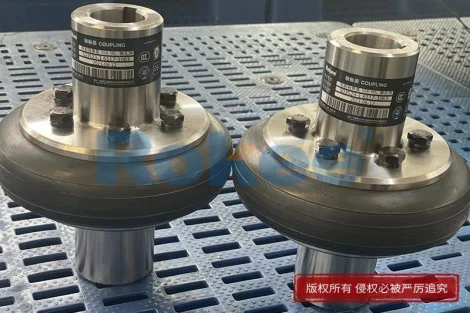
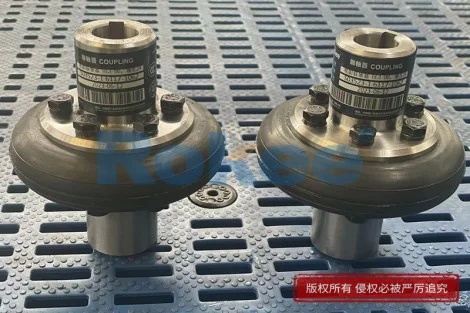
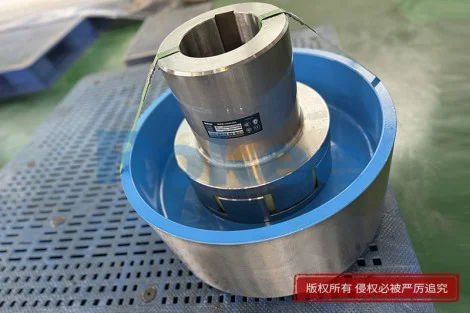
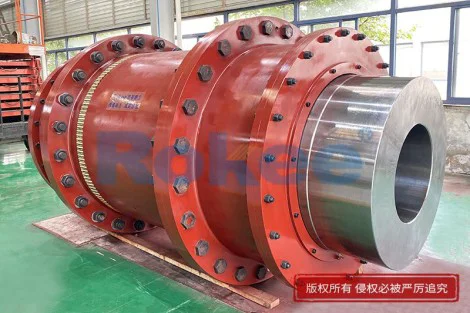
The basic structural composition of high torque tyre couplings is simple and scientific, mainly consisting of symmetric metal hub components and a high-strength elastomeric tyre body clamped between the hubs. The metal hubs, processed with high-precision machining technology, serve as the rigid connection base with the transmission shafts, ensuring firm assembly and stable torque input and output. The intermediate tyre body, made of modified rubber and reinforced with multi-layer fabric structures, is the core functional part of the coupling. This special structural design abandons the rigid contact transmission mode of traditional couplings and adopts flexible friction and shear transmission principles. During equipment operation, the driving shaft drives the metal hub on the driving side to rotate synchronously, and the pre-tightening force of assembly bolts forms stable friction between the hub surface and the tyre body. Relying on this friction and the controllable shear deformation of the elastomer, torque is efficiently transmitted from the driving end to the driven end, thereby driving the entire transmission system to operate stably. The overall structure requires no complex auxiliary transmission parts, and the integrated design of the flexible tyre body effectively avoids structural looseness and transmission failure caused by long-term high-load operation.
The most prominent advantage of high torque tyre couplings is their outstanding high torque bearing capacity, which distinguishes them from conventional tyre couplings. Through formula optimization of elastomeric materials and structural reinforcement of the tyre body, these couplings can withstand continuous high torque impact and instantaneous overload torque in heavy industrial production. Ordinary flexible couplings are prone to elastic fatigue, structural cracking or torque transmission lag under long-term high-load conditions, while high torque tyre couplings enhance the overall structural rigidity of the tyre body on the premise of retaining excellent elastic flexibility. The internal multi-layer fabric reinforcement structure disperses concentrated torque stress to the entire tyre body evenly, avoiding local stress concentration and damage. This enables the coupling to maintain stable transmission efficiency even in long-term high-intensity operation, and effectively cope with instantaneous torque surges caused by equipment start-up, load mutation and working condition switching, providing reliable power transmission guarantee for heavy mechanical equipment.
In addition to excellent high torque performance, the superior misalignment compensation capability is another core feature of high torque tyre couplings. In actual industrial production, it is difficult to achieve absolute coaxiality of driving and driven shafts due to equipment installation errors, foundation settlement, mechanical vibration and long-term operational wear. Slight axial, parallel and angular misalignments between shafts will cause additional mechanical stress, vibration and noise in the transmission system, accelerate component wear, and even lead to equipment failure in severe cases. The elastic deformation characteristics of the tyre-shaped flexible element of high torque tyre couplings can well adapt to various shaft misalignment states. The special curved surface structure of the tyre body allows it to produce gentle and uniform elastic deformation in multiple directions, effectively compensating for axial displacement, parallel offset and angular deflection between connected shafts. This multi-dimensional compensation performance eliminates additional mechanical stress generated by shaft misalignment, reduces the operating load of bearings, reducers and other matching components, and greatly improves the overall operational stability of the transmission system.
Vibration damping and shock absorption performance is crucial for prolonging the service life of industrial transmission equipment, and high torque tyre couplings show unique advantages in this aspect. The elastomeric tyre body has excellent damping and energy absorption characteristics, which can effectively absorb and consume torsional vibration, mechanical impact and periodic fluctuation stress generated during equipment operation. In heavy-duty mechanical systems, frequent start-stop, load change and uneven operation will produce continuous torsional vibration, which will be transmitted along the transmission shaft and affect the normal operation of the entire equipment. The flexible structure of high torque tyre couplings can cut off the transmission path of vibration and shock, convert mechanical vibration energy into elastic deformation energy of the tyre body and dissipate it in the form of internal friction. This vibration isolation effect not only reduces the operating noise of equipment and improves the on-site working environment, but also avoids fatigue damage of mechanical components caused by long-term vibration, significantly reducing the failure rate of transmission systems.
The material performance of high torque tyre couplings determines their excellent environmental adaptability and long-term durability. The optimized elastomeric materials have good resistance to fatigue, aging and deformation, and can maintain stable physical and mechanical properties in complex industrial environments. Different from ordinary rubber materials that are prone to aging, hardening and cracking after long-term use, the modified materials used in high torque tyre couplings can resist the erosion of conventional industrial media, including slight oil pollution, dust and humid air. In high-load continuous working conditions, the material can effectively resist elastic fatigue, avoid permanent deformation caused by long-term shear and torsion, and ensure long-term stable torque transmission accuracy. Meanwhile, the metal hub parts undergo anti-rust and anti-corrosion treatment, which can adapt to indoor and outdoor industrial working environments, reducing the impact of environmental factors on the service life of the coupling.
The installation and maintenance advantages of high torque tyre couplings make them highly adaptable to industrial production scenarios. The overall structural design is simple and reasonable, with a split assembly structure that supports radial installation and disassembly. In the actual installation process, there is no need to move the connected mechanical equipment axially or disassemble other matching components, which greatly simplifies the installation process and shortens the equipment assembly and debugging cycle. For daily maintenance, the coupling has no vulnerable precision parts and complex transmission structures, and the whole machine presents a maintenance-free state in most conventional working conditions. Routine equipment inspection only needs to check the assembly tightness of bolts and the surface integrity of the tyre body, without regular lubrication, calibration and other complex maintenance operations. This low-maintenance characteristic effectively reduces the daily operation and maintenance cost of industrial equipment, improves the overall operation efficiency of the production line, and avoids production downtime losses caused by frequent component maintenance and replacement.
High torque tyre couplings have a wide range of industrial application scenarios, covering almost all heavy-duty power transmission fields that require high stability, shock resistance and misalignment compensation. In the field of heavy machinery and engineering equipment, they are applied to the power transmission systems of large conveyors, crushers, mixers and hoisting equipment. Such equipment often operates with variable loads and frequent start-stops, accompanied by obvious torque impact and shaft misalignment, and the high torque resistance and shock absorption performance of the coupling can well adapt to such harsh working conditions. In the power industry, the coupling is used for the connection of fans, water pumps and power generation auxiliary equipment, stabilizing the torque transmission of high-speed and high-power equipment and reducing equipment vibration and noise. In the chemical, building materials and metallurgical industries, where the production environment is harsh and the equipment operates continuously for a long time, high torque tyre couplings rely on their excellent durability and environmental adaptability to ensure the long-term stable operation of the transmission system.
In the field of industrial transmission system optimization, high torque tyre couplings also play an important role in energy saving and consumption reduction. The flexible transmission mode reduces the rigid friction and impact between mechanical components, lowers the invalid power consumption caused by vibration and stress loss, and improves the overall transmission efficiency of the equipment. The stable torque transmission state ensures that the power output of the power source can be efficiently applied to the working components, avoiding power waste caused by transmission lag and vibration loss. At the same time, the excellent protection performance of the coupling reduces the wear and failure frequency of matching equipment such as bearings and reducers, extends the service life of the entire mechanical system, and further reduces the equipment replacement cost and long-term operation investment of industrial production.
Compared with diaphragm couplings, gear couplings and other common high torque transmission components, high torque tyre couplings have unique comprehensive performance advantages. Gear couplings have high torque bearing capacity but poor vibration damping effect, and are prone to gear wear and need regular lubrication maintenance. Diaphragm couplings have high transmission accuracy but weak misalignment compensation ability and poor tolerance to instantaneous impact loads. In contrast, high torque tyre couplings integrate high torque resistance, multi-dimensional misalignment compensation, efficient vibration damping and low maintenance performance, and have higher cost performance in heavy-duty and impact-prone working conditions. Although the transmission accuracy under ultra-high speed and ultra-precision working conditions is slightly lower than that of rigid precision couplings, it can fully meet the operational requirements of most heavy industrial equipment, and has better equipment protection performance and environmental adaptability.
In the long-term industrial operation practice, the reliability of high torque tyre couplings has been fully verified. Under continuous high-load operation, frequent load impact and complex environmental conditions, the coupling can always maintain stable working performance, with low failure rate and long service life. Its flexible protection mechanism can effectively buffer the instantaneous overload impact of equipment, avoid torque overload damage to motors, reducers and working machines, and build a safe and reliable buffer barrier for the entire power transmission system. With the continuous upgrading of industrial production equipment towards high power, high load and high efficiency, the market demand for high-performance high torque tyre couplings is also increasing, and their structural design and material technology are constantly optimized and upgraded to adapt to more extreme industrial working conditions.
To sum up, high torque tyre couplings are excellent flexible transmission components tailored for heavy-duty industrial power transmission scenarios. Their unique tyre-shaped elastic structure, high-strength material performance and scientific transmission principle endow them with outstanding high torque bearing capacity, multi-directional misalignment compensation ability, efficient vibration damping and shock absorption performance and low maintenance advantages. They can not only realize efficient and stable power transmission, but also effectively protect the entire mechanical transmission system, reduce equipment operation failure rate and comprehensive use cost. In modern industrial production focusing on high efficiency, stability and low consumption, high torque tyre couplings have irreplaceable application value in heavy machinery, power, chemical industry, building materials and many other fields, and will continue to play an important role in the stable operation and performance optimization of industrial transmission systems with the progress of industrial manufacturing technology.