Cardan Driveshaft for PUF Sandwich Panel Assembly Line Adapts to Various Core Material Working Conditions
In the field of modern industrial manufacturing, the PUF sandwich panel assembly line plays a crucial role in producing high-performance building materials that integrate thermal insulation, sound insulation, and structural strength, widely used in industrial plants, warehousing facilities, commercial buildings, and clean workshops. The core material of PUF sandwich panels varies significantly according to application requirements, including polyurethane (PU), rock wool, glass wool, expanded polystyrene (EPS), extruded polystyrene (XPS), and polyisocyanurate (PIR), each with distinct physical and chemical properties, such as density, hardness, thermal conductivity, and processing characteristics. These differences in core materials pose unique challenges to the transmission system of the assembly line, requiring the transmission components to have exceptional adaptability, stability, and durability to ensure consistent production quality and efficient operation under varying working conditions. Among all transmission components, the cardan driveshaft, also known as the universal joint driveshaft, stands out as a key element that directly affects the operational efficiency and reliability of the entire assembly line, thanks to its unique structural design and excellent transmission performance, which enable it to adapt seamlessly to the diverse working conditions brought by different core materials.
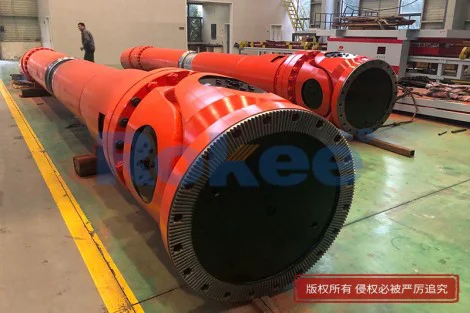
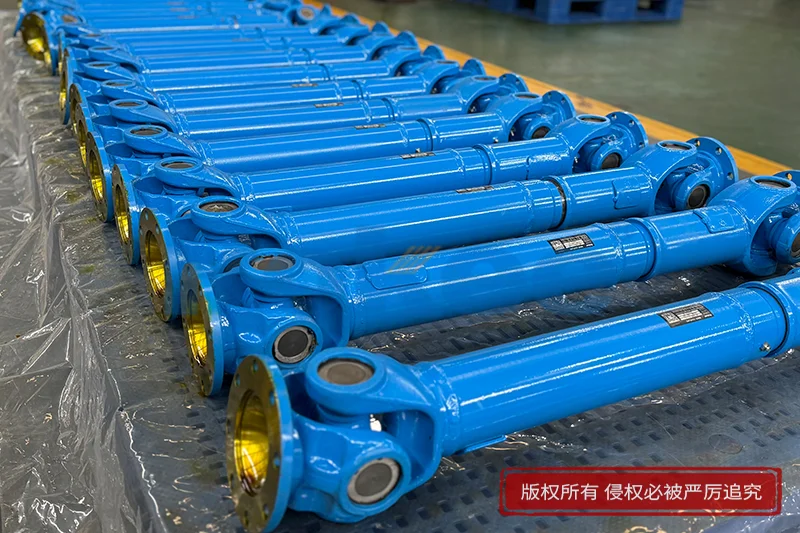
The cardan driveshaft is a flexible mechanical transmission device designed to transmit torque and rotational motion between two shafts that are not perfectly aligned, a common scenario in PUF sandwich panel assembly line due to the layout constraints of multiple subsystems, including uncoiling, roll forming, foaming, lamination, and cutting. Unlike rigid driveshafts that require precise coaxial alignment, the cardan driveshaft can compensate for angular, radial, and axial misalignments through its articulated structure, which consists of two yoke-shaped end fittings and a central cross-shaped member, commonly referred to as a spider. Each yoke is securely attached to the driving and driven shafts, respectively, through connections that eliminate slippage and ensure full torque transfer, while the spider, equipped with bearings, allows the two yokes to rotate at different angles within a certain range—typically 5° to 45°—without interrupting the continuity of motion. This structural flexibility is particularly critical for PUF sandwich panel assembly lines, where the installation positions of different subsystems often deviate from the same axis due to the complexity of the production process, and the relative positions of the shafts may change due to vibration, thermal expansion, or load fluctuations during long-term continuous operation. For different core materials, the transmission requirements of the assembly line vary, and the cardan driveshaft’s ability to adapt to misalignments ensures that power is transmitted stably and accurately, regardless of the core material being processed.
One of the primary challenges posed by different core materials in PUF sandwich panel production is the variation in processing resistance, which directly affects the torque and speed requirements of the transmission system. For example, rock wool, as a non-combustible mineral fiber core material, has high hardness and brittleness, requiring higher torque during the lamination and cutting processes to ensure that the core material is evenly compressed and accurately cut without breakage. In contrast, PU and EPS core materials are lightweight and flexible, with lower processing resistance, requiring more stable and uniform speed transmission to avoid uneven foaming or lamination defects. The cardan driveshaft is engineered to handle these varying torque and speed demands through its robust construction and precise design. Manufactured using high-grade heat-treated alloy steel, the cardan driveshaft exhibits excellent structural integrity and fatigue resistance, capable of withstanding high torque loads without deformation or damage. Its splined section allows for length compensation, ensuring that the driveshaft can adjust to changes in the distance between the driving and driven shafts caused by thermal expansion or load variations, which is particularly important when switching between core materials with different processing temperatures, such as PU foam that requires high-temperature foaming and rock wool that is processed at room temperature.
Another key factor that the cardan driveshaft must adapt to is the variation in operating temperatures associated with different core materials. The production process of PUF sandwich panels involves distinct temperature environments depending on the core material: PU and PIR core materials require a foaming process that generates high temperatures, often ranging from 80°C to 120°C, while rock wool, glass wool, and EPS core materials are processed at room temperature or slightly elevated temperatures. These temperature variations can cause thermal expansion or contraction of the assembly line’s mechanical components, leading to changes in the alignment of the shafts and potential damage to rigid transmission components. The cardan driveshaft addresses this challenge through its thermal stability and adaptive design. The bearings used in the cardan driveshaft are specially selected to withstand high temperatures, with advanced lubrication mechanisms that prevent lubricant degradation under high-temperature conditions, ensuring smooth operation even in the harsh environment of PU foaming. Additionally, the material selection of the cardan driveshaft—typically heat-resistant alloy steel—minimizes thermal expansion and contraction, maintaining the driveshaft’s structural stability and transmission accuracy across different temperature ranges. This thermal adaptability ensures that the cardan driveshaft can switch between high-temperature and normal-temperature working conditions seamlessly when processing different core materials, without compromising performance or service life.
The particle size and dust generation of different core materials also present unique challenges to the cardan driveshaft. Core materials such as rock wool and glass wool generate fine fibers and dust during processing, which can easily enter the bearings and other moving parts of the driveshaft, causing wear, jamming, or corrosion over time. In contrast, PU and EPS core materials produce less dust but may generate sticky residues during the foaming process, which can also affect the smooth operation of the driveshaft. To address these issues, the cardan driveshaft is equipped with advanced sealing systems that effectively prevent dust, fibers, and residues from entering the internal components. The seals are designed to be durable and resistant to wear, ensuring that they can withstand the harsh working environment of the assembly line. Additionally, the surface of the cardan driveshaft is often treated with protective coatings, such as galvanization or anti-corrosion paint, to enhance its resistance to corrosion and wear caused by dust and chemical residues from different core materials. These protective measures extend the service life of the cardan driveshaft and ensure its reliable operation even when processing core materials that generate high levels of dust or residues.
The adaptability of the cardan driveshaft to various core material working conditions is also reflected in its ability to maintain synchronization with other subsystems of the assembly line. The PUF sandwich panel assembly line is a continuous and automated system that requires the coordinated operation of multiple subsystems, including the uncoiling system that feeds the surface panels, the foaming system that injects the core material, the double-belt lamination system that bonds the surface panels and core material together, and the cutting system that trims the panels to the required size. Each subsystem has different speed and torque requirements depending on the core material being processed, and the cardan driveshaft plays a critical role in ensuring that power is transmitted synchronously between these subsystems. For example, when processing rock wool core materials, the lamination system requires a slower speed and higher torque to ensure that the rock wool is evenly compressed, while the cutting system requires a higher speed to achieve precise cuts. The cardan driveshaft’s ability to adjust to varying speed and torque demands ensures that all subsystems operate in harmony, maintaining the continuity and stability of the production process. This synchronization is particularly important for ensuring the quality of the final product, as any deviation in speed or torque can lead to defects such as uneven lamination, incorrect panel thickness, or irregular cutting edges.
In addition to adapting to the physical and chemical properties of different core materials, the cardan driveshaft also needs to accommodate the varying thickness and density of the core materials. PUF sandwich panels are produced with core thickness ranging from 50mm to 200mm or more, depending on the application requirements, and the density of the core material can vary from 35 kg/m³ to 100 kg/m³. These variations affect the load on the assembly line’s transmission system, requiring the cardan driveshaft to have sufficient load-bearing capacity and flexibility. The cardan driveshaft’s design incorporates a balanced shaft body and high-strength bearings, allowing it to handle the increased load caused by thicker and denser core materials without sacrificing performance. The splined section of the driveshaft also allows for adjustments in length, ensuring that the driveshaft can adapt to the changes in the distance between the driving and driven shafts caused by the varying thickness of the core material. This adaptability ensures that the assembly line can produce PUF sandwich panels of different specifications with the same cardan driveshaft, reducing the need for frequent component replacement and improving production efficiency.
The reliability and durability of the cardan driveshaft are crucial for minimizing downtime in PUF sandwich panel production, especially when switching between different core materials. Frequent changes in working conditions, such as torque, temperature, and load, can place significant stress on the transmission components, leading to premature wear or failure. The cardan driveshaft is designed to withstand these stresses through its robust construction and advanced manufacturing processes. The use of high-grade materials, such as alloy steel, ensures that the driveshaft has excellent fatigue resistance and can operate continuously for long periods without maintenance. The bearings are selected for their durability and resistance to wear, and the lubrication system is designed to provide consistent lubrication even under varying operating conditions. Additionally, the cardan driveshaft’s modular design facilitates easy replacement of worn components, reducing maintenance time and costs. This reliability ensures that the assembly line can switch between different core materials quickly and efficiently, minimizing downtime and maximizing production output.
The adaptability of the cardan driveshaft to various core material working conditions also contributes to the overall efficiency and cost-effectiveness of the PUF sandwich panel assembly line. By eliminating the need for specialized transmission components for each type of core material, the cardan driveshaft reduces the initial investment and maintenance costs associated with the assembly line. Its ability to maintain stable performance across different working conditions ensures that the production process is consistent, reducing the number of defective products and improving overall product quality. Additionally, the cardan driveshaft’s high transmission efficiency minimizes energy loss, reducing the energy consumption of the assembly line and lowering operational costs. This cost-effectiveness is particularly important for manufacturers that produce a wide range of PUF sandwich panels with different core materials, as it allows them to meet diverse customer needs without incurring excessive costs.
To further enhance the adaptability of the cardan driveshaft to various core material working conditions, continuous improvements in design and manufacturing technologies are being made. Modern cardan driveshafts often incorporate advanced balancing techniques to minimize vibration, which is particularly important when processing core materials that require high precision, such as PU foam used in clean workshops. The use of computer-aided design (CAD) and finite element analysis (FEA) allows engineers to optimize the design of the cardan driveshaft, ensuring that it can handle the specific requirements of different core materials while maintaining structural integrity and performance. Additionally, the development of maintenance-free bearings and advanced sealing systems has further improved the reliability and durability of the cardan driveshaft, reducing the need for regular maintenance and extending its service life.
In practical applications, the adaptability of the cardan driveshaft to various core material working conditions has been widely verified. For example, in a production line that processes both PU and rock wool core materials, the cardan driveshaft seamlessly switches between the high-temperature, low-torque requirements of PU foaming and the normal-temperature, high-torque requirements of rock wool lamination, ensuring consistent production quality and efficiency. In another application, a production line that produces EPS and PIR core panels uses a cardan driveshaft to adjust to the varying density and processing resistance of these two core materials, maintaining synchronization between the foaming and cutting subsystems. These real-world applications demonstrate that the cardan driveshaft is a versatile and reliable transmission component that can meet the diverse needs of PUF sandwich panel production.
In conclusion, the cardan driveshaft is an indispensable component of the PUF sandwich panel assembly line, whose unique structural design and excellent performance enable it to adapt seamlessly to the various working conditions brought by different core materials. Its ability to compensate for misalignments, handle varying torque and speed demands, withstand different temperature environments, resist dust and residues, maintain synchronization with other subsystems, and accommodate varying core thickness and density ensures that the assembly line operates stably, efficiently, and reliably. The reliability and durability of the cardan driveshaft minimize downtime and maintenance costs, while its adaptability reduces the need for specialized components, contributing to the overall cost-effectiveness of the production process. As the demand for PUF sandwich panels with diverse core materials continues to grow, the cardan driveshaft will continue to play a critical role in ensuring the flexibility and efficiency of the assembly line, supporting the development of the modern building materials industry.