Plum Blossom Coupling For Electric Motor

Plum blossom coupling, also known as jaw elastic coupling, is a core flexible transmission component specially optimized for electric motor power transmission systems, serving as a critical connecting medium between electric motors and driven mechanical equipment. Featuring a unique plum-petal-shaped elastic intermediate structure, this coupling effectively solves common operational problems in motor transmission such as shaft misalignment, mechanical vibration, instantaneous impact load and transmission noise. Different from rigid couplings that lack buffering capacity and ordinary flexible couplings with single compensation performance, it integrates torque transmission, displacement compensation and vibration damping into one compact structure. It is widely adapted to various electric motor operating scenarios ranging from low-speed stable operation to medium and high-speed dynamic operation. With simple structural composition, reliable mechanical performance and low maintenance demand, it has become one of the most mainstream matching parts for modern electric motor transmission systems, greatly improving the overall operational stability and service life of motor-driven mechanical equipment.
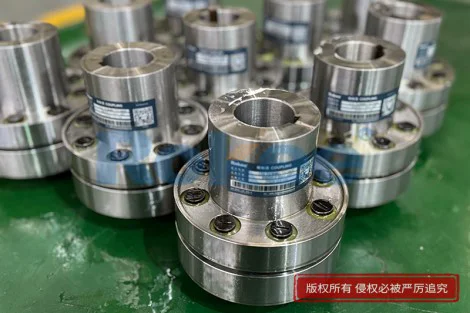
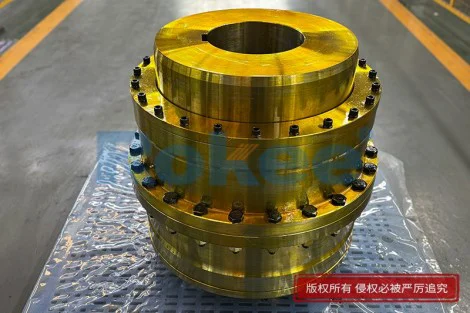
The overall structural design of the plum blossom coupling for electric motors is concise and scientific, consisting mainly of two symmetrical half-coupling bodies and a replaceable plum-shaped elastic elastomer, with no redundant auxiliary parts or complex transmission structures. The two half-couplings are equipped with evenly distributed convex claw structures that correspond to each other, and the plum-blossom-shaped elastic element is tightly embedded in the gap between the claw structures of the two half-couplings, forming a closed flexible connection structure. This embedded assembly mode enables the coupling to maintain high structural rigidity during normal torque transmission while retaining sufficient elastic deformation space under dynamic loads. The symmetrical layout of the claw bodies ensures uniform force distribution during motor operation, avoiding local stress concentration that may cause structural damage. The compact overall size allows it to be installed in narrow mechanical spaces, which perfectly matches the compact installation requirements of most electric motor supporting equipment. Moreover, the integrated structural design avoids loose parts falling off during long-term motor operation, laying a solid foundation for continuous and stable power transmission of the motor system.
The installation and debugging process of the plum blossom coupling for electric motors is simple and efficient, with low technical threshold and strong on-site adaptability, which is an important reason for its wide popularization. Before installation, it is only necessary to calibrate the coaxiality of the motor shaft and the driven equipment shaft to control the installation deviation within a reasonable range, avoiding excessive initial misalignment that affects the service life of the elastic element. The integral embedded structure enables fast assembly: the elastic element is placed in the middle of the two half-couplings, and then the two half-couplings are respectively fixed on the motor shaft and the driven shaft through fastening parts. No complicated positioning tools or auxiliary fixing structures are required during the whole process. After installation, simple manual rotation and no-load test operation can verify the assembly quality. The coupling allows appropriate shaft displacement generated by minor installation errors and later equipment operation, eliminating the need for extremely high-precision one-time installation calibration. This convenient installation feature greatly shortens the equipment assembly cycle and improves the overall deployment efficiency of motor-driven mechanical systems.
The application scenarios of plum blossom couplings cover almost all conventional electric motor-driven mechanical transmission fields, with strong versatility and scenario adaptability. It is widely used in light industrial transmission equipment such as conveying machinery, packaging equipment and printing machinery matched with small and medium-power electric motors, providing stable and low-noise power transmission for continuous cyclic operation equipment. In medium-load industrial scenarios including fan equipment, water pump systems and general processing machinery, it can effectively buffer the start-up impact and operational vibration of motors, ensuring long-term stable operation of equipment. In precision automation equipment supporting servo motors and variable-frequency motors, its precise torque transmission and micro-displacement compensation capacity meet the high-precision operation requirements of automated production lines. Whether it is continuous stable operation at constant speed or dynamic variable-load operation with frequent start and stop, the plum blossom coupling can adapt to the working characteristics of different motors and provide reliable transmission guarantee for various mechanical equipment.
The plum blossom coupling has remarkable advantages in daily operation and later maintenance of electric motor systems, realizing low-cost and high-efficiency equipment operation and management. Different from many transmission components that require regular lubrication and oil replacement, this coupling adopts fully dry transmission operation and does not need any lubricating oil or grease during the whole service cycle, eliminating the daily lubrication maintenance work and avoiding equipment pollution and safety hazards caused by lubricant leakage. In the long-term operation process, the wearing parts are only the intermediate elastic elastomer, and the coupling body can be used repeatedly for a long time. When the elastic element ages, wears or deforms after long-term use, it can be replaced independently without disassembling the motor and the overall mechanical structure, which greatly reduces maintenance time and cost. Its strong fatigue resistance and stable performance also reduce the failure rate of motor transmission systems, effectively extending the comprehensive service life of motor supporting equipment and creating higher operational value for mechanical transmission systems.