Heavy Duty Universal Shaft Coupling
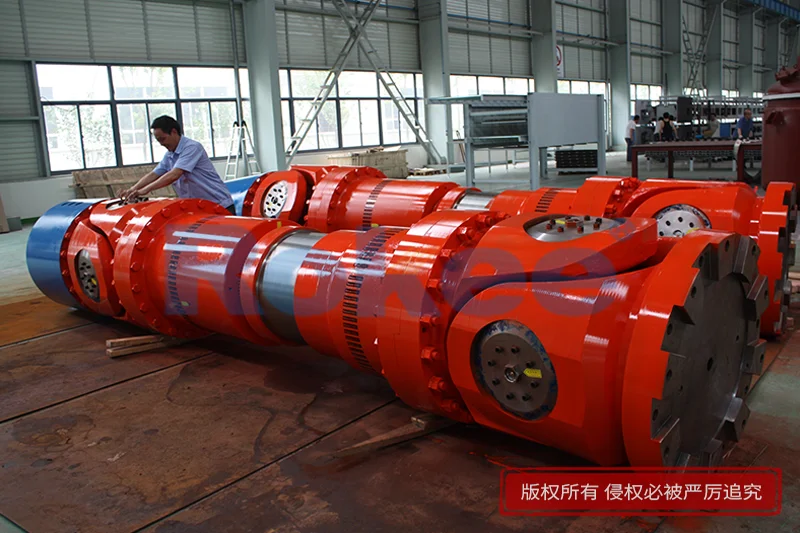
Heavy duty universal shaft couplings are indispensable mechanical transmission components designed to connect rotating shafts and deliver stable torque transfer in complex and harsh industrial operating environments. Unlike ordinary coupling products that only adapt to ideal coaxial working conditions, this heavy-duty mechanical part features excellent multi-dimensional misalignment compensation performance, effectively accommodating angular, axial, and radial shaft deviations generated during equipment installation and dynamic operation. Built with high-strength alloy materials and optimized mechanical structures, it is engineered to withstand heavy loads, high rotational speeds, and continuous cyclic operation, solving common industrial pain points such as transmission jitter, component abrasion, and power loss caused by shaft misalignment. Widely applicable to heavy engineering machinery, metallurgical equipment, mining systems, and large industrial transmission lines, it maintains reliable transmission efficiency and structural stability under extreme working conditions, serving as a core guarantee for the long-term stable operation of heavy mechanical transmission systems across diverse industrial scenarios.
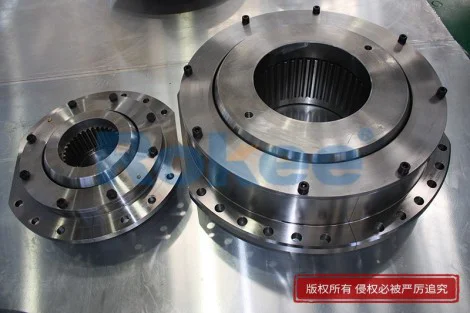
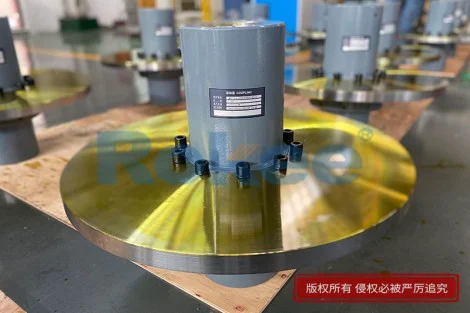
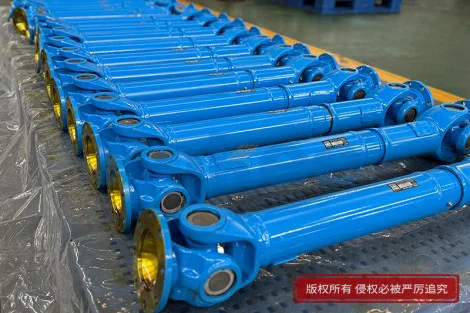
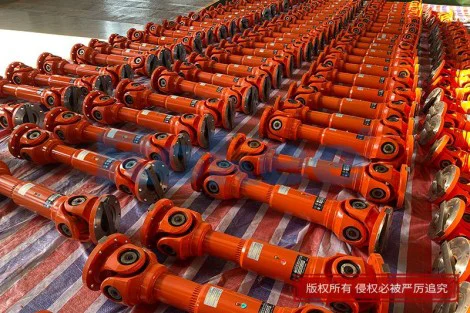
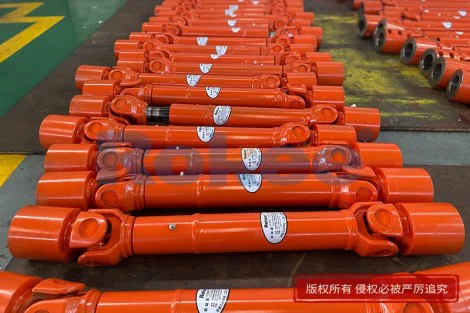
The structural design of heavy duty universal shaft couplings is the fundamental support for its superior heavy-load performance, adopting a mature and optimized cross-axis universal joint structure that integrates flexible rotation and rigid load-bearing capabilities. The core load-bearing parts are forged from high-performance alloy steel materials, which undergo precise heat treatment processes to enhance overall hardness, toughness, and deformation resistance, effectively resisting structural fatigue and damage under long-term heavy torque impact. The internal cross shaft and bearing assembly is precisely machined to minimize internal friction during rotation, ensuring smooth and continuous power transmission while reducing mechanical wear and heat generation. Most heavy-duty models adopt a modular assembled structure, which integrates telescopic sleeve components to adapt to axial displacement changes during equipment operation, and the double universal joint configuration can offset rotational speed fluctuations caused by single-angle deviation, achieving uniform and stable power output. This integrated structural design balances high load-bearing capacity and flexible adaptability, breaking through the performance limitations of traditional rigid couplings that fail to adapt to misalignment and ordinary elastic couplings that cannot bear heavy loads, making it highly compatible with complex dynamic industrial working conditions.
Misalignment compensation capability stands out as the most core functional advantage of heavy duty universal shaft couplings, distinguishing them from conventional mechanical coupling products. In actual industrial equipment operation, it is nearly impossible to achieve absolute coaxiality between driving and driven shafts due to installation errors, equipment vibration, thermal expansion and contraction, and long-term mechanical deformation. Slight shaft deviation will trigger severe transmission resistance, mechanical vibration, and accelerated wear of transmission components when using rigid couplings, while common flexible couplings only provide limited compensation for tiny displacements and cannot cope with the large-range misalignment in heavy machinery operation. Heavy duty universal shaft couplings can stably adapt to a certain range of angular deflection, axial stretching, and radial offset simultaneously, automatically adjusting the transmission angle and shaft distance during equipment operation to eliminate additional mechanical stress generated by shaft misalignment. This active compensation function effectively buffers vibration and impact force in the transmission process, protects adjacent mechanical components such as bearings and gearboxes from overload damage, and greatly extends the overall service life of the entire transmission system.
Material selection and processing technology directly determine the durability and operational stability of heavy duty universal shaft couplings under extreme working conditions. Premium heavy-duty couplings mainly adopt high-strength forged alloy steel as the base material, which has outstanding tensile strength, impact resistance, and wear resistance compared with ordinary carbon steel, perfectly adapting to long-term heavy-load operation and harsh environmental interference. All core components including cross shafts, bearing seats, and flange discs undergo strict forging, quenching, and tempering processes to refine the internal metal structure, eliminate material internal stress, and avoid structural deformation or fracture under high torque and frequent impact loads. The surface of key parts is treated with anti-wear and anti-corrosion processes to resist oxidation, rust, and abrasive wear caused by dust, moisture, and industrial impurities in the working environment. High-precision machining technologies are applied for component matching to ensure tight assembly tolerance and excellent coaxiality of the overall structure during operation. The combination of high-quality materials and sophisticated processing techniques enables the coupling to maintain stable mechanical performance for a long time without frequent failure or performance attenuation in high-intensity industrial scenarios.
Heavy duty universal shaft couplings deliver exceptional transmission efficiency and dynamic performance in high-intensity industrial operation, meeting the precise power transmission demands of heavy machinery equipment. With optimized structural matching and low-friction component design, the torque transmission efficiency of these couplings remains at an extremely high level during continuous operation, avoiding serious power loss that plagues traditional transmission connecting parts. Even under high-speed rotation and alternating heavy load conditions, the improved structural balance design effectively suppresses rotational jitter and amplitude fluctuation, ensuring consistent and accurate power output. Different from ordinary couplings that are prone to fatigue failure and transmission instability after long-term high-load operation, heavy-duty universal shaft couplings are structurally optimized for cyclic load working conditions, with uniform stress distribution across all components to avoid local stress concentration and partial damage. This stable dynamic performance not only improves the overall operating efficiency of mechanical equipment but also reduces unnecessary energy consumption in the power transmission process, realizing energy-saving and efficient operation of industrial production equipment while ensuring production continuity.
The application scenarios of heavy duty universal shaft couplings cover almost all heavy industrial fields that require high-power and high-stability rotational power transmission, showing strong industrial adaptability. In the metallurgical industry, they serve as key connecting components for rolling mills, straightening machines, and continuous casting equipment, stably transmitting power under high-temperature environments and heavy rolling loads to support continuous metal processing production. In mining and coal industrial systems, the couplings are applied to crushing equipment, conveyor transmission systems, and mining machinery drive devices, adapting to severe vibration and impact loads generated by mineral processing and transportation. In engineering machinery fields including excavators, cranes, and loaders, they connect power output shafts and working components, ensuring flexible power transmission during complex posture adjustment and heavy-load operation. Additionally, they are widely used in large agricultural machinery, petrochemical transmission equipment, and building material production machinery, reliably coping with diverse complex working conditions such as uneven load distribution, variable operating angles, and harsh environmental interference in different industries.
The installation and maintenance advantages of heavy duty universal shaft couplings further enhance their practical value in industrial production and mechanical operation. The standardized modular structure simplifies the overall installation process, enabling quick positioning and assembly between driving and driven shafts without complex auxiliary tools and tedious debugging procedures. The reserved adjustable structure allows workers to fine-tune the installation angle and axial distance according to actual shaft misalignment conditions, effectively adapting to on-site installation errors and avoiding secondary disassembly and adjustment. In terms of daily maintenance, the split assembly design enables independent replacement of worn individual components without disassembling the entire transmission system, greatly reducing maintenance difficulty and downtime loss. The excellent wear resistance and structural stability of heavy-duty couplings also lower the frequency of daily maintenance and inspection. Under normal operating conditions, they can maintain long-term stable operation with only regular simple lubrication and appearance inspection, effectively reducing the later operation and maintenance cost of mechanical equipment and improving the overall operational efficiency of industrial production lines.
With the continuous upgrading of modern heavy industry and the increasing complexity of mechanical operating conditions, the technical optimization and development potential of heavy duty universal shaft couplings are becoming increasingly prominent. Modern industrial machinery is developing towards large-scale, high-speed, and intelligent operation, putting forward higher requirements for the load-bearing capacity, misalignment adaptability, and service life of transmission connecting components. Heavy duty universal shaft couplings are constantly optimized in structural design, material formula, and processing technology to adapt to evolving industrial demands, with new upgraded models achieving larger misalignment compensation ranges, stronger heavy-load resistance, and longer fatigue life. Meanwhile, the lightweight and compact structural optimization design further improves the space adaptability of the product, enabling it to be applied to more compact and refined heavy mechanical equipment. As a core basic transmission component in heavy industry, it will continue to iterate and upgrade with industrial technological progress, providing more reliable, efficient, and durable connection solutions for high-intensity and high-precision modern mechanical transmission systems, and supporting the stable development of various heavy industrial fields.