Barrel Coupling Working Principle

Barrel couplings are high-performance mechanical transmission components designed for heavy-duty power transmission systems, distinguished by their unique rolling contact transmission mechanism and adaptive misalignment compensation capabilities. Unlike traditional rigid couplings that rely on fixed meshing and elastic couplings that depend on material deformation, barrel couplings adopt cylindrical roller barrels as the core force-transmitting medium, realizing smooth torque transfer through flexible rolling contact between structural components. This core working principle enables the coupling to efficiently transmit rotational power while tolerating minor axial, radial, and angular deviations between connected shafts. Widely applied in heavy machinery transmission scenarios that require stable operation and strong load resistance, the structural design of barrel couplings eliminates rigid impact during operation, reduces mechanical wear and vibration, and maintains continuous and reliable transmission performance under long-term, high-load working conditions. Its integrated structural logic of power transmission and displacement compensation makes it a key component to optimize the stability and service life of mechanical transmission systems.
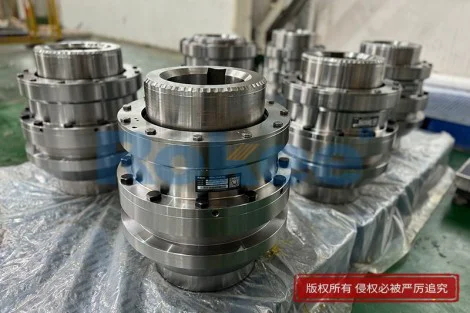
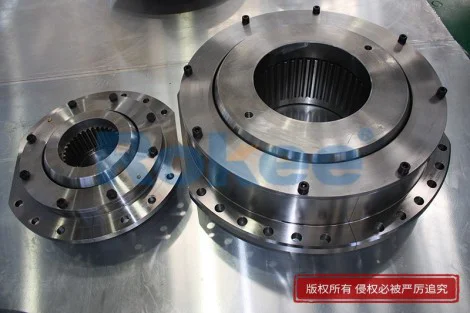
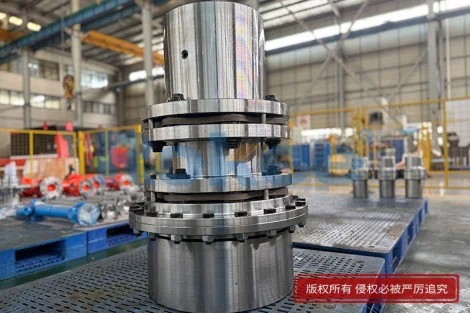
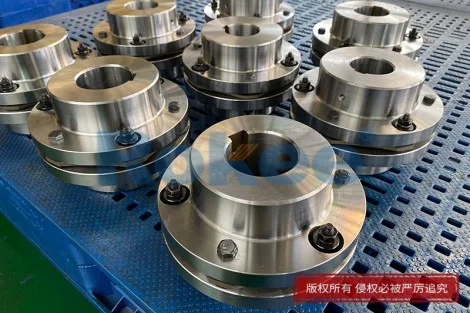
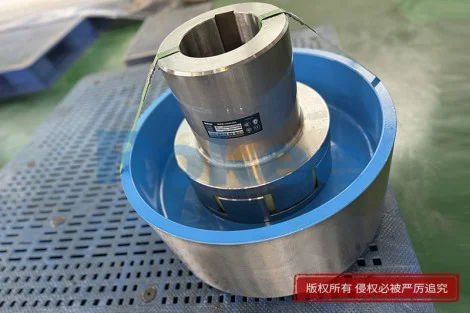
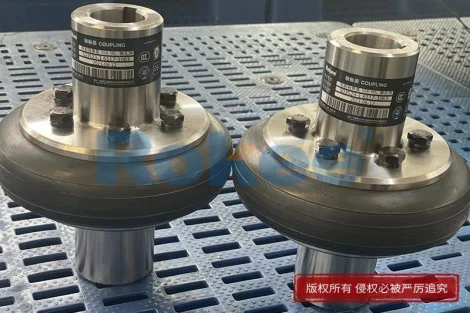
The basic structural composition lays the foundation for the unique working principle of barrel couplings, and every core component is precisely matched to ensure coordinated power transmission and adaptive adjustment. The main structure includes inner toothed sleeves, outer toothed hubs, high-strength steel barrel rollers, sealing assemblies, and limit fixing parts. The inner wall of the outer sleeve is processed with uniform semicircular tooth grooves, while the outer surface of the inner hub is equipped with matching curved tooth structures, and the circular gaps formed by the two sets of tooth grooves are filled with cylindrical barrel rollers. These barrel rollers are the most critical force-transmitting units, differing from traditional pin and gear transmission structures in that they can freely roll and fine-tune their positions in the tooth grooves during operation. The external sealing components form a closed internal space, which retains lubricating grease inside the coupling and isolates external dust, impurities, and moisture. The fixing parts ensure the axial stability of the barrel rollers and prevent displacement or shedding during high-speed rotation. The overall structural design abandons rigid limit constraints, creating flexible rolling conditions for power transmission, which is the fundamental premise for the coupling to achieve efficient and low-loss torque transmission.
The core torque transmission process of barrel couplings follows the mechanical logic of sequential force transfer and rolling energy conversion, completing power output from the driving shaft to the driven shaft stably and efficiently. When the power equipment starts to operate, the driving shaft drives the connected inner hub to perform synchronous rotational motion, and the rotating hub generates continuous tangential thrust on the barrel rollers distributed in the tooth grooves. Driven by the hub’s rotational force, the barrel rollers start to roll along the semicircular tooth tracks of the outer sleeve, converting the rotational torque of the hub into the rolling thrust of the rollers. In this process, the barrel rollers maintain full contact with both the hub tooth grooves and the sleeve tooth grooves at all times, evenly transferring the received torque to the outer sleeve. The outer sleeve is fixedly connected to the driven shaft, thus driving the driven shaft to rotate synchronously and realizing the complete transmission of mechanical power. Compared with rigid meshing transmission, the rolling contact mode avoids concentrated stress on local structural parts, disperses the transmission load on multiple barrel rollers, and effectively reduces transmission resistance and mechanical loss, ensuring stable torque output even under fluctuating load conditions.
Adaptive misalignment compensation is the most prominent functional advantage derived from the working principle of barrel couplings, solving the transmission instability caused by shaft installation deviations and operational displacement. In actual mechanical assembly, it is difficult to achieve absolute coaxiality between the driving shaft and the driven shaft, and long-term operation will also produce minor shaft displacement and angular deflection due to equipment vibration and component wear. Benefiting from the curved tooth groove design and the rolling characteristics of barrel rollers, the coupling can automatically adapt to various minor misalignment states. When axial displacement occurs between the two shafts, the barrel rollers can slightly roll and shift along the axial direction of the tooth grooves to offset the position deviation without generating additional extrusion force. For radial deviation and small-angle skew, the curved contact surface between the rollers and tooth grooves can adjust the contact angle in real time, always maintaining uniform stress on the contact area. This passive adaptive compensation mechanism does not rely on auxiliary elastic parts, purely through mechanical structural motion adjustment, to avoid edge friction and local overload failure in traditional transmission structures, greatly improving the fault tolerance of the transmission system.
The load distribution mechanism in the working process further optimizes the operational performance of barrel couplings and enhances their heavy-duty adaptability. During high-load operation, traditional transmission couplings often suffer from uneven load bearing, where individual force-bearing components bear excessive pressure and cause accelerated wear or structural deformation. In contrast, the rolling transmission structure of barrel couplings can realize automatic load sharing among all barrel rollers. When the transmission load increases, the multiple barrel rollers arranged circumferentially can simultaneously participate in force bearing, and the curved contact surface makes the load act on the entire contact area evenly rather than local line or point contact. The rolling motion of the rollers can fine-tune the stress state of each contact point in real time, balancing the load difference caused by instantaneous torque fluctuation and shaft deviation. This uniform load distribution characteristic effectively reduces the unit stress of each component, improves the overall bearing capacity of the coupling, and avoids partial structural fatigue damage caused by long-term uneven force. It also enables the coupling to maintain stable transmission efficiency under variable load and impact load working conditions, adapting to complex and changeable mechanical operation environments.
Lubrication and sealing coordination is an indispensable auxiliary working mechanism that ensures the long-term stable operation of barrel couplings. The internal closed cavity formed by the coupling’s structural design provides a stable lubrication environment for the rolling contact parts. Before operation, the internal cavity is filled with high-performance lubricating grease, which adheres to the surface of barrel rollers and tooth grooves to form a continuous lubricating film. During the rolling and rotating process of the coupling, the relative motion between the rollers and tooth grooves drives the lubricating grease to circulate slightly inside the cavity, continuously replenishing the lubricating film on the friction surface. This effective lubrication greatly reduces rolling friction resistance and mechanical wear, lowers the heat generated by friction during high-speed operation, and prevents structural abrasion and seizure failure. Meanwhile, the external sealing assembly can effectively block external particulate impurities and humid air from entering the internal transmission area, avoiding lubricant deterioration and abrasive wear caused by impurity mixing. The coordinated operation of lubrication and sealing systems maintains the flexibility of the rolling transmission mechanism for a long time, extends the service life of the coupling, and reduces the frequency of equipment maintenance and failure shutdown.
Vibration damping and impact resistance are important functional characteristics formed by the working principle of barrel couplings, improving the operational stability of the entire mechanical system. Mechanical equipment often produces instantaneous impact load and vibration during start-up, shutdown, and load mutation processes, which easily cause rigid impact damage to the transmission structure. The rolling contact transmission mode of barrel couplings has inherent buffering performance. When instantaneous impact torque is generated, the barrel rollers can produce tiny rolling displacement in the tooth grooves, which absorbs and decomposes instantaneous impact force through flexible mechanical motion, rather than directly transferring the impact load to the shaft and equipment. This buffering effect effectively weakens the vibration amplitude and impact force in the transmission process, protects the driving and driven equipment, bearings, and other precision components from impact damage. In continuous operation, the uniform rolling friction replaces the rigid sliding friction of traditional couplings, reducing high-frequency vibration and operation noise caused by uneven friction and meshing clearance, making the entire transmission process more stable and smooth.
The comprehensive operational stability and application adaptability of barrel couplings are ultimately determined by their integrated working principle, making them suitable for diverse heavy-duty transmission scenarios. The combination of rolling torque transmission, adaptive misalignment compensation, uniform load distribution, and vibration buffering endows barrel couplings with unparalleled advantages over traditional couplings in heavy-load, high-speed, and long-term continuous operation conditions. The all-mechanical structural operation mode avoids the aging and failure problems of elastic materials, ensuring stable transmission performance in high-temperature, dusty, and high-load harsh working environments. During long-term operation, the coupling can automatically adapt to minor structural changes and operational deviations of mechanical equipment, maintaining consistent transmission efficiency and operational accuracy. Its reliable working mechanism not only reduces the failure rate of mechanical transmission systems but also lowers the comprehensive operation and maintenance cost of equipment, becoming a reliable core component for heavy machinery, transportation equipment, and industrial transmission systems that pursue high stability and long service life.