Pin Coupling Supplier
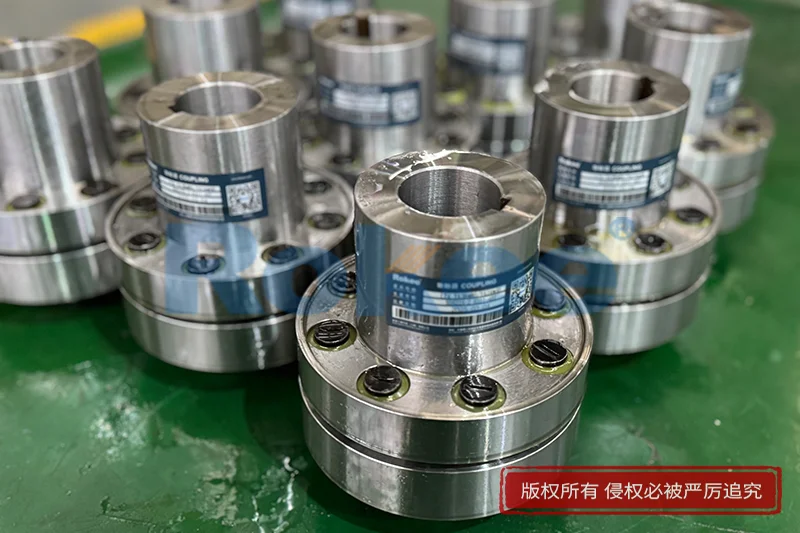
Pin couplings stand as one of the most practical and widely adopted mechanical transmission components in modern industrial machinery, serving as a critical connecting medium for shaft-to-shaft power transmission in diverse mechanical systems. As a core link in the industrial supply chain, professional pin coupling suppliers focus on the research, production, and customized supply of these flexible transmission parts, catering to the operational demands of various mechanical equipment for stable torque transmission, vibration buffering, and misalignment compensation. Featuring a simple and robust structural design composed of precision pins, flexible bushings, and paired hubs, pin couplings effectively alleviate operational impact loads, reduce mechanical vibration and friction loss, and extend the service life of matched equipment. Reliable suppliers prioritize product structural optimization, material selection refinement, and production process upgrading, ensuring their pin coupling products adapt to complex working conditions ranging from conventional light-load operation to heavy-duty continuous operation. With the continuous upgrading of industrial machinery, the role of professional pin coupling suppliers has become increasingly prominent in stabilizing equipment operation, lowering maintenance costs, and improving overall mechanical transmission efficiency.
The fundamental operational logic of pin couplings defines their irreplaceable value in mechanical transmission systems, and professional suppliers deeply grasp this core principle to guide entire production and supply processes. Different from rigid connecting parts that pursue absolute fixed connection, pin couplings rely on high-precision matching pins and elastic bushings to complete torque transmission between driving and driven shafts. During equipment operation, rotational power is transmitted through the contact force between pins and hub hole walls, while the flexible bushings wrapped around pins absorb instantaneous impact force and high-frequency vibration generated during mechanical start-up, shutdown, and variable-speed operation. This unique working mechanism enables pin couplings to tolerate moderate parallel, angular, and axial misalignment between connected shafts, effectively avoiding abnormal wear, shaft deformation, and component fatigue damage caused by rigid connection stress concentration. Professional suppliers optimize the fit clearance between pins and bushings through repeated structural debugging, ensuring balanced flexibility and rigidity of products. This precise structural design not only guarantees efficient and stable power transmission but also endows the products with excellent shock absorption and noise reduction performance, making them suitable for long-term continuous operation of various mechanical equipment.
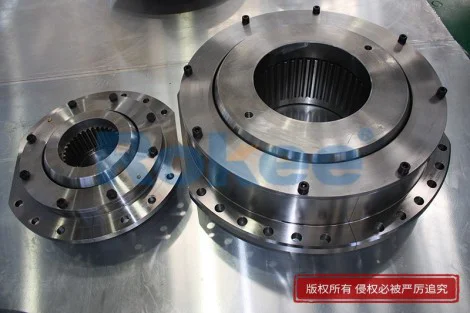
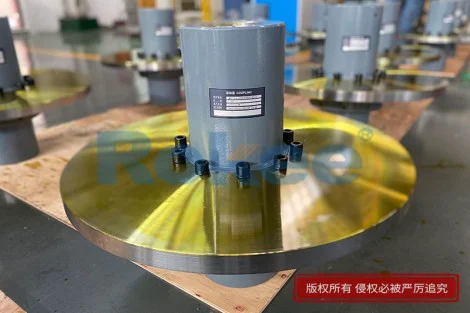
Product structural classification and scenario-oriented design are core advantages of high-quality pin coupling suppliers, who tailor diversified product solutions to meet differentiated industrial application needs. In industrial application scenarios, pin couplings are mainly divided into rigid and flexible types according to structural flexibility, each with unique application positioning and performance characteristics. Rigid pin couplings adopt an integrated hard connection structure with high-hardness integral pins and solid hubs, featuring strong torsional rigidity and stable power transmission efficiency, which is suitable for low-vibration, high-precision fixed-speed transmission scenarios with high shaft alignment accuracy. Flexible pin couplings, as the mainstream product type in the market, are equipped with detachable elastic bushings, which can effectively buffer mechanical vibration and compensate for slight shaft displacement during equipment operation. Professional suppliers continuously optimize product structure details based on actual working condition feedback, adjusting pin distribution density, bushing thickness, and hub structural size to adapt to different load levels and operating environments. Meanwhile, they simplify the product assembly and disassembly structure, realizing quick replacement of vulnerable parts without disassembling the overall mechanical structure, greatly improving equipment maintenance efficiency and reducing downtime loss for industrial production.
Material selection is the foundation of pin coupling performance and durability, and mature suppliers establish strict material screening and matching systems to ensure product operational stability under complex working conditions. The core load-bearing parts of pin couplings, including transmission pins and connecting hubs, require high tensile strength, wear resistance, and fatigue resistance to withstand long-term cyclic load and frequent impact. Professional suppliers select high-quality alloy steel and carbon steel raw materials for core components, and conduct standardized forging, quenching, and tempering treatments to improve material hardness and structural stability, avoiding pin deformation, fracture, and hub wear during high-load operation. For flexible bushing components that undertake vibration buffering and misalignment compensation functions, suppliers select high-elasticity, aging-resistant polymer materials or composite rubber materials, which can maintain stable elasticity in variable temperature and continuous operation environments, avoiding aging failure and elasticity attenuation. In addition, suppliers conduct targeted material optimization for special working conditions, enhancing product corrosion resistance and high-temperature resistance for humid, dusty, and chemically corrosive industrial environments, ensuring pin couplings maintain consistent performance and long service life in harsh operating scenarios.
Precision manufacturing process control is the key for pin coupling suppliers to achieve product quality stability and batch consistency. The overall performance of pin couplings depends on the machining accuracy of each component, especially the matching precision of pin holes and pins, as well as the flatness and coaxiality of hub surfaces. Formal suppliers adopt advanced numerical control machining equipment and automated production lines to complete fine turning, drilling, and grinding of components, realizing micron-level precision control of key matching sizes. In the production process, they implement full-process process supervision, from raw material incoming inspection, semi-finished product processing monitoring to finished product assembly debugging, to eliminate dimensional deviation and structural defects caused by manual operation errors. After component processing is completed, suppliers conduct professional assembly and pre-tightening debugging to ensure uniform stress of each pin and consistent flexibility of bushings, avoiding local excessive load and abnormal vibration during operation. Meanwhile, they optimize the production process flow, improve production efficiency on the premise of ensuring precision, and realize stable batch supply of products, which can meet the large-scale procurement demand of industrial enterprises while ensuring consistent quality of each batch of products.
Strict quality inspection and performance testing systems are important guarantees for reliable pin coupling suppliers to deliver high-quality products and win market recognition. Professional suppliers build a comprehensive quality testing system covering mechanical performance detection, structural stability verification, and operational durability simulation. For finished pin couplings, they conduct torque transmission test, vibration damping performance test, and misalignment adaptation test to verify whether the product meets actual industrial operational requirements. The torque test detects the maximum stable transmission capacity of the product to ensure no power loss or structural damage under rated load; the vibration damping test evaluates the buffer effect of flexible components on mechanical vibration to confirm the product’s noise reduction and shock absorption effect; the misalignment test verifies the product’s adaptive capacity to shaft displacement, ensuring stable operation under non-ideal installation conditions. In addition, suppliers carry out long-term fatigue life simulation tests to simulate continuous operation state of equipment, assess product aging resistance and structural durability. All products will be delivered only after passing all testing indicators, effectively avoiding product failure and equipment operation risks caused by unqualified performance.
Customized service capability has become an important competitive advantage of modern pin coupling suppliers, meeting the personalized and differentiated needs of diverse industrial equipment. With the continuous refinement of industrial production equipment, standardized universal pin couplings can no longer fully adapt to the special structural and operational requirements of some customized mechanical systems. Professional suppliers have a professional technical team that can conduct one-to-one scheme design according to customers’ actual working condition parameters, equipment structural characteristics, and special operational requirements. They can adjust product structural size, pin layout scheme, material matching combination, and flexible component hardness to customize exclusive pin coupling products for special load conditions, special installation spaces, and special environmental scenarios. In addition to product customization, suppliers also provide pre-sales technical consultation and after-sales technical support services, analyzing equipment transmission characteristics for customers, recommending matching product models, and providing installation guidance and operation maintenance suggestions. This full-cycle customized service helps customers optimize equipment transmission systems, improve operational stability, and reduce long-term equipment maintenance costs.
With the continuous development of intelligent and high-efficiency industrial machinery, the development trend of pin coupling suppliers is increasingly oriented to technological innovation, green production, and intelligent upgrading. Traditional pin coupling products are gradually optimized and upgraded in structural design and material application, and suppliers continue to explore new composite materials and lightweight structural schemes to reduce product weight while ensuring load-bearing performance, improving mechanical transmission efficiency and energy-saving effect. At the same time, suppliers introduce intelligent production and testing technologies to realize real-time monitoring of production process data and automatic judgment of product quality, further improving product precision and batch stability. In terms of market service, suppliers gradually build a refined service system, realizing fast response to customer demand, flexible batch supply, and full-life cycle product after-sales guarantee. In the future, professional pin coupling suppliers will continue to focus on industrial equipment operational demands, rely on technological innovation to optimize product performance and service system, provide more stable, efficient, and energy-saving transmission components for various industrial fields, and escort the stable and efficient operation of modern mechanical systems.