Barrel Coupling Design
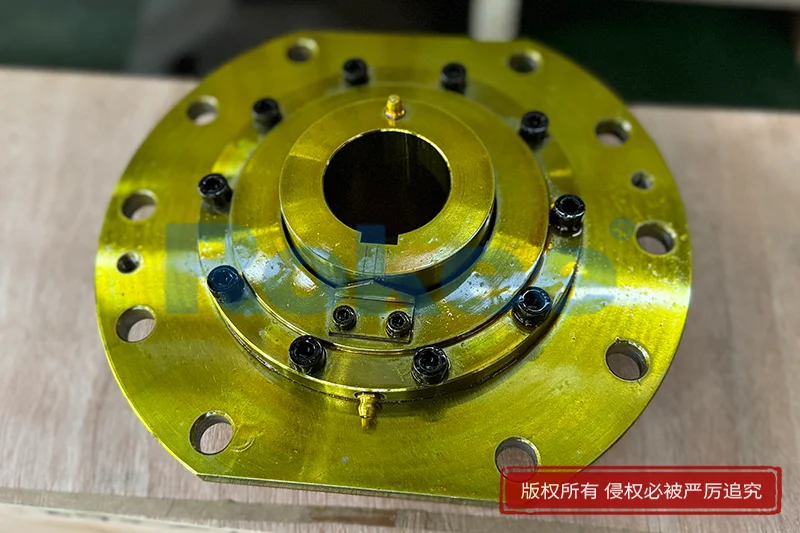
Barrel coupling design focuses on creating robust, flexible mechanical transmission components that deliver stable torque transfer while accommodating common shaft misalignments in industrial machinery. As a core connecting part between driving and driven shafts, its design prioritizes structural rationality, load adaptability and long-term operational durability to solve the practical problems of installation deviation, mechanical vibration and operational deformation during equipment operation. Different from traditional rigid couplings, the optimized barrel-shaped contact structure abandons linear meshing modes and adopts curved surface contact and rolling-sliding composite motion, which effectively disperses concentrated stress on transmission components. This design concept not only improves the overall load-bearing capacity of the coupling but also enhances its tolerance to alternating loads and impact forces. Reasonable barrel coupling design can significantly reduce component wear, lower equipment vibration and noise, and extend the service life of transmission systems, making it widely applicable in various heavy-duty and continuous operating mechanical scenarios.
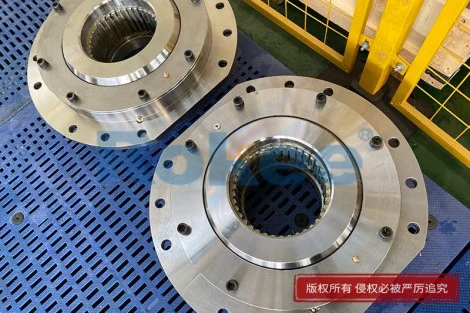
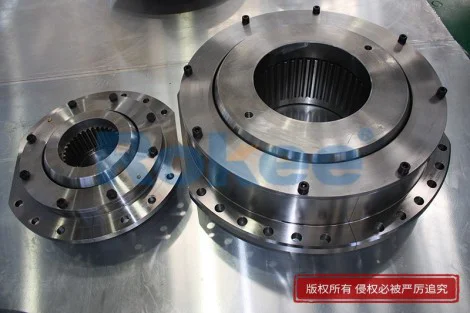
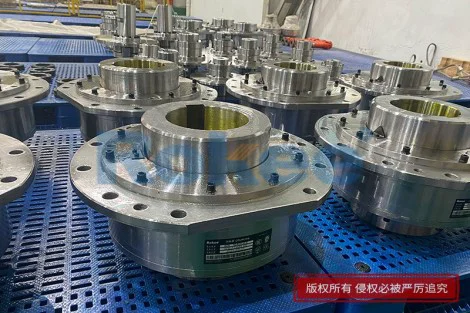
The core structural design of barrel couplings centers on the innovative curved profile and matching internal and external meshing components, which form the fundamental basis for its superior transmission performance. The overall structure mainly consists of two half-coupling hubs with specially machined curved tooth profiles, movable cylindrical barrel transmission elements, sealing components and fastening assemblies. Unlike conventional straight-tooth couplings with rigid linear contact, the external teeth of the barrel coupling are processed into smooth arc-shaped curved surfaces, which create uniform and flexible meshing gaps with internal tooth structures. The cylindrical barrels embedded in the tooth gaps serve as the key medium for torque transmission, realizing rolling and sliding compound movement during equipment operation. This structural design avoids rigid extrusion and friction between fixed tooth surfaces, eliminates local stress concentration caused by minor shaft displacement, and ensures that torque is evenly distributed across all meshing surfaces. Meanwhile, the compact integrated structural layout optimizes the spatial occupancy of the coupling, maintaining a small overall size while retaining high torque transmission efficiency, which helps simplify the overall mechanical structure and reduce equipment assembly volume.
Misalignment compensation capability is the key functional goal of barrel coupling design, targeting the unavoidable coaxial errors in mechanical assembly and operation. In actual industrial production, it is impossible to achieve absolute coaxial alignment between driving and driven shafts due to manual installation errors, equipment foundation settlement, thermal expansion and contraction during operation, and long-term mechanical deformation. These tiny deviations in axial, radial and angular directions will cause additional load and abnormal wear on transmission components if not compensated effectively. The unique curved tooth and barrel matching design of barrel couplings allows multi-dimensional flexible displacement adaptation. When shaft misalignment occurs, the cylindrical barrels can freely fine-tune their contact positions and angles within the meshing gaps, automatically offsetting coaxial deviations without affecting the continuity of torque transmission. Designers optimize the curvature of the tooth profile and the dimensional tolerance of the barrel clearance through repeated structural simulation, ensuring that the coupling can maintain stable working conditions within a reasonable misalignment range. This targeted design greatly reduces the failure rate of transmission systems caused by shaft alignment errors and improves the operational stability of mechanical equipment.
Load performance optimization is a crucial part of barrel coupling design, focusing on improving bearing capacity and impact resistance for complex working conditions. Industrial mechanical equipment often faces variable loads, sudden start-stop impacts and reverse torque changes during continuous operation, which put forward high requirements on the structural strength and fatigue resistance of couplings. The surface contact mode adopted by barrel couplings greatly expands the effective stress area compared with point or linear contact structures of traditional couplings. The uniform contact stress distribution avoids local overloading and premature fatigue cracks of components, enabling the coupling to bear larger torque and radial loads under the same structural volume. In the design process, the matching degree between barrel diameter and tooth groove curvature is precisely calculated to ensure that the load can be evenly transmitted to each movable barrel element. This structural optimization significantly enhances the coupling’s overload resistance and impact tolerance, allowing it to adapt to harsh working environments with frequent load fluctuations. Additionally, the integral forging and precision machining design of the coupling hub further improves the overall structural rigidity, preventing structural deformation under long-term heavy-load operation and ensuring consistent transmission accuracy.
Wear reduction and service life extension are important optimization directions in barrel coupling design, which directly determines the long-term economic benefits of equipment operation. Traditional gear couplings are prone to severe tooth surface wear and meshing abrasion due to rigid friction and stress concentration during operation, leading to reduced transmission accuracy and frequent component replacement. The rolling-sliding composite motion mechanism designed for barrel couplings fundamentally changes the friction state between transmission components. The movable cylindrical barrels convert most rigid sliding friction into flexible rolling friction during torque transmission, greatly reducing friction resistance and surface wear degree. Designers also optimize the surface finish and hardness of barrels and tooth surfaces through precision processing and surface treatment processes, improving wear resistance and anti-scuffing performance. At the same time, the structural design reserves reasonable lubrication gaps and is equipped with reliable sealing components, which can stably store lubricating grease and prevent dust, impurities and moisture from entering the meshing area. Good lubrication conditions and isolated working environment effectively reduce abrasive wear and corrosion of internal components, greatly prolonging the service cycle of the coupling and reducing the frequency of equipment maintenance and component replacement.
Assembly and maintenance convenience are fully considered in the human-oriented design of barrel couplings, balancing structural performance and operational practicability. In mechanical equipment installation and daily maintenance, complex assembly procedures and difficult disassembly operations will increase construction costs and equipment downtime. The barrel coupling adopts a modular combined structure design, with independent and matched components that realize simple assembly and quick positioning. The standardized structural size design allows workers to complete shaft connection and fastening operations through conventional assembly processes without complex professional tools. The movable barrel elements are independently embedded in the tooth grooves, enabling single partial replacement of worn components instead of overall replacement, which greatly improves maintenance efficiency. In terms of structural layout, the design avoids overly closed and complex internal structures, making daily inspection of component wear, lubrication state and fastening degree more intuitive and convenient. The reasonable gap design also reserves sufficient thermal expansion space for high-temperature operation, preventing component jamming caused by thermal deformation. This practical design makes barrel couplings more adaptable to on-site operation scenarios and reduces the technical threshold and time cost of equipment installation and maintenance.
Vibration damping and operational stability optimization are key details that cannot be ignored in barrel coupling design, helping improve the overall operating quality of mechanical systems. Mechanical vibration and noise generated during equipment operation are mainly caused by unbalanced torque transmission, rigid collision between transmission components and shaft misalignment excitation. The flexible meshing structure of barrel couplings provides effective buffering for torque transmission. When sudden load changes or mechanical vibration occur, the movable barrels can absorb and dissipate part of the vibration energy through slight displacement and rolling buffering, avoiding rigid force transmission between shafts. The uniform stress transmission characteristic eliminates periodic impact and jitter in the transmission process, making torque output more stable and continuous. Designers optimize the structural clearance and component matching tolerance through dynamic simulation tests to ensure that the coupling can maintain good vibration damping effect under different rotating speeds and load conditions. Stable transmission and effective vibration suppression not only reduce the fatigue loss of mechanical components but also lower equipment operating noise, improve the working environment of mechanical systems, and ensure the long-term stable and efficient operation of equipment.
The iterative optimization of barrel coupling design always adheres to the integration of structural innovation, performance improvement and scenario adaptability, continuously meeting the diversified development needs of modern industrial machinery. With the continuous upgrading of industrial equipment towards high speed, heavy load and long-cycle continuous operation, higher standards have been put forward for the comprehensive performance of transmission components. Modern barrel coupling design no longer focuses on single torque transmission function, but realizes multi-dimensional performance optimization including misalignment compensation, load resistance, wear resistance, vibration reduction and convenient maintenance through systematic structural improvement. The flexible and changeable structural design scheme can be adjusted according to different mechanical operating conditions, adapting to various complex working scenarios from conventional light-load operation to harsh heavy-duty and impact working environments. In the future, with the continuous progress of mechanical design technology and processing technology, barrel coupling design will further realize lightweight, high-precision and intelligent optimization, continuously improving the comprehensive service performance of mechanical transmission systems and providing more reliable basic component support for the stable operation of industrial equipment.