Welded Universal Joint Coupling
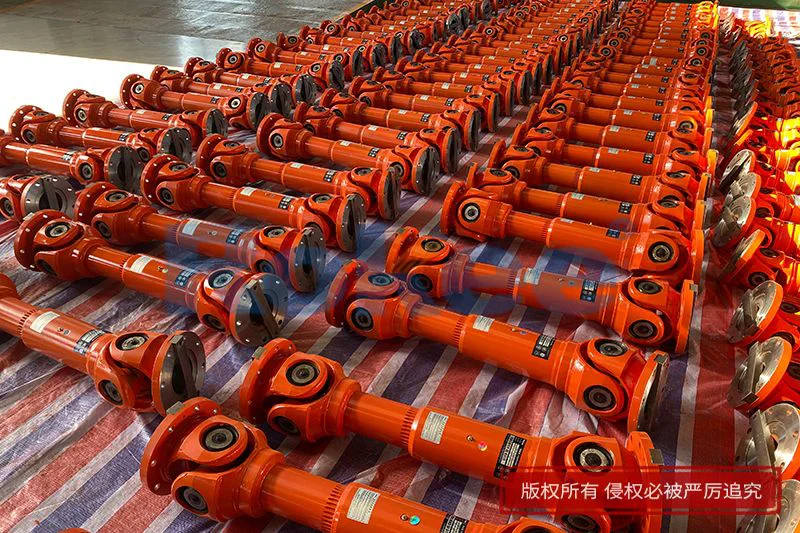
Welded universal joint coupling is a high-performance mechanical transmission component designed to connect misaligned rotating shafts and deliver stable torque transfer in complex operating environments. Differing from conventional bolted or assembled universal joints, this coupling adopts an integrated welded structure that merges key components into a unified whole, eliminating structural gaps and weak connection points found in traditional counterparts. It is engineered to accommodate angular, axial, and radial shaft misalignments that commonly occur during mechanical operation, equipment installation, or long-term service wear. Renowned for its robust structural rigidity, reliable power transmission, and strong environmental adaptability, it has become an indispensable core part in heavy-duty mechanical transmission systems. It effectively solves the operational instability and transmission loss caused by shaft offset, ensuring continuous and efficient power output for various industrial mechanical equipment under diverse working conditions.
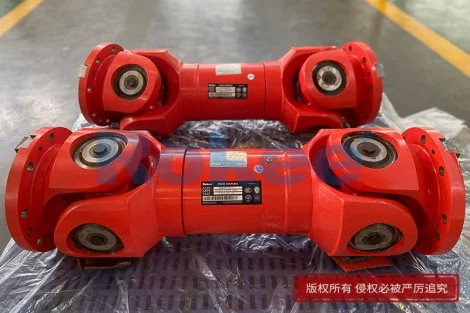
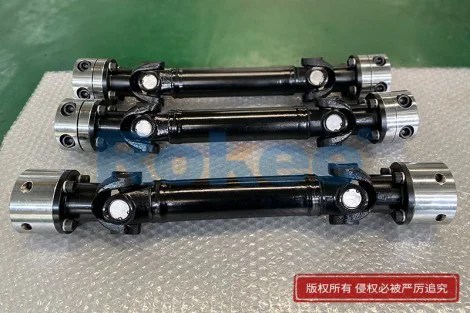
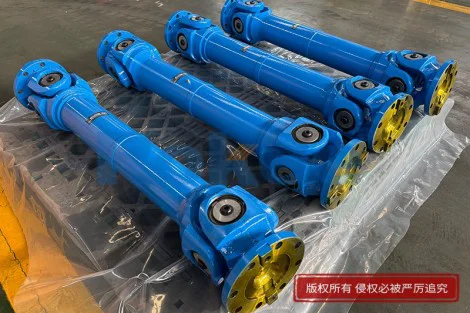
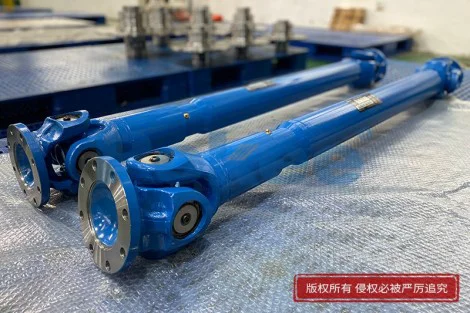
The structural design of welded universal joint coupling lays a solid foundation for its superior transmission performance and long-term operational stability. The core structure consists of two symmetrical yoke bodies, a central cross shaft, and precision rolling components, all integrated through professional welding processes to form a seamless integral structure. Unlike detachable universal joints that rely on bolts or key connections for assembly, the welding treatment fuses the joint components tightly together, avoiding loosening, displacement, or component separation during high-speed rotation and high-torque operation. The cross shaft at the center serves as the key movable pivot, enabling flexible angular swing between the two yokes and allowing the coupling to adapt to variable shaft angles without hindering rotational power transmission. The internal rolling parts are precisely fitted to reduce mechanical friction during operation, while the welded outer structure enhances overall structural compactness, making the coupling occupy less installation space compared with multi-part assembled couplings. This integrated structural design not only optimizes the spatial layout of mechanical equipment but also greatly improves the overall structural firmness and anti-deformation ability of the coupling.
The working principle of welded universal joint coupling follows the spatial linkage transmission mechanism, realizing efficient and continuous torque transmission between non-coaxial rotating shafts. When the driving shaft starts to operate and output rotational power, it drives the connected yoke to perform synchronous rotary motion. The rotational force is then transmitted to the central cross shaft through the matching rolling structure, and the cross shaft converts the fixed-axis rotation of the driving end into flexible spatial composite motion. This composite motion is further transmitted to the driven end yoke, driving the driven shaft to rotate stably and complete power transfer. Thanks to the flexible pivot characteristic of the cross shaft structure, the coupling can maintain normal power transmission even when the driving shaft and driven shaft produce obvious angular deviation or tiny axial displacement. The integrated welded structure ensures that each force-bearing part can bear uniform load during operation, avoiding local stress concentration caused by loose assembly gaps. Even in dynamic working environments where shaft misalignment changes in real time, the coupling can adjust its swing angle adaptively to ensure no interruption or attenuation of torque transmission, achieving stable and efficient mechanical power output.
One of the most prominent advantages of welded universal joint coupling is its excellent high torque bearing capacity and structural durability. Traditional assembled universal joints often face structural limitations at the connection parts, which are prone to deformation, loosening or fatigue damage under long-term high-torque load, affecting transmission stability and service life. In contrast, the integral welded structure eliminates all weak connection links, making the entire coupling form a unified force-bearing system. The welding process optimizes the stress distribution of the component, enabling the coupling to withstand continuous heavy load impact and high-intensity torque transmission without permanent structural deformation. In addition, the integrated structure avoids the abrasion and failure of fasteners that often occur in assembled couplings during frequent operation. The surface and internal structural integrity formed by welding also enhances the component’s resistance to mechanical fatigue, allowing it to adapt to long-term uninterrupted operation scenarios. Whether in steady high-load operation or intermittent impact load working conditions, the coupling can maintain stable mechanical performance and greatly extend the overall service cycle of transmission components.
Welded universal joint coupling possesses outstanding misalignment compensation capability, which is the core reason for its wide adaptability in complex mechanical working conditions. In actual mechanical equipment operation, it is difficult to achieve absolute coaxial alignment of driving and driven shafts due to installation errors, equipment vibration, thermal expansion and contraction of metal components, and long-term operational wear. Rigid couplings cannot adapt to such shaft offset changes, which will cause severe transmission vibration, increased mechanical wear, and even equipment failure. As a flexible transmission component with multi-directional compensation function, this welded coupling can effectively adapt to angular deviation, axial displacement and radial offset between shafts. Its unique cross shaft pivot structure allows a certain range of free swing of the connected shafts, offsetting the position deviation generated during equipment operation. The integrated welded design ensures that the compensation function will not be weakened by loose structural gaps, maintaining accurate and sensitive misalignment adjustment ability for a long time. This excellent compensation performance effectively reduces mechanical operation resistance, lowers equipment vibration and noise, and protects other transmission components from eccentric wear and impact damage.
The transmission efficiency and operational stability of welded universal joint coupling are far superior to many traditional transmission coupling products. The seamless integral structure formed by precision welding minimizes structural gaps and motion dead zones inside the coupling, enabling the rotational power transmitted between shafts to be fully output with almost no power loss. The internal precision-matched rolling components reduce sliding friction during motion conversion, making the power transmission process more smooth and efficient. Compared with elastic couplings that rely on deformation for buffer transmission, it avoids power attenuation caused by elastic component deformation and recovery, maintaining high transmission efficiency even under long-term continuous operation. Meanwhile, the high-rigidity welded structure effectively suppresses structural vibration and motion jitter during high-speed rotation. The overall stress balance design enables the coupling to operate stably at different rotational speeds without obvious amplitude fluctuation or rotational speed deviation. This stable and efficient transmission characteristic not only improves the overall operating efficiency of mechanical equipment but also reduces invalid energy consumption, realizing energy-saving and efficient mechanical operation.
Welded universal joint coupling exhibits extremely wide application adaptability, covering most heavy-duty and complex mechanical transmission scenarios in the industrial field. It is widely applied in engineering machinery, general industrial equipment, transportation machinery and other fields that require non-coaxial power transmission. In engineering machinery, it serves as a key transmission component for various heavy equipment, adapting to the severe working conditions of frequent start-stop, impact load and complex vibration. In general industrial production equipment, it solves the transmission instability problem caused by equipment installation deviation and thermal deformation, ensuring the continuous operation of production lines. In mechanical transmission systems with limited installation space, its compact integrated structure can flexibly adapt to narrow assembly environments without affecting transmission performance. Moreover, the welded integral structure has good structural stability in harsh environments such as dust, humidity and slight vibration, not prone to component loosening or failure. Its strong working condition adaptability makes it a preferred transmission component for various complex and high-load mechanical systems, providing reliable basic support for the stable operation of industrial mechanical equipment.
The maintenance economy and long-term application value of welded universal joint coupling make it stand out among various mechanical coupling products. Thanks to the integral welded integrated structure, the number of discrete components of the coupling is greatly reduced, eliminating the need for regular inspection and replacement of fasteners, elastic parts and other vulnerable parts required by assembled couplings. The overall structural firmness and fatigue resistance reduce the probability of sudden failure and daily wear and tear, greatly lowering the frequency of equipment maintenance and downtime maintenance costs. In the long-term operation process, its stable transmission performance avoids mechanical failure problems such as transmission deviation and component abrasion caused by structural loosening, reducing the loss of matching parts and improving the overall operation continuity of mechanical equipment. Although the integrated welding process puts forward higher requirements for manufacturing precision, the excellent durability and low maintenance cost in the later stage make it have higher comprehensive cost performance. For industrial mechanical equipment that requires long-term continuous and stable operation, this coupling can effectively reduce overall operating costs and create more stable operational benefits for mechanical systems.