SWC-BH Cardan Coupling Telescopic Transmission Adaptation for PU Sandwich Panel Line
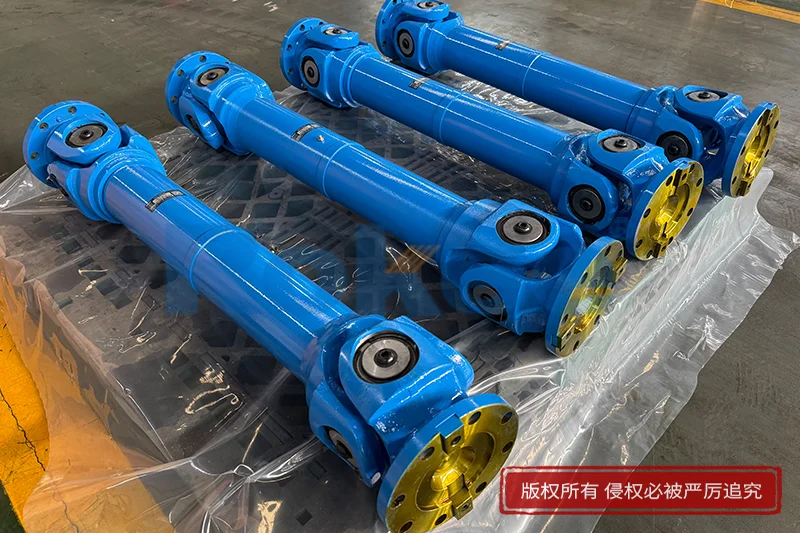
In modern industrial production, the stability and efficiency of transmission systems directly determine the quality of finished products and the operational efficiency of production lines. PU sandwich panels, as a kind of composite material with excellent thermal insulation, sound insulation and structural performance, are widely used in construction, cold storage, industrial workshops and other fields. The PU sandwich panel production line is a complex integrated system that involves multiple links such as uncoiling, forming, foaming, compounding, cooling and cutting. Each link relies on precise power transmission to ensure coordinated operation. Among the many transmission components, the SWC-BH cardan coupling plays an irreplaceable role with its unique telescopic transmission performance, effectively solving the problems of axis offset, angular deviation and axial displacement in the transmission process of the PU sandwich panel production line, and providing a reliable guarantee for the stable and efficient operation of the entire production line.
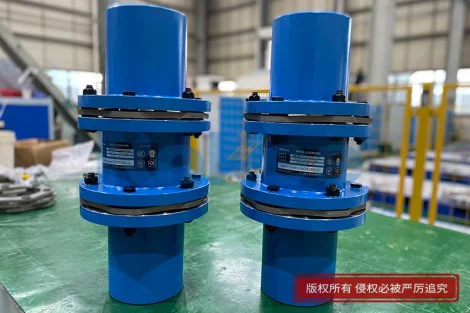
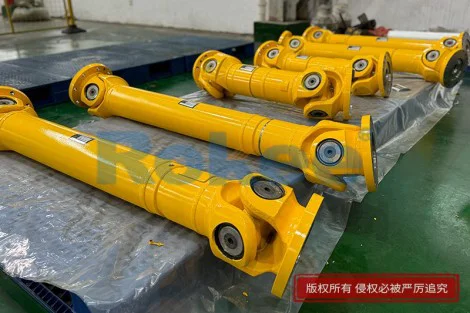
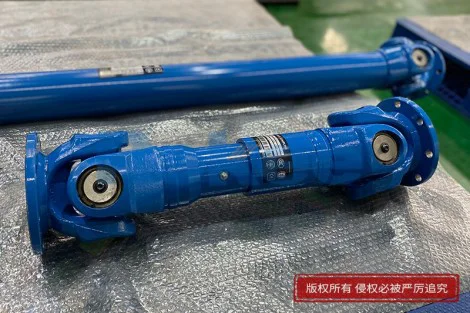
The SWC-BH cardan coupling is a kind of telescopic welded universal joint coupling, which is designed based on the working characteristics of industrial transmission systems that require large-angle compensation and axial displacement adaptation. Its structural design integrates the advantages of compact structure, high bearing capacity and strong adaptability, making it suitable for various harsh industrial working environments, especially the PU sandwich panel production line which has high requirements for transmission accuracy and stability. Unlike ordinary couplings that can only realize simple torque transmission, the SWC-BH cardan coupling adopts a cross shaft structure, which connects the flanges at both ends through cross bearings, enabling it to transmit torque stably even when the two connected shafts are not on the same axis or have a certain angular deviation. At the same time, the spline connection design of the coupling realizes the telescopic function, which can effectively compensate for the axial displacement generated during the operation of the production line, avoiding the damage to the transmission system caused by the mutual pulling or extrusion of the shafts.
To understand the adaptation of the SWC-BH cardan coupling in the telescopic transmission of the PU sandwich panel production line, it is first necessary to clarify the working principle of the coupling and the transmission characteristics of the production line. The core component of the SWC-BH cardan coupling is the cross shaft, which is equipped with bearings at the four ends and connected to the fork-shaped joints on both sides. When the driving shaft rotates, it drives the connected fork-shaped joint to rotate, and the fork-shaped joint transmits the rotational motion to the other fork-shaped joint through the cross shaft, thereby realizing the torque transmission between the two shafts. The spline connection between the fork-shaped joint and the shaft enables the coupling to stretch and contract axially within a certain range, which is the key to its telescopic transmission adaptation. The angular compensation capacity of the SWC-BH cardan coupling can reach more than 25 degrees, and the spline connection can compensate for a large distance of axial displacement, which is particularly suitable for the transmission scenario of the PU sandwich panel production line where the axis position is prone to changes.
The PU sandwich panel line is a continuous operation system, and each process link has strict requirements on the synchronization of power transmission. From the uncoiling of the surface metal sheet to the roll forming, then to the PU foam injection, compound pressing, cooling and curing, and finally to the fixed-length cutting, each link needs to maintain a consistent transmission speed and stable torque output. In the actual operation process, due to factors such as the installation error of equipment, the thermal expansion and contraction of components during operation, and the vibration generated by the operation of the motor and other equipment, the axes of the driving shaft and the driven shaft in the transmission system will inevitably produce offset, including angular offset and axial displacement. If these offsets are not effectively compensated, it will lead to unstable transmission, increased noise, accelerated wear of components, and even affect the quality of PU sandwich panels, such as uneven thickness of the panel, poor bonding between the foam core and the surface sheet, and inaccurate cutting size.
The telescopic transmission performance of the SWC-BH cardan coupling just solves the above problems. In the uncoiling and roll forming section of the PU sandwich panel production line, the uncoiler and the roll forming machine need to maintain synchronous operation. Due to the different installation positions of the two devices, there is often a certain angular deviation between their axes. The SWC-BH cardan coupling can effectively compensate for this angular deviation through its cross shaft structure, ensuring that the torque is transmitted stably and evenly, so that the metal sheet can be uncoiled smoothly and formed accurately. At the same time, during the long-term operation of the uncoiler, the position of the coil will gradually change, leading to axial displacement of the driving shaft. The spline telescopic structure of the SWC-BH cardan coupling can automatically adjust the length according to the axial displacement, avoiding the occurrence of transmission jamming or component damage.
In the PU foam injection and compound pressing section, the stability of the transmission system is directly related to the quality of the foam core and the bonding effect of the composite panel. The foam injection machine needs to inject the mixed PU foam into the gap between the two surface sheets at a uniform speed, while the compound pressing mechanism needs to apply a stable pressure to ensure that the foam is evenly distributed and fully bonded with the surface sheets. The transmission speed of these two devices must be strictly synchronized, otherwise it will cause uneven foam filling, bubbles in the foam core, or poor bonding between the surface sheet and the foam. The SWC-BH cardan coupling has high transmission efficiency, which can reach 98% to 99.8%, ensuring that the power is transmitted without loss, and the synchronous operation of the two devices is maintained. At the same time, the vibration generated during the operation of the injection machine and the pressing mechanism can be effectively buffered by the coupling, reducing the impact on the transmission system and improving the stability of the equipment operation.
The cooling and curing section and the cutting section are the final links of the PU sandwich panel production line, and the requirements for transmission accuracy are higher. After the composite panel with expanding foam enters the cooling and curing section, it needs to move at a uniform speed under controlled temperature and pressure conditions to ensure that the foam is fully cured and the structure is stable. The cutting machine needs to cut the continuous composite panel into fixed-length finished products according to the preset size, which requires the transmission system to have high precision to ensure that the cutting size is accurate and the error is within the allowable range. The SWC-BH cardan coupling has excellent transmission accuracy, and the error of torque transmission is small, which can ensure that the transmission speed of the cooling conveyor and the cutting machine is stable and consistent. At the same time, the telescopic function of the coupling can compensate for the axial displacement caused by the thermal expansion and contraction of the conveyor belt during the cooling process, avoiding the deviation of the panel position and ensuring the accuracy of the cutting size.
In addition to the adaptation in the telescopic transmission and angle compensation, the SWC-BH cardan coupling also has the advantages of high carrying capacity and long service life, which are very suitable for the working environment of the PU sandwich panel production line. The production line often needs to transmit large torque during operation, especially in the roll forming and compound pressing sections, which require the coupling to have strong load-bearing capacity. The SWC-BH cardan coupling adopts a welded structure and high-strength materials, which can bear large torque and axial force, and is not easy to be damaged even under long-term heavy load operation. At the same time, the coupling is equipped with a complete lubrication system, including oil nozzles and sealing devices, which can ensure the long-term reliable operation of the bearings, reduce the wear of components, and extend the service life of the coupling. This not only reduces the frequency of equipment maintenance and replacement, but also reduces the production cost and improves the production efficiency.
The adaptation of the SWC-BH cardan coupling in the telescopic transmission of the PU sandwich panel production line is also reflected in its strong adaptability to the working environment. The PU sandwich panel production line often produces a certain amount of dust, foam residues and other impurities during operation, and the temperature of the production environment may also change within a certain range. The SWC-BH cardan coupling has a good sealing performance, which can prevent dust, impurities and other substances from entering the internal structure of the coupling, avoiding the wear of bearings and other components and affecting the transmission performance. At the same time, the coupling can work normally within a certain temperature range, and will not be affected by the change of ambient temperature, ensuring the stable operation of the transmission system under various working conditions.
In the actual application process, the adaptation effect of the SWC-BH cardan coupling in the telescopic transmission of the PU sandwich panel production line is also related to the correct installation and daily maintenance. During installation, it is necessary to ensure the accurate alignment of the coupling and the shafts, and adjust the angular deviation and axial displacement within the allowable range of the coupling to avoid excessive stress on the coupling during operation. At the same time, the lubrication of the coupling should be carried out regularly, and the lubricating oil should be replaced according to the working conditions to ensure that the bearings are in a good lubrication state. In addition, the coupling should be inspected regularly, including checking the wear of the cross shaft, bearings, splines and other components, and replacing the damaged components in time to avoid the failure of the coupling affecting the operation of the entire production line.
With the continuous development of the PU sandwich panel industry, the requirements for the production line are getting higher and higher, and the performance requirements for the transmission components are also constantly improving. The SWC-BH cardan coupling, with its unique telescopic transmission performance, high bearing capacity, high transmission efficiency and strong adaptability, has become an important part of the transmission system of the PU sandwich panel production line. It not only solves the problems of axis offset, angular deviation and axial displacement in the transmission process, but also improves the stability and efficiency of the production line, ensuring the quality of the finished PU sandwich panels. In the future, with the continuous improvement of mechanical design and manufacturing technology, the structure and performance of the SWC-BH cardan coupling will be further optimized, and its adaptation in the telescopic transmission of the PU sandwich panel production line will be more perfect, providing more reliable support for the development of the PU sandwich panel industry.
It is worth noting that the adaptation of the SWC-BH cardan coupling in the PU sandwich panel production line is not a single component adaptation, but needs to be coordinated with other transmission components and equipment to form a complete and efficient transmission system. For example, the matching between the coupling and the motor, reducer, conveyor and other equipment directly affects the overall transmission effect. Therefore, in the design and selection of the transmission system of the PU sandwich panel production line, it is necessary to comprehensively consider the working characteristics of each link, select the appropriate model and specification of the SWC-BH cardan coupling, and ensure the reasonable matching between the coupling and other equipment, so as to give full play to the role of the coupling in telescopic transmission adaptation.
In the process of long-term operation, the SWC-BH cardan coupling will inevitably have some wear and tear, but through scientific installation, regular maintenance and reasonable use, the service life of the coupling can be effectively extended, and its telescopic transmission adaptation performance can be maintained. For example, regularly checking the tightness of the connecting bolts, adjusting the lubrication state in time, and cleaning the surface and internal impurities of the coupling can all reduce the wear of the coupling and ensure its stable operation. At the same time, when the coupling is found to have abnormal phenomena such as noise, vibration or transmission instability during operation, it is necessary to stop the machine for inspection in time, find out the cause and solve it, so as to avoid further damage to the coupling and the transmission system.
In conclusion, the SWC-BH cardan coupling has excellent telescopic transmission adaptation performance, which can effectively solve the problems of axis offset, angular deviation and axial displacement in the transmission process of the PU sandwich panel production line. Its high carrying capacity, high transmission efficiency, strong adaptability and long service life make it an indispensable transmission component in the PU sandwich panel production line. By correctly selecting, installing and maintaining the SWC-BH cardan coupling, the stability and efficiency of the PU sandwich panel production line can be significantly improved, the quality of the finished products can be guaranteed, and the production cost can be reduced. With the continuous progress of industrial technology, the SWC-BH cardan coupling will play a more important role in the telescopic transmission adaptation of the PU sandwich panel production line, promoting the healthy and sustainable development of the PU sandwich panel industry.