Cardan Coupling for PU Sandwich Panel Line High Transmission Efficiency Energy Saving
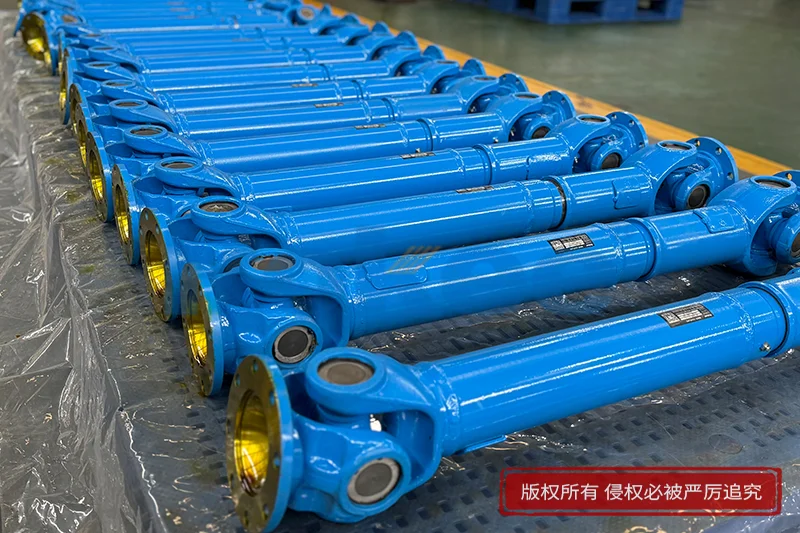
In the modern construction and manufacturing industry, polyurethane (PU) sandwich panels have become increasingly indispensable due to their excellent thermal insulation, structural stability, lightweight properties, and environmental friendliness. These panels, composed of two outer facing materials and a rigid PU foam core, are widely applied in external walls, roofs, cold storage facilities, prefabricated buildings, and various industrial structures, driving the continuous development and upgrading of PU sandwich panel production lines. A PU sandwich panel production line is a complex integrated system that involves multiple consecutive processes, including uncoiling of facing materials, roll forming, preheating, PU foaming, lamination, curing, and cutting. Each link in this system requires precise, stable, and efficient power transmission to ensure the consistency of product quality, the smooth operation of the production process, and the optimization of production costs. Among the numerous components that constitute the transmission system of the production line, the cardan coupling, also known as the universal joint coupling, plays a crucial role. Its unique structural design and excellent transmission performance not only ensure the stable operation of the entire production line but also significantly improve transmission efficiency and achieve energy-saving effects, becoming an essential core component in the PU sandwich panel production process.
To understand the important role of cardan coupling in PU sandwich panel lines, it is first necessary to clarify the working characteristics of the production line and the core requirements for its transmission system. A modern PU sandwich panel production line is a highly automated continuous production system that integrates mechanical, electrical, hydraulic, and chemical reaction technologies. It requires the coordinated operation of multiple subsystems, such as the uncoiling system, roll forming system, foaming system, double-belt lamination system, cutting system, and conveying system. Each subsystem is driven by an independent power source, and the power needs to be accurately and stably transmitted to various executive components to ensure that the entire production line operates in a synchronized manner. The transmission system of the PU sandwich panel line faces several key challenges in practical operation: first, due to the limitations of the production process and the overall structure of the equipment, the installation and layout of each subsystem are often not on the same axis, resulting in angular deviations, parallel deviations, or axial displacements between the driving shaft and the driven shaft; second, during long-term continuous operation, the equipment will generate vibration and thermal expansion, leading to changes in the relative position of the shafts, which requires the transmission component to have a certain compensation capacity; third, the production process of PU sandwich panels requires stable power transmission at different speeds, and the transmission component needs to adapt to speed changes while maintaining transmission stability and efficiency; fourth, with the increasing emphasis on energy conservation and environmental protection in the manufacturing industry, the transmission system is required to reduce energy loss as much as possible to achieve the goal of energy saving and emission reduction.
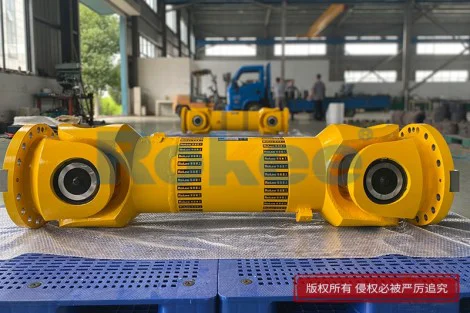
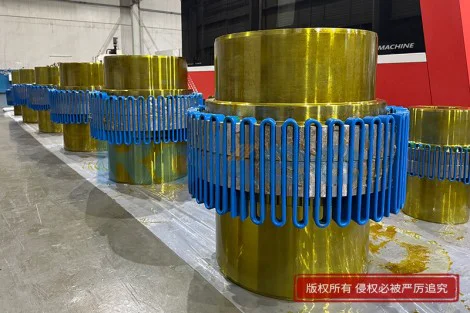
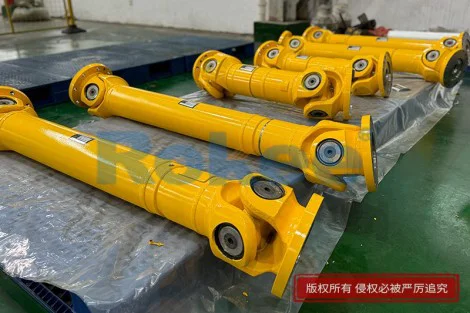
The cardan coupling is specifically designed to meet these transmission requirements, and its structural characteristics enable it to perfectly adapt to the working environment of PU sandwich panel production lines. A typical cardan coupling consists of two yokes, a cross shaft, and needle bearings. The two yokes are respectively connected to the driving shaft and the driven shaft, and the cross shaft connects the two yokes, forming a flexible connection structure. This structural design allows the cardan coupling to compensate for angular deviations, parallel deviations, and axial displacements between the two shafts within a certain range, ensuring that power can be stably transmitted even when the shafts are misaligned. Unlike rigid couplings that require strict coaxial alignment of the shafts, the cardan coupling’s flexible compensation capacity greatly reduces the installation accuracy requirements of the production line, simplifies the installation process, and also reduces the wear of shafts and bearings caused by misalignment, extending the service life of the equipment. The needle bearings installed at the connection between the cross shaft and the yokes minimize the friction during the transmission process, ensuring smooth operation of the coupling and reducing energy loss caused by friction.
High transmission efficiency is one of the most prominent advantages of cardan coupling in PU sandwich panel production lines, and this advantage is closely related to its structural design and working principle. The transmission of torque by the cardan coupling is achieved through direct mechanical contact between the yokes and the cross shaft, forming a nearly rigid torque transmission path. Unlike flexible couplings that rely on elastic elements to absorb misalignment, which may introduce torsional slack and reduce torque transmission efficiency, the cardan coupling has minimal power loss even under heavy load conditions. The precision-engineered cross shaft and needle bearings ensure that the friction between components is kept to a minimum during operation, so that most of the power output by the motor can be effectively transmitted to the executive components of the production line, such as the roll forming machine, conveyor belt, and cutting machine. In the PU sandwich panel production process, the roll forming system needs stable torque to shape the facing materials into the required profiles, and the conveying system needs constant power to ensure the continuous and stable movement of the panels. The high transmission efficiency of the cardan coupling ensures that these systems can obtain sufficient and stable power, avoiding production interruptions or product quality defects caused by insufficient power transmission. At the same time, the reduction of power loss also means that the motor does not need to consume additional energy to make up for the power loss in the transmission process, thereby reducing the overall energy consumption of the production line.
The energy-saving effect of cardan coupling in PU sandwich panel line is reflected not only in the reduction of power loss during transmission but also in the improvement of the overall operational efficiency of the production line and the reduction of maintenance costs. In practical production, if the transmission component has low efficiency and large power loss, the motor will need to operate at a higher power to meet the production requirements, which will inevitably increase energy consumption. The cardan coupling, with its high transmission efficiency, can reduce the load on the motor, allowing the motor to operate in a more energy-efficient range. For example, in a continuous production line with a daily operating time of 20 hours, the use of cardan coupling can reduce the power loss of the transmission system by a certain percentage, and the accumulated energy saving effect over a long period is very significant. In addition, the cardan coupling has a simple structure, high reliability, and strong wear resistance, which can reduce the frequency of maintenance and replacement. The maintenance process of the cardan coupling is relatively simple, usually only requiring regular lubrication and inspection, without complex disassembly and assembly work. This not only reduces the labor intensity of maintenance personnel but also reduces the downtime of the production line caused by maintenance, improving the overall production efficiency of the line. The reduction of maintenance costs and the improvement of production efficiency further help enterprises reduce production costs, achieving the dual goals of energy saving and cost reduction.
The adaptability of cardan coupling to the working environment of PU sandwich panel production lines also provides important support for its energy-saving and high-efficiency performance. PU sandwich panel production lines often need to operate in different environments, including high temperature, humidity, and dust. The cardan coupling is usually made of high-strength materials such as carbon steel or alloy steel, which have good corrosion resistance, high-temperature resistance, and wear resistance, ensuring stable operation in harsh working environments. The sealed structure of the coupling can prevent dust, moisture, and other impurities from entering the internal components, avoiding friction increase and power loss caused by component wear. In addition, the cardan coupling can adapt to different speed and load changes, which is very suitable for the production characteristics of PU sandwich panel lines. During the production process, the speed of the production line may need to be adjusted according to the thickness of the panels, the type of facing materials, and other factors. The cardan coupling can maintain stable transmission efficiency and torque transmission under different speed conditions, without obvious power loss or vibration, ensuring the stability of the production process and the consistency of product quality. This adaptability not only improves the flexibility of the production line but also avoids energy waste caused by unstable operation due to speed changes.
To better play the role of cardan coupling in improving transmission efficiency and saving energy, it is necessary to pay attention to reasonable selection, installation, and maintenance in practical applications. In the selection process, it is necessary to determine the model and specification of the cardan coupling according to the power, speed, torque, and shaft misalignment of the production line. If the selected coupling is too small, it may not bear the required torque, leading to overload operation, increased power loss, and even damage to the coupling; if the selected coupling is too large, it will increase the cost and the weight of the transmission system, resulting in unnecessary energy consumption. In the installation process, it is necessary to ensure the correct connection of the coupling with the driving shaft and the driven shaft, and adjust the alignment as much as possible to reduce the misalignment angle, so as to minimize the additional power loss caused by excessive misalignment. Regular lubrication is an important part of the maintenance work. Adding an appropriate amount of lubricating oil to the needle bearings and cross shaft can effectively reduce friction, prevent component wear, and extend the service life of the coupling. At the same time, regular inspection of the coupling’s components, such as the yokes, cross shaft, and bearings, to find and replace worn or damaged parts in a timely manner can avoid the reduction of transmission efficiency and energy waste caused by component failure.
In recent years, with the continuous development of the PU sandwich panel industry, the requirements for production efficiency, product quality, and energy conservation have become higher and higher. The cardan coupling, as a key transmission component, has been continuously improved and optimized in terms of structural design, material selection, and manufacturing process. Modern cardan couplings often adopt advanced processing technologies to improve the precision and surface quality of components, further reducing friction and power loss. Some couplings also adopt lightweight materials on the premise of ensuring strength, reducing the weight of the transmission system and further improving energy-saving effects. In addition, with the application of intelligent technology in the manufacturing industry, some cardan couplings are equipped with monitoring devices that can real-time monitor the operating status of the coupling, such as temperature, vibration, and wear, so that maintenance personnel can find potential problems in a timely manner, avoid sudden failures, and ensure the continuous and stable operation of the production line. These improvements and optimizations make the cardan coupling more suitable for the development needs of PU sandwich panel production lines, providing stronger support for the high-efficiency, energy-saving, and stable operation of the production lines.
The application of cardan coupling in PU sandwich panel production lines is not only a reflection of the continuous progress of transmission technology but also an important measure to respond to the call for energy conservation and environmental protection. In the context of global energy conservation and emission reduction, reducing energy consumption and improving production efficiency have become important goals for enterprises in the manufacturing industry. The cardan coupling, with its high transmission efficiency, strong adaptability, and good energy-saving effect, can help PU sandwich panel manufacturers reduce production costs, improve market competitiveness, and achieve sustainable development. Compared with other types of couplings, the cardan coupling has obvious advantages in handling shaft misalignment, transmitting large torque, and reducing power loss, making it the preferred transmission component for many PU sandwich panel production lines.
In practical application cases, many PU sandwich panel manufacturers have achieved significant energy-saving effects and production efficiency improvements after adopting cardan couplings. For example, a manufacturer engaged in the production of PU cold storage panels found that after replacing the original flexible coupling with a cardan coupling, the power loss of the transmission system was reduced by a considerable proportion, the daily energy consumption of the production line was significantly reduced, and the production efficiency was improved by about 10% because the stability of the transmission system was enhanced, and the downtime caused by transmission failures was reduced. Another manufacturer producing PU wall panels reported that the service life of the transmission system components was extended by more than 30% after using cardan couplings, and the maintenance cost was reduced by nearly 20%, which not only saved energy but also reduced the overall production cost. These practical cases fully prove the important role of cardan coupling in improving transmission efficiency and saving energy in PU sandwich panel production lines.
It should be noted that the performance of cardan coupling in PU sandwich panel production lines is also affected by various factors, such as the quality of the coupling itself, the accuracy of installation, the frequency of maintenance, and the working conditions of the production line. Therefore, enterprises need to choose high-quality cardan couplings, strictly follow the installation specifications, establish a sound maintenance system, and regularly inspect and maintain the couplings to ensure that they can always operate in the best state. At the same time, with the continuous development of technology, enterprises should also pay attention to the new technologies and new products of cardan couplings, and actively adopt more advanced and energy-saving coupling products to further improve the operational efficiency and energy-saving level of the production line.
In conclusion, the cardan coupling is an indispensable core component in the PU sandwich panel production line, and its high transmission efficiency and energy-saving advantages provide important support for the stable, efficient, and low-cost operation of the production line. Its unique structural design enables it to adapt to the working characteristics of the PU sandwich panel production line, compensate for shaft misalignment, reduce power loss, and improve transmission stability. Through reasonable selection, correct installation, and regular maintenance, the cardan coupling can give full play to its performance advantages, help enterprises reduce energy consumption, improve production efficiency, reduce maintenance costs, and achieve sustainable development. With the continuous progress of the PU sandwich panel industry and transmission technology, the cardan coupling will be further optimized and improved, and its application in PU sandwich panel production lines will become more extensive and in-depth, making greater contributions to the development of the industry.