Perfect Adaptation Scheme Of Teeth Coupling And PUR Sandwich Panel Production Line

In the field of modern industrial manufacturing, the PUR sandwich panel production line is a key equipment system that integrates multiple processes such as raw material processing, molding, foaming, and cutting, and it plays an important role in the construction, refrigeration, and logistics industries due to its efficient production capacity and stable product quality. As a core power transmission component in the production line, the teeth coupling undertakes the task of connecting the power source and each functional equipment, ensuring the smooth transmission of torque and the coordinated operation of the entire line. The adaptation effect between the teeth coupling and the PUR sandwich panel production line directly affects the production efficiency, product quality, and equipment service life of the entire production system. Therefore, formulating a scientific and reasonable adaptation scheme is essential to promote the stable and efficient operation of the production line, reduce equipment failure rates, and improve the overall operational efficiency of the production system.
Before exploring the adaptation scheme, it is necessary to first clarify the working characteristics of the PUR sandwich panel production line and the performance requirements of the teeth coupling, so as to lay a foundation for the formulation of targeted adaptation measures. The PUR sandwich panel production line is a complex integrated system composed of multiple functional modules, including unwinding system, steel plate feeding system, forming machine system, high-pressure foaming system, double-track laminating conveyor system, cutting system, and quality inspection system. Each module undertakes different production tasks and needs to maintain a high degree of coordination and synchronization during operation. The entire production line operates continuously for a long time, and the load during operation is relatively stable, but it will also be affected by factors such as raw material viscosity, equipment operation speed, and foaming pressure, resulting in slight fluctuations in load. In addition, the installation accuracy of each equipment in the production line has strict requirements. Any installation deviation or displacement may affect the transmission efficiency of the power system, and even lead to equipment jamming, vibration, or component damage.
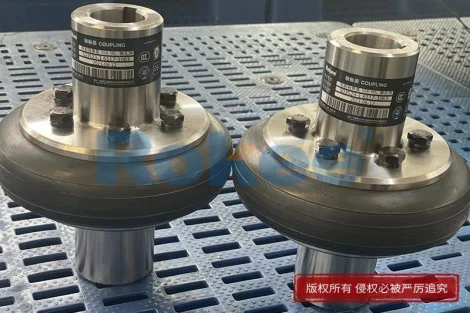
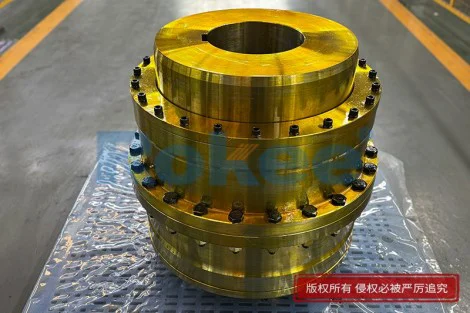
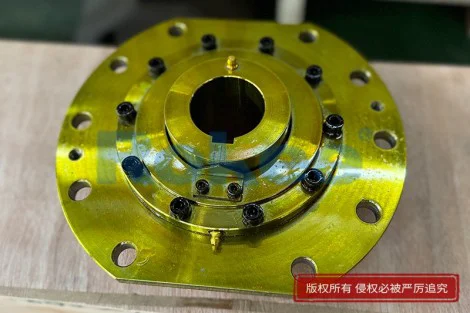
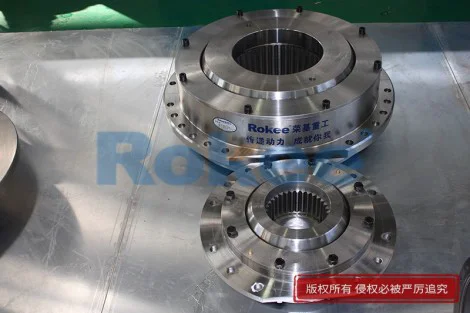
As a key power transmission component, the teeth coupling needs to meet the specific working requirements of the PUR sandwich panel production line to achieve perfect adaptation. The teeth coupling is a movable rigid coupling, whose core structure consists of internal gear rings with the same number of teeth and flange half couplings with external teeth. According to the different shapes of the external teeth, it is mainly divided into straight teeth and drum teeth. The drum-shaped gear coupling has a more superior displacement compensation capacity due to its special spherical tooth profile design. The basic performance requirements of the teeth coupling in the PUR sandwich panel production line mainly include the following aspects: first, it has sufficient torque transmission capacity to meet the power demand of each functional module of the production line, ensuring that the torque can be efficiently transmitted without obvious power loss. The torque transmission capacity of the teeth coupling is related to factors such as its material, tooth profile design, and processing accuracy, and it needs to be matched according to the actual power demand of the production line. Second, it has good displacement compensation capacity. In the actual operation of the production line, due to factors such as installation errors, thermal expansion of equipment during operation, and load fluctuations, there will inevitably be relative displacements between the two connected shafts, mainly including angular displacement, radial displacement, and axial displacement. The teeth coupling needs to compensate for these displacements within a certain range to avoid jamming, vibration, or component damage caused by displacement. Generally speaking, the angular displacement compensation capacity of the teeth coupling can reach 0.5° to 6°, the radial displacement compensation capacity can reach several millimeters, and the axial displacement compensation capacity can reach dozens of millimeters, which can effectively adapt to the working environment with shaft misalignment. Third, it has high transmission efficiency. The meshing transmission between internal and external gears has a small friction coefficient, and the power loss during operation is small. The transmission efficiency can usually reach more than 99%, which can save energy consumption of the production line and reduce heat generation during operation, which is conducive to extending the service life of the equipment. Fourth, it has good wear resistance and stability. The teeth coupling needs to operate continuously for a long time in the production line, and the tooth surface is easily worn due to relative sliding and friction. Therefore, it is necessary to have good wear resistance to ensure a long service life and avoid frequent replacement of components, which affects production efficiency. Fifth, it has good compatibility with the control system of the production line, which can realize coordinated operation with other equipment and facilitate real-time monitoring and adjustment of the operation status.
In view of the working characteristics of the PUR sandwich panel production line and the performance requirements of the teeth coupling, the perfect adaptation scheme needs to be constructed from multiple links such as model selection, installation, debugging, daily maintenance, and fault handling, so as to ensure that the teeth coupling can fully play its role in the production line and realize the coordinated and efficient operation of the entire production system.
The model selection of the teeth coupling is the first link of adaptation, and it is also the foundation to ensure the adaptation effect. The model selection of the teeth coupling in the PUR sandwich panel production line cannot be blind. It is necessary to comprehensively consider the power parameters, operation conditions, and installation space of the production line, and select the appropriate model and specification according to the actual needs. First of all, it is necessary to determine the torque transmission demand of the production line. According to the power of the motor in each functional module of the production line, the speed of the equipment, and the transmission ratio, the required torque range is calculated, and the teeth coupling with corresponding torque transmission capacity is selected. It should be noted that the selected coupling's torque bearing capacity should be slightly higher than the actual required torque to reserve a certain safety margin, so as to cope with the impact of load fluctuations on the coupling and avoid coupling damage caused by overload. Secondly, it is necessary to consider the displacement compensation demand of the production line. According to the installation accuracy of the equipment, the thermal expansion coefficient of the components, and the possible displacement during operation, the type of teeth coupling is selected. For the parts of the production line where the shaft misalignment is likely to occur, such as the connection between the foaming machine and the conveyor, the drum-shaped teeth coupling with strong displacement compensation capacity should be selected, which can better compensate for angular displacement, radial displacement, and axial displacement, ensuring stable power transmission. For the parts with high installation accuracy and small displacement, the straight-tooth teeth coupling can be selected, which has the advantages of compact structure and low moment of inertia. Thirdly, it is necessary to consider the installation space of the coupling. The PUR sandwich panel production line has many functional modules, and the installation space between the equipment is relatively limited. Therefore, when selecting the teeth coupling, it is necessary to consider its structural size to ensure that it can be smoothly installed in the reserved space without affecting the operation of other equipment. In addition, the material of the teeth coupling should also be considered. The production environment of the PUR sandwich panel production line may involve a certain temperature range and slight corrosive gas (such as the gas generated during foaming). Therefore, the coupling material should have good corrosion resistance and high temperature resistance. Common materials include alloy steel, stainless steel, etc. Alloy steel has the advantages of high strength, good wear resistance, and strong torque transmission capacity, which is suitable for most parts of the production line. Stainless steel has better corrosion resistance, which is suitable for parts close to the foaming system.
After completing the model selection of the teeth coupling, the correct installation and debugging are the key links to ensure the adaptation effect. The installation quality of the teeth coupling directly affects its transmission efficiency, displacement compensation capacity, and service life. In the installation process, the following points need to be paid attention to: first, the installation accuracy of the coupling should be strictly controlled. Before installation, the coaxiality of the two connected shafts should be checked and adjusted. The radial misalignment and angular misalignment should be controlled within the allowable range of the coupling. If the coaxiality is not up to standard, it will lead to uneven force on the tooth surface of the coupling during operation, increase wear and vibration, and even damage the coupling and the connected equipment. In the installation process, dial indicators or laser alignment tools can be used to calibrate the two shafts to ensure that the radial misalignment is not more than 0.1mm and the angular misalignment is not more than 0.1mm/m. Second, the installation process should be standardized. When installing the coupling, the half-couplings should be fixed on the shafts of the driving equipment and the driven equipment respectively, and the fixing should be firm to avoid loosening during operation. At the same time, attention should be paid to the meshing state of the internal and external teeth of the coupling. The meshing gap should be within the standard range. Too large a gap will lead to unstable transmission and increased noise, while too small a gap will lead to difficult rotation and increased friction. Third, the installation of the sealing and lubrication system should be done well. The teeth coupling needs to be lubricated during operation to reduce the friction between the tooth surfaces, reduce wear, and extend the service life. In the installation process, the lubricating oil (grease) that meets the requirements should be injected according to the specifications of the coupling, and the sealing performance of the coupling should be checked to prevent the leakage of lubricating oil and the entry of dust and impurities, which will affect the operation of the coupling. Modern high-performance teeth couplings often use forced thin oil lubrication systems or segmented grease lubrication structures, which can be selected according to the actual operation needs of the production line.
After the installation of the teeth coupling is completed, it is necessary to carry out systematic debugging to ensure that the coupling can adapt to the operation of the production line. The debugging work mainly includes the following aspects: first, no-load test run. Before the production line is officially put into operation, the no-load test run of the coupling should be carried out. The motor is started to drive the coupling to rotate, and the operation status of the coupling is observed, including whether there is abnormal noise, vibration, and leakage of lubricating oil. At the same time, the rotation speed of the coupling and the transmission efficiency are detected to ensure that they meet the design requirements. Second, load test run. After the no-load test run is qualified, the load test run is carried out. The production line is started to run under the actual production load, and the operation status of the coupling under load is observed. The torque transmission capacity, displacement compensation capacity, and temperature rise of the coupling are detected. If any abnormal situation is found, it should be stopped in time for inspection and adjustment. Third, parameter adjustment. According to the test run results, the parameters of the coupling and the production line are adjusted. For example, the meshing gap of the coupling is adjusted, the lubricating oil dosage is optimized, and the operation speed of the equipment is adjusted to ensure that the coupling and the production line are in the best coordination state. During the debugging process, it is necessary to record the relevant data, including the operation parameters of the coupling, the test results, and the adjustment measures, so as to provide a basis for future maintenance and optimization.
Daily maintenance is an important guarantee to maintain the good adaptation state of the teeth coupling and the PUR sandwich panel production line, and it is also an effective measure to extend the service life of the coupling and reduce the failure rate. The daily maintenance work should be carried out in accordance with the established maintenance system, and the following points should be focused on: first, regular inspection. Regularly check the operation status of the teeth coupling, including the meshing state of the tooth surface, the tightness of the fixing bolts, the sealing performance, and the level of lubricating oil. The inspection frequency can be determined according to the operation time of the production line. Generally, it is inspected once a week under normal operation, and the inspection frequency should be increased during the peak production period. During the inspection, if tooth surface wear, bolt loosening, lubricating oil leakage, or other problems are found, they should be handled in time. Second, regular lubrication. The lubricating oil of the teeth coupling will gradually age and deteriorate after long-term use, which will reduce the lubrication effect and increase the wear of the tooth surface. Therefore, it is necessary to regularly replace the lubricating oil. The replacement cycle should be determined according to the operation conditions of the coupling and the type of lubricating oil. Generally, the lubricating oil should be replaced every 3 to 6 months. When replacing the lubricating oil, the old lubricating oil should be completely drained, the internal parts of the coupling should be cleaned, and then new lubricating oil that meets the requirements should be injected. Third, regular cleaning. The surface of the teeth coupling is easily contaminated by dust, impurities, and foaming materials during operation. If it is not cleaned in time, it will affect the heat dissipation of the coupling and the meshing of the tooth surface, and even cause corrosion of the coupling components. Therefore, it is necessary to regularly clean the surface of the coupling, remove dust and impurities, and keep the coupling clean and tidy. Fourth, regular maintenance of vulnerable parts. The tooth surface, sealing ring, and other parts of the teeth coupling are vulnerable parts. During daily maintenance, it is necessary to check the wear of these parts regularly. If the wear is serious, they should be replaced in time to avoid affecting the operation of the coupling and the production line.
In the long-term operation process of the PUR sandwich panel production line, the teeth coupling may have various faults due to factors such as wear, aging, improper operation, and installation deviation. Timely and effective fault handling is an important part of the adaptation scheme, which can minimize the impact of faults on production and ensure the continuous and stable operation of the production line. Common faults of the teeth coupling include abnormal vibration, abnormal noise, tooth surface wear, lubrication failure, and bolt loosening. For each type of fault, targeted handling measures should be taken.
Abnormal vibration is a common fault of the teeth coupling. Its main manifestations are significant vibration during the operation of the coupling, and the vibration intensity increases with the increase of speed, which may be accompanied by resonance of the equipment foundation. The main causes of this fault include insufficient alignment accuracy of the two shafts, wear of the coupling components, aging of the elastic elements (if any), and loosening of the bolts. The handling measures are as follows: first, re-align the two shafts, use dial indicators or laser alignment tools to calibrate the coaxiality of the shafts, and ensure that the radial misalignment and angular misalignment are within the allowable range. Second, inspect the worn components. If the tooth surface is severely worn or the coupling body is damaged, it should be replaced in time. Third, tighten the bolts, torque the bolts to the specified value, and replace them with lock nuts or add lock washers if necessary to prevent loosening. Fourth, adjust the load to avoid frequent overload starts of the equipment, reduce impact vibration, and reduce the vibration of the coupling.
Abnormal noise is another common fault of the teeth coupling, which is often accompanied by friction or impact sounds, and the noise intensifies during startup or load changes. The main causes include inadequate lubrication of the coupling, excessive meshing gap, poor fit of the flange surface, and loose fit between the half-coupling and the shaft. The handling measures are as follows: first, strengthen lubrication, inject sufficient lubricating oil (grease) that meets the requirements, and ensure that the tooth surface is fully lubricated to reduce dry friction. Second, adjust the meshing gap of the coupling. If the gap is too large due to wear, the worn parts should be replaced or the coupling should be adjusted to restore the normal meshing gap. Third, repair or replace the positioning components. If the flange spigot is worn, it should be ground and repaired; if the wear is severe, the half-coupling should be replaced. Fourth, fix the shaft connection, refit the key connection if necessary, and tighten the set screws to ensure that the half-coupling and the shaft are closely fitted.
Tooth surface wear is a common problem in the long-term operation of the teeth coupling, which is mainly caused by insufficient lubrication, high operating speed, abrasive contaminants, and other factors. The wear of the tooth surface will lead to decreased transmission efficiency, increased backlash, and even loss of torque transmission capacity. The handling measures are as follows: first, check the lubrication system, ensure that the lubricating oil is sufficient and of qualified quality, and replace the lubricating oil regularly. Second, clean the coupling, remove the dust and impurities on the tooth surface, and avoid abrasive wear. Third, if the tooth surface wear is slight, the tooth surface can be polished and repaired to restore its normal meshing performance; if the wear is severe, the coupling should be replaced in time to avoid further damage to the equipment.
Lubrication failure is also a common fault of the teeth coupling, which is mainly manifested by insufficient lubrication, excessive lubrication, or deterioration of lubricating oil. Inadequate lubrication will lead to increased friction, overheating, and accelerated wear of the coupling; excessive lubrication will cause oil leakage, contamination, and reduced transmission efficiency; deterioration of lubricating oil will reduce the lubrication effect and cause wear of the tooth surface. The handling measures are as follows: first, check the lubricating oil level and quality regularly, add lubricating oil in time if it is insufficient, and replace the lubricating oil if it deteriorates. Second, check the sealing system of the coupling, repair or replace the sealing ring if there is oil leakage, and ensure the sealing performance. Third, follow the relevant guidelines for lubrication, select the appropriate type of lubricating oil, and control the dosage of lubricating oil to avoid excessive or insufficient lubrication.
In addition to the above common faults, the teeth coupling may also have faults such as bolt breakage and coupling body cracking. For these faults, it is necessary to stop the machine in time for inspection, find out the cause of the fault, and take corresponding handling measures. At the same time, it is necessary to analyze the cause of the fault, summarize the experience and lessons, and optimize the daily maintenance and operation management measures to avoid the recurrence of similar faults.
In order to further improve the adaptation effect between the teeth coupling and the PUR sandwich panel production line, on the basis of model selection, installation, debugging, daily maintenance, and fault handling, it is also necessary to carry out continuous optimization and improvement. With the continuous development of industrial technology, the performance of the teeth coupling and the automation level of the PUR sandwich panel production line are constantly improving. Therefore, the adaptation scheme should also be adjusted and optimized according to the actual operation situation and technical development. For example, new types of teeth couplings with better performance can be introduced, such as the optimized crowned gear coupling, which can reduce tooth root stress by 50% and improve fatigue life, making it more suitable for the working environment of the PUR sandwich panel production line. At the same time, the monitoring system of the production line can be improved, and sensors can be installed on the teeth coupling to monitor its operation parameters in real time, such as temperature, vibration, and torque, so as to find potential faults in time and carry out predictive maintenance, which can effectively reduce the failure rate and improve the reliability of the equipment.
In addition, it is necessary to strengthen the training of operators and maintenance personnel. The operators are responsible for the daily operation of the production line, and their operation level directly affects the operation status of the teeth coupling and the production line. Therefore, it is necessary to train the operators to make them familiar with the working principle and operation specifications of the teeth coupling, master the correct operation methods, and avoid equipment damage caused by improper operation. The maintenance personnel are responsible for the daily maintenance and fault handling of the coupling. It is necessary to train them to make them master the maintenance skills and fault diagnosis methods of the teeth coupling, so as to carry out maintenance and fault handling work efficiently and accurately. Through regular training and technical exchange, the professional quality of the staff can be continuously improved, providing human support for the perfect adaptation of the teeth coupling and the PUR sandwich panel production line.
In conclusion, the perfect adaptation of the teeth coupling and the PUR sandwich panel production line is a systematic project that involves multiple links such as model selection, installation, debugging, daily maintenance, fault handling, and continuous optimization. Only by formulating a scientific and reasonable adaptation scheme, strictly implementing each link of the scheme, and continuously optimizing and improving according to the actual operation situation, can we ensure that the teeth coupling can fully play its power transmission role, realize the coordinated and efficient operation of the entire production line, reduce the equipment failure rate, extend the service life of the equipment, and improve the production efficiency and product quality of the PUR sandwich panel. With the continuous progress of industrial technology, the adaptation scheme will also be continuously improved and upgraded, providing a more solid guarantee for the development of the PUR sandwich panel manufacturing industry.