Heavy Duty Barrel Coupling

In the complex and demanding ecosystem of industrial mechanical transmission systems, the stability, durability, and load-bearing capacity of connecting components directly determine the overall operational efficiency and service life of large-scale equipment. Heavy duty barrel coupling stands out among numerous mechanical transmission accessories as a reliable core component tailored for high-torque, heavy-load, and continuous-cycle working conditions. Unlike conventional coupling structures that adopt rigid locking connection or simple elastic deformation transmission modes, this type of coupling integrates optimized curved contact structure and floating compensation design, perfectly balancing rigid torque transmission performance and flexible misalignment adaptability, making it widely applicable in heavy industrial scenarios that require long-term stable operation and strong impact resistance. As industrial equipment continues to develop toward high power, large load, and uninterrupted efficient operation, the technical advantages and application value of heavy duty barrel coupling have become increasingly prominent, gradually becoming a preferred connecting part for mainstream heavy-duty mechanical transmission systems.
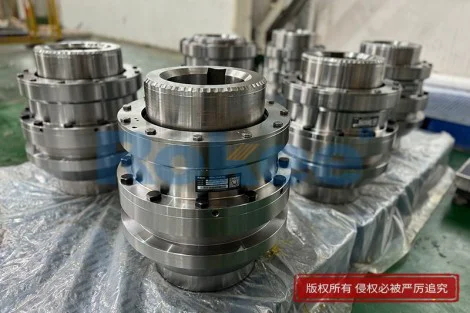
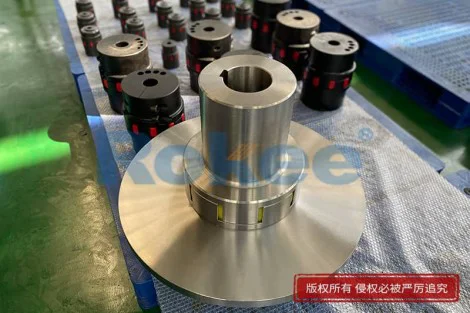
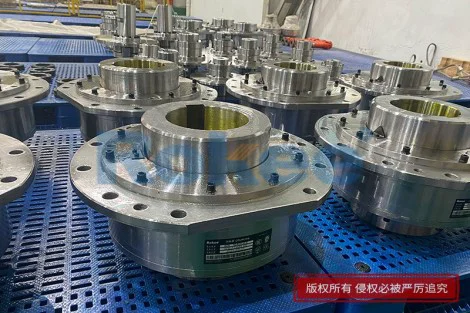
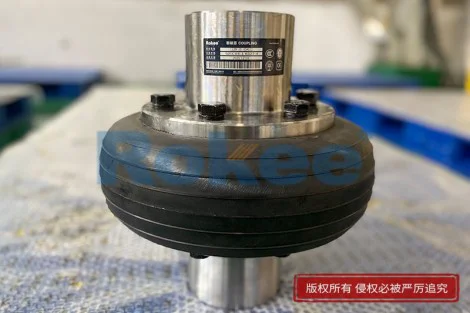
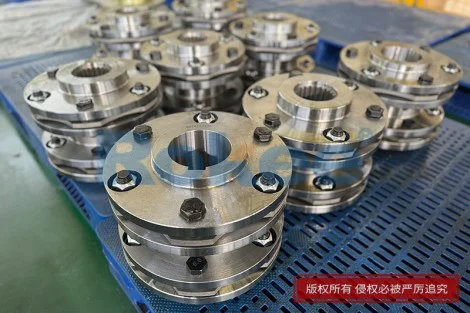
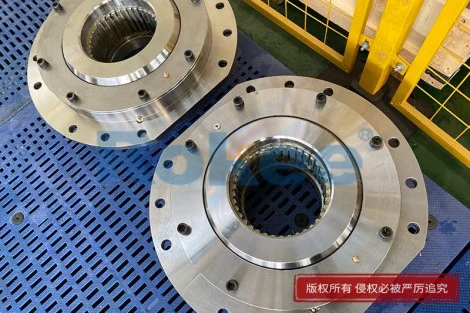
The core superiority of heavy duty barrel coupling originates from its unique and sophisticated structural design, which abandons the line contact or point contact stress mode of traditional straight-pin couplings and realizes full surface contact transmission through specially crafted barrel-shaped rolling components. The overall structure consists of two precision-machined hubs, a outer sleeve, and a set of symmetrically arranged barrel rollers with optimized crowning radii. All components undergo fine processing and surface treatment to ensure precise fitting and uniform force bearing during operation. The barrel rollers serve as the key floating transmission medium between the hub and the outer sleeve, enabling torque to be evenly transmitted from the driving end to the driven end without rigid force concentration. The reserved reasonable gap between the inner cavity of the outer sleeve and the hub matching part, combined with the convex arc design of the barrel rollers, endows the coupling with excellent multi-dimensional misalignment compensation capability, which can effectively adapt to slight angular deviation, axial displacement, and radial offset between connected shafts generated by equipment installation errors, mechanical vibration, or thermal expansion and contraction during long-term operation.
In terms of load-bearing performance, heavy duty barrel coupling exhibits outstanding heavy-load resistance and instantaneous impact tolerance, which is the core characteristic that distinguishes it from ordinary couplings. Benefiting from the surface contact transmission mechanism, the contact area between transmission components is maximized, and the stress generated during torque transmission is evenly distributed on each barrel roller and contact surface, completely avoiding local stress concentration and premature fatigue damage of individual parts that often occur in traditional coupling products. This uniform force-bearing mode allows the coupling to stably bear and transmit large torque for a long time, and can effectively buffer and absorb instantaneous impact loads generated by equipment startup, shutdown, load mutation, and external mechanical shock. For heavy industrial equipment that frequently faces variable load working conditions, this impact resistance can greatly reduce the instantaneous mechanical shear force on the transmission shaft system, effectively protecting key equipment components such as transmission shafts, bearings, and gearboxes, and avoiding sudden equipment failure caused by local overload.
The self-aligning and self-compensation functions of heavy duty barrel coupling bring extremely high operational stability to mechanical transmission systems. In the actual industrial production environment, it is almost impossible to achieve absolute perfect alignment of the driving shaft and driven shaft during equipment installation. Minor axis misalignment is ubiquitous, and such misalignment will gradually expand with the vibration, wear, and thermal deformation of equipment during long-term operation. Ordinary rigid couplings will generate additional alternating mechanical stress on the shaft system under misalignment conditions, leading to accelerated wear of bearings, shaft deformation, loose connection gaps, and even abnormal vibration and noise of the entire equipment. In contrast, the floating structural design of heavy duty barrel coupling can automatically adapt to various minor misalignments in the working process, eliminate additional residual stress in the transmission system, keep the shaft system running in a balanced and stable state at all times, and significantly reduce the amplitude and frequency of equipment vibration. This stable adaptive performance not only optimizes the operating state of equipment but also lays a solid foundation for long-term continuous and efficient operation of mechanical systems.
Material selection and processing technology further endow heavy duty barrel coupling with excellent durability and environmental adaptability. All core load-bearing components are made of high-strength wear-resistant alloy materials with good toughness, hardness, and fatigue resistance. Through integral forging and precision heat treatment processes, the structural rigidity and surface wear resistance of the components are significantly improved, enabling the coupling to maintain stable mechanical performance under long-term high-load operation, high-frequency friction, and complex environmental conditions. The surface of key components is treated with anti-corrosion and anti-oxidation processes, which can effectively resist the erosion of moisture, dust, and mild corrosive substances in industrial working environments, avoid component rust, oxidation and performance degradation, and extend the overall service life of the coupling. Whether in high-temperature operating environments generated by long-term equipment operation or dusty and humid open industrial sites, heavy duty barrel coupling can maintain stable transmission performance without frequent failure and performance attenuation.
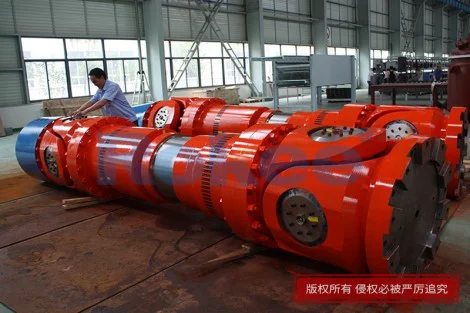
In terms of practical industrial application, heavy duty barrel coupling covers a wide range of heavy-load mechanical scenarios, showing irreplaceable application advantages. It is widely used in winding transmission systems of large hoisting equipment, perfectly adapting to the high-torque transmission and frequent start-stop working characteristics of hoisting machinery, ensuring stable power output during equipment lifting and lowering, and avoiding load jitter and power transmission interruption. In heavy conveyor equipment, the coupling can cope with the continuous variable load impact generated by material transportation, maintain the synchronization and stability of multi-group transmission shafts, and improve the overall operating efficiency of the conveyor line. In addition, it also plays a key role in heavy industrial equipment such as large mixing machinery, mining transmission equipment, and port handling machinery. These equipment all have the characteristics of heavy load, long continuous operation time, and complex working conditions, which put forward extremely high requirements on the load-bearing capacity, stability and fatigue resistance of connecting components, and the comprehensive performance of heavy duty barrel coupling can fully meet these stringent application requirements.
The advantages of heavy duty barrel coupling are also reflected in its convenient installation, maintenance and high operational economy. The overall structure is compact and reasonable with a modular assembly design, which simplifies the installation and disassembly process. Workers can complete the positioning, assembly and debugging work efficiently without complex professional tools and tedious operation steps, greatly shortening the equipment assembly and maintenance cycle. In the daily operation process, the coupling has extremely low wear rate and stable performance, requiring almost no frequent maintenance and debugging. Compared with other types of heavy-duty couplings that are prone to wear, deformation and failure, it effectively reduces the frequency of equipment shutdown maintenance, improves the overall operation rate of industrial equipment, and saves a lot of time cost and labor maintenance cost for industrial production. At the same time, its long service life reduces the frequency of component replacement, further optimizing the long-term operation cost of mechanical transmission systems.
In the actual operation process, the excellent torsional rigidity of heavy duty barrel coupling ensures high-precision power transmission without torsional deformation. For industrial mechanical equipment that requires high synchronization and high transmission accuracy, slight torsional deformation of transmission components will lead to deviation of equipment operation accuracy and affect product processing quality and production efficiency. The structural characteristics of the barrel coupling enable it to maintain accurate torque transmission angle under high-load conditions, avoid torsional displacement and power loss, ensure the consistency and accuracy of power output, and meet the high-precision operation requirements of modern heavy industrial equipment. Moreover, the flexible compensation performance does not affect the overall torsional rigidity of the coupling, realizing the perfect combination of rigid transmission accuracy and flexible misalignment adaptability, which is a key advantage that many traditional coupling products cannot achieve.
With the continuous upgrading of modern industrial manufacturing technology and the continuous improvement of equipment operation standards, the market demand for high-performance heavy-duty transmission components is constantly increasing, and the development potential of heavy duty barrel coupling is becoming more and more prominent. Modern industrial equipment is developing in the direction of larger load, higher power, longer continuous operation cycle and higher operational stability, which puts forward higher requirements on the comprehensive performance of couplings. Through continuous structural optimization, material upgrading and processing technology improvement, heavy duty barrel coupling is constantly breaking through the performance limits of traditional products, with stronger load-bearing capacity, better misalignment compensation effect, higher wear resistance and longer service life. It can better adapt to the increasingly complex and harsh industrial working conditions, and provide more reliable basic component support for the upgrading and iteration of heavy industrial machinery.
In conclusion, heavy duty barrel coupling has become an indispensable core component in the field of heavy-duty mechanical transmission by virtue of its unique surface contact transmission structure, excellent heavy-load resistance, reliable multi-dimensional misalignment compensation capability, stable long-term operation performance and good economic applicability. It not only solves many practical pain points in the operation of traditional coupling products, such as easy stress concentration, poor impact resistance, short service life and cumbersome maintenance, but also effectively improves the overall operational stability, efficiency and safety of heavy industrial equipment. In the future industrial development process, with the continuous progress of industrial technology and the continuous expansion of heavy-load application scenarios, heavy duty barrel coupling will continue to rely on its superior comprehensive performance to play a greater value in more industrial fields, and become an important guarantee for the stable and efficient operation of modern heavy-duty mechanical transmission systems.