Curved Tooth Coupling Is Preferred Transmission Component For PUR Sandwich Panel Production Line
In the field of modern industrial manufacturing, the PUR sandwich panel production line plays an irreplaceable role in the construction, refrigeration, and logistics industries due to its ability to produce high-quality, energy-efficient, and durable composite panels. These production lines integrate multiple processes, including raw material feeding, forming, foaming, curing, and cutting, requiring each component to operate with high precision, stability, and efficiency. Among the numerous mechanical components that constitute the production line, the transmission component is the core link that connects the power source to each functional unit, directly determining the overall operational performance, product quality, and service life of the production line.
To understand why curved tooth couplings are widely favored in PUR sandwich panel production lines, it is first necessary to clarify the working characteristics and transmission requirements of these production lines. PUR sandwich panels are composite panels with a polyurethane rigid foam core sandwiched between surface materials (usually metal or non-metal), which require strict control of processing parameters throughout the production process to ensure the uniformity of the foam core, the firmness of the bonding between the core and the surface materials, and the accuracy of the panel size. The production line operates continuously for long periods, with each functional unit, such as the unwinding system, forming machine, foaming system, and cutting saw, needing to maintain synchronous operation. This places high demands on the transmission component: it must be able to transmit torque stably and efficiently, accommodate the inevitable misalignment between shafts caused by installation errors, thermal expansion, or mechanical vibration, and have sufficient durability to withstand long-term heavy-load operation without frequent maintenance.
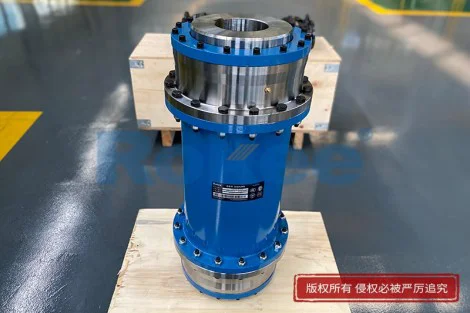
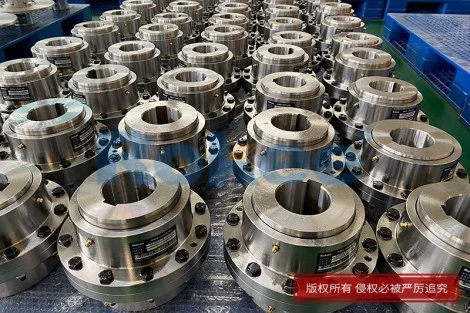
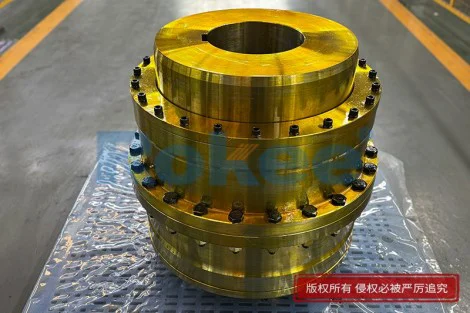
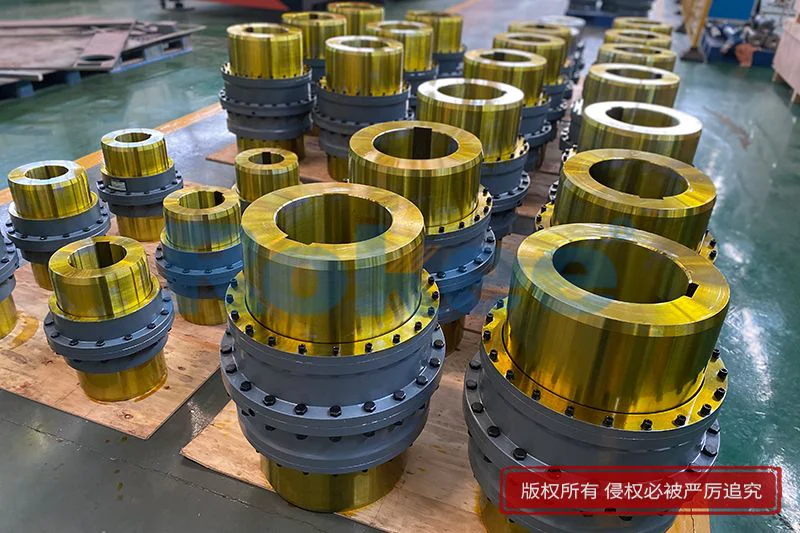
Curved tooth couplings, also known as drum gear couplings, are a type of flexible mechanical coupling that uses curved tooth profiles on mating gear hubs to transmit torque between two rotating shafts. Unlike straight-tooth gear couplings, which feature linear tooth engagement, the curved tooth design of these couplings brings a series of performance advantages that are highly compatible with the needs of PUR sandwich panel production lines. The core structure of a curved tooth coupling typically includes two gear hubs, an outer sleeve (or inner gear ring), and a lubrication system. Each gear hub is attached to one of the shafts being connected, and the curved teeth on the gear hubs mesh with the teeth on the outer sleeve (or inner gear ring) to transmit power. The outer teeth of the coupling are usually made into a spherical shape, with the center of the sphere on the axis of the gear, which is the key design that distinguishes it from other types of couplings.
One of the most prominent advantages of curved tooth couplings is their excellent ability to compensate for shaft misalignment. In the operation of a PUR sandwich panel production line, due to factors such as the large length of the production line, the weight of the equipment, thermal expansion during operation, and slight foundation settlement, it is difficult to ensure absolute coaxiality between the shafts of different functional units. If a transmission component with poor misalignment compensation ability is used, such as a rigid coupling, it will lead to increased stress on the shafts and bearings, generate severe vibration and noise, accelerate component wear, and even cause damage to the equipment in severe cases. Curved tooth couplings, however, can effectively compensate for angular, radial, and axial displacements between shafts through their unique curved tooth design. The spherical curved teeth allow for smooth sliding and rolling between the tooth surfaces when there is relative displacement between the two shafts, avoiding edge contact and stress concentration that often occur in straight-tooth couplings. The allowable angular displacement of curved tooth couplings can reach 1°30′, which is 50% higher than that of straight-tooth couplings, ensuring that the transmission system remains stable even when there is a certain degree of misalignment between shafts.
Another key advantage of curved tooth couplings is their high torque transmission capacity and uniform load distribution. The production process of PUR sandwich panels involves multiple heavy-load operations, such as the unwinding of heavy metal coils, the extrusion forming of surface materials, and the high-pressure foaming of polyurethane raw materials. These operations require the transmission component to transmit large torque stably without power loss. The curved tooth design of the coupling increases the contact area between the teeth, changing the line contact of straight-tooth couplings into surface contact, which allows more teeth to participate in torque transmission at the same time. This not only improves the torque transmission capacity but also makes the load distribution on the tooth surface more uniform, reducing the contact stress on a single tooth and effectively preventing tooth wear, pitting, or breakage caused by uneven load. In addition, the tooth clearance of curved tooth couplings is slightly larger than that of ordinary couplings, which not only facilitates the compensation of shaft displacement but also helps to reduce the impact of torque fluctuations, ensuring smooth power transmission even under heavy-load conditions.
Stability and low noise during operation are also important reasons why curved tooth couplings are suitable for PUR sandwich panel production lines. The production of PUR sandwich panels requires a relatively stable working environment, as excessive vibration and noise can affect the foaming quality of the polyurethane core, lead to uneven bonding between the core and the surface materials, and even affect the accuracy of the cutting process. Curved tooth couplings achieve smooth engagement between teeth through their curved tooth profile design, reducing the impact and friction between teeth during torque transmission. Compared with other types of couplings, such as jaw couplings, curved tooth couplings operate with less noise and vibration, creating a stable working environment for the production line. The smooth power transmission also helps to improve the synchronization of each functional unit in the production line, ensuring that the processing parameters of each link are kept consistent, thereby improving the overall quality of the PUR sandwich panels.
Durability and low maintenance requirements are also important factors that make curved tooth couplings the preferred choice for PUR sandwich panel production lines. These production lines usually operate continuously for 24 hours to meet market demand, so the transmission components must have sufficient service life and be able to withstand long-term heavy-load operation. Curved tooth couplings are usually made of high-strength alloy steel, which has excellent wear resistance, corrosion resistance, and fatigue resistance. After special heat treatment processes, such as carburizing and quenching, the tooth surface hardness of the coupling is significantly improved, further enhancing its wear resistance and service life. In addition, the lubrication system of curved tooth couplings is relatively simple and reliable. By using appropriate lubricating oil or grease, the friction between the tooth surfaces can be effectively reduced, the generation of heat during operation can be reduced, and the service life of the coupling can be extended. Compared with other transmission components that require frequent maintenance and replacement, curved tooth couplings have lower maintenance costs and longer service intervals, which can reduce the downtime of the production line and improve production efficiency.
The adaptability of curved tooth couplings to the working environment of PUR sandwich panel production lines is also worthy of attention. The production process of PUR sandwich panels may involve the use of chemical raw materials, such as polyurethane monomers and foaming agents, and the working environment may have certain humidity and temperature changes. Curved tooth couplings, with their sealed structure design, can effectively prevent dust, moisture, and chemical substances from entering the internal gear meshing area, avoiding corrosion and wear of the internal components. This ensures that the coupling can maintain stable performance even in harsh working environments, reducing the impact of environmental factors on the transmission system. In addition, curved tooth couplings have a compact structure and small moment of inertia, which can be installed in limited space, making them suitable for the layout of various functional units in the PUR sandwich panel production line.
To further illustrate the application value of curved tooth couplings in PUR sandwich panel production lines, it is necessary to compare them with other common transmission components. For example, rigid couplings have a simple structure and low cost, but they cannot compensate for shaft misalignment, which is easy to cause equipment vibration and wear, and are not suitable for long-term operation of the production line. Jaw couplings have a certain degree of misalignment compensation ability and vibration absorption performance, but their torque transmission capacity is limited, and the elastic body is prone to aging and damage, requiring frequent replacement, which increases maintenance costs and production downtime. Straight-tooth gear couplings have a higher torque transmission capacity than jaw couplings, but their misalignment compensation ability is poor, and edge contact is easy to occur between teeth, leading to rapid wear and short service life. Compared with these couplings, curved tooth couplings integrate the advantages of high torque transmission capacity, excellent misalignment compensation ability, stable operation, durability, and low maintenance requirements, making them more in line with the transmission needs of PUR sandwich panel production lines.
In the actual application process, the selection and installation of curved tooth couplings in PUR sandwich panel production lines also need to pay attention to some key points to ensure their optimal performance. First, the type and specification of the coupling should be selected according to the torque, speed, and shaft diameter of the transmission system. Different types of curved tooth couplings, such as single curved gear couplings, double curved gear couplings, and spiral curved gear couplings, have different performance characteristics and application scenarios. For example, double curved gear couplings have greater flexibility and torque transmission capacity, suitable for occasions with high torque and large misalignment; spiral curved gear couplings have higher precision and can handle high loads and misalignment levels well, suitable for precision processing links in the production line. Second, the installation accuracy of the coupling should be guaranteed as much as possible. Although curved tooth couplings have strong misalignment compensation ability, good initial alignment can reduce the stress on the coupling and extend its service life. During installation, the coaxiality of the two shafts should be adjusted within a reasonable range, and the connection between the coupling and the shaft should be firm to avoid loosening during operation. Third, regular lubrication and maintenance of the coupling should be carried out. According to the working conditions of the production line, the lubricating oil or grease should be replaced regularly to ensure that the gear meshing area is fully lubricated, reducing friction and wear. At the same time, the coupling should be inspected regularly for signs of wear, corrosion, or damage, and timely maintenance or replacement should be carried out to avoid equipment failure caused by coupling damage.
With the continuous development of the PUR sandwich panel industry, the requirements for production line efficiency, product quality, and operational stability are constantly improving. As a key transmission component, the performance of the coupling directly affects the overall level of the production line. Curved tooth couplings, with their unique structural advantages and excellent performance, can effectively meet the transmission needs of PUR sandwich panel production lines, improve production efficiency, reduce maintenance costs, and ensure product quality. In practical applications, more and more PUR sandwich panel manufacturers have begun to adopt curved tooth couplings as the core transmission component of their production lines, which has been proven to be an effective way to improve the competitiveness of the production line.
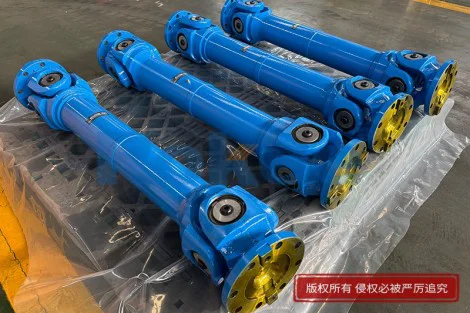
In addition to the above advantages, curved tooth couplings also have good interchangeability and scalability. The standardization of their components makes it easy to replace and maintain, and they can be customized according to the specific needs of the production line to adapt to different transmission scenarios. For example, for production lines that need to transmit torque over long distances, curved tooth couplings with intermediate shafts can be selected; for production lines that require braking functions, curved tooth couplings with brake discs or brake wheels can be configured. This flexibility makes curved tooth couplings more widely applicable in PUR sandwich panel production lines, whether it is a small-scale production line or a large-scale fully automated production line, curved tooth couplings can play an excellent transmission role.
It is worth noting that the performance of curved tooth couplings is also closely related to their manufacturing process and material selection. High-precision manufacturing processes can ensure the accuracy of the curved tooth profile, improve the meshing quality between teeth, and reduce vibration and noise during operation. High-quality materials can enhance the wear resistance, corrosion resistance, and fatigue resistance of the coupling, extending its service life. Therefore, when selecting curved tooth couplings, manufacturers should pay attention to the manufacturing level and material quality of the products to ensure that they can meet the long-term stable operation needs of the production line.
In conclusion, the curved tooth coupling has become the preferred transmission component for PUR sandwich panel production lines due to its excellent misalignment compensation ability, high torque transmission capacity, stable and low-noise operation, durability, and low maintenance requirements. Its application not only improves the operational stability and efficiency of the production line but also ensures the quality of PUR sandwich panels, reduces production costs, and brings greater economic benefits to manufacturers. With the continuous advancement of mechanical manufacturing technology, the design and performance of curved tooth couplings will be further optimized, and their application in PUR sandwich panel production lines will become more extensive and in-depth, contributing more to the development of the PUR sandwich panel industry.In the field of modern industrial manufacturing, the PUR sandwich panel production line plays an irreplaceable role in the construction, refrigeration, and logistics industries due to its ability to produce high-quality, energy-efficient, and durable composite panels. These production lines integrate multiple processes, including raw material feeding, forming, foaming, curing, and cutting, requiring each component to operate with high precision, stability, and efficiency. Among the numerous mechanical components that constitute the production line, the transmission component is the core link that connects the power source to each functional unit, directly determining the overall operational performance, product quality, and service life of the production line.
To understand why curved tooth couplings are widely favored in PUR sandwich panel production lines, it is first necessary to clarify the working characteristics and transmission requirements of these production lines. PUR sandwich panels are composite panels with a polyurethane rigid foam core sandwiched between surface materials (usually metal or non-metal), which require strict control of processing parameters throughout the production process to ensure the uniformity of the foam core, the firmness of the bonding between the core and the surface materials, and the accuracy of the panel size. The production line operates continuously for long periods, with each functional unit, such as the unwinding system, forming machine, foaming system, and cutting saw, needing to maintain synchronous operation. This places high demands on the transmission component: it must be able to transmit torque stably and efficiently, accommodate the inevitable misalignment between shafts caused by installation errors, thermal expansion, or mechanical vibration, and have sufficient durability to withstand long-term heavy-load operation without frequent maintenance.
Curved tooth couplings, also known as drum gear couplings, are a type of flexible mechanical coupling that uses curved tooth profiles on mating gear hubs to transmit torque between two rotating shafts. Unlike straight-tooth gear couplings, which feature linear tooth engagement, the curved tooth design of these couplings brings a series of performance advantages that are highly compatible with the needs of PUR sandwich panel production lines. The core structure of a curved tooth coupling typically includes two gear hubs, an outer sleeve (or inner gear ring), and a lubrication system. Each gear hub is attached to one of the shafts being connected, and the curved teeth on the gear hubs mesh with the teeth on the outer sleeve (or inner gear ring) to transmit power. The outer teeth of the coupling are usually made into a spherical shape, with the center of the sphere on the axis of the gear, which is the key design that distinguishes it from other types of couplings.
One of the most prominent advantages of curved tooth couplings is their excellent ability to compensate for shaft misalignment. In the operation of a PUR sandwich panel production line, due to factors such as the large length of the production line, the weight of the equipment, thermal expansion during operation, and slight foundation settlement, it is difficult to ensure absolute coaxiality between the shafts of different functional units. If a transmission component with poor misalignment compensation ability is used, such as a rigid coupling, it will lead to increased stress on the shafts and bearings, generate severe vibration and noise, accelerate component wear, and even cause damage to the equipment in severe cases. Curved tooth couplings, however, can effectively compensate for angular, radial, and axial displacements between shafts through their unique curved tooth design. The spherical curved teeth allow for smooth sliding and rolling between the tooth surfaces when there is relative displacement between the two shafts, avoiding edge contact and stress concentration that often occur in straight-tooth couplings. The allowable angular displacement of curved tooth couplings can reach 1°30′, which is 50% higher than that of straight-tooth couplings, ensuring that the transmission system remains stable even when there is a certain degree of misalignment between shafts.
Another key advantage of curved tooth couplings is their high torque transmission capacity and uniform load distribution. The production process of PUR sandwich panels involves multiple heavy-load operations, such as the unwinding of heavy metal coils, the extrusion forming of surface materials, and the high-pressure foaming of polyurethane raw materials. These operations require the transmission component to transmit large torque stably without power loss. The curved tooth design of the coupling increases the contact area between the teeth, changing the line contact of straight-tooth couplings into surface contact, which allows more teeth to participate in torque transmission at the same time. This not only improves the torque transmission capacity but also makes the load distribution on the tooth surface more uniform, reducing the contact stress on a single tooth and effectively preventing tooth wear, pitting, or breakage caused by uneven load. In addition, the tooth clearance of curved tooth couplings is slightly larger than that of ordinary couplings, which not only facilitates the compensation of shaft displacement but also helps to reduce the impact of torque fluctuations, ensuring smooth power transmission even under heavy-load conditions.
Stability and low noise during operation are also important reasons why curved tooth couplings are suitable for PUR sandwich panel production lines. The production of PUR sandwich panels requires a relatively stable working environment, as excessive vibration and noise can affect the foaming quality of the polyurethane core, lead to uneven bonding between the core and the surface materials, and even affect the accuracy of the cutting process. Curved tooth couplings achieve smooth engagement between teeth through their curved tooth profile design, reducing the impact and friction between teeth during torque transmission. Compared with other types of couplings, such as jaw couplings, curved tooth couplings operate with less noise and vibration, creating a stable working environment for the production line. The smooth power transmission also helps to improve the synchronization of each functional unit in the production line, ensuring that the processing parameters of each link are kept consistent, thereby improving the overall quality of the PUR sandwich panels.
Durability and low maintenance requirements are also important factors that make curved tooth couplings the preferred choice for PUR sandwich panel production lines. These production lines usually operate continuously for 24 hours to meet market demand, so the transmission components must have sufficient service life and be able to withstand long-term heavy-load operation. Curved tooth couplings are usually made of high-strength alloy steel, which has excellent wear resistance, corrosion resistance, and fatigue resistance. After special heat treatment processes, such as carburizing and quenching, the tooth surface hardness of the coupling is significantly improved, further enhancing its wear resistance and service life. In addition, the lubrication system of curved tooth couplings is relatively simple and reliable. By using appropriate lubricating oil or grease, the friction between the tooth surfaces can be effectively reduced, the generation of heat during operation can be reduced, and the service life of the coupling can be extended. Compared with other transmission components that require frequent maintenance and replacement, curved tooth couplings have lower maintenance costs and longer service intervals, which can reduce the downtime of the production line and improve production efficiency.
The adaptability of curved tooth couplings to the working environment of PUR sandwich panel production lines is also worthy of attention. The production process of PUR sandwich panels may involve the use of chemical raw materials, such as polyurethane monomers and foaming agents, and the working environment may have certain humidity and temperature changes. Curved tooth couplings, with their sealed structure design, can effectively prevent dust, moisture, and chemical substances from entering the internal gear meshing area, avoiding corrosion and wear of the internal components. This ensures that the coupling can maintain stable performance even in harsh working environments, reducing the impact of environmental factors on the transmission system. In addition, curved tooth couplings have a compact structure and small moment of inertia, which can be installed in limited space, making them suitable for the layout of various functional units in the PUR sandwich panel production line.
To further illustrate the application value of curved tooth couplings in PUR sandwich panel production lines, it is necessary to compare them with other common transmission components. For example, rigid couplings have a simple structure and low cost, but they cannot compensate for shaft misalignment, which is easy to cause equipment vibration and wear, and are not suitable for long-term operation of the production line. Jaw couplings have a certain degree of misalignment compensation ability and vibration absorption performance, but their torque transmission capacity is limited, and the elastic body is prone to aging and damage, requiring frequent replacement, which increases maintenance costs and production downtime. Straight-tooth gear couplings have a higher torque transmission capacity than jaw couplings, but their misalignment compensation ability is poor, and edge contact is easy to occur between teeth, leading to rapid wear and short service life. Compared with these couplings, curved tooth couplings integrate the advantages of high torque transmission capacity, excellent misalignment compensation ability, stable operation, durability, and low maintenance requirements, making them more in line with the transmission needs of PUR sandwich panel production lines.
In the actual application process, the selection and installation of curved tooth couplings in PUR sandwich panel production lines also need to pay attention to some key points to ensure their optimal performance. First, the type and specification of the coupling should be selected according to the torque, speed, and shaft diameter of the transmission system. Different types of curved tooth couplings, such as single curved gear couplings, double curved gear couplings, and spiral curved gear couplings, have different performance characteristics and application scenarios. For example, double curved gear couplings have greater flexibility and torque transmission capacity, suitable for occasions with high torque and large misalignment; spiral curved gear couplings have higher precision and can handle high loads and misalignment levels well, suitable for precision processing links in the production line. Second, the installation accuracy of the coupling should be guaranteed as much as possible. Although curved tooth couplings have strong misalignment compensation ability, good initial alignment can reduce the stress on the coupling and extend its service life. During installation, the coaxiality of the two shafts should be adjusted within a reasonable range, and the connection between the coupling and the shaft should be firm to avoid loosening during operation. Third, regular lubrication and maintenance of the coupling should be carried out. According to the working conditions of the production line, the lubricating oil or grease should be replaced regularly to ensure that the gear meshing area is fully lubricated, reducing friction and wear. At the same time, the coupling should be inspected regularly for signs of wear, corrosion, or damage, and timely maintenance or replacement should be carried out to avoid equipment failure caused by coupling damage.
With the continuous development of the PUR sandwich panel industry, the requirements for production line efficiency, product quality, and operational stability are constantly improving. As a key transmission component, the performance of the coupling directly affects the overall level of the production line. Curved tooth couplings, with their unique structural advantages and excellent performance, can effectively meet the transmission needs of PUR sandwich panel production lines, improve production efficiency, reduce maintenance costs, and ensure product quality. In practical applications, more and more PUR sandwich panel manufacturers have begun to adopt curved tooth couplings as the core transmission component of their production lines, which has been proven to be an effective way to improve the competitiveness of the production line.
In addition to the above advantages, curved tooth couplings also have good interchangeability and scalability. The standardization of their components makes it easy to replace and maintain, and they can be customized according to the specific needs of the production line to adapt to different transmission scenarios. For example, for production lines that need to transmit torque over long distances, curved tooth couplings with intermediate shafts can be selected; for production lines that require braking functions, curved tooth couplings with brake discs or brake wheels can be configured. This flexibility makes curved tooth couplings more widely applicable in PUR sandwich panel production lines, whether it is a small-scale production line or a large-scale fully automated production line, curved tooth couplings can play an excellent transmission role.
It is worth noting that the performance of curved tooth couplings is also closely related to their manufacturing process and material selection. High-precision manufacturing processes can ensure the accuracy of the curved tooth profile, improve the meshing quality between teeth, and reduce vibration and noise during operation. High-quality materials can enhance the wear resistance, corrosion resistance, and fatigue resistance of the coupling, extending its service life. Therefore, when selecting curved tooth couplings, manufacturers should pay attention to the manufacturing level and material quality of the products to ensure that they can meet the long-term stable operation needs of the production line.
In conclusion, the curved tooth coupling has become the preferred transmission component for PUR sandwich panel production lines due to its excellent misalignment compensation ability, high torque transmission capacity, stable and low-noise operation, durability, and low maintenance requirements. Its application not only improves the operational stability and efficiency of the production line but also ensures the quality of PUR sandwich panels, reduces production costs, and brings greater economic benefits to manufacturers. With the continuous advancement of mechanical manufacturing technology, the design and performance of curved tooth couplings will be further optimized, and their application in PUR sandwich panel production lines will become more extensive and in-depth, contributing more to the development of the PUR sandwich panel industry.