High Speed Gear Coupling
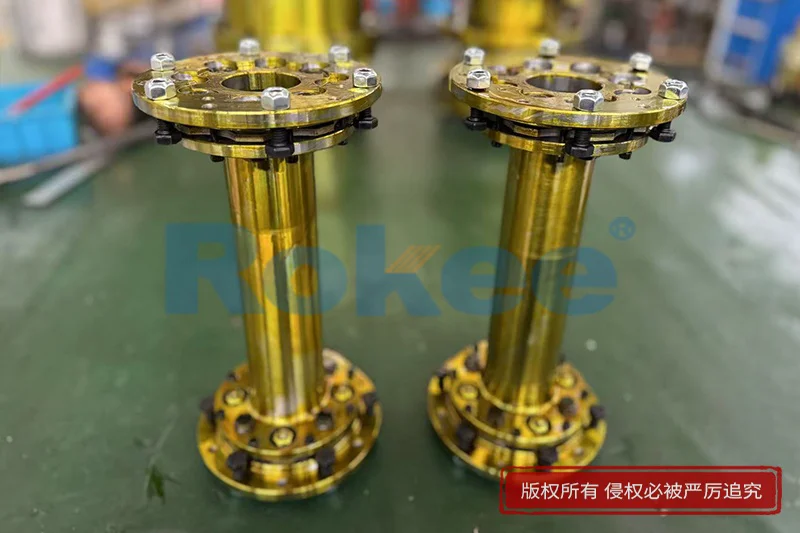
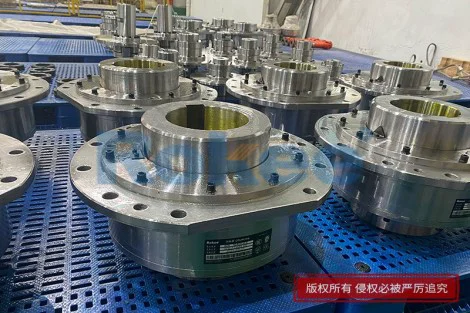
High speed gear coupling is a core mechanical transmission component designed for high-velocity industrial operation scenarios, dedicated to achieving stable torque transmission and synchronous rotation between two adjacent rotating shafts. Unlike ordinary couplings that adapt to low-speed and conventional working conditions, this specialized coupling is structurally optimized to cope with the high centrifugal force, frequent vibration and tiny shaft displacement generated during high-speed equipment operation. Its core value lies in balancing efficient power transmission, operational stability and structural durability, making it a key connecting part for high-speed rotating mechanical systems. Through precise internal and external gear meshing structures, it can effectively compensate for axial, radial and angular misalignments caused by installation deviations, thermal expansion and mechanical vibration, while minimizing transmission loss and mechanical noise. Widely applied in high-speed motors, industrial compressors, precision transmission equipment and other core industrial facilities, it ensures the long-term stable and efficient operation of high-speed mechanical transmission systems under complex working conditions.
The fundamental operating principle of high speed gear coupling relies on the precise meshing transmission of involute gear pairs, which distinguishes it from flexible couplings that rely on elastic deformation for power transfer. The overall structure is mainly composed of toothed hubs and inner gear sleeves, forming a closed meshing transmission system that converts the rotational power of the driving shaft into synchronous rotation of the driven shaft. During high-speed operation, the evenly distributed gear teeth bear uniform torque load, avoiding local stress concentration that commonly occurs in traditional transmission structures. The optimized tooth profile design effectively adapts to the micro-deformation and slight displacement of the shaft system under high-speed rotation, ensuring continuous and stable meshing without tooth jumping or transmission interruption. Different from low-speed gear couplings, its meshing clearance is precisely calibrated for high-velocity scenarios, which can offset the tiny axial expansion and radial offset caused by temperature rise during long-term high-speed operation. This pure mechanical meshing transmission mode features high transmission efficiency and low energy loss, laying a solid foundation for the stable operation of high-power and high-speed mechanical equipment.
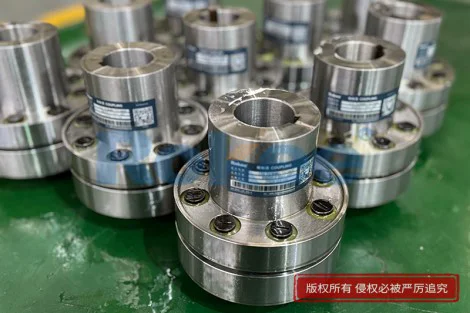
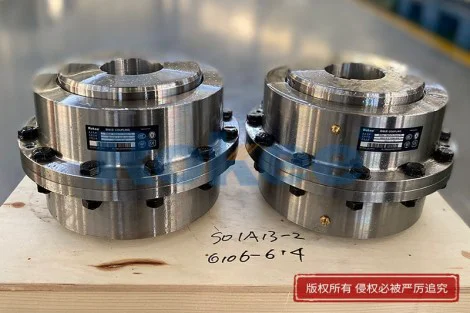
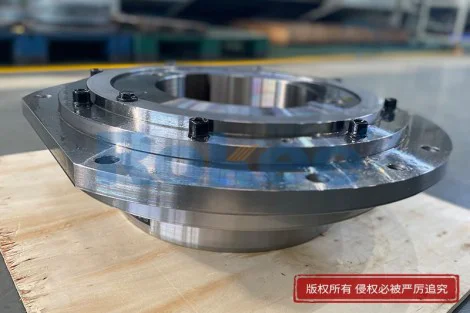
Structural optimization is the core advantage that enables high speed gear coupling to adapt to extreme high-speed working environments. Adopting a highly integrated and compact structural design, it abandons redundant auxiliary accessories, effectively reducing the overall volume and weight while maintaining excellent torque bearing capacity. The symmetrical layout of internal and external gears realizes uniform stress distribution during high-speed rotation, completely eliminating eccentric load and local overstress problems, which greatly reduces mechanical vibration and operating noise. Many optimized models integrate the gear sleeve and end cover into an integral structure, which enhances the overall structural rigidity and sealing performance, and avoids assembly gaps that may cause transmission jitter at high speeds. The tooth tip and tooth root structures are polished and optimized to reduce friction resistance during meshing, lowering heat generation in high-speed operation. In addition, the reserved flexible matching gap can comprehensively compensate for three common shaft misalignments in mechanical operation, including axial displacement from thermal expansion, radial displacement from installation errors, and angular displacement from shaft deflection, greatly improving the operational tolerance of high-speed transmission systems.
High speed gear coupling exhibits outstanding performance stability and durability in long-term high-load and high-velocity operation. Benefiting from high-precision gear processing technology and reasonable structural design, it can maintain stable transmission accuracy for a long time under continuous high-speed rotation, without obvious wear failure or transmission efficiency attenuation. The uniform stress bearing mode avoids concentrated friction and impact on local parts, effectively delaying the wear rate of gear teeth and key connecting structures. Compared with elastic couplings that are prone to aging and deformation, it has stronger structural stability and longer service life, and will not produce elastic fatigue failure under frequent high-speed cyclic operation. Its excellent heat dissipation performance can timely discharge the heat generated by high-speed meshing friction, preventing structural deformation and performance degradation caused by long-term high temperature accumulation. Moreover, the optimized sealing structure can effectively isolate external dust, moisture and particulate impurities, avoiding gear tooth abrasion and internal lubrication failure, ensuring consistent and reliable working performance in complex industrial environments.
The misalignment compensation capability of high speed gear coupling is far superior to many traditional coupling products, which is crucial for the safe operation of high-speed mechanical systems. In actual industrial production, it is impossible to achieve absolute precise alignment of two connecting shafts due to manual installation deviations, equipment foundation settlement, and thermal deformation during operation. Tiny shaft misalignments that are negligible in low-speed operation will be amplified exponentially at high speeds, triggering severe vibration, shaft system deflection and even equipment failure. High speed gear coupling can flexibly adapt to small-range axial, radial and angular displacements through the flexible meshing fit of gear pairs, eliminating additional mechanical stress caused by shaft misalignment. This excellent compensation performance not only reduces the precision requirements for shaft alignment during equipment installation, saving installation time and labor costs, but also buffers the vibration and impact generated during equipment start-up, shutdown and load fluctuation, protecting the high-speed shaft system and core equipment from impact damage.
High speed gear coupling has a wide range of industrial application scenarios, covering almost all mechanical fields involving high-speed power transmission. In high-speed motor supporting systems, it serves as a key connecting component to realize efficient and synchronous power transmission between motors and driven equipment, ensuring the stable output of high-speed power. In industrial compressor and fan equipment, it adapts to long-term continuous high-speed operation, effectively reducing vibration and noise of high-speed rotating components and improving the overall operating efficiency of fluid mechanical equipment. It also plays an irreplaceable role in high-speed gearbox transmission systems, precision industrial transmission equipment and large-scale power generation units. Its compact structure can adapt to limited installation space of high-precision equipment, while its high torque transmission capacity meets the power demand of high-power industrial equipment. Whether in continuous stable operation scenarios or intermittent variable-load high-speed working conditions, it can maintain excellent adaptive performance, providing reliable transmission guarantees for different types of high-speed mechanical systems.
In terms of operational economy and maintenance advantages, high speed gear coupling shows significant comprehensive benefits in long-term industrial application. Its high transmission efficiency effectively reduces power loss during mechanical operation, lowering the long-term energy consumption cost of equipment operation. The durable structural design and wear-resistant performance greatly reduce the frequency of component replacement and equipment failure shutdown, improving the continuous operation rate of industrial production lines. Compared with other high-speed coupling products, it has a simpler internal structure and fewer vulnerable parts, making daily maintenance more convenient and efficient. Regular lubrication maintenance can maintain its optimal working state for a long time, without complex debugging and precision calibration work. In addition, its strong environmental adaptability enables it to operate stably in high-temperature, dusty and other harsh industrial environments, avoiding frequent performance failures caused by environmental factors. The overall low maintenance cost and high operational stability make it a cost-effective choice for high-speed mechanical transmission systems.
With the continuous upgrading of modern industrial high-speed mechanical equipment, the technical optimization direction of high speed gear coupling is constantly evolving towards higher precision, stronger adaptability and longer service life. Current technical iterations mainly focus on further optimizing tooth profile structures and friction matching performance, reducing meshing friction and heat generation in ultra-high-speed operation, and improving transmission stability under extreme working conditions. Structural lightweight and high-rigidity optimization has become an important development trend, which can reduce the centrifugal load of high-speed rotation while ensuring structural strength, and further improve the limit operating speed of the coupling. At the same time, the upgrade of sealing and lubrication systems is committed to realizing longer maintenance cycles and adapting to more complex industrial working environments. In the future, with the continuous progress of mechanical processing and material technology, high speed gear coupling will break through more performance limitations, provide more stable and efficient transmission solutions for high-end high-speed mechanical equipment, and better meet the development needs of modern high-precision industrial manufacturing.