Crane Drum Coupling

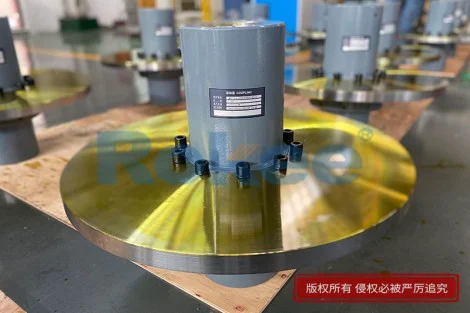
Crane drum coupling serves as a core flexible transmission component exclusively designed for the hoisting system of crane equipment, bridging the reducer output shaft and the crane drum to realize stable power and torque transmission. Unlike conventional mechanical couplings with single transmission functions, this specialized coupling integrates torque delivery, radial load bearing, and shaft misalignment compensation into one compact structure, making it highly adaptable to the harsh and variable working conditions of cranes. During crane operation, it effectively buffers mechanical shocks generated by frequent start-stop, load lifting, and sudden load changes, avoiding rigid friction and structural damage between transmission components. Its unique drum-shaped tooth profile and spherical self-aligning structure enable it to tolerate minor axial, radial, and angular deviations between connected shafts, ensuring the synchronous and stable operation of the entire hoisting mechanism. As a key guarantee for crane operational stability and component durability, it has become an indispensable part of heavy-duty crane transmission systems, optimizing overall mechanical operation efficiency and reducing frequent equipment failures caused by transmission mismatch.
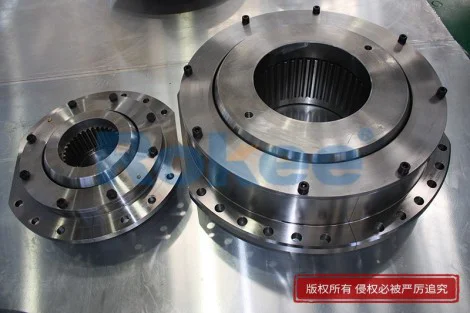
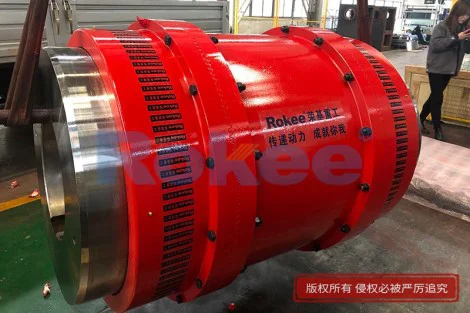
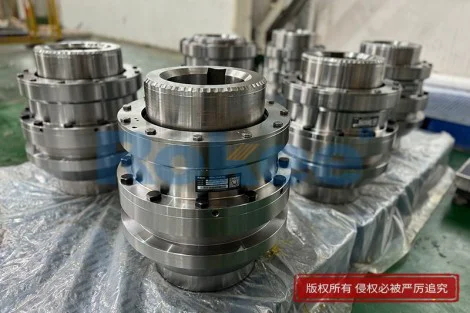
The structural design of crane drum coupling follows a highly practical and robust mechanical logic, with every component tailored to meet the heavy-load and high-stability requirements of crane operation. The core structure mainly consists of an inner tooth sleeve with a flange, outer tooth half-couplings, spherical load-bearing rings, and sealed protective components. The inner tooth sleeve, serving as the main connecting shell, is directly matched with the crane drum, while the outer tooth half-couplings connect to the reducer shaft, forming a complete torque transmission loop through the meshing of inner and outer drum-shaped teeth. Different from straight-tooth couplings, the optimized drum-shaped tooth profile enlarges the contact area during meshing and disperses local pressure, which greatly reduces tooth surface wear under long-term heavy-load operation. The built-in spherical load-bearing structure is the key functional part that distinguishes it from ordinary couplings, which can independently bear the radial gravity and dynamic load of the crane drum, preventing the transmission shaft from bearing excessive eccentric force. Meanwhile, the matched internal and external cover plates and integral sealing structure can isolate external dust, moisture, and industrial debris, locking internal lubricating grease and avoiding dry friction of internal moving parts, thus maintaining long-term stable transmission performance in complex working environments.
The working principle of crane drum coupling centers on flexible torque transmission and automatic misalignment compensation, realizing efficient and safe power transmission under dynamic working conditions. When the crane starts to operate, the motor drives the reducer to output rotational torque, which is transmitted to the outer tooth half-coupling first, and then transferred to the inner tooth sleeve through the meshing action of drum-shaped teeth, finally driving the crane drum to rotate and complete the lifting and lowering of heavy loads. In this process, the spherical contact pair formed by the spherical load-bearing ring and the inner concave surface of the outer sleeve can flexibly adapt to tiny axis deviations caused by installation errors, equipment vibration, or long-term structural deformation. During frequent crane start and stop cycles, the flexible meshing structure of the tooth profile can buffer instantaneous torque fluctuations and mechanical impact force, avoiding rigid collision between the reducer and the drum. This flexible transmission mode eliminates the resonance phenomenon easily generated by rigid connection under variable loads, stabilizes the rotating speed of the drum, and ensures uniform stress on the steel wire rope. Even in continuous alternating load operation, the coupling can maintain consistent transmission accuracy, prevent torque loss and transmission lag, and lay a solid foundation for the precise and stable operation of crane hoisting actions.
Crane drum coupling boasts prominent performance advantages that make it uniquely suitable for heavy-duty crane working scenarios, far exceeding the comprehensive performance of traditional ordinary couplings. Its most notable advantage is the dual capacity of high-efficiency torque transmission and heavy radial load bearing. Traditional couplings can only undertake simple torque transmission tasks, while this professional coupling can bear the huge radial static and dynamic load generated by the self-weight of the drum and heavy lifting objects, effectively protecting the reducer shaft and bearing components from eccentric load damage. The optimized drum-shaped tooth meshing design greatly improves the wear resistance and fatigue resistance of the transmission structure, enabling long-term continuous operation without frequent failure even under low-speed and heavy-load working conditions. In addition, the self-aligning function allows it to adapt to various minor shaft misalignments without generating additional mechanical stress, which greatly reduces the installation and debugging difficulty of crane transmission systems. Its integrated sealing and lubrication structure realizes maintenance-friendly operation, avoiding frequent shutdown maintenance caused by lubricant failure or dust blockage, effectively improving the overall operation continuity of crane equipment and reducing ineffective downtime loss.
The service life and operational stability of crane drum coupling are closely related to daily operation habits and routine maintenance measures, and standardized maintenance can maximize its working performance and service cycle. In daily crane operation, avoiding overloaded lifting and frequent violent start-stop actions is the primary measure to protect the coupling, as instantaneous overload torque and impact force will cause irreversible wear and deformation of the tooth surface and spherical contact parts. Regular inspection of the coupling’s operating state is essential, including checking for abnormal vibration, noise, and local temperature rise during equipment operation, which are typical early fault signals of poor meshing or insufficient lubrication. It is necessary to regularly check the tightness of connecting bolts and the integrity of the sealing structure to prevent lubricating grease leakage and external impurity invasion that may cause internal component abrasion. Timely replacement of aging lubricants and cleaning of internal residual wear debris can always keep the meshing and rotating parts in a good working state. Scientific and standardized maintenance can not only extend the service life of the coupling itself but also avoid secondary damage to the crane reducer, drum, and steel wire rope caused by coupling failure, reducing the overall equipment operation cost.
Crane drum coupling plays an irreplaceable role in improving the overall safety and working efficiency of crane equipment, serving as a critical safety barrier for crane hoisting operations. In the entire crane transmission system, all power and load changes need to be buffered and adjusted through the coupling. When the crane encounters sudden load changes or slight structural jitter during operation, the flexible performance of the coupling can absorb most of the mechanical vibration and impact force, preventing the instantaneous impact from being directly transmitted to the motor and reducer core components. This buffering effect effectively avoids component fatigue damage and structural loosening caused by long-term vibration, greatly reducing the risk of sudden equipment failure during high-intensity operation. At the same time, the stable torque transmission performance ensures that the drum rotates uniformly and stably, avoiding jitter and deviation of heavy objects during lifting, which improves the operational accuracy and safety of crane work. By stabilizing the transmission system, the coupling also reduces ineffective power consumption caused by transmission friction and torque loss, indirectly improving the overall working efficiency of crane equipment and realizing energy-saving and efficient operation in long-term industrial work.
In practical industrial application scenarios, crane drum coupling shows strong environmental adaptability and scenario compatibility, covering most heavy-duty crane working environments. It can maintain stable working performance in harsh environments with dust, humidity, and variable temperature, and its reliable sealing structure can resist the erosion of most conventional industrial pollutants. Whether it is fixed industrial cranes for factory production or mobile cranes for outdoor engineering operations, the coupling can adapt to low-speed heavy-load continuous operation and intermittent frequent start-stop operation modes. Its compact and integrated structural design does not occupy extra installation space, which is convenient for equipment assembly and later replacement and maintenance, and can well match the structural layout of various crane transmission systems. With the continuous upgrading of industrial mechanical equipment, the structural optimization and performance improvement of crane drum coupling are also ongoing. Modern optimized couplings adopt more precise machining processes and high-strength wear-resistant materials, further improving load-bearing capacity, wear resistance and impact resistance, and can adapt to more complex and high-intensity industrial operation requirements, providing more reliable basic support for the stable operation of crane mechanical equipment.
The future development of crane drum coupling focuses on structural optimization, performance upgrading and intelligent adaptation to meet the increasingly stringent industrial mechanical operation requirements. With the continuous improvement of industrial automation and equipment intensification, cranes are developing towards larger load capacity, higher operation frequency and more precise operation control, which puts forward higher requirements for the comprehensive performance of supporting couplings. The subsequent optimization direction will focus on improving the flexible compensation ability and extreme load resistance of the coupling, further reducing transmission wear and improving long-term operation stability. In terms of structural design, more integrated and lightweight optimization will be carried out on the premise of ensuring load-bearing performance, to reduce the overall self-weight of components and improve equipment operation flexibility. In addition, the combination of intelligent monitoring structures will become an important development trend. By embedding simple sensing structures, the operating state, wear degree and lubrication state of the coupling can be monitored in real time, realizing early warning of potential faults, helping staff complete predictive maintenance, avoiding sudden equipment shutdown failures, and further improving the intelligent and safe operation level of the entire crane transmission system.