Cardan Driveshaft For Sale
Cardan driveshafts stand as fundamental and versatile power transmission components widely adopted across automotive, construction, agricultural and industrial mechanical systems, serving as a core link to transfer torque and rotational force between disconnected driving and driven equipment parts. Designed with flexible universal joint structures, these driveshafts excel at compensating angular, axial and radial deviations during equipment operation, solving the transmission limitations of rigid shaft systems that require precise axis alignment. Ideal for dynamic working environments with frequent position changes and operational vibrations, modern cardan driveshafts integrate optimized structural design and high-quality durable materials, delivering stable power output, strong load-bearing capacity and excellent environmental adaptability. Currently, high-performance cardan driveshaft options are available for various equipment upgrade and replacement needs, catering to diverse operational scenarios from light-duty daily use to heavy-duty industrial work, making them a reliable choice for maintaining mechanical efficiency and extending equipment service life.
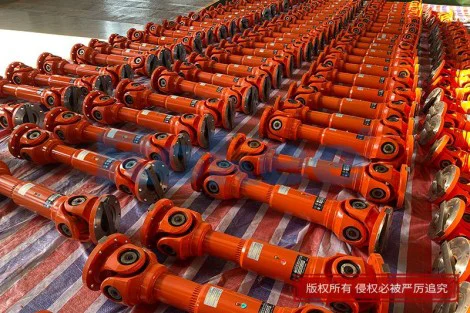
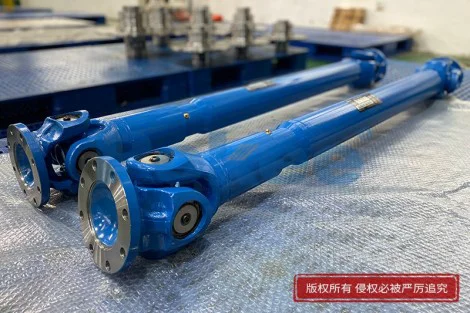
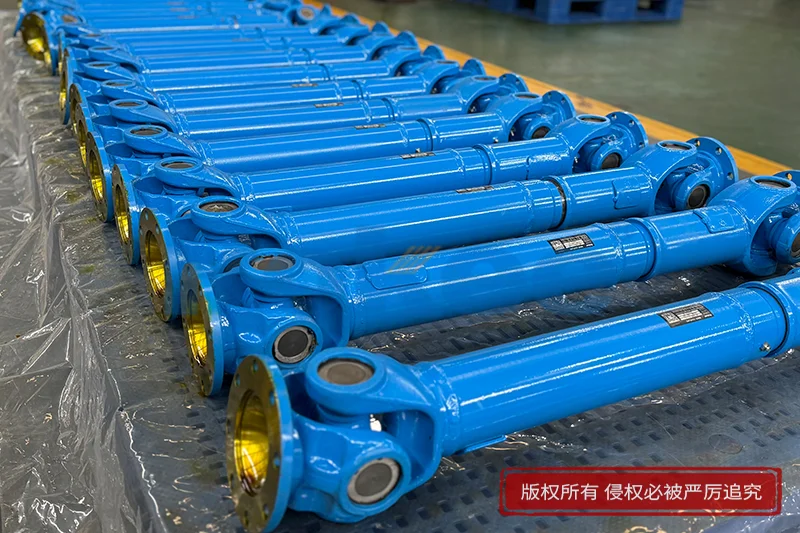
The core structural design of cardan driveshafts defines their unparalleled flexibility and operational reliability in complex mechanical transmission scenarios. Each complete cardan driveshaft assembly mainly consists of universal joints, cross bearing components, telescopic shaft sections and connecting flanges, with every part engineered to coordinate seamlessly to realize efficient power transmission. The universal joint structure serves as the key functional unit, allowing the driveshaft to operate stably even when the driving end and driven end form a certain angle offset, which fundamentally overcomes the defect of rigid shafts that are prone to jamming or damage under misalignment conditions. The telescopic shaft section can adapt to real-time axial distance changes between mechanical parts during equipment operation, effectively avoiding structural stress and transmission failure caused by chassis shaking, component displacement or mechanical deformation. Meanwhile, precision-processed cross bearings reduce rotational friction significantly, ensuring smooth torque output and minimizing mechanical vibration and noise during high-speed operation. This modular and flexible structural layout not only endows the driveshaft with strong adaptability to diverse working conditions but also lays a solid foundation for convenient daily inspection and part replacement.
Material selection is a critical factor that determines the overall performance, durability and operational stability of cardan driveshafts, with premium-grade materials adopted to suit long-term high-intensity operation requirements. High-strength alloy steel is the primary material for main shaft bodies and core connecting components, featuring outstanding tensile strength, impact resistance and fatigue resistance, which enables the driveshaft to withstand continuous heavy-load torque transmission and frequent mechanical impact without permanent deformation or structural damage. The bearing parts are equipped with wear-resistant alloy materials and matched with high-precision sealing structures, effectively resisting friction loss during long-term rotation and preventing external dust, moisture and debris from entering the internal structure to cause abrasion or corrosion. In addition, surface anti-rust and anti-oxidation treatments are applied to the entire driveshaft surface, greatly enhancing its adaptability to harsh working environments such as high temperature, high humidity and dusty construction sites. Compared with ordinary carbon steel driveshafts, products with optimized material configurations achieve longer service cycles, lower wear rates and more stable long-term transmission performance, reducing the frequency of equipment failures caused by component aging and damage.
Cardan driveshafts boast extremely wide application coverage, serving as an indispensable core component in multiple mechanical operation fields. In the automotive industry, they are widely applied in rear-wheel drive and four-wheel drive vehicles, responsible for transmitting engine power from the transmission to the drive axle, ensuring smooth power output during vehicle starting, acceleration and turning, and adapting to the chassis displacement caused by road unevenness. In construction machinery, these driveshafts support the normal operation of loaders, excavators, cranes and other heavy equipment, stably transmitting high torque power under heavy-load and high-impact working conditions to guarantee continuous and efficient construction operations. Agricultural machinery such as tractors and harvesters also relies on cardan driveshafts to complete power transmission for walking and operating components, adapting to the complex and variable field working environments with mud and gravel. Beyond mobile equipment, various industrial production devices including rolling mills, conveyor systems and processing machinery also use cardan driveshafts to realize stable power connection between discrete transmission structures, ensuring the continuous operation of industrial production lines.
One of the most prominent advantages of cardan driveshafts is their excellent operational stability and low failure rate, which brings significant value to mechanical operation and maintenance. Different from traditional rigid transmission shafts that are sensitive to axis deviation and mechanical vibration, the flexible universal joint structure of cardan driveshafts can buffer and absorb most operational vibrations and impact forces during power transmission, avoiding rigid stress concentration on mechanical components. This buffering effect not only protects the driveshaft itself from rapid wear and fatigue damage but also reduces the transmission of vibration to the whole mechanical system, effectively extending the service life of adjacent equipment parts such as engines, transmissions and bearings. Under normal operating conditions, high-quality cardan driveshafts can maintain stable transmission performance for a long time without power attenuation or operational jitter. Even in intermittent operation and variable load working modes, they can adjust the transmission angle and displacement autonomously to adapt to operational changes, ensuring consistent and reliable power output and greatly improving the overall operational safety and stability of mechanical equipment.
The convenient maintenance characteristics of cardan driveshafts make them a cost-effective choice for long-term equipment operation and management. Thanks to their standardized modular design, each component of the cardan driveshaft is independent and detachable, enabling targeted inspection, maintenance and replacement of worn or aging parts without replacing the entire assembly, which effectively reduces equipment maintenance costs and downtime loss. Daily maintenance work mainly includes regular lubrication of bearing and universal joint parts to reduce friction wear, routine inspection of shaft body surface for cracks, deformation or corrosion, and checking the tightness of connecting flanges to avoid loose power transmission. Many upgraded cardan driveshaft designs adopt fully sealed structures, which reduce the need for frequent lubrication and maintenance, making them more suitable for remote working scenarios or equipment with difficult daily maintenance. Simple and efficient maintenance procedures lower the technical threshold for equipment management, help mechanical operators quickly complete daily maintenance work, and ensure the driveshaft always maintains optimal working condition during long-term service.
Upgrading or replacing with high-quality cardan driveshafts can significantly improve the overall working efficiency of mechanical equipment and optimize operational performance. Old or low-performance transmission shaft components often suffer from insufficient torque transmission capacity, severe vibration, obvious power loss and frequent jitter during operation, which not only reduces equipment working efficiency but also increases fuel consumption and mechanical wear. Premium cardan driveshafts feature precise transmission matching, which minimizes power loss during torque transmission and converts more engine power into effective mechanical power, thereby improving equipment operation efficiency and energy utilization rate. Their excellent dynamic balance performance effectively suppresses high-speed rotation vibration and noise, making equipment operation more stable and comfortable while reducing additional mechanical loss caused by vibration. In addition, the strong structural toughness and impact resistance of high-grade driveshafts enable equipment to cope with more intense working loads and complex working conditions, expanding the equipment’s applicable operation scenarios and improving overall operational adaptability and durability.
When selecting a suitable cardan driveshaft for equipment replacement or upgrade, it is essential to focus on practical matching and comprehensive performance to ensure optimal operational compatibility. The first key factor is to confirm the dimensional matching degree with the original equipment, including shaft body length, connecting flange specification and installation spacing, to ensure seamless installation and accurate power connection. It is also necessary to select driveshafts with corresponding load-bearing levels and transmission performance according to the actual working load and operational intensity of the equipment, avoiding insufficient bearing capacity leading to premature wear or structural damage. Working environment adaptability should also be taken into full consideration; for equipment operating in long-term high-dust, high-humidity or high-temperature environments, priority should be given to driveshafts with enhanced sealing performance and anti-corrosion treatment. Choosing reliable and well-crafted cardan driveshaft products with stable performance can effectively avoid frequent failures, reduce long-term maintenance investment, and provide lasting and stable power transmission guarantee for various mechanical equipment operations.