Gear Coupling For Heavy Duty

Heavy-duty gear couplings stand as core mechanical transmission components engineered to deliver stable, high-efficiency torque transmission for industrial equipment operating under extreme working conditions. Unlike conventional flexible couplings with limited load capacity, these specialized devices integrate precise internal and external gear meshing structures, enabling them to bear heavy loads, withstand frequent impact forces, and accommodate minor shaft misalignments during continuous operation. They are widely adopted in high-power mechanical systems that demand reliable power delivery, including industrial rolling equipment, large pumping units, mining machinery, and heavy-duty conveying systems. The unique structural design balances rigid torque transmission and flexible displacement compensation, effectively reducing mechanical vibration and friction loss during operation. With excellent torsional rigidity and compact structural layout, heavy-duty gear couplings maintain stable transmission performance under long-term, high-load, and high-speed working states, greatly lowering the risk of mechanical failure and extending the overall service life of industrial transmission systems.
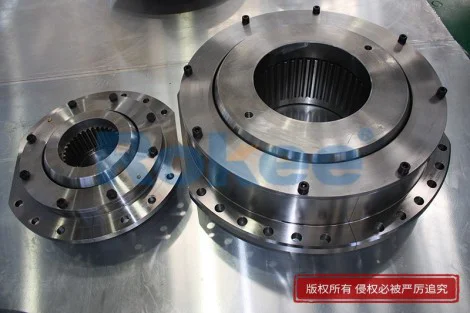
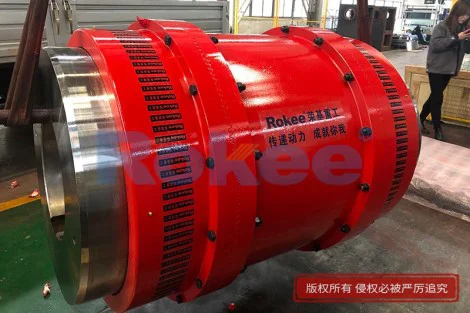
The structural composition of heavy-duty gear couplings is meticulously optimized to adapt to harsh industrial operating environments, with every core component designed for high load resistance and operational stability. The main structure consists of two external gear hubs, an internal gear sleeve, professional sealing assemblies, and fixed fasteners, all of which work in synergy to complete continuous power transmission. The external gear hubs are installed on the driving and driven shafts respectively, adopting a crowned tooth profile design that enhances the flexibility of gear meshing while ensuring sufficient contact area for torque transmission. The matching internal gear sleeve forms a fully enclosed meshing cavity with the two external gears, which effectively concentrates transmission force and avoids local stress concentration under heavy loads. Auxiliary components including labyrinth sealing structures and anti-loosening fasteners play a vital role in isolating external dust, moisture, and abrasive impurities. This integrated structural design not only ensures the overall rigidity required for heavy-duty work but also reserves reasonable displacement tolerance, allowing the coupling to adapt to axial, radial, and angular deviations generated by equipment operation, foundation settlement, or thermal expansion of mechanical parts.
The working principle of heavy-duty gear couplings is based on precise involute gear meshing transmission, realizing efficient and stable power transmission between disconnected rotating shafts. During equipment operation, the driving shaft drives the external gear hub to rotate synchronously, and the meshing tooth surfaces of external and internal gears generate uniform extrusion force to transmit torque steadily to the internal gear sleeve. Subsequently, the internal gear sleeve drives the other external gear hub and the connected driven shaft to operate synchronously, forming a complete closed-loop power transmission process. Different from ordinary rigid couplings that fail to adapt to shaft misalignment, the crowned tooth profile of heavy-duty gear couplings allows slight angular deflection and displacement of the gear hub inside the sleeve without disrupting the meshing state. This flexible meshing characteristic offsets the adverse effects of shaft position deviation, mechanical vibration, and operational jitter on the transmission system. Even under instantaneous impact loads and fluctuating torque conditions common in heavy industrial production, the gear meshing structure can disperse stress evenly, avoid sudden torque interruption, and ensure the continuity and stability of mechanical operation.
Heavy-duty gear couplings possess unparalleled performance advantages over other types of transmission couplings, making them the preferred choice for high-load industrial scenarios. Their most prominent feature is ultra-high torque density, which enables compact-sized gear couplings to bear and transmit extremely large torque, saving installation space while meeting high-power transmission requirements. In terms of rigidity and stability, these couplings maintain excellent torsional rigidity during operation, producing negligible torsional deformation even under long-term heavy loads, thus guaranteeing high-precision power transmission. Meanwhile, their multi-directional misalignment compensation capability effectively solves the operational problems caused by shaft installation errors, equipment aging deformation, and thermal expansion displacement. Additionally, the all-metal structure of gear couplings endows them with outstanding wear resistance, high temperature resistance, and impact resistance, allowing them to operate stably in high-dust, high-humidity, and high-temperature harsh working environments. Compared with elastic couplings that are prone to aging and fatigue damage, heavy-duty gear couplings have far stronger durability and environmental adaptability in continuous industrial production.
The application scenarios of heavy-duty gear couplings cover almost all high-power and high-load industrial mechanical fields, serving as a key guarantee for the stable operation of heavy industrial equipment. In the metallurgical industry, they are applied to rolling mills and smelting transmission equipment, enduring continuous heavy torque and frequent impact loads during metal processing to ensure the stable operation of rolling and stretching processes. In the mining industry, these couplings are installed on large crushers, conveyors, and hoisting machinery, adapting to the complex working conditions of frequent start-stop operation and uneven load impact in mining sites. In the field of fluid machinery, they match with large industrial pumps, compressors, and fan equipment, solving the vibration and displacement problems of high-speed rotating equipment and improving the operational efficiency of fluid transmission systems. Moreover, they are also widely used in marine propulsion systems, heavy engineering machinery, and thermal power generation equipment, providing reliable power transmission support for various large mechanical systems that require long-term and high-intensity operation.
Lubrication management is the core link to maintain the long-term stable performance of heavy-duty gear couplings, directly affecting their operational efficiency and service life. The internal gear meshing area of the coupling requires continuous lubrication to reduce metal friction and wear between tooth surfaces, avoid dry grinding damage under high-load operation, and dissipate heat generated by high-speed meshing. Reasonable lubrication can also form a protective oil film on the gear tooth surface, isolating air and moisture to prevent oxidation and corrosion of metal parts. In actual industrial operation, it is necessary to select professional high-viscosity extreme-pressure lubricating grease suitable for heavy-load working conditions, which can maintain stable lubricating performance under high pressure and high temperature without oil dilution or failure. Regular lubricant replacement and oil cavity inspection are essential to prevent lubricant deterioration, impurity accumulation, and oil leakage caused by aging seals. Scientific lubrication maintenance can effectively reduce the friction coefficient of gear meshing, lower equipment operating energy consumption, and avoid premature wear, tooth surface peeling, and transmission failure caused by poor lubrication.
Daily maintenance and fault prevention are crucial to extend the service life of heavy-duty gear couplings and ensure the continuous and stable operation of industrial equipment. In routine equipment inspection, workers need to regularly check the operational vibration, noise, and temperature changes of the coupling. Abnormal vibration and harsh operating noise usually indicate excessive gear wear, insufficient lubrication, or shaft misalignment beyond the allowable range, which require timely shutdown inspection and adjustment. It is also necessary to regularly check the tightness of fastening bolts and the integrity of sealing components, as loose fasteners will cause structural displacement, and damaged seals will lead to lubricant leakage and external impurity intrusion. Long-term continuous operation may cause slight wear on gear tooth surfaces, and regular detection of meshing gaps can effectively avoid transmission accuracy reduction and load-bearing capacity decline. Through standardized daily maintenance, potential minor faults can be eliminated in advance, avoiding major mechanical failures and production shutdown losses caused by cumulative wear and structural abnormalities.
With the continuous upgrading of modern industrial manufacturing technology, the design and performance of heavy-duty gear couplings are also constantly optimized and improved to adapt to more stringent industrial working conditions. Modern manufacturing processes adopt high-strength alloy materials and precision machining technology to further improve the overall mechanical strength, wear resistance, and fatigue resistance of gear couplings, enabling them to withstand higher torque and more frequent impact loads. Optimized tooth profile design and structural iteration enhance the misalignment compensation ability and transmission efficiency of the coupling, reducing mechanical energy loss during operation. At the same time, the upgraded sealing and lubrication structure adapts to more complex extreme environments, including ultra-high temperature, low temperature, and high-corrosion working scenarios. As industrial equipment develops toward high power, high precision, and long-cycle continuous operation, heavy-duty gear couplings will continue to iterate in structural design, material application, and performance optimization, providing more reliable and efficient transmission solutions for modern heavy industrial production systems.