Universal Shaft Coupling For Industrial Machinery
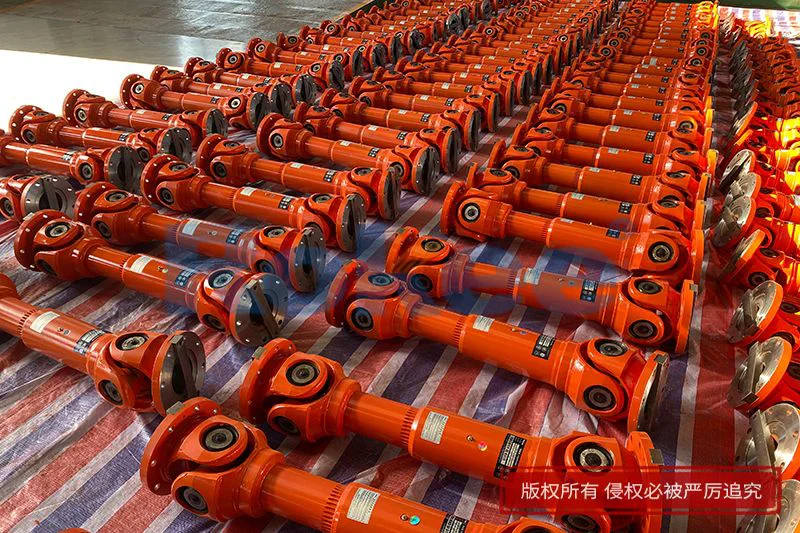
Universal shaft couplings are indispensable core transmission components in modern industrial mechanical systems, serving as critical connecting parts between drive shafts and driven shafts to realize stable power and torque transmission in complex operating environments. Unlike rigid coupling structures that rely on precise shaft alignment, this versatile mechanical part features unique multi-dimensional displacement compensation capabilities, effectively adapting to angular deviation, axial displacement, and radial misalignment generated during equipment installation and long-term operation. Widely applied in heavy machinery, automated production lines, metallurgical equipment, and transportation industrial devices, it resolves common transmission failures caused by installation errors, mechanical vibration, and thermal deformation. With a compact structural design, high transmission efficiency, and strong environmental adaptability, universal shaft couplings greatly reduce mechanical wear and operational faults, extend the service life of industrial equipment, and ensure the continuous and stable operation of various industrial production processes, making them a fundamental guarantee for efficient mechanical power transmission.
The basic working principle of universal shaft couplings centers on the flexible spatial motion coordination of their internal cross shaft and bearing structures, which enables stable torque transmission even when the connected two shafts are not collinear. The core structural composition includes cross shaft joints, precision bearings, connecting flanges, and telescopic spline components, each part cooperating closely to convert irregular spatial rotation into smooth and continuous power output. When industrial machinery operates with shaft misalignment, the cross shaft structure can freely adjust the rotation angle within a certain range, while the bearing assembly reduces friction resistance during relative motion to avoid power loss and mechanical jamming. The telescopic spline design further complements axial displacement changes, effectively coping with shaft distance variations caused by equipment thermal expansion, mechanical vibration, or load changes. This flexible transmission mechanism abandons the rigid limiting mode of traditional couplings, allowing mechanical equipment to maintain efficient power transmission under dynamic operating conditions and greatly improving the fault tolerance of industrial transmission systems in complex working scenarios.
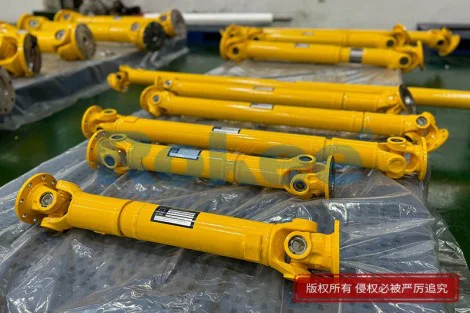
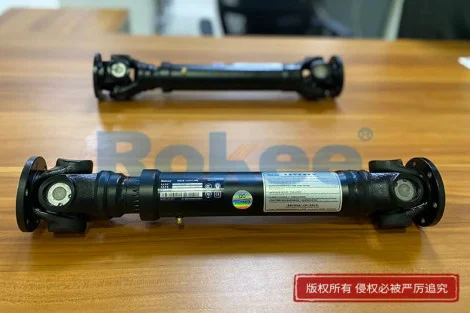
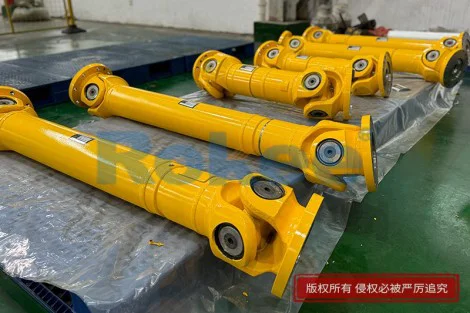
Structural diversity is a prominent advantage of universal shaft couplings, enabling targeted adaptation to differentiated operating demands of various industrial machinery. According to structural forms, mainstream types include fixed universal couplings and telescopic universal couplings, each with unique application characteristics and performance orientations. Fixed universal couplings feature an integrated and sturdy structure, with strong load-bearing capacity and torsional rigidity, suitable for industrial equipment with stable shaft spacing and small misalignment ranges, such as fixed processing machinery and conventional transmission devices. Telescopic universal couplings adopt a retractable spline structure, which can freely adjust the overall length during operation, perfectly adapting to mechanical equipment with frequent axial position changes and large installation tolerance deviations. In addition, optimized structural designs such as double-joint universal couplings further expand the angle compensation range, solving the power transmission problem of large-angle misalignment between shafts. All structural types adhere to high-strength integrated molding concepts, ensuring structural stability while retaining flexible motion performance to meet light-duty precision transmission and heavy-load industrial transmission requirements.
High-quality material selection lays a solid foundation for the excellent performance and long service life of industrial-grade universal shaft couplings. Most core load-bearing components are made of high-strength alloy materials, which undergo professional heat treatment processes such as carburizing and quenching to significantly improve surface hardness, wear resistance, and overall structural toughness. This material processing method effectively resists mechanical fatigue and abrasion caused by long-term high-speed rotation and frequent load impact, avoiding structural deformation and component damage in high-intensity industrial working environments. Partial auxiliary structures adopt lightweight and corrosion-resistant alloy materials, which reduce the overall self-weight of the coupling without affecting load-bearing performance, lowering the operating load of mechanical equipment. The surface of the coupling is also treated with anti-rust and anti-corrosion processes, enabling stable operation in harsh industrial environments such as high humidity, dust accumulation, and variable temperatures. Scientific material matching and precise processing technologies ensure that the coupling maintains stable transmission performance in long-term continuous industrial production and reduces the frequency of component replacement and equipment maintenance.
Universal shaft couplings deliver outstanding performance in vibration damping and impact buffering, which is crucial for protecting industrial machinery and optimizing production stability. In the operation of industrial equipment, frequent load changes, mechanical collision, and uneven ground vibration will generate instantaneous impact force and vibration conduction between transmission shafts. Traditional rigid couplings cannot isolate these adverse mechanical effects, which easily lead to shaft deformation, bearing damage, and loose equipment parts. In contrast, the flexible motion structure of universal shaft couplings can effectively absorb and buffer instantaneous impact energy, block the transmission of mechanical vibration between the drive end and driven end, and reduce the resonance phenomenon of the entire transmission system. This vibration isolation and buffering performance avoids excessive wear of precision mechanical parts, reduces operational noise of equipment, and improves the running stability of automated production lines. For heavy-duty industrial machinery with frequent start-stop and variable load operation, this performance advantage can effectively reduce mechanical failure rates and ensure the consistency and precision of industrial production operations.
The wide application scope of universal shaft couplings covers almost all industrial fields involving mechanical rotational power transmission, becoming a universal core component of modern industrial manufacturing systems. In metallurgical and mining industries, they adapt to the heavy-load and high-vibration working conditions of rolling mills, crushing equipment, and conveying machinery, ensuring stable power output of heavy industrial equipment. In automated manufacturing and mechanical processing industries, they are applied to precision machine tools, assembly lines, and transmission devices, compensating for tiny misalignments generated by equipment operation and guaranteeing processing precision. In construction machinery and transportation equipment, they cope with dynamic shaft displacement and angle changes during equipment movement, improving the adaptability of mobile mechanical transmission systems. In addition, they also play an important role in chemical, textile, and agricultural industrial machinery, adapting to different environmental characteristics and operating intensity requirements. The strong scenario adaptability makes universal shaft couplings an indispensable basic part for upgrading the operational performance of various industrial machinery.
Reasonable daily maintenance and standardized operation are key to maximizing the service life and working efficiency of universal shaft couplings in industrial applications. In routine industrial production, regular lubrication of bearing and spline moving parts is required to reduce friction wear between components and avoid dry friction damage caused by long-term operation. It is necessary to regularly check the tightness of connecting parts and the wear degree of core components, timely replace severely worn parts to prevent transmission jitter and power attenuation caused by component aging. During equipment operation, overload operation and long-term high-intensity continuous start-stop working modes should be avoided, so as not to cause fatigue deformation of the coupling structure. For industrial equipment operating in harsh environments, regular cleaning of surface dust and corrosive attachments is needed to protect the anti-corrosion layer and structural integrity. Standardized maintenance habits can effectively maintain the stable transmission performance of the coupling, reduce equipment downtime and maintenance costs, and improve the overall operational efficiency of industrial production lines.
With the continuous upgrading of modern industrial machinery towards high precision, high efficiency, and intelligent heavy load, the performance optimization of universal shaft couplings is also advancing continuously. Modern industrial production puts forward higher requirements for transmission stability, compensation accuracy, and environmental adaptability of coupling components, driving the continuous innovation of coupling structural design and processing technology. New optimized universal shaft coupling products adopt more precise spatial motion structures, realizing smaller error transmission and larger range displacement compensation, which can adapt to the high-precision operation demands of intelligent automated equipment. The application of new high-strength and wear-resistant materials further improves the load-bearing capacity and service cycle of products, adapting to the long-term continuous operation mode of modern industrial production. Meanwhile, the integrated and lightweight design reduces equipment assembly difficulty and overall energy consumption. As a key basic transmission component, universal shaft couplings will continue to iterate and upgrade with industrial technological progress, providing more reliable and efficient support for the stable operation and performance improvement of various industrial machinery.